REVIEW · LOS ANGELES
The History and Architecture of Downtown Los Angeles
Book on Viator →Operated by See LA in a Day · Bookable on Viator
Downtown Los Angeles can surprise you fast. This small-group history and architecture tour takes you from Angels Flight up into Bunker Hill, then across Civic Center and down through Little Tokyo and the old bank district for a walk-through story of how LA grew up. I love that you get practical context for what you’re looking at, and I love the food stop in Little Tokyo that feels genuinely local rather than touristy. One thing to keep in mind: it’s still a walking tour, so hot afternoons and sun exposure matter.
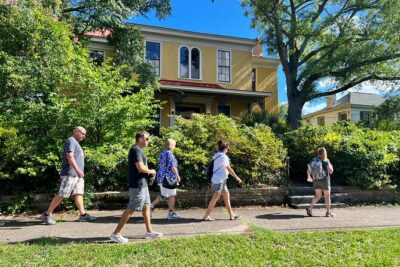
My experience was led by Chris, who has the kind of energy that makes buildings feel like characters. He’s friendly, answers questions, and uses pictures to explain details without turning it into a lecture. The tour runs about three hours with a maximum group size of 15, which keeps it conversational.
In This Review
- Key Highlights You Can Feel Right Away
- Downtown LA as an Architecture Classroom
- The 3-Hour Flow: Meeting at 341 S Hill St
- Start With the World’s Shortest Train Ride: Angels Flight
- Bunker Hill Art in Motion: MOCA and The Broad
- Frank Gehry’s Walt Disney Concert Hall: Design With a Backstory
- City Hall and Grand Park: How LA Grew Up
- Little Tokyo With Fugetsu-Do Mochi: Culture and Legacy
- Vibiana, Movie Palaces, and the Bradbury Building
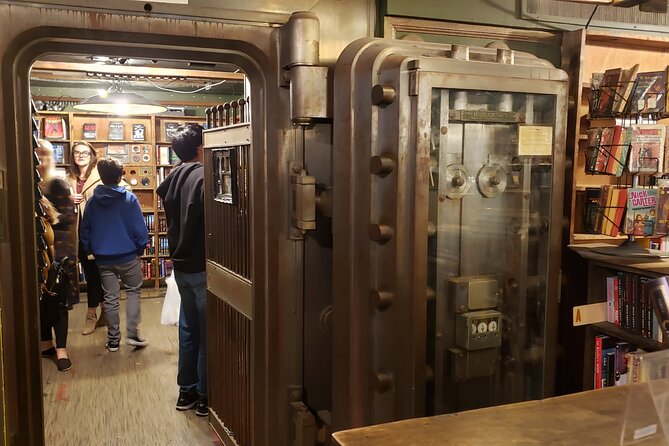
- Spring Street’s Architectural Timeline and The Last Bookstore Vault
- Grand Central Market: A 100-Year Food Finale
- Price and Value: What $39.20 Buys You
- Should You Book This Downtown History and Architecture Tour?
- FAQ
- What is the price and duration of the tour?
- Is the Angels Flight ride included?
- Are any museum entrances included?
- What food is included in the tour?
- Where do I meet the tour, and where does it end?
- How big is the group?
- What language is the tour offered in?
- Is this tour dependent on weather?
- Can I cancel for a full refund?
- Are service animals allowed?
Key Highlights You Can Feel Right Away
- Angels Flight Railway ride included and explained as LA’s shortest train story with real neighborhood connections
- Free art stops in Bunker Hill at MOCA and The Broad, both quick but meaningful
- Frank Gehry’s Walt Disney Concert Hall with the building’s backstory, not just the photos
- Little Tokyo with a classic snack stop at Fugetsu-Do (motive: mochi and Japanese American legacy)
- Old LA architecture stops like the Bradbury Building and grand movie-palace facades
- Local-food ending at Grand Central Market, a 100+ year institution
Downtown LA as an Architecture Classroom
Downtown LA is one of those places where you learn by walking. You’ll see how different eras left their fingerprints: Victorian-era thinking up high, early 20th-century ambition in the financial district, and cultural layers like Little Tokyo in the middle of it all. Chris frames it so you don’t just spot landmarks; you understand why they exist where they do.
What makes this tour work is the mix of form and story. Buildings and streets become a timeline you can actually trace on foot, and the food stops act like breaks that also teach you something. Expect more street-level “why this mattered” than postcard sightseeing.
Also, you’re moving through neighborhoods that have their own identity. That means the tour is best if you like noticing small details, asking questions, and connecting the dots as you go.
You can also read our reviews of more tours and experiences in Los Angeles.
The 3-Hour Flow: Meeting at 341 S Hill St
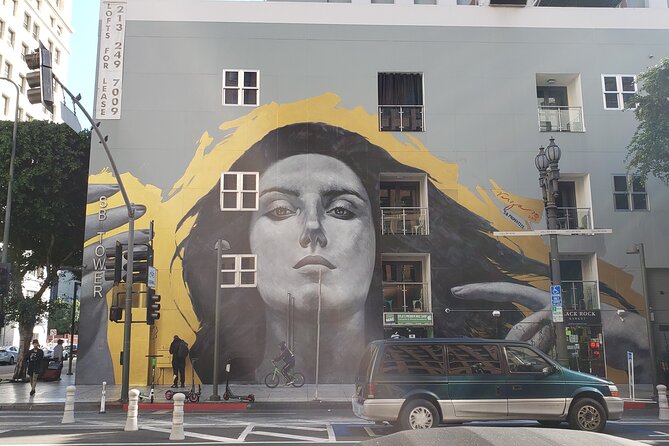
You meet at 341 S Hill St, Los Angeles, CA 90013, and you end back at the same point. Plan for an easy-to-moderate walking pace across downtown blocks, with multiple short stops where you can pause, look, and learn.
Because it’s a small group (max 15), Chris can slow down when someone’s curious and speed up when you just want to keep moving. If you’re the type who likes to stop for shade or take photos, this tour style tends to fit. Bring a hat if you get warm easily. One review called that out, and it’s good advice.
Language is English, and you’ll get a mobile ticket. The route is also described as near public transportation, which helps if you want an easy start or a quick escape if you need it.
Start With the World’s Shortest Train Ride: Angels Flight
You begin at Angels Flight Railway, known for being one of the world’s shortest train rides. The fun part is that you don’t just ride; you learn what the climb meant when Bunker Hill was home to Victorian-era LA. Chris links the railway to that neighborhood’s development, so the ride feels like a shortcut through social history.
You’ll be on this stop for about 10 minutes, and the cost of the ride is included. That matters for value because it prevents that common problem where you arrive excited for a classic site and then realize you still have extra fees.
If you’ve seen downtown from viewpoints but never felt the street-level height change up close, this opening makes your brain recalibrate immediately. It’s a quick start that turns the rest of the tour into a “watch the city change around you” experience.
Bunker Hill Art in Motion: MOCA and The Broad
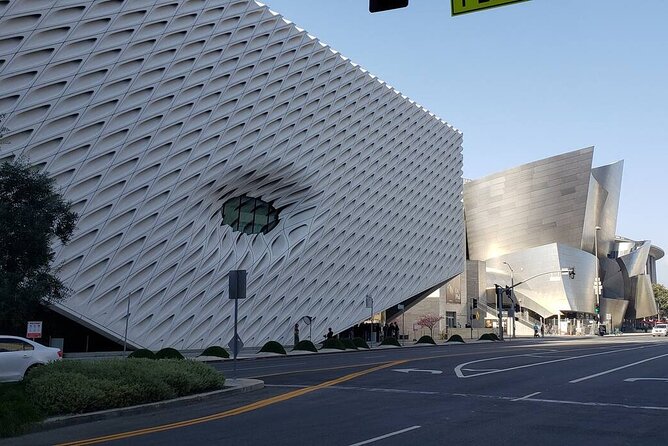
From Angels Flight, the route moves into Bunker Hill, where you get free art with short, focused time windows. The first stop is the Museum of Contemporary Art (MOCA). The tour explains the Pritzker prize-winning architect behind the building and even touches on early struggles—useful context, because it helps you understand how architecture can reflect the designer’s real constraints.
Next is The Broad, another free museum stop. You’ll hear the correct pronunciation and the tour focuses on the building’s architecture and the Pop Art collection inside. There are also plans for the future additions, which gives you something to connect to if you revisit later.
Both stops are brief—around 5 minutes each—so don’t expect long galleries. Instead, think of this as an architectural orientation plus an art taste. It’s ideal if you want downtown context more than deep museum time.
Frank Gehry’s Walt Disney Concert Hall: Design With a Backstory
Then you get one of LA’s most photographed shapes in real life: Walt Disney Concert Hall. You’ll spend around 15 minutes here, and the tour treats the design like the main character.
The highlight for me is that Chris connects the building to Frank Gehry, emphasizing how the story behind it is as interesting as the concert hall itself. If you’re the kind of person who always notices the weird angles in architecture photos, this stop will feel satisfying because you learn what those choices are communicating.
It’s also a good stop for photos, but don’t rush it. Even without going inside, the exterior gives you a lot to read: curves, reflections, and the way the structure catches light from different angles.
City Hall and Grand Park: How LA Grew Up
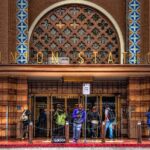
After the concert hall, you reach City Hall area with about 10 minutes focused on political and civic history. This is where Chris helps you understand LA as more than just weather and traffic—he walks you through how the city morphed from a much smaller town into a major metropolis.
The tour includes time through Grand Park, which is practical as well as interesting. It gives you a clearer sense of open civic space within downtown’s dense development.
If you tend to skip political history on trips, don’t. Civic buildings are where you can see how a city imagines itself. Here, the story is also tied to growth and planning choices, not just dates.
Little Tokyo With Fugetsu-Do Mochi: Culture and Legacy
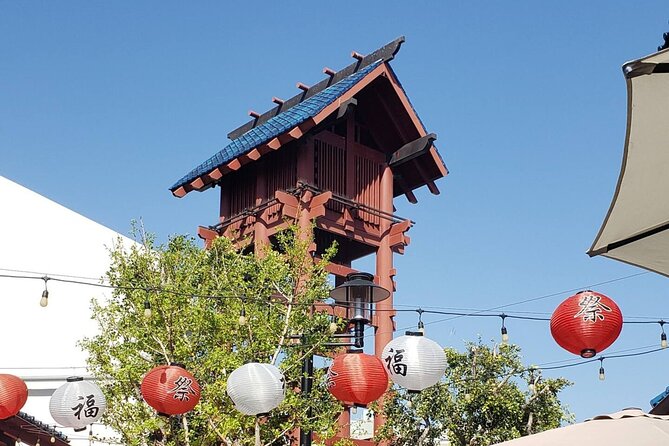
The route then shifts into Little Tokyo, for about 30 minutes. This is one of the tour’s strongest segments because it’s not only about a neighborhood vibe; it’s about community history and how that history shows up in businesses, markers, and food.
Chris points out legacy businesses and historic markers, plus he makes sure you leave knowing where to eat and what to look for beyond the street corners. If you want a downtown area that feels like it has layers you can still touch, Little Tokyo delivers.
Then you stop at Fugetsu-Do, a long-running family business that opened in 1903. The tour includes sampling mochi, and the story covers how the business survived through major events like two world wars and the Great Depression. That context makes the snack feel earned, not random.
This stop is only 10 minutes, so you should treat it like a taste-and-learn moment. If you’re a foodie, this is the moment you’ll probably remember most later because it’s both personal (a specific brand) and cultural (Japanese American food legacy).
Vibiana, Movie Palaces, and the Bradbury Building
After Little Tokyo, the tour touches the oldest feeling structures along the way. First up is Vibiana, St. Vibiana’s Cathedral from 1876, described with the scale of its early congregation—at one point, about one-fifth of LA’s population could fit in the building. That single fact makes the cathedral’s size feel practical rather than just impressive.
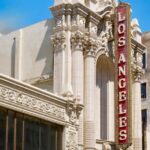
Next is a quick look at the Million Dollar Theater, one of the historic movie palaces on Broadway in downtown. The tour connects the theater’s grandeur to Hollywood premieres, including legends like Charlie Chaplin. You don’t spend long here—around 5 minutes—but the goal is to help you recognize what you’re looking at when you see theater facades like this.
Then comes a more dramatic architecture stop: the Bradbury Building. You’ll spend about 10 minutes here, and it’s treated like an all-time favorite: described as a 1893 masterpiece with an incredible story. The Bradbury is one of those places where you understand immediately why architects and photographers care. Even if you only get a short look, you’ll feel the building’s personality.
Spring Street’s Architectural Timeline and The Last Bookstore Vault
After the older landmark cluster, you walk through the old financial district feeling the architecture change as you go. The tour describes Spring Street as an architectural timeline: styles and materials shift as you move along—iron, steel, Beaux Arts, then later Art Deco—so the street reads like a timeline of ambition.
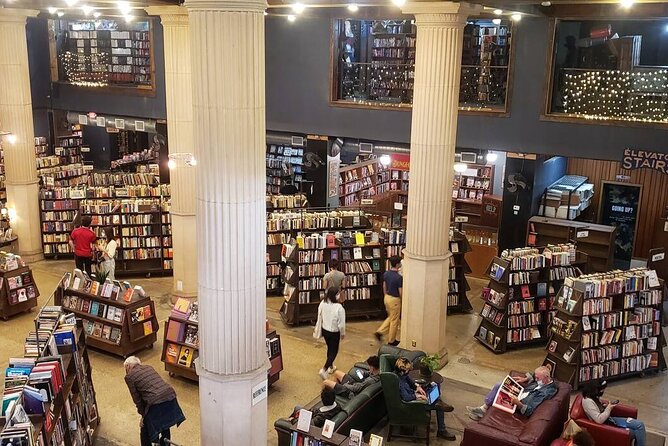
Next you get The Last Bookstore for about 10 minutes. This is more than a stop to browse. The tour explains that it’s located in an original bank building and includes stories about the original vault, which adds a layer of meaning when you’re surrounded by books and shelves.
From a value perspective, this kind of stop is smart. You get something atmospheric you can explore on your own in five minutes, but you also get context that makes the building feel like part of LA’s financial story—not just a retail space.
Grand Central Market: A 100-Year Food Finale
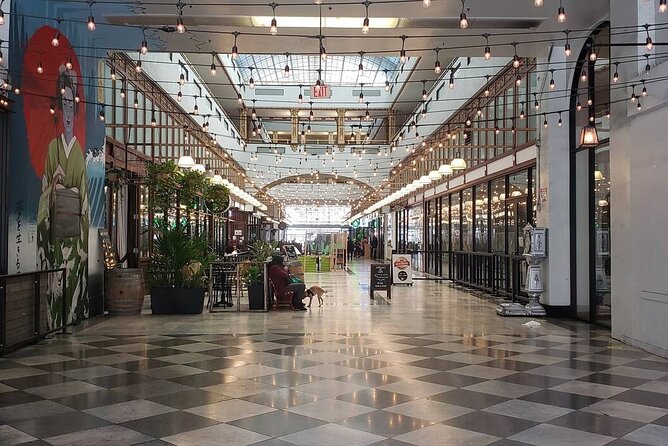
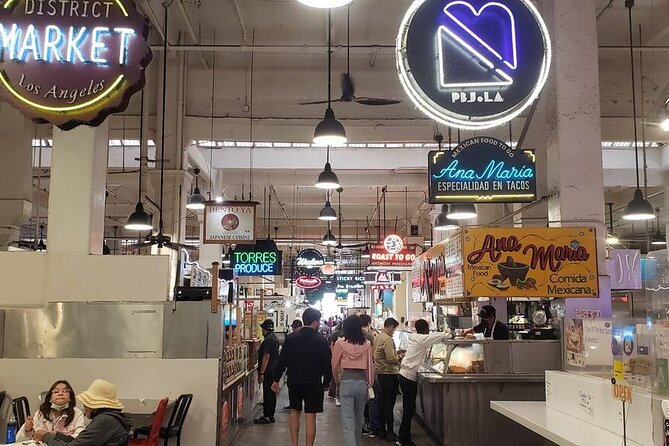
To close, you head to Grand Central Market, a historic food hall operating for over 100 years. The time here is around 10 minutes, so again it’s not a slow wandering meal. The point is to give you a strong sense of where locals go and how to keep eating in downtown without guessing.
If you like markets, this ending works well because it turns your architecture walk into a real-life break. It’s also a clean way to reset before you head out on your own.
You’ll finish back at the meeting spot, so the tour doesn’t leave you stranded in an unfamiliar part of downtown.
Price and Value: What $39.20 Buys You
At $39.20 per person for about 3 hours, this tour prices like a deal compared to doing the stops separately. The value isn’t only the sightseeing. It’s what’s included.
Key inclusion points you can feel:
- Angels Flight ride is included, which is often a separate paid add-on elsewhere
- Fugetsu-Do mochi is included in Little Tokyo
- Many museum stops listed here are free (MOCA, The Broad, Walt Disney Concert Hall exterior time, plus other architectural/cultural stops)
The tour also saves you decision fatigue. You don’t have to figure out which downtown sites are worth your time, where to start, or how to connect the eras. Chris does that work for you, and the short stops keep the pacing tight.
What to bring:
- A hat and water for sun
- Comfortable shoes for repeated short walks
- A few questions, because Chris is the type to answer them
Should You Book This Downtown History and Architecture Tour?
Book it if you want downtown LA to make sense fast. This is a good fit for people who like buildings, street-level stories, and food that connects to real communities like Little Tokyo. The small-group format (max 15) also makes it easier to ask questions without feeling lost in a crowd.
Skip it if you’re looking for a long museum day or deep, hours-long interior time at one big institution. This tour is built for many stops with context, not for one place you fully sink into.
If your goal is to leave downtown with an explanation you’ll remember, and with places you’ll want to revisit, this is a strong choice.
FAQ
What is the price and duration of the tour?
The tour costs $39.20 per person and runs for about 3 hours.
Is the Angels Flight ride included?
Yes. You start with a ride on Angels Flight, and the cost of Angels Flight is included with the tour.
Are any museum entrances included?
Some stops are listed as free. MOCA and The Broad are listed as free admissions, and the other sightseeing stops are included as part of the walk.
What food is included in the tour?
You’ll have a traditional Japanese snack at Fugetsu-Do, with mochi included.
Where do I meet the tour, and where does it end?
You meet at 341 S Hill St, Los Angeles, CA 90013, and the tour ends back at the same meeting point.
How big is the group?
This tour has a maximum group size of 15 travelers.
What language is the tour offered in?
The tour is offered in English.
Is this tour dependent on weather?
Yes. The experience requires good weather. If it’s canceled due to poor weather, you’ll be offered a different date or a full refund.
Can I cancel for a full refund?
You can cancel up to 24 hours in advance for a full refund. If you cancel less than 24 hours before the start time, the amount paid will not be refunded.
Are service animals allowed?
Yes. Service animals are allowed.