REVIEW · LOS ANGELES
Downtown Los Angeles Architecture Walking Tour
Book on Viator →Operated by LA Walking Tours · Bookable on Viator
DTLA architecture can teach you a lot fast. This Downtown Los Angeles walking tour turns the city center into a clear story, with Phil explaining how buildings reflect LA’s shift from old ambitions to modern life. I especially loved the Central Library stop, because it gives you a fast way to read the city like a map of ideas.
My other favorite part was how the route threads multiple styles side by side, so you can spot transitions without needing an architecture degree. One possible drawback: most highlights are viewed from the outside, so if you’re craving lots of inside access, you may want to plan a bit of extra time for museums or building tours on your own.
In This Review
- Quick highlights
- Why This Downtown LA Architecture Walk Works
- Price and Time: Getting Value From $38
- Meet at the Central Library, Then Let the City Explain Itself
- A Stop-by-Stop Walk Through DTLA’s Architectural Styles
- Los Angeles Central Library: The Symbolic Opening Act
- Fine Arts Building: Where Artists Once Had Real Space
- The Jewelry District: A District With Clout
- Historic Theater District: The Southern Broadway Story
- Eastern Columbia Lofts: Art Deco With Attitude
- The NoMad Hotel: A Building With a Financial Past
- Oviatt Building: The Oldest Standing Art Deco Marker
- The Architectural Style Mix Is the Real Teaching Tool
- What the Guide Changes: Conversation, Not Script
- Who This Tour Is Best For
- Practical Tips to Get the Most Out of Your Walk
- Should You Book This Downtown Los Angeles Architecture Tour?
- FAQ
- FAQ
- How long is the Downtown Los Angeles Architecture Walking Tour?
- How much does the tour cost?
- Where does the tour start and end?
- What time does the tour begin?
- What architectural styles will I see during the walk?
- Is admission included for every stop?
- How big is the group?
- Does this tour require good weather?
- Are service animals allowed?
Quick highlights
- Phil’s approach makes architecture feel like real LA history you can walk through
- Central Library symbolism is the kind of detail that changes how you look at the façade
- Art Deco stops like Eastern Columbia Lofts and the Oviatt Building help you “see” a style
- Historic Theater District context gives meaning to what you might otherwise rush past
- Multiple eras in one loop: Beaux Arts, Renaissance Revival, Art Deco, and modernism
- Small group size keeps the walk conversational, not lecture-like
Why This Downtown LA Architecture Walk Works
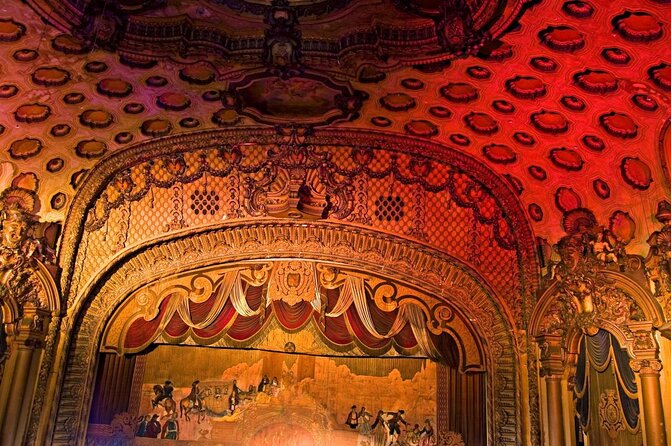
Downtown Los Angeles can feel like two different cities at once: glass-and-glow towers overlaid on grand, older forms that still control the street corners. This tour helps you notice that layering. You’re not stuck staring at a single landmark for hours. Instead, you get a guided walk that links buildings, districts, and design choices into one readable route.
The strongest value is the guide’s storytelling. Phil’s style is organized and easy to follow, with answers to questions that actually connect back to what you’re seeing. Many architecture tours give you facts. This one also gives you context, so the building details make sense instead of floating by.
You can also read our reviews of more tours and experiences in Los Angeles.

Price and Time: Getting Value From $38
For $38 per person, you’re paying for a guided, two-hour walk through a cluster of major architectural landmarks. That’s good value in DTLA, where self-guided exploration can be hit-or-miss unless you already know where to look and what to notice.
A few practical details matter here:
- The tour runs about 2 hours
- It’s capped at 20 travelers, which helps keep the pace comfortable
- You’ll use a mobile ticket
- The start time is 10:30 am
- You’ll meet at the Central Library (630 W 5th St) and end near the James Oviatt Building (617 S Olive St)
If you’re only in LA for a short window and want a fast orientation, this timing is ideal. You’ll finish still alert, not worn out, and you’ll have a mental framework for what you see later when you’re wandering on your own.
Meet at the Central Library, Then Let the City Explain Itself
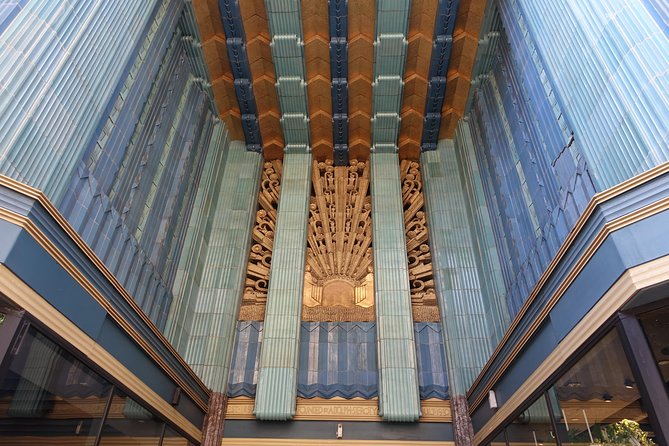
The tour starts at the Los Angeles Central Library on W 5th St. From the beginning, you’re set up to understand why this area became a “statement” part of the city. It’s a strong choice for a first stop because the building isn’t just pretty. It’s symbolic, and Phil helps you decode that symbolism in plain language.
The route then pushes you through nearby districts rather than scattering you across the map. That’s a big deal in DTLA, where driving can make you miss the best details at street level. The walk forces you to notice scale, materials, and small design cues you’d never catch from a car window.
A Stop-by-Stop Walk Through DTLA’s Architectural Styles
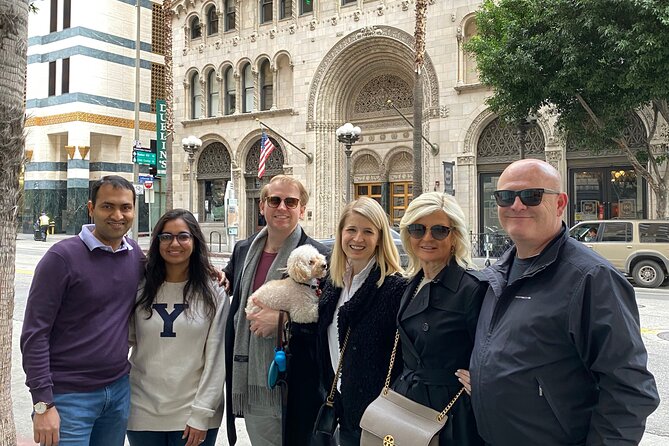
Below is what you’ll actually experience, and what to watch for at each stop.
Los Angeles Central Library: The Symbolic Opening Act
You’ll spend about 20 minutes here, and the ticket is free. This is the best place to start because Phil focuses on the building’s architectural symbolism, not just its surface look.
What you should pay attention to:
- How the design communicates importance and civic pride
- Any details that suggest LA’s aspirations when the city center was being shaped
- The way the library sets the tone for the rest of the walk
If you’ve never learned to “read” architecture, this stop gives you a simple method. It also helps that the tour doesn’t rush the library piece. Just note that if you prefer fewer longer pauses, this first stop may feel like a slow opener.
Fine Arts Building: Where Artists Once Had Real Space
Next you’ll see the Fine Arts Building for about 10 minutes. Again, the admission is listed as free. This stop matters because it represents LA’s earlier creative energy—the idea that the city wasn’t only about commerce, but also about making and living.
Why it’s a good mid-walk moment:
- It breaks the tour out of a purely “big landmark” rhythm
- It helps you understand the Fine Arts District’s roots
- It connects architecture to how people actually used spaces
Even if your main interest is building design, this is where the story gets human.
The Jewelry District: A District With Clout
You’ll spend around 5 minutes at the Jewelry District. No ticket is mentioned here, and it’s presented as America’s largest jewelry district.
This is the kind of stop that works even if you’re not a jewelry person, because it shifts your attention from style to function. The lesson: architecture in Downtown LA isn’t just decoration. It also reflects what the neighborhood produced and why it mattered.
Historic Theater District: The Southern Broadway Story
Your next stop covers the southern section of the Historic Broadway Theater District for about 25 minutes, with admission free.
If you want a clearer picture of why Downtown LA feels dramatic on foot, this is where it clicks. Phil’s commentary gives you the “why” behind the streetscapes—how the theater zone shaped entertainment life and architectural ambition.
What to watch for:
- The theatrical design cues that feel built for an audience
- How the streets and building facades create a sense of momentum
This is also one of the most memorable portions for first-time visitors because theaters are visual magnets. Here, you’re also learning what you’re looking at.
Eastern Columbia Lofts: Art Deco With Attitude
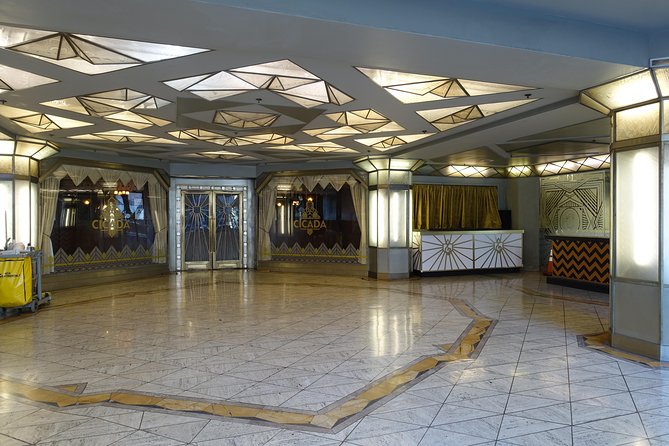
The stop at Eastern Columbia Lofts takes about 10 minutes, and admission is not included. The tour frames it as an Art Deco standout (the route calls it the Jewel of Art Deco).
Because admission isn’t included, expect this portion to focus on what you can see from the street:
- The geometry and styling that signal Art Deco
- Any repeating motifs you notice once Phil points them out
- The way the building’s design feels like it was meant to be viewed from the sidewalk
If Art Deco is on your “must see” list, this is one of the stops that makes the tour worth it by itself.
The NoMad Hotel: A Building With a Financial Past
You’ll spend about 10 minutes at the NoMad Hotel, where the tour notes it was the former home of the Bank of Italy Los Angeles. Admission isn’t included here as well.
This stop is a neat reminder that Downtown LA buildings often have layered identities:
- A structure may change purpose over time
- The architecture remains, carrying clues about its original role
- Phil’s context helps you notice the difference between old and repurposed
If you like “then and now” comparisons, this is where you’ll feel it most.
Oviatt Building: The Oldest Standing Art Deco Marker
Finally, you’ll reach the James Oviatt Building for about 10 minutes. It’s described as LA’s oldest standing Art Deco building. Admission is listed as not included.
This is a fitting finish. It’s close to your starting area too, since the tour ends at the Oviatt Building area and the guide can point you in the direction for the walk back (about 10 minutes).
What to watch for here:
- Why “oldest standing” matters for how you interpret the style in LA
- The design elements that persist as the city modernized around it
It’s the kind of end stop that makes the entire walk feel connected, rather than like random highlights.
The Architectural Style Mix Is the Real Teaching Tool
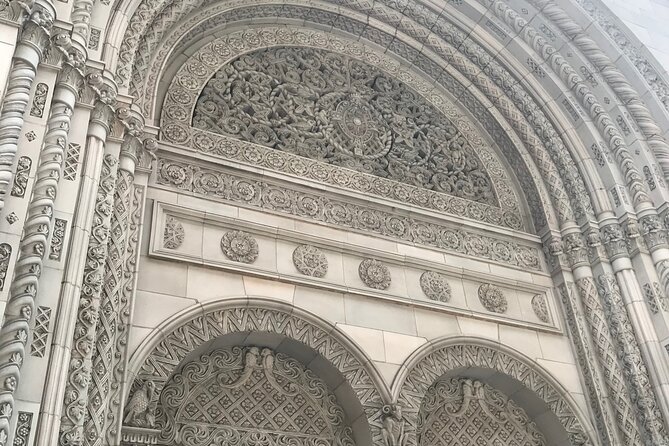
This tour is explicitly designed around different architectural styles, including Beaux Arts, Renaissance Revival, Art Deco, and modernism. The key benefit isn’t just that you’ll see variety. It’s that you’ll learn to notice transitions.
Here’s how that helps you as a visitor:
- When you spot a style shift, you start understanding the timeline of Downtown LA
- You can compare buildings without needing a textbook
- You’ll be more confident when you later see similar styles elsewhere in the city
Phil’s commentary seems to focus heavily on the differentiating details between styles, which is what makes the walk feel educational without turning into homework.
What the Guide Changes: Conversation, Not Script
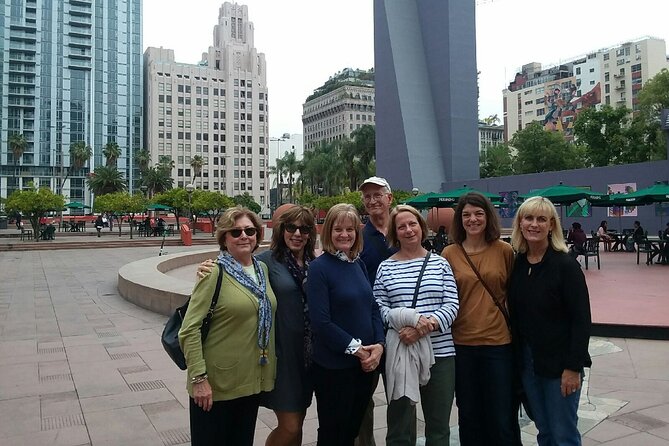
Multiple comments on this tour point to Phil’s delivery: well-spoken, structured, and able to answer questions. I like tours where the guide doesn’t sound like they read everything off a card. Here, the walk feels alive because you can ask stuff and get a response tied to what you’re seeing in front of you.
That also shows up in pacing. The tour covers a lot of ground in two hours, but it doesn’t feel chaotic. It feels planned.
The only caution I’d give is about stop balance. One critique you should take seriously: there can be more focus on some landmarks than others, and if you’re hoping to spend more time inside buildings, you might feel you only got the exterior version of the experience—especially around the stops where admission isn’t included.
Who This Tour Is Best For
This is a strong fit if you:
- Are first-time visitors who want a Downtown LA overview with real landmarks
- Like architecture but don’t want a slow, technical seminar
- Want an easy way to understand LA’s evolution through design
- Prefer walking to driving so you catch street-level details
It’s also a good choice if you’ve already done the standard tourist checklist. Downtown LA has more to say than most people expect, and this route targets that surprise.
Practical Tips to Get the Most Out of Your Walk
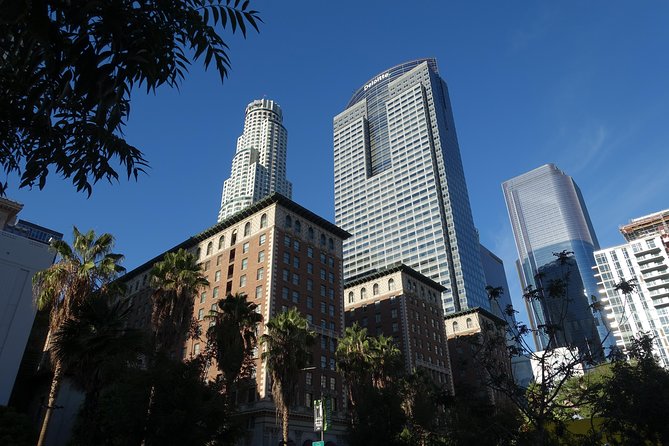
You’re on your feet for about two hours, and you’ll pause at multiple buildings. A few simple moves will help your experience feel smooth:
- Wear comfortable shoes. DTLA sidewalks can be long and sun-or-shadow dependent.
- Bring a water bottle. Even on mild days, two hours in the open adds up.
- Have your questions ready. Phil handles Q and A in a way that connects back to architecture and history.
- Look up often. This tour trains you to read facades, not just street signage.
Also, the tour requires good weather. If it gets canceled for weather, you’ll be offered a different date or a full refund.
Should You Book This Downtown Los Angeles Architecture Tour?
If you want a smart, guided way to learn Downtown LA architecture without spending the whole day in a museum, I’d book this. For $38, the combination of major landmarks, multiple styles, and Phil’s storytelling makes it feel like more than a checklist walk.
I’d especially recommend it if you’re the type who likes to understand what you’re looking at. The Central Library symbolism plus Art Deco highlights give you a framework you can use instantly as you keep exploring.
I would hold off only if you’re mainly seeking long interior visits. Since several major stops have admission not included, you should expect the emphasis to stay on exterior views and guided explanation.
FAQ
FAQ
How long is the Downtown Los Angeles Architecture Walking Tour?
It’s about 2 hours (approx.).
How much does the tour cost?
The price is $38.00 per person.
Where does the tour start and end?
It starts at Central Library, 630 W 5th St, Los Angeles, CA 90071. It ends at 617 S Olive St, Los Angeles, CA 90017, near the James Oviatt Building.
What time does the tour begin?
The start time is 10:30 am.
What architectural styles will I see during the walk?
The tour highlights Beaux Arts, Renaissance Revival, Art Deco, and modernism.
Is admission included for every stop?
Not all stops include admission. Stops like the Central Library and the Fine Arts Building list free admission tickets, while places such as Eastern Columbia Lofts, the NoMad Hotel, and the Oviatt Building state that admission is not included.
How big is the group?
The tour has a maximum of 20 travelers.
Does this tour require good weather?
Yes. It requires good weather, and if canceled due to poor weather, you’ll be offered a different date or a full refund.
Are service animals allowed?
Yes, service animals are allowed.