REVIEW · LOS ANGELES
LA’s Art Deco & Beaux Art Architecture: Private Walking Tour
Book on Viator →Operated by Travel Curious · Bookable on Viator
Art can be read in buildings. This private Los Angeles Art Deco & Beaux-Arts walk turns downtown landmarks into a clear timeline you can see, not just hear about, with a guide steering you block by block.
I especially like the pace and photo breaks. You’re given enough time at each stop to frame details (those towers, patterned facades, and the little flourishes you miss at street level) without feeling rushed.
One thing to plan for: the route is mostly on sidewalks, and while it’s wheelchair accessible, it still asks for a moderate walking level over about three hours.
In This Review
- Key things to know before you go
- Kicking off at Los Angeles City Hall, where film-fame meets design
- LA Courthouse area: Art Moderne contrast you’ll actually notice
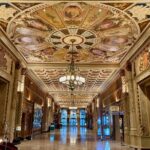
- Bradbury Building: Beaux-Arts grandeur inside a downtown time capsule
- Title Guarantee Building Apartments: the vertical punch of Art Deco
- Pershing Square and the 1925 Biltmore reference: why style didn’t stay put
- The CalEdison corner from 1931: marble details and the question of entry
- Los Angeles Central Library (1926): Art Deco kept alive by conservation
- Oviatt Building: Romanesque Revival roots, then an Art Deco makeover
- Ending at Eastern Columbia Lofts: clock tower drama and modern luxury
- What makes the tour feel worth $175
- Who this tour fits best (and who should consider alternatives)
- Photo and comfort tips to get more out of every stop
- Should you book this private architecture walk?
- FAQ
- How long is the Los Angeles Art Deco & Beaux-Arts private walking tour?
- How much does the tour cost?
- Where does the tour start and end?
- Do I need to buy admission tickets for the stops?
- Is the tour wheelchair accessible?
- Is this a private tour or a group tour?
Key things to know before you go
- Private group setup: your group walks together with your own guide, not a big cattle-car tour.
- Downtown navigation included: your guide handles the turns so you can focus on the buildings.
- Photo-friendly timing: each stop is long enough to actually look and photograph.
- Free access for the key stops: you don’t need paid tickets for the scheduled sights.
- Architecture details you can’t guess: you’ll learn what to look for and why it matters.
- A possible rooftop bonus: at least one past tour included a surprise rooftop viewing when it worked out.
Kicking off at Los Angeles City Hall, where film-fame meets design
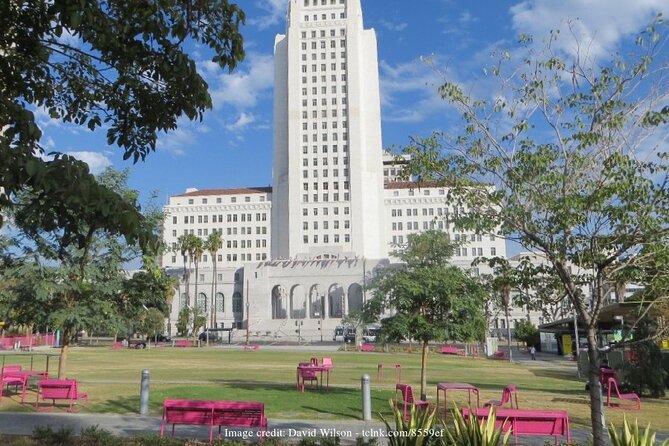
You start at Los Angeles City Hall at 200 N Spring St. It’s an instantly recognizable landmark, and it has been used in films many times because the building’s look is so distinctive. More importantly for you, it’s a strong starting point for learning how Los Angeles borrowed ideas from older grand styles and then reshaped them for the city’s own look.
A good architecture tour should help you see. Here, the guide sets the tone by pointing out what makes the complex feel eclectic, and then connects it to what came next. Even if you’re not an architecture nerd, you’ll catch the pattern: Los Angeles was learning how to look modern without losing the drama of classical form.
You’ll also get a quick transition toward the LA Courthouse area, described as an Art Moderne example. That’s a useful contrast because Art Moderne tends to feel smoother and more streamlined than earlier grand-statement styles. If you keep your eyes open, you start spotting the differences instead of just collecting names.
Practical tip: bring a phone tripod or at least use steady hands. City Hall details can look flatter on camera than they do in person, especially if the light is harsh. Early downtown light is your friend.
You can also read our reviews of more tours and experiences in Los Angeles.
LA Courthouse area: Art Moderne contrast you’ll actually notice
Right after the City Hall start, the tour heads toward the LA Courthouse, highlighted as an Art Moderne stop. This is one of those sections where the guide’s explanations help you see the design language fast.
What you’re looking for is the vibe shift. Art Moderne is often about clean lines and a sense of momentum. In a walking tour, that matters because your eyes need an easy mental handle: you’re not only learning one style, you’re learning how styles evolve.
This is also a practical pause. You’re moving through a compact downtown zone, and the tour keeps a rhythm that works well if you’re traveling with someone who enjoys photos but doesn’t want a long lecture. You’ll feel the architectural story speeding up as you go.
Bradbury Building: Beaux-Arts grandeur inside a downtown time capsule
Next comes the Bradbury Building, a landmark you’ll likely recognize from photos. It’s described as one of the oldest surviving Beau-Arts architecture buildings downtown, which makes it a key anchor stop for the whole theme.
This is where you get something beyond facades: the building’s interior character is part of why it’s famous. If you’ve ever wondered why some LA architecture looks cinematic, this is the answer. The proportions, the sense of vertical space, and the ornamental mood all contribute to that feeling.
At this stop, your guide’s job is to steer your attention. Instead of you wandering and hoping to find the interesting parts, you’ll get a directed look at the features that make the building feel so distinct. And with a set amount of time, you can linger at the spots that make you stop scrolling through your camera roll.
Downside to know: if you’re hoping for a long, slow museum-style visit, this stop is paced as part of a walking tour. The goal is to see what makes it important, not to spend hours.
Title Guarantee Building Apartments: the vertical punch of Art Deco
From Bradbury, you move toward the Title Guarantee Building Apartments, originally a former office building from 1930, now loft-style apartments. The highlight here is verticality, and that’s a big deal in Art Deco design.
In plain terms: Art Deco loves height. It often builds drama through stacked setbacks, strong vertical lines, and a facade that feels like it’s climbing. Even if you only have a short window, you’ll learn how to spot that vertical strategy.
This is also one of the best stops for photography if you like architectural geometry. Square corners, crisp linework, and the way the building steps upward can make photos look much more architectural than typical street scenes.
Small caution: since it’s now apartments, the street-level experience may feel different than a purely public building. You’ll still get your viewing time; just set expectations that the vibe is urban and residential.
Pershing Square and the 1925 Biltmore reference: why style didn’t stay put
Next you explore Pershing Square, where your guide ties earlier influences into what led to later Art Deco and Beaux-Arts trends. This stop is useful because it teaches you the time connection: styles didn’t appear out of nowhere. People borrowed, adapted, and updated.
A specific example mentioned is the 1925 Biltmore hotel as a Beaux-Arts reference. That matters because once you learn what a style typically looks like in a major landmark, you start recognizing it elsewhere—even when it’s been altered or repurposed.
Pershing Square is also a practical break in the walk. It’s open enough to reposition, regroup, and take pictures from a few angles. If you’re traveling with family or someone who gets bored by buildings that look similar, this kind of interpretive stop helps keep attention.
The CalEdison corner from 1931: marble details and the question of entry
Now you’ll head to the CalEdison building from 1931 at a prominent corner. This stop is built around a very specific promise: you might be able to enter, where you could see spectacular marble types on the floor and columns.
That’s the kind of detail that can turn a good architecture tour into a memorable one. Marble isn’t just decoration—it’s a clue. It signals the importance of the institution housed there and the intention to project permanence, craftsmanship, and prestige.
Even if entry isn’t possible on your date, you still benefit from learning where to look outside: corners, column rhythm, and how the building’s materials contribute to the overall look. Architecture tourism works best when you learn to “read” the building even without going inside.
Practical note: because the possibility of entry is mentioned as conditional, don’t build your whole trip around it. Build on the fact that the architecture details themselves are the main event.
Los Angeles Central Library (1926): Art Deco kept alive by conservation
The tour then reaches the Los Angeles Central Library, dated to 1926 and described as an example of early Art Deco. What makes this stop extra meaningful is that it was saved from demolition in 1978 by the Los Angeles Conservatory.
That’s a powerful lesson for you as a traveler: not every great building survives because it’s famous. Sometimes it survives because people fought for it. Knowing the library’s rescue history makes the architecture feel more grounded—less like a pretty facade and more like a civic victory.
In a walking tour format, you’re not getting a full library visit, but you’re getting something just as valuable: the context. You’ll see how early Art Deco in LA carries both optimism and restraint, and why the library’s design fits the city’s identity at the time.
Also, this is a great stop for photos that show the building’s scale. Libraries and major public institutions often photograph better than smaller storefront architecture because you can capture their proportion in one frame.
Oviatt Building: Romanesque Revival roots, then an Art Deco makeover
Next is the Oviatt Building, and it’s one of the more interesting style-mixing examples on the route. The description includes parts built in Romanesque Revival style, with changes to resemble Art Deco after the owner visited the Paris exposition in 1925.
This is the kind of backstory you’ll appreciate because it explains why some buildings look like they have multiple personalities. The Paris exposition reference gives you a clear idea of what kind of influence was landing in LA at that time—and why.
The Oviatt area also includes a pass-by of the PacMutual building from 1908, described as resembling a Greek temple, then remodeled in the 1930s to give it an Art Deco look. So you get a compare-and-contrast moment without needing to travel far.
If you want a quick test of whether you’re enjoying the tour, this is it: by now you should be spotting the differences on your own. When the guide points out a stylistic shift, it should start to feel obvious rather than abstract.
Ending at Eastern Columbia Lofts: clock tower drama and modern luxury
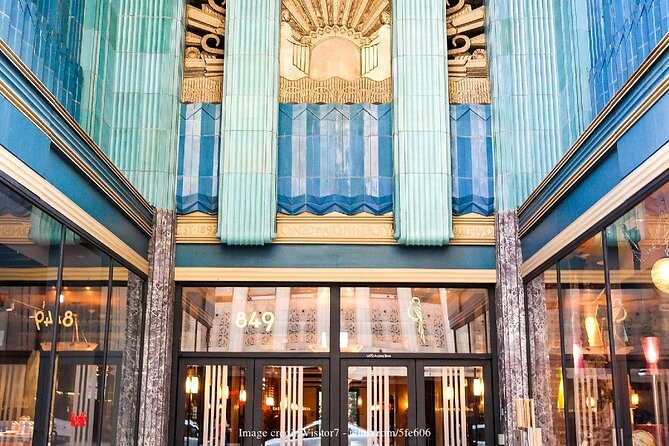
The tour finishes at the Eastern Columbia Lofts at 849 S Broadway. This is a strong finish because it’s spectacular and instantly identifiable, with an iconic clock tower and greenish terra cotta.
The building is described as originally built as a department store, now used as luxury condominiums, with mention that one property is still owned by Johnny Depp. Even if celebrity ownership isn’t your thing, the important takeaway is how the building’s original grandeur has been repurposed rather than erased.
For your photos, this ending stop is built to deliver. The clock tower gives you a vertical anchor, and the terra cotta color makes the exterior pop against downtown streets. Plus, your guide will help you with advice for how to get from the finish point to your next stop, which is a big practical win at the end of a walking tour.
What makes the tour feel worth $175
At $175 per person for about three hours, value depends on what you care about. If you’re the type who enjoys architecture details—molds, materials, and how styles connect over time—you’ll likely feel the price makes sense because the guide’s job is interpretive, not just logistical.
A few elements tilt the value toward you:
- Private group setup means you’re not squeezed into a mass experience.
- Free scheduled access at each stop means you’re not paying extra just to see the architecture.
- Time for photos helps you convert the experience into memories, not just quick looks.
- Navigation matters downtown; having the guide handle turns saves mental energy.
One more point: the tour is offered in English, and it uses a mobile ticket. That’s a small thing, but it’s the kind of small thing that reduces stress.
If you’re deciding whether to book, think of it like this: you’re paying for a walking guide who turns buildings into a readable story, while also protecting your time so you don’t lose it hunting for the next spot.
Who this tour fits best (and who should consider alternatives)
This tour is a great match if:
- You want a downtown architecture-focused LA experience.
- You enjoy photographing buildings and want help knowing what to look for.
- You like walking tours that include clear stops and built-in breaks.
It may be less ideal if:
- You hate walking for long stretches, even if accessibility is supported.
- You’re expecting a slow-paced interior museum style. This is structured for the outdoor-to-interior rhythm of a walking route.
One of the best signals of fit is the kind of reaction architecture-friendly people tend to have. In past experiences, this tour has worked especially well for people who are intrigued by design details, including younger visitors.
Photo and comfort tips to get more out of every stop
You’ll get the most out of the tour if you prepare for downtown realities:
- Wear shoes you trust on sidewalks and crossings.
- Bring water if it’s warm; the plan assumes time on the street.
- For photos, aim for both wide shots (to capture scale) and detail shots (to capture style).
- Keep your camera ready at corners—many of these buildings reveal their best lines when you turn a street bend.
And here’s a small pro move: at each stop, take one photo from far back first. Then move closer for details. You’ll end up with a set that shows both context and craftsmanship.
Should you book this private architecture walk?
I’d book it if your goal is to understand downtown LA through Art Deco and Beaux-Arts architecture without wandering aimlessly. The structure is built for you to see multiple design eras in one focused afternoon, with free sight access and enough time to photograph what you love.
Skip it or consider a different format only if you want a deep museum-length experience or you prefer very light walking. Otherwise, this is the kind of tour where the guide turns the city into a map you can actually read.
If you’re excited by towers, columns, and style changes you can spot with your own eyes, this one is a strong match. And if you happen to get a guide like Sam, you’ll likely appreciate the way the story clicks into place building by building—sometimes with a surprise bonus like a rooftop viewing when conditions allow.
FAQ
How long is the Los Angeles Art Deco & Beaux-Arts private walking tour?
It’s about 3 hours total.
How much does the tour cost?
The price is $175.00 per person.
Where does the tour start and end?
It starts at Los Angeles City Hall, 200 N Spring St, Los Angeles, CA 90012, and ends at Eastern Columbia Lofts, 849 S Broadway, Los Angeles, CA 90014.
Do I need to buy admission tickets for the stops?
No. The tour states that tickets are not required and that admissions for the listed stops are free.
Is the tour wheelchair accessible?
Yes, it is wheelchair accessible, and it’s near public transportation.
Is this a private tour or a group tour?
It’s private. Only your group participates. Your tour includes a friendly, professional guide for your own group.