Paris hides its best buildings in plain sight. This Le Marais walking tour follows Place des Vosges and legendary private mansions like Hôtel Lamoignon, turning a neighborhood stroll into an 8-century architecture lesson. I like the way the route blends big-name icons with lesser-seen medieval streetscapes. One caution: there’s at least one report of a guide no-show, so you should be ready to contact the operator if plans feel shaky.
You’ll get an expert English guide, Louis Capion, with stories designed to help you read Parisian facades instead of just staring at them. Expect a 150-minute walk paced for seeing, not racing, with stops that connect politics, wealth, and culture to the way buildings look.
If you want an easy “see it, move on” tour, this is not it. You’ll walk, you’ll look closely, and you’ll come away noticing details you’d otherwise miss.
In This Review
- Key points worth your attention
- Le Marais on foot: what makes this architecture tour different
- Price and timing: is $41 for 150 minutes a good value?
- Meeting point at Saint-Paul metro: how to avoid the stress
- From Rue Saint-Antoine toward Hôtel Lamoignon: learning to read status in stone
- Hôtel des archevêques de Sens: the medieval layer you might miss
- Hôtel Carnavalet: where the neighborhood’s stories start to feel personal
- Place des Vosges: the square that anchors the whole walk
- Paroisse Saint-Paul Saint-Louis: faith and neighborhood identity in one stop
- Wrap-up back at Place des Vosges: how to use your last 15 minutes
- The guide matters: what to expect from Louis Capion
- Should you book this Le Marais architecture walk?
- FAQ
- FAQ
- Where is the meeting point?
- What time should I arrive?
- How long is the tour?
- What is the price per person?
- What language is the tour guide speaking?
- Which major stops should I expect?
- Where does the tour start and where does it end?
- Is the tour refundable if plans change?
- Can I reserve without paying right away?
- Is this tour suitable for wheelchair users?
- Is the guide experienced and engaging?
Key points worth your attention
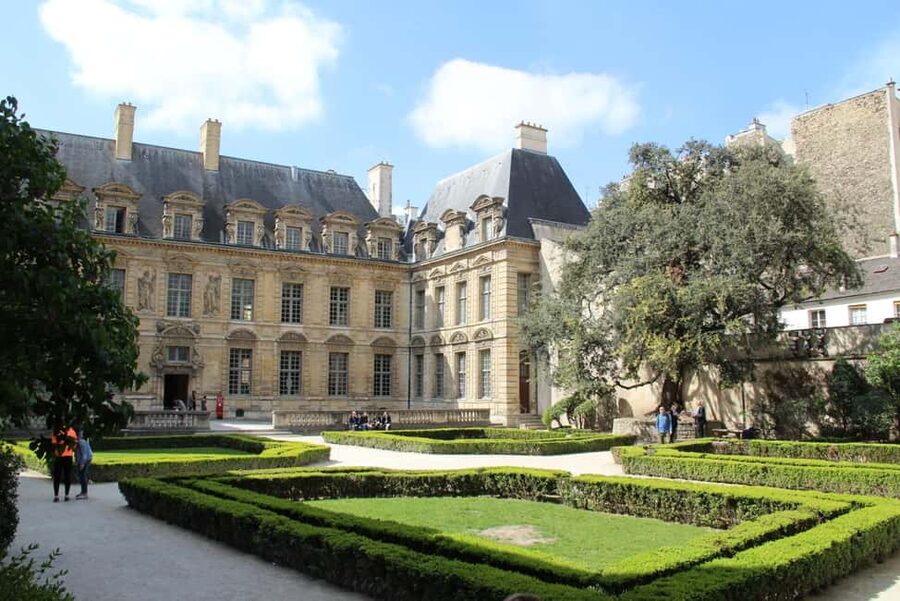
- Place des Vosges: Paris’s 2nd oldest square is your anchor stop and rest break
- Private mansions (hôtels particuliers): you’ll learn how elite homes shaped the neighborhood’s streets
- Hôtel Lamoignon: a standout early example you can recognize by style and status
- Hôtel des archevêques de Sens: a medieval building you might walk past without noticing
- Louis Capion’s delivery: multiple reviews highlight humor, passion, and a guide who connects history to what you’re seeing
- One real-world risk: a reported instance where the guide didn’t arrive (always keep a backup plan)
Le Marais on foot: what makes this architecture tour different
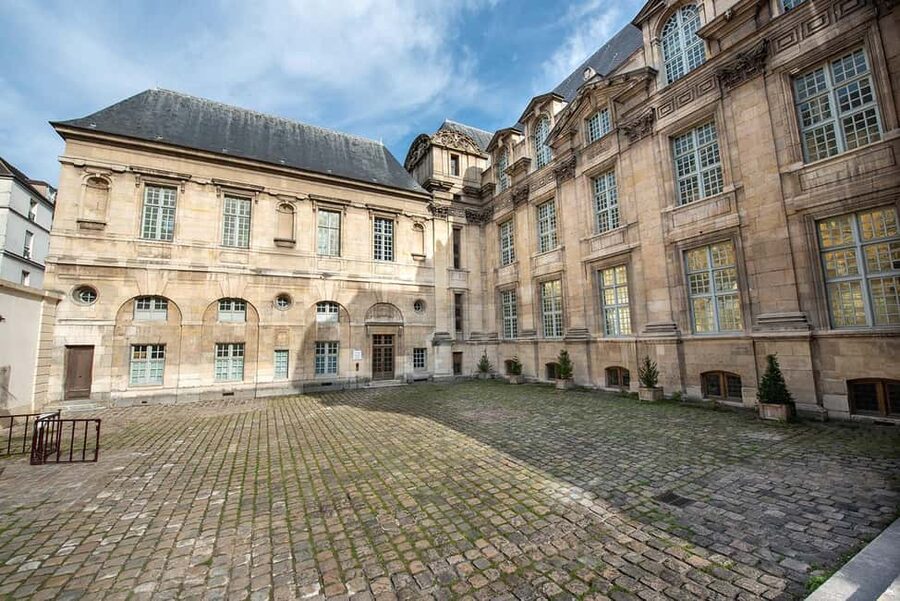
Le Marais is one of those parts of Paris where the street plan already tells a story. This tour makes you slow down just enough to notice how power and money changed what people built—and where they built it.
I especially like the focus on hôtels particuliers, the private mansions that used to belong to wealthy families. Museums are great, but these homes sit right on the streets where daily life happens. That makes the architecture feel less like “art on a wall” and more like a living record of how Paris evolved.
The itinerary also treats time as a physical thing. You start in a medieval mood, move through Renaissance-era grandeur, and land in the more polished aristocratic look you associate with later Paris. It’s the kind of route that helps you understand why Le Marais became the place it is today, not just where to take photos.
You can also read our reviews of more tours and experiences in Paris.


Price and timing: is $41 for 150 minutes a good value?
At $41 per person for 150 minutes, this tour sits in a sensible mid-range for a guided walking experience. The value isn’t just that you’re paying for a guide—it’s that you’re getting a guided way to interpret architecture that would otherwise take years to understand on your own.
This is also a practical length. Two and a half hours is long enough to include meaningful stops—think Place des Vosges plus major hôtel architecture—without turning into an all-day endurance test. Still, you should plan for steady walking and standing around to look closely at buildings.
One more value point: the tour isn’t “only look at famous squares.” It also includes Hôtel Carnavalet and religious architecture like Paroisse Saint-Paul Saint-Louis, so your brain gets a few different angles on neighborhood identity instead of one single architectural style.
Meeting point at Saint-Paul metro: how to avoid the stress
Meet outside Saint-Paul (line 1) metro station, and there’s only one exit. Arrive about 10 minutes early so you can find your guide without panic.
This matters because walking tours depend on timing. If you show up at the last second, you might miss the group and end up trying to catch up in streets that can feel confusing fast.
If you’re using transit, line 1 is the simplest way in. From there, your “job” is easy: find the correct station exit, look for the tour group, and get moving. After that, the tour’s structure does the rest.
From Rue Saint-Antoine toward Hôtel Lamoignon: learning to read status in stone
The walk begins on Rue Saint-Antoine, and that makes sense. This street is a good starting line because it pulls you into the older structure of the neighborhood before you hit the most iconic places.
Early on, you’re set up to notice a key theme: in Le Marais, the buildings often show the social ladder. Hôtels particuliers were private residences with a clear message—who lived there, how wealthy they were, and how seriously they took their public image.
You’ll spend time focused on Hôtel Lamoignon, one of the oldest hôtel particuliers highlighted in the tour. Even if you don’t know the technical terms, you can still learn what to look for. Instead of only admiring decoration, you’ll be guided to see how design choices signal power: proportions, façade presence, and the overall “arrival” feeling of the property.
Practical tip: when you stop, don’t just look straight ahead. Look slightly up and then step to the side. That’s where façade logic becomes obvious, and it’s exactly the kind of thing a guide can point out quickly.
Hôtel des archevêques de Sens: the medieval layer you might miss
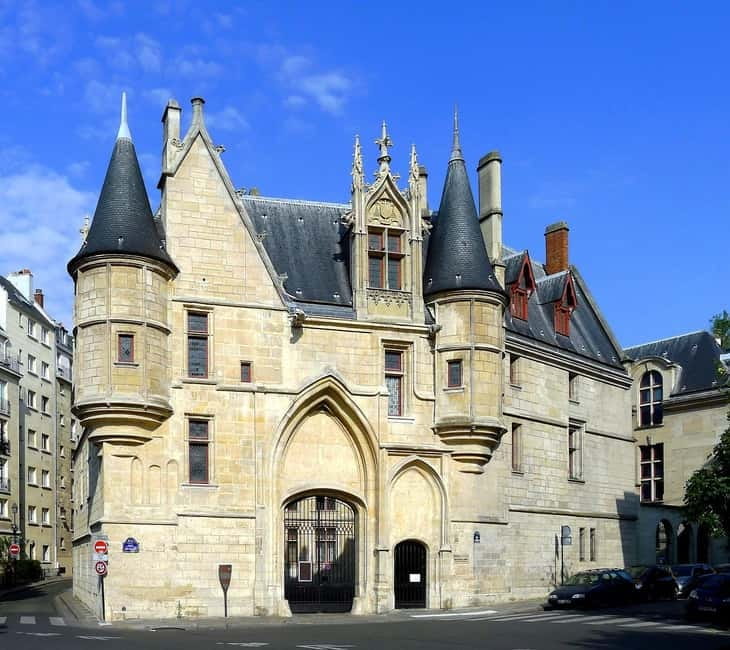
One of the best surprises here is the stop for the Hôtel des archevêques de Sens. Medieval Paris doesn’t always announce itself loudly on street level, which is why a guided approach matters. You can easily walk past a building and never realize it holds centuries older traces.
This is where the “8 centuries” idea becomes real. The guide’s job is to connect form with time: how a medieval structure reads differently from Renaissance or later aristocratic design, even when you’re not an architecture student.
If you’re the type who likes making sense of what you’re seeing, this portion is a win. You’ll learn what to compare—how windows, entries, and massing can change as styles and power structures shift over time.
Also, these stops work well for photos, but don’t treat them like a quick snapshot mission. Give yourself a minute or two to understand the building before you try to frame it.



Hôtel Carnavalet: where the neighborhood’s stories start to feel personal
The tour includes Hôtel Carnavalet, and this is a smart pivot. After focusing on private mansions and medieval streets, a museum-house setting brings the stories into sharper focus.
Even if you only get a short stop, you’re still likely to catch the idea behind the building: this is the kind of place Paris uses to preserve memories of people and events connected to the city. It also helps you connect architecture to “who lived here” rather than only “what the style is.”
Why this stop matters for value: it keeps the tour from becoming purely visual. Your guide can connect what you see outside to what the neighborhood became as time passed—how Paris grew into a cultural center, and why Le Marais stayed important rather than fading into history.
One possible drawback to keep in mind: museum-adjacent stops can feel more “structured” than street-facing ones. If you prefer purely outdoor looking, focus on the parts you can scan quickly and move on with the group.
Place des Vosges: the square that anchors the whole walk
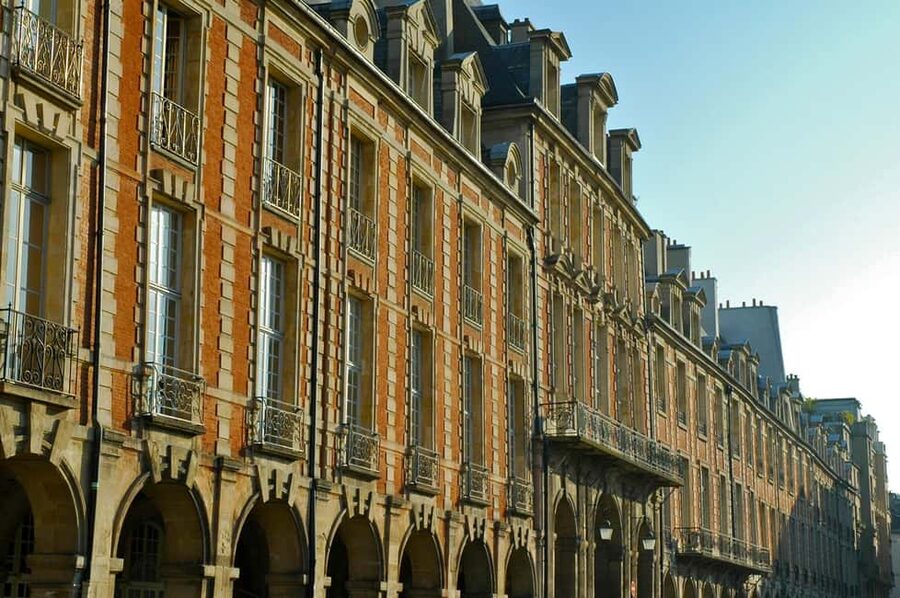
Place des Vosges is the centerpiece, and the tour treats it correctly: you’ll see it in the middle, and you’ll return to it at the end. It’s also highlighted as the 2nd oldest square in the city, which gives your pause time a purpose.
This is the moment to regroup. It’s a wide open public space where you can reset your feet and let your brain connect the dots from earlier stops. After hearing about hôtels particuliers and medieval layers, the square helps you understand how Paris made ordered public spaces out of older neighborhood fabric.
I also like that the tour uses the square as a reference point. If you’re visually oriented, having a consistent backdrop makes the surrounding architecture easier to classify in your mind.
Practical tip: take a few minutes to orient yourself to the square’s geometry. Once you see the layout clearly, many surrounding buildings start to “fit” into the same mental map, which makes the rest of the tour feel less scattered.
Paroisse Saint-Paul Saint-Louis: faith and neighborhood identity in one stop
The tour also includes Paroisse Saint-Paul Saint-Louis, another stop that broadens the range beyond elite residences and civic squares. Religious architecture changes the vibe of a neighborhood for centuries, even when the surrounding streets evolve.
This stop helps you understand Le Marais as a community space, not only a wealthy address. While hôtels particuliers reflected social power and private wealth, a parish church reflects public life—belief, gatherings, and identity.
The time you spend here (around a 20-minute block on the route structure) is long enough to notice details like shape and materials, but short enough that you won’t feel stuck.
If you’re traveling with kids, this sort of stop can be a good breath. One of the positive reviews specifically notes that the tour was kid-friendly, helped by a guide who makes history feel like a story instead of a lecture.
Wrap-up back at Place des Vosges: how to use your last 15 minutes
Finishing near Place des Vosges is a smart design choice because you end somewhere easy to navigate. From there, you can keep exploring Le Marais without having to re-plan your entire day around where the tour ended.
Use this time to do two things:
- Re-check anything you found confusing earlier (a façade detail, a building name, a street line)
- Decide what style of souvenir you want—photos, prints, or something small from nearby shops
If you still have energy, you can also use the square as a pivot point to branch into neighboring streets on your own. That’s where the real benefit of a guided architecture walk shows up: you stop guessing and start recognizing patterns.
The guide matters: what to expect from Louis Capion
The experience is led by Louis Capion, and that name shows up in positive feedback for a reason. Reviews highlight that he’s friendly, humorous, and able to connect details to the bigger picture.
That style isn’t just entertaining. Humor and storytelling make architecture easier to remember. When you hear why a building changed or what a family’s status meant, the facade stops being random decoration and becomes evidence.
One caution: there’s also a serious negative report about a guide not turning up. That’s rare, but it’s real enough that you should treat your arrival timing seriously and keep the operator’s contact info handy if something feels off.
Should you book this Le Marais architecture walk?
Book it if you want to walk through Paris and come away with clear architecture takeaways—Place des Vosges, older hôtels particuliers like Hôtel Lamoignon, and the medieval presence of Hôtel des archevêques de Sens. The structure also includes Hôtel Carnavalet and Paroisse Saint-Paul Saint-Louis, so you get a broader sense of what shaped Le Marais over time.
Skip it (or at least reconsider) if you hate walking for 150 minutes or you’re expecting a purely relaxed sightseeing loop with minimal standing around. Also, if you rely on accessibility needs, pay attention: the activity is listed as wheelchair accessible, but it’s also marked not suitable for wheelchair users. If that affects you, confirm details directly with the provider before committing.
FAQ
FAQ
Where is the meeting point?
Meet outside Saint-Paul (line 1) metro station. There is only one exit.
What time should I arrive?
Arrive 10 minutes before the tour time.
How long is the tour?
The duration is 150 minutes.
What is the price per person?
The price is $41 per person.
What language is the tour guide speaking?
The tour is in English.
Which major stops should I expect?
You’ll visit Place des Vosges, Hôtel Carnavalet, and Paroisse Saint-Paul Saint-Louis, and you’ll also see architectural highlights including Hôtel Lamoignon and Hôtel des archevêques de Sens.
Where does the tour start and where does it end?
It starts around Rue Saint-Antoine and finishes at Place des Vosges.
Is the tour refundable if plans change?
Yes. You can cancel up to 24 hours in advance for a full refund.
Can I reserve without paying right away?
Yes. The option is reserve now and pay later.
Is this tour suitable for wheelchair users?
The information provided includes both that it’s wheelchair accessible and that it is not suitable for wheelchair users. If you need accessibility support, it’s best to verify the exact suitability with the provider before booking.
Is the guide experienced and engaging?
The reviews provided highlight a guide, Louis Capion, who shares details with passion and humor, and one review specifically mentions it being kid-friendly.