REVIEW · BUDAPEST
Budapest Art Nouveau Walking Tour
Book on Viator →Operated by Insight Cities · Bookable on Viator
Budapest has a habit of looking like it is wearing jewelry. This Art Nouveau walking tour takes you from grand facades to details you’d miss on your own, with a historian guide calling out what makes the style so Hungarian. I especially like the mix of famous names and specific design clues—think Ödön Lechner and the way ceramic makers like Zsolnay influenced the look. One thing to consider: you’ll do a moderate walk for about 3 hours, so wear comfortable shoes and give yourself a few extra minutes at the start because the meeting spot can be busy.
What really makes this tour work is how it turns architecture into a story you can see, step by step. You’ll spend time at the Gresham Palace and the flashy Royal Postal Savings Bank, then move on to tile-heavy design and end at the Kazinczy Street Synagogue for an exterior and, on most days, an interior visit too. The possible drawback is timing around the synagogue: interior access is not available on Saturdays.
In This Review
- Key Highlights You’ll Actually Care About
- Art Nouveau in Budapest: What You’re Looking For
- Price and Time: 3 Hours With a Historian Guide
- Getting to Madal Café and Avoiding a Start-Line Mix-Up
- Stop 1: Gresham Palace Facades and Inside the Luxury Story
- Stop 2: The Royal Postal Savings Bank and Lechner’s Flourish
- Stop 3: Thonet House and the Tile Story Hungary Became Famous For
- Stop 4: Kazinczy Street Synagogue—Exterior Art Nouveau, Possible Interior Visit
- How Much Public Transport Will You Use?
- Small Group Size: Easier Questions and Less Waiting
- The Guide Factor: Historian-Style Storytelling
- What I’d Pack and Wear for This 3-Hour Walk
- Who This Tour Suits Best
- Final Call: Should You Book This Budapest Art Nouveau Tour?
- FAQ
- How long is the Budapest Art Nouveau Walking Tour?
- What is the tour price?
- Is the tour offered in English?
- Does the tour include public transport?
- Are tickets included for the stops?
- Can I visit the inside of Kazinczy Street Synagogue?
- Where do I meet and where does the tour end?
Key Highlights You’ll Actually Care About
- Historian guide-led walk that focuses on readable design details, not just big landmarks
- Ödön Lechner spotlight, including his Royal Postal Savings Bank connection
- Zsolnay porcelain and ceramics influence, tied directly to the tile style you’ll see
- Small group size for easier questions (capped small, up to eight people)
- Mostly free admissions at key stops, with the synagogue interior being the main exception
Art Nouveau in Budapest: What You’re Looking For
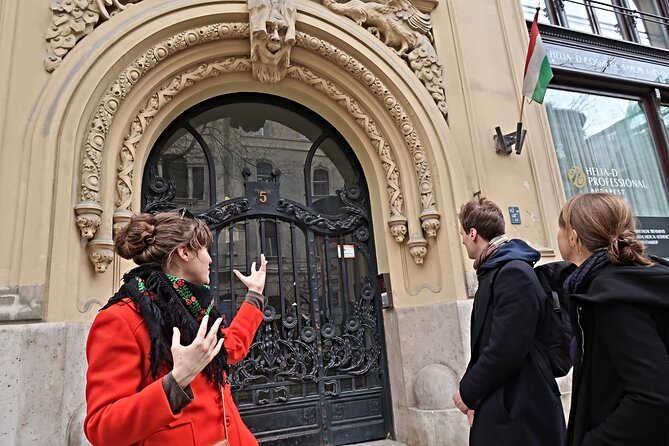
Art Nouveau is usually treated like a single style, but Budapest’s version feels personal and local. The big idea on this tour is that the movement didn’t just decorate buildings—it helped shape how the city wanted to look and be remembered. And once you know what to watch for, the streets start turning into a visual map.
You’ll learn what defines Hungarian Art Nouveau: the parts that repeat (floral and ornamental motifs), the way entrances and facades are composed (not just flat walls), and the design choices that make some buildings feel theatrical. That matters for you because it changes how you walk through a city. Instead of trying to memorize names, you start noticing patterns—tiles, curves, and carved-looking surfaces—even when you’re just passing by.
A second reason this style-focused approach is valuable: Budapest is full of architectural layers. This tour gives you a framework for sorting them out fast. After a few stops, you’ll be able to say, Oh, this is the Art Nouveau moment, and that is something else.
You can also read our reviews of more tours and experiences in Budapest.


Price and Time: 3 Hours With a Historian Guide
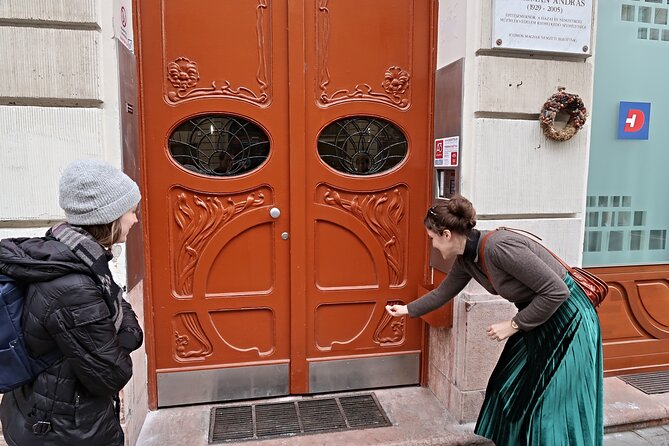
At $126.16 per person for about 3 hours, this is not a budget-only activity. But it can be good value if you want interpretation rather than just photographs of pretty buildings.
Here’s why the price can make sense:
- You’re paying for a guide with a historian perspective, and the tour is built around explaining design choices you can’t easily decode alone.
- Several stops come with free admission tickets (at least for the listed visits), so you’re not paying again just to get inside.
- The group size is kept small enough that you can ask questions and keep up, instead of being squeezed into a large crowd.
Time-wise, the schedule is built in short chunks—mostly about 20 minutes per stop, then a final 25 minutes at the synagogue. You won’t be dragging yourself through long stretches of “stand and listen.” You’ll pause, look closely, then move on.
Getting to Madal Café and Avoiding a Start-Line Mix-Up
The tour begins at Madal Café, Alkotmány u. 4, 1054, and ends at the Orthodox Synagogue on Kazinczy u. 29–31, 1075.
The practical tip that will save you stress: show up a few minutes early. One past issue is that the meeting area can be busy enough that it’s easy to miss each other. If you arrive early, you can spot where the guide is grouping people and get settled without rushing. This also helps because the tour runs best when you’re not trying to locate the group while the rest of the walk is already starting.
Stop 1: Gresham Palace Facades and Inside the Luxury Story
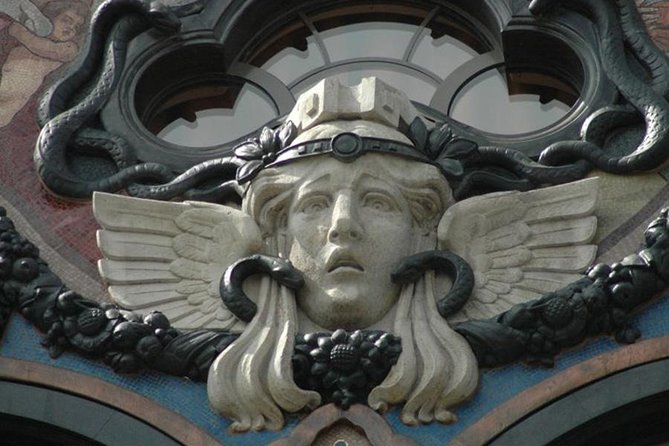
The first stop is Gresham Palace, and you’ll spend around 20 minutes here. It’s described as Budapest’s most luxurious hotel now—but the point of the visit is how the building used to function and what the design communicates.
Why this stop is worth your attention:
- The facade is meant to impress. It’s a strong opening because Art Nouveau isn’t subtle everywhere—it’s confident.
- The tour also includes attention to interior design, which is helpful because Art Nouveau often shows up most clearly where you can’t just glance while walking.
- Even if you only get a short visit, it sets the theme: these buildings were designed to signal status and identity, not just shelter.
If you’re the kind of traveler who enjoys architecture as a cultural clue, Gresham Palace is a smart first anchor. It teaches you how to start noticing the style’s fingerprints before you move deeper into the more famous Art Nouveau names.
Stop 2: The Royal Postal Savings Bank and Lechner’s Flourish
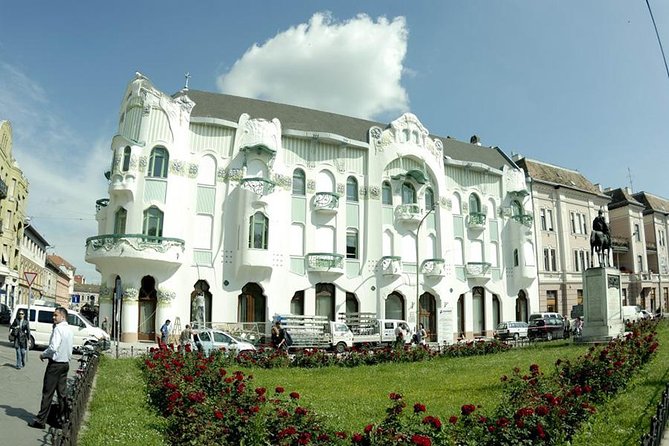
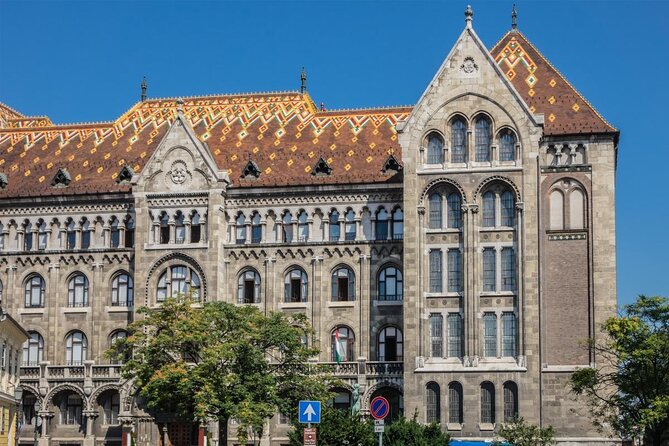
Next you’ll go to the Postatakarek Bank, also known as the Royal Postal Savings Bank. This is a highlight stop because it’s tied to Ödön Lechner, the Hungary architect featured throughout the tour.
The bank is famous here for being flamboyant, and the tour focuses on the entrance hall interior design elements. You’ll learn how Lechner helped define Hungarian Art Nouveau, and why his work is often described with comparisons like Gaudí of Hungary (a nickname you’ll hear for a reason).
What to watch for during your time there:
- Look at how the entrance transitions from outside to inside. Art Nouveau loves this threshold moment.
- Pay attention to decoration that feels designed rather than applied. In other words, it’s not just paint or ornaments—it’s part of how the space is composed.
This stop is also a good “aha” for first-timers. You’ll see how a building’s role—here, a major financial institution—doesn’t have to kill the creative spirit. The style gives the bank a personality.
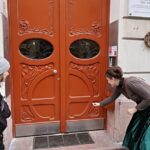
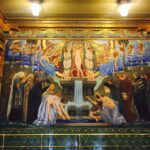
Stop 3: Thonet House and the Tile Story Hungary Became Famous For
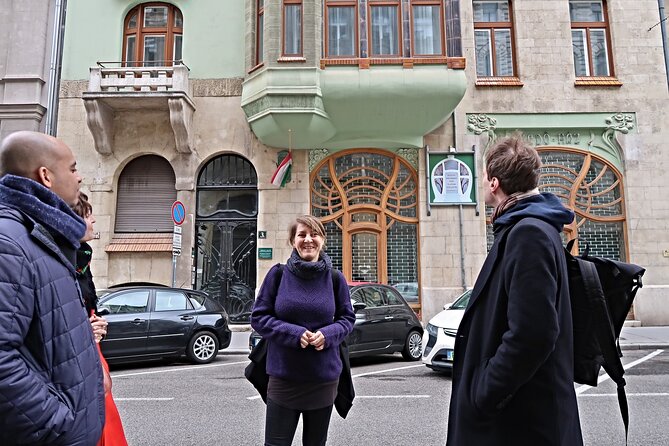
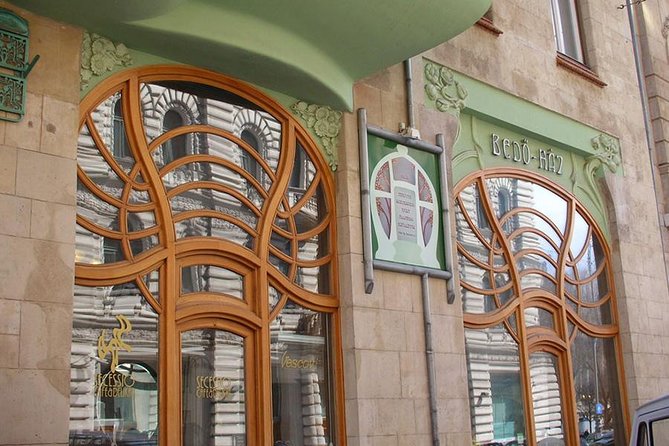
At Thonet House, the tour pauses for about 20 minutes and points you toward one of the most recognizable Hungarian Art Nouveau features: the use of tiles on facades.
Tiles matter because they’re practical and decorative at the same time. They can be detailed, repeatable, and durable—great for a city where weather and time will test building surfaces. And the tour links this look to Zsolnay’s role in porcelain and ceramics coming out of Pécs.
This stop gives you a useful lens. Instead of thinking of Art Nouveau as only line drawings and curved ironwork, you see it as materials and manufacturing. That’s a detail you’ll carry with you when you walk around Budapest after the tour, because you’ll start identifying buildings by surface texture and tile patterns—not just shape.
If you like small, specific design explanations, this is one of the most rewarding stops. It turns a pretty facade into something you can interpret.
Stop 4: Kazinczy Street Synagogue—Exterior Art Nouveau, Possible Interior Visit
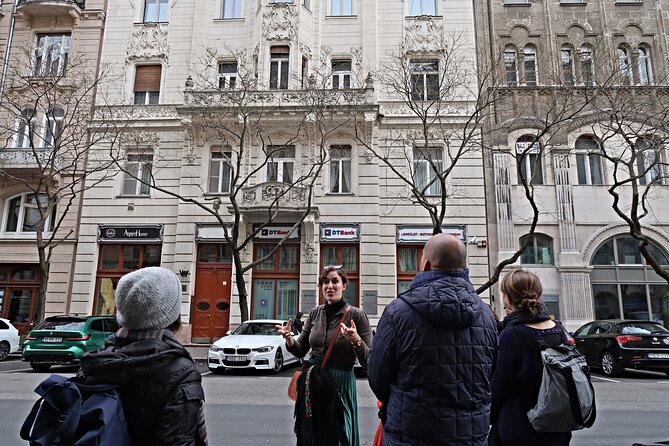
The final stop is the Kazinczy Street Synagogue on Kazinczy u. 29–31. You’ll end there for about 25 minutes.
Two important notes:
- The synagogue is decorated in Art Nouveau style, so it continues the theme with a different kind of building.
- Interior access depends on the day. You can visit the interior except on Saturdays. The synagogue admission is not included.
Why the synagogue can be a strong way to end the tour:
- It’s a change of pace from hotel and bank architecture, so you see Art Nouveau reaching into everyday civic and religious life.
- It also gives you a cultural context for why the style mattered. The look wasn’t only for elites. It showed up in public-facing spaces.
If you’re booking for a Saturday, keep your expectations aligned: you’ll still see the Art Nouveau connection, but you might only get the exterior. Either way, it’s a meaningful finish line.
How Much Public Transport Will You Use?
This tour includes some public transport, but passes are at your own expense. The tour also notes you’ll be near public transportation.
So how should you plan?
- Bring a transit plan you can adapt quickly—this tour isn’t purely a long walk through one neighborhood.
- If you’re trying to keep costs predictable, budget a little for a transport pass since it isn’t included.
This mixed approach is a plus for most people. You’ll cover more ground without turning the day into a marathon, while still spending enough time at each stop to actually look.
Small Group Size: Easier Questions and Less Waiting
The experience is built for a small group feel, with the maximum group size listed as eight (and the tour style described as limited to a maximum of six). Either way, it’s not a giant bus group.
For you, the practical benefit is simple: you can follow along and ask the guide about what you’re seeing without shouting. That also helps the tour feel more personal, because the guide can react to your interests—whether you want more about Lechner or more about those tile materials.
The Guide Factor: Historian-Style Storytelling
This tour is led by a historian guide, and the standout pattern here is how much clarity the guide brings. The architecture isn’t presented as random trivia. It’s explained as a set of choices—style, materials, and function—connected across multiple stops.
One bonus: the guide’s approach is flexible. If you want to focus your attention on what’s most interesting to you, this is the kind of walk where a good guide can steer the conversation while keeping the route moving.
That’s also why the tour works if you’re new to Art Nouveau. You don’t need to already know the terms. The tour gives you the visual vocabulary while you’re looking at the buildings themselves.
What I’d Pack and Wear for This 3-Hour Walk
This is a moderate walking tour, so set yourself up for comfort.
- Wear comfortable shoes. You’ll be on your feet long enough that blisters become a buzzkill.
- Dress for the weather and bring a layer if you tend to get cold on shaded streets.
- If you’re hoping to photograph details, also bring your phone fully charged and consider stepping back before shots so you don’t block others.
If you do these small things, you’ll get more from each stop, especially the tile and entrance-hall moments where you’ll want a steady look.
Who This Tour Suits Best
This is a great fit if:
- You love architecture and want more than postcard facts
- You’re curious about how one design movement shaped real city streets
- You want a guided connection to Ödön Lechner and the ceramic/tile story
It may feel less ideal if you prefer very long museum stays or want a purely self-guided tour where you can linger silently at each building. This walk is structured, and you’ll follow the route and timing.
Final Call: Should You Book This Budapest Art Nouveau Tour?
If you’re in Budapest and you like seeing cities with informed eyes, I’d book it. The combination of small group size, a historian guide, and multiple high-impact stops makes it a strong way to understand Art Nouveau in a way that sticks after the tour.
The main reason to think twice is practical, not artistic: the tour ends at a synagogue where interior access can be limited (especially on Saturdays), and you’ll want to have shoes ready for moderate walking plus a bit of transit.
Overall, this feels like a smart “orientation plus detail” tour—exactly the kind of experience that turns Budapest’s architecture from background noise into a story you can actually follow.
FAQ
How long is the Budapest Art Nouveau Walking Tour?
It lasts about 3 hours.
What is the tour price?
The price is $126.16 per person.
Is the tour offered in English?
Yes, it is offered in English.
Does the tour include public transport?
Some parts use public transport, but transportation passes are not included and you pay at your own expense.
Are tickets included for the stops?
Admission tickets are free for Gresham Palace, Postatakarek Bank, and Thonet House. The Kazinczy Street Synagogue admission is not included.
Can I visit the inside of Kazinczy Street Synagogue?
Interior visits are included except on Saturdays. On Saturdays, you will not visit the interior.
Where do I meet and where does the tour end?
You start at Madal Café, Alkotmány u. 4, 1054, and you end at the Budapest Orthodox Synagogue on Kazinczy u. 29–31, 1075.