REVIEW · CHICAGO
Chicago Architecture and True Crime Tour
Book on Viator →Operated by Local Chicago Tours · Bookable on Viator
True crime and architecture in one tight loop of the Loop. I love the chance to step into the Palmer House historic lobby and hear the darker stories tied to the buildings. The main consideration is that the content is crime-focused, and you’ll still do some walking outside between stops.
For $35, you’re not paying extra admission at each venue, and you get a live local guide for about 1 hour 30 minutes to 1 hour 45 minutes. I also like the balance of indoors and outdoors, which matters in Chicago—especially when temps drop. You’ll meet at 118 S Wabash Ave and finish near Christkindlmarket Chicago, so it’s easy to keep your day moving.
In This Review
- Key things to know before you go
- Why this architecture + true crime format feels right in Chicago
- Start at Palmer House Hilton Historic Lobby: marble, history, and a chilling tone
- The Loop walking stretch: connecting crimes to the city’s built environment
- Chase Tower finale: the photo-friendly illusion moment
- How long it takes, and what the pace really feels like
- Price and value: $35 for interiors, storytelling, and free entries
- Meeting and ending points that make it easy to keep your day going
- Guides and storytelling style: what makes it enjoyable
- Who should book this tour (and who might skip it)
- Should you book Chicago Architecture and True Crime?
- FAQ
- How much does the Chicago Architecture and True Crime Tour cost?
- How long is the tour?
- Where does the tour start?
- Where does the tour end?
- What language is the tour offered in?
- Is admission included for the stops?
- What’s included in the price?
- Is gratuity included?
- Can I use a mobile ticket?
- Can I cancel for a full refund?
- Is the tour near public transportation, and are service animals allowed?
Key things to know before you go
- Palmer House lobby time: a short stop that’s heavy on interiors and atmosphere.
- Chase Tower photo moment: the final stop is timed for a great view of the building’s illusion.
- True crime, Chicago-style: stories connect crimes to real places, not just generic “spooky” talk.
- Indoors when weather turns: expect plenty of indoor moments and only brief outdoor stretches.
- Mobile ticket and a local guide: simple logistics, live narration, and no extra paid entry.
- Gratuity isn’t included: plan to tip if you want to reward great storytelling.
Why this architecture + true crime format feels right in Chicago
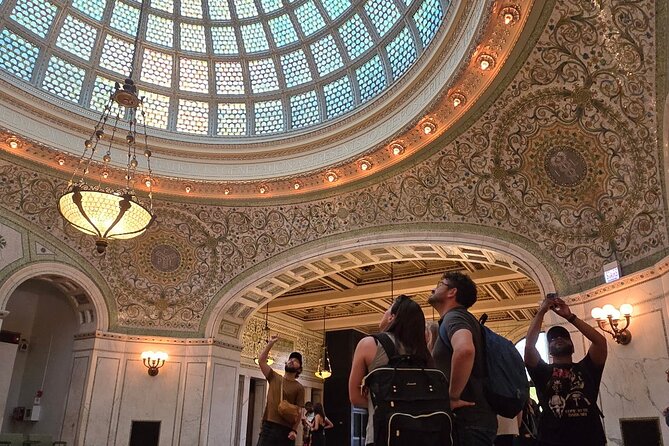
Chicago is built for this kind of tour. The Loop isn’t just skyline wallpaper—it’s a working, story-rich slice of city life, where the buildings, the lobbies, and the street grid all have histories. When you pair that with true crime narration, the city stops feeling like a postcard and starts feeling like a real place with real consequences.
I like that this tour doesn’t treat architecture as a lecture. You’re learning while you move—looking at façades, stepping into iconic interiors, then linking what you see to the darker side of Chicago’s past. If you’re the type who enjoys a spooky story but still wants context, the mix here usually lands well.
One more practical point: it’s short. You’re out there about ninety minutes, not half a day. That makes it a smart add-on if you’re also doing a bigger activity like a river cruise or a day packed with museum time.
You can also read our reviews of more tours and experiences in Chicago.
Start at Palmer House Hilton Historic Lobby: marble, history, and a chilling tone
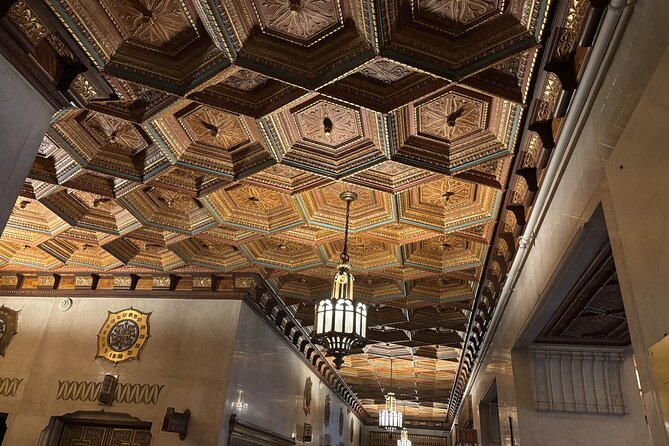
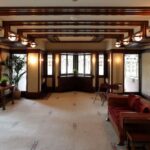
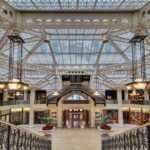
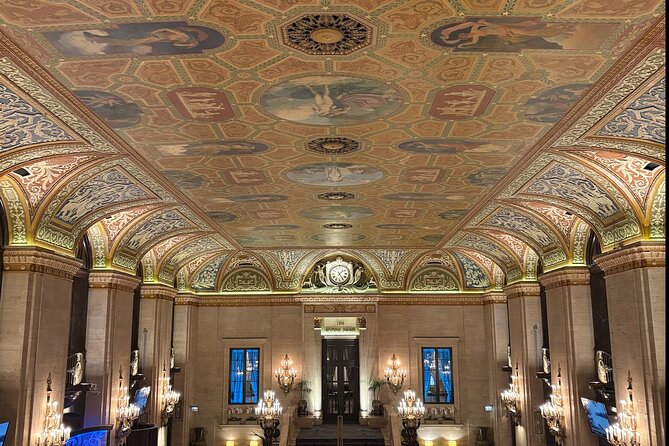
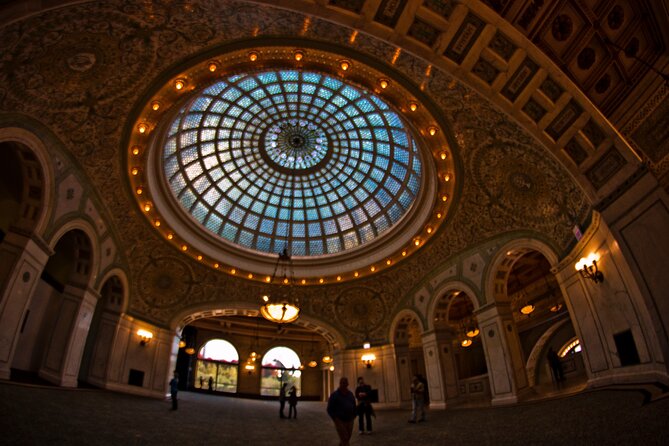
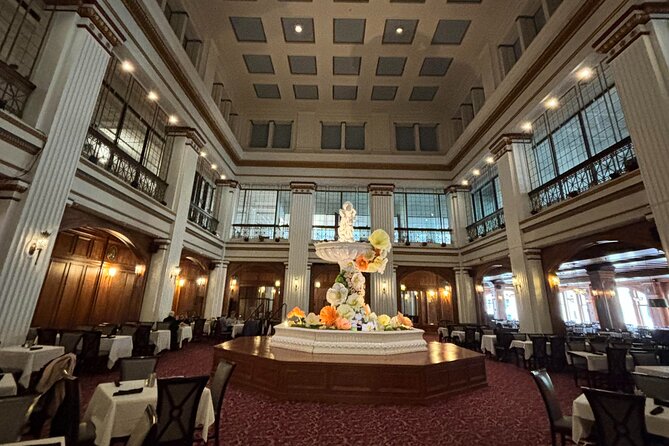
Your first stop is the Palmer House Hilton Historic Lobby, with about 10 minutes on the clock. Admission is free, and the focus is very much on stepping back in time—while the guide brings in the dark side of the story.
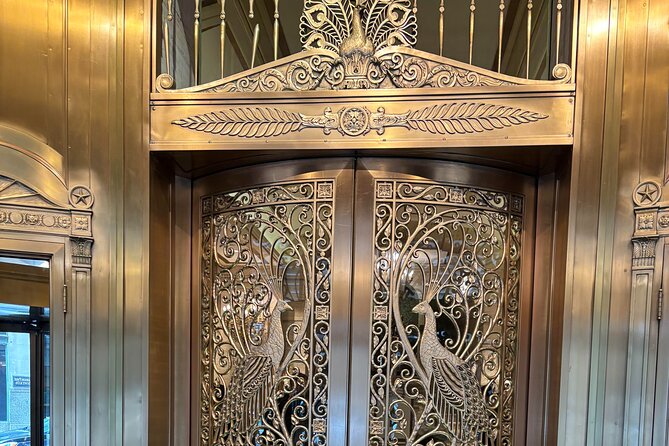
This is a great opener for two reasons. First, you get right into the kind of architecture tourists often miss: the interior details. Lobbies like this are where you can spot craftsmanship fast—massing, finishes, and the kind of grand design that made hotels feel like landmarks. Second, the timing sets the tone. You’re not starting with spooky trivia—you’re starting with a place that already feels theatrical, then adding the crime narrative on top.
What to do while you’re there: pause and look at the space as if you were walking through it in an earlier era. Then watch for how the guide ties the building’s role in city life to the darker events. If you’ve ever wished you could tour hotel interiors the way you tour museums, this stop scratches that itch.
Possible drawback: it’s only around 10 minutes. If you’re the type who wants lots of photo angles and slow wandering, you’ll feel slightly “on rails” here. Still, it’s a strong way to get oriented and warmed up.
The Loop walking stretch: connecting crimes to the city’s built environment
After Palmer House, you spend about 1 hour 10 minutes in the Downtown / The Loop area. Admission is free for this portion (since you’re outside and walking), and the guide uses the skyline and street layout to explain Chicago’s dark past in a way that actually sticks.
This is the part of the tour where the architecture talk becomes more than “pretty buildings.” You’re learning how the Loop grew, why the concentration of offices and institutions mattered, and how certain kinds of crime stories played out in a city built on major addresses and crowds. Even if you think you know Chicago already, walking this section with a guide usually gives you new reference points—things you can spot later on your own.
Expect a mix of street-level walking and short pauses. In winter, that pacing is a lifesaver. Several guides keep the narration moving while you’re walking, then slow down just enough at key spots. That way you’re not standing around waiting for the cold to win.
What I’d watch for on this segment:
- How the guide links specific places to specific kinds of crimes and outcomes (rather than listing names endlessly).
- Where the group naturally slows—those are often your “look here” moments for buildings and street corners.
- How your own photos will work, since this is also where you’ll figure out which angles feel best.
Chase Tower finale: the photo-friendly illusion moment
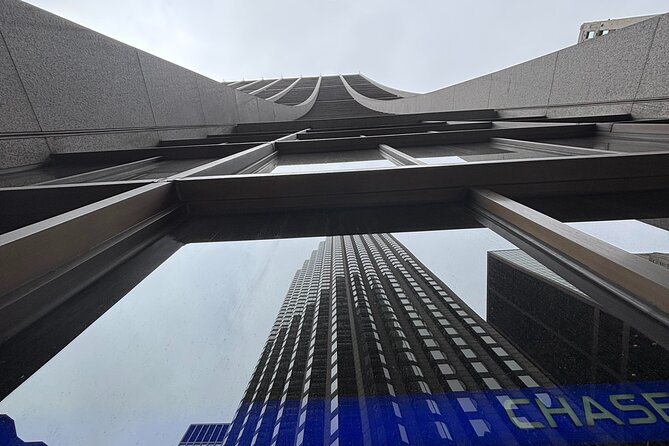
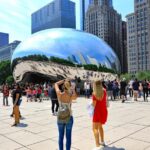
The tour wraps up at Chase Tower, again for about 10 minutes. Admission is free, and the stop is designed for one thing: a solid photo opportunity at the building known for its illusion.
If you’re into architecture photography, this ending is smart. You’ve spent most of the tour learning and walking, and then the guide gives you a short, high-impact finale where you can test what you saw and what you expected to see. The “illusion” reputation matters here because it gives you something to look for immediately, not ten minutes later when you’re already tired.
Practical tip: bring your camera ready and pay attention to where the guide positions people. With illusion effects, the angle and your distance matter. If you’re late to the group or distracted, you’ll miss the best viewpoint and it won’t feel like as much fun.
Also, this stop works as a clean capstone emotionally. The tour’s tone has been dark, but the last scene is visual and satisfying—like ending a good story with a strong final image.
How long it takes, and what the pace really feels like
The total duration is about 1 hour 30 minutes to 1 hour 45 minutes. That range is helpful: it means you’re getting a real guided experience, but you’re not trapped all afternoon.
The pace usually feels like:
- short indoor moments with story focus,
- then a longer walking segment where you keep moving between photo and landmark points,
- finishing at Chase Tower with a quick, concentrated photo stop.
One detail that’s worth planning around: there’s a mix of indoors and outdoors. In colder months, the indoor stops help a lot. The walking portions may still be chilly, so wear layers and don’t plan to dress “just for indoors.”
If you’re bringing kids or anyone who doesn’t like long stretches, you’ll likely appreciate that the tour is mostly structured around stops rather than endless wandering. But if someone in your group hates walking, it’s still a walking tour, so choose shoes accordingly.
Group size note: the max number listed is 999, which sounds big on paper. In practice, you should expect a guided group experience, but I’d still show up a few minutes early so you can find the meetup point and get settled without stress.



Price and value: $35 for interiors, storytelling, and free entries
At $35 per person, this is priced like an affordable, focused city experience. The biggest value move is that the tour includes a local guide and doesn’t require you to buy paid admission at the named stops. That turns the cost into what you’re actually paying for: the guide’s time, the narrative, and the route that strings Chicago together in a way you won’t get from a map alone.
You also get a mobile ticket and confirmation at booking time. That matters because it cuts down on “find a printout” hassles in the middle of travel days.
Gratuity isn’t included. If the guide is great—and many guides are—tipping is a fair way to reward good storytelling, especially when you’re being led through multiple interior spaces and a structured route.
Where this price is best spent:
- If you like architecture but want it explained through real people and real settings.
- If you enjoy true crime and want the stories tied to place, not just general history.
- If you’re short on time and want a high return-per-hour activity.
Where it might not be the best fit:
- If you only want architecture and would rather avoid crime content.
- If you hate any indoor-outdoor weather shift and want a completely indoor tour.
Meeting and ending points that make it easy to keep your day going
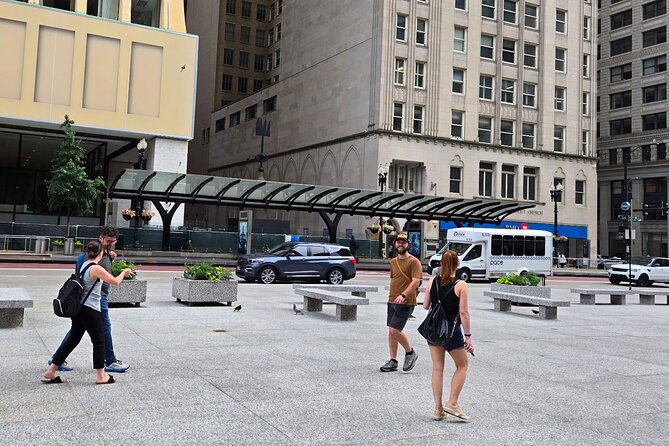
You’ll start at 118 S Wabash Ave, Chicago, IL 60603. That’s a central launch point, and it’s near public transportation, which helps if your schedule is fluid.
The tour ends near Christkindlmarket Chicago at 50 W Washington St. That’s a very convenient finishing area because it gives you a natural next step—food, browsing, and an easy way to extend your trip without changing neighborhoods. You’ll also be able to pivot back to your hotel or connect to other plans with minimal backtracking.
Mobile ticket in hand, show up a few minutes early, and you’ll reduce the “where exactly are we standing” stress.
Guides and storytelling style: what makes it enjoyable
The overall tone is equal parts architecture talk and true crime storytelling. Guides are praised for being engaging, with a voice that helps you picture the scene while you look at the buildings.
Names that pop up in this experience include Joseph and David, and there are also references to guides like Kris and Roan. The pattern is the same: lively delivery, a clear connection between what you’re seeing and the story being told, and frequent opportunities to get inside impressive interiors rather than only viewing things from the sidewalk.
The best guides also pace the information so you’re not hit with one long monologue. You’ll usually get short story beats, then a shift in setting—lobby to street, street to another landmark, then a final visual stop at Chase Tower.
If you like your tours with personality and a bit of humor between heavy moments, this format tends to work.
Who should book this tour (and who might skip it)
This is a strong choice if you:
- love Chicago buildings and want to see interior spaces, not just façades,
- like true crime stories but still want them anchored to real locations,
- want a winter-friendlier outing thanks to more indoor time than some walking tours,
- enjoy social group energy with people who are into the same mix of spooky and city design.
Consider a different option if:
- true crime content makes you uncomfortable,
- you want a purely architectural deep study with no crime narrative,
- your group has limited walking tolerance, since there are outdoor stretches between stops.
Should you book Chicago Architecture and True Crime?
I think you should book it if you’re the kind of traveler who gets bored with generic sightseeing and loves story-based city walks. For $35, you get a live guide, multiple landmark stops, interior time at the Palmer House lobby, and a photo-forward finish at Chase Tower.
If you’re unsure, here’s the quick test: if you enjoy the idea of learning Chicago through both architecture and real crimes, this tour is a very efficient use of your time. If the crime angle doesn’t appeal to you at all, you’ll probably feel like it’s fighting your preferences.
FAQ
How much does the Chicago Architecture and True Crime Tour cost?
It costs $35.00 per person.
How long is the tour?
The tour runs about 1 hour 30 minutes to 1 hour 45 minutes.
Where does the tour start?
The meeting point is 118 S Wabash Ave, Chicago, IL 60603.
Where does the tour end?
The tour ends near Christkindlmarket Chicago at 50 W Washington St, Chicago, IL 60602.
What language is the tour offered in?
The tour is offered in English.
Is admission included for the stops?
The tour information lists admission tickets as free for the stops.
What’s included in the price?
A local guide is included.
Is gratuity included?
No. Gratuity is not included.
Can I use a mobile ticket?
Yes, the tour uses a mobile ticket.
Can I cancel for a full refund?
Yes. You can cancel up to 24 hours in advance for a full refund.
Is the tour near public transportation, and are service animals allowed?
It’s near public transportation, and service animals are allowed.