REVIEW · CHARLESTON
Historic Charleston: The Battery, Rainbow Row, St. Michael Church
Book on Viator →Operated by Charleston by Foot · Bookable on Viator
Historic Charleston is best seen on foot. This 2-hour walk strings together key sights like St. Michael’s Church and The Battery with live commentary that makes the streets feel alive. I especially like the small-group feel (up to 20) and the way the guide connects architecture to big events, even when the weather turns. One drawback: some church and theater doors depend on what’s happening that day, so you’ll want to be flexible.
You’ll start at Washington Square, then move through free-to-view stops like Rainbow Row and the Four Corners of Law, plus guided interior time where access is available. It’s a great way to get oriented fast, but it is still a walking tour, so good shoes matter.
In This Review
- Key highlights you’ll actually care about
- A 2-hour Charleston route that hits the big emotions (without wasting time)
- Starting at Washington Square: your natural reset button
- St. Philip’s Church (1836): a steeple you can spot from miles away
- St. Michael’s Church (1752) and its famous Tiffany stained glass
- The Four Corners of Law: when civic power meets religious influence
- Rainbow Row: pastel homes, but pay attention to the details
- Dock Street Theater: a theater building made for performances
- Washington Square (again, but different): the statues and plaques you’ll remember
- The Battery: harbor views with historic artillery along the walk
- Old Slave Mart Museum stop: don’t rush the meaning
- What makes this tour a strong value (even if you’ve only got 2 hours)
- Who should book this Charleston by Foot walking tour
- Rain, heat, and shoes: the unglamorous part that matters
- Should you book this tour?
- FAQ
- How long is the tour?
- Where does the tour start and end?
- What time does the tour run?
- Is the tour ticket mobile?
- Are entrances always available inside the churches and theater?
- Is the tour accessible for service animals?
- Can I cancel for a full refund?
Key highlights you’ll actually care about
- Licensed guide with live storytelling that links buildings to the people who used them
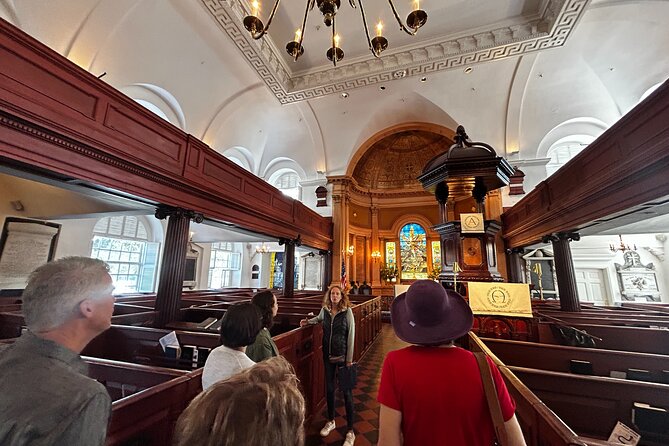
- Church interiors when doors are open, especially for St. Philip’s (1836) and St. Michael’s (1752)
- Rainbow Row on a short, efficient route with perfect photo timing built in
- Dock Street Theater access (when available), including an entrance that’s part of the tour
- Harbor views at The Battery with historic artillery and mansions along the promenade
- Washington Square as a breather with live oaks, statues, and plaques right in the middle of town
A 2-hour Charleston route that hits the big emotions (without wasting time)
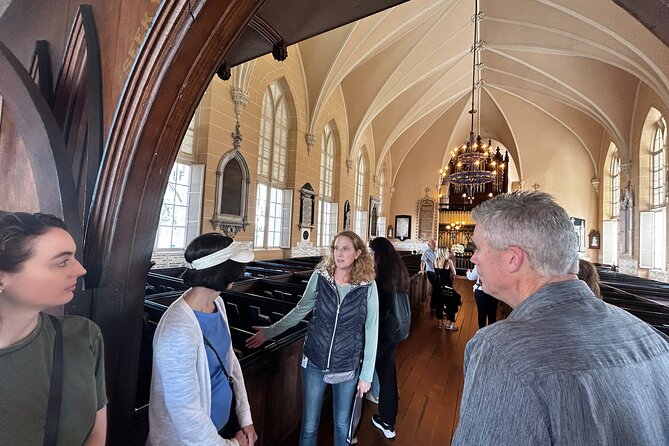
Charleston can overwhelm you fast. That’s why I like this kind of focused walking tour: you cover a lot of ground, but it still feels calm and readable. The pacing works well if you only have a morning or early afternoon and you want the essentials lined up in one pass.
The ticket format is simple: you get a mobile ticket, and the tour runs in English with live commentary. You’re not stuck staring at a screen or reading plaques by yourself. The guide’s job is to give you the story behind what you see—church spires, pastel row houses, civic oddities—so the sights connect in your mind.
You’ll also appreciate the practical setup: the tour starts and ends near the same spot, so you’re not constantly negotiating new meeting points. And with a maximum of 20 people, you get a more personal feel than the big bus-style crowd.
You can also read our reviews of more tours and experiences in Charleston.


Starting at Washington Square: your natural reset button
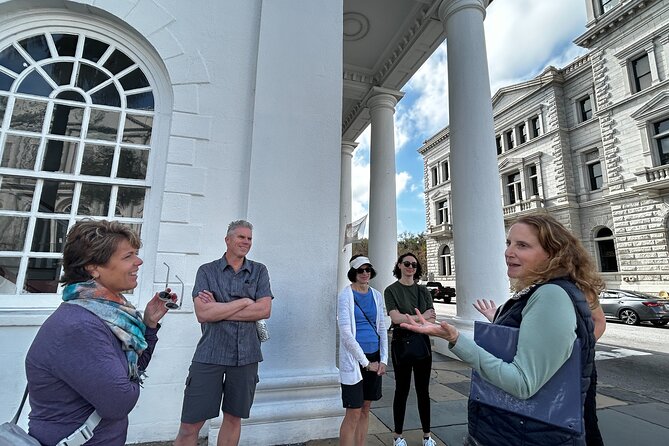
Your walk begins at Washington Square, 80 Broad St. This is a smart starting point because it’s a real pause in the middle of city motion. Live oaks and the quiet geometry of the square make it easier to settle in before you head into tighter, busier blocks.
From here, you get two kinds of benefits:
- You start with an atmosphere check. The square tells you Charleston is about shade, courtyards, and slow streets.
- You get a central orientation before the tour commits to landmarks that pull you outward toward the harbor.
If you’re the type who likes to get your bearings fast, this is the beginning you want.
St. Philip’s Church (1836): a steeple you can spot from miles away
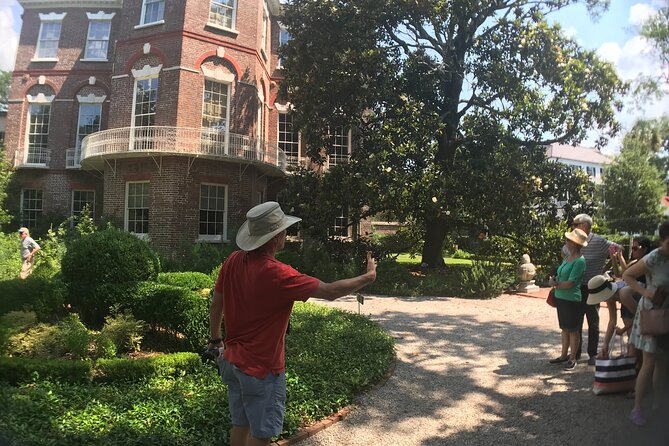
Stop one is St. Philip’s Church on Church Street. Completed in 1836, the steeple is one of the Charleston landmarks you’ll notice even if you haven’t memorized the city yet. Outside, it’s all lines and height. Inside, you’re looking at the grand interior and a treasured organ, plus the history you can’t fully see until you’re standing in the space.
Then there’s the graveyard, which is where the tour’s tone can shift from architecture appreciation to human stories. The name-drop of notable figures interred there gives you a way to connect place to people without turning the stop into a lecture.
This church stop is free, but it’s also important to know that entrances are subject to availability because these are active congregations. Translation: you should plan to enjoy what you can see from the accessible areas even if an interior moment is limited that day.
St. Michael’s Church (1752) and its famous Tiffany stained glass
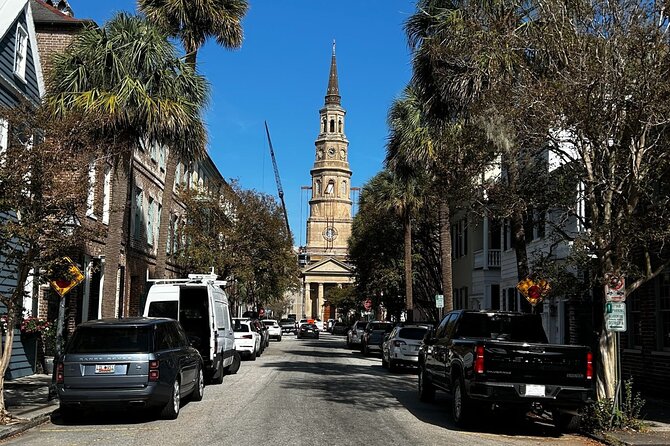
St. Michael’s Church is the stop most people picture when they think Charleston churches. The spire is dramatic, and the Tiffany stained-glass windows add color that feels almost unreal against the darker church interiors.
What makes this stop extra meaningful is the age. The structure dates to 1752 and is described as the oldest surviving religious structure in Charleston. That fact matters because it changes how you see the building: you’re not just looking at a pretty church, you’re looking at something that has lasted through major eras.
The tour also connects it to historical figures who were associated with the church, including George Washington and Robert E. Lee. Whether you know their stories well or not, you’ll come away with a clearer sense of why certain places get repeated names in American history.
Just like St. Philip’s, it’s a working church. Doors can be open, but they can also be closed depending on service schedules. This is why I treat this stop as a bonus when you get interior access, not a guaranteed checkbox.
The Four Corners of Law: when civic power meets religious influence
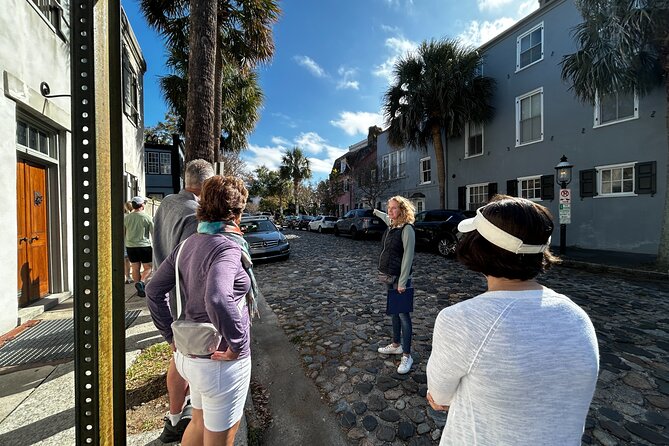
One of my favorite quick stops here is the Four Corners of Law. It sounds like a trivia title, but it’s more useful than you might think.
You’re seeing a unique intersection where local, state, federal, and church laws converge. Standing at that point helps you understand Charleston’s civic identity isn’t just a modern concept. The way authority has layered over time—sometimes peacefully, sometimes not—shows up in real streets and boundaries.
The best part is how fast it is. You don’t need to schedule half a day for this idea. You just need a minute or two at the intersection, and suddenly the city feels less like a postcard and more like a place where rules shaped daily life.

Rainbow Row: pastel homes, but pay attention to the details
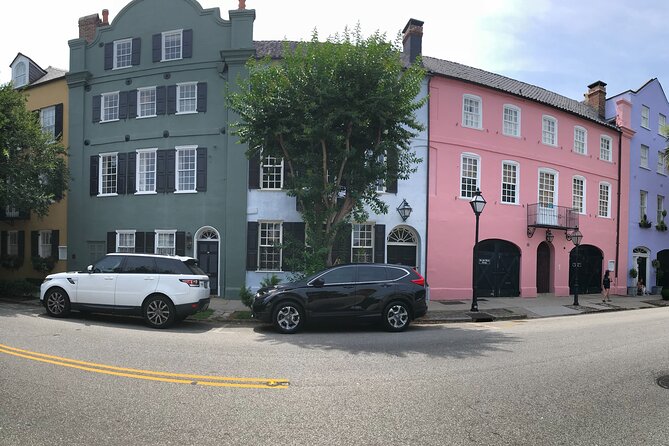
Rainbow Row is one of those locations that’s always photographed. Still, the tour does something helpful: it keeps you from just snapping pictures. You get a guided look at what you’re actually seeing, so the colors and symmetry become meaningful instead of just pretty.
Expect a short stop with photo time for the pastel historic homes that make Rainbow Row a photographer’s dream. The tour’s pacing is key here. You’ll be around the right amount of time to frame shots without feeling rushed into the next block.
One practical tip: wear something comfortable for walking. The route is manageable, but you’ll be on your feet and stopping for views more than once.
Dock Street Theater: a theater building made for performances
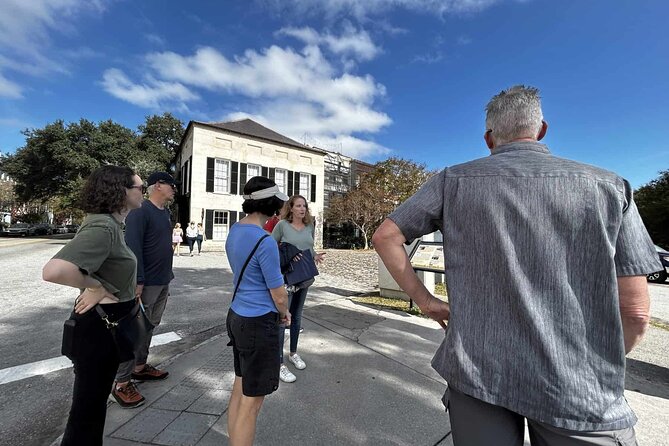
Next up is Dock Street Theater, an important stop for anyone who likes the history of American arts. This is described as America’s first building designed specifically for theatrical performances, which gives it a gravity that goes beyond the exterior.
Entrance is included, but availability can affect whether you can go inside. Either way, the moment is worth it because the building helps you picture Charleston not only as a port and courthouse city, but also as a place where performances mattered enough to shape dedicated architecture.
If your group loves history that feels physical—doors, rooms, stage-related spaces—this is the stop that usually lands hardest.
Washington Square (again, but different): the statues and plaques you’ll remember
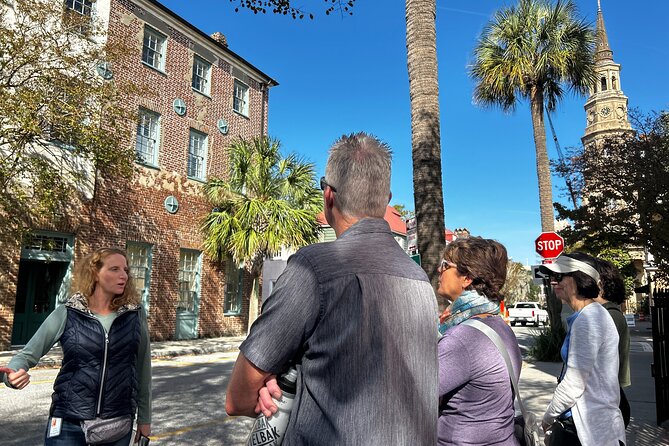
You’ll spend time at Washington Square with a more reflective angle. This is not just a pretty starting spot. During the tour, you get to look at the live oaks and the way the square’s grounds function as a calm pocket.
You’ll also have time to notice statues and plaques. That’s where the tour’s commentary helps: symbols become readable. Instead of seeing random markers, you understand they’re part of how Charleston teaches its own story.
This is also a good “reset” stop if the earlier church interiors had you thinking hard. You’ll get a break from spires and windows and return to something landscaped and slower, built for lingering.
The Battery: harbor views with historic artillery along the walk
The Battery is one of the most scenic stretches of Charleston, and this tour uses it well. You walk along the promenade for harbor views, with historic artillery and stately mansions lined along the way. It’s a long-feeling walk in a short amount of time because every bend seems to open another perspective.
The views are the payoff. From this angle, Charleston’s relationship to the harbor becomes obvious, not abstract. The artillery and the mansions create a visual conversation: defense, wealth, and trade all show up in the same line of sight.
This stop is free, and you get plenty of photo opportunities. It’s also one of the best places to slow down even if the tour is moving at a steady pace. Take a moment. Look back toward the city. Then look forward toward the water. That back-and-forth is where the place clicks.
Old Slave Mart Museum stop: don’t rush the meaning
The tour also includes a stop at the Old Slave Mart Museum. This part is less about scenery and more about confronting history directly.
You’ll be guided through what the site represents—an era of enslaved people’s lives and resilience—and how that history shaped Charleston and the larger American story. This is the kind of stop where your pace should feel different. You don’t need to speed through it just to tick off a schedule.
If you’re coming to Charleston to understand the city beyond its charm, this is the moment you’ll carry with you. It adds weight to the earlier church and civic stops, because the people affected weren’t just footnotes in a long timeline—they lived through the systems those buildings and laws helped maintain.
What makes this tour a strong value (even if you’ve only got 2 hours)
I think the real value here is the match between time and output. In about two hours, you hit:
- multiple landmark structures,
- free exterior stops that are actually meaningful,
- one interior-style theater experience when access allows,
- and a museum stop that adds context you can’t get from a street view.
You’re also getting a professional, licensed tour guide with live commentary throughout. That changes everything. Without that human layer, places like the Four Corners of Law and the graveyard history can read like random facts. With a guide, they become a coherent story.
The guide’s style is another reason people rate this highly. In particular, Eric or Erik-style guiding shows up in the way the tour answers questions and keeps a patient rhythm. The small group size also helps. You’re not yelling across a crowd to ask what something means, and you’re not forced to keep up with the fastest walkers.
A final value point: many stops are free to view, so you’re not paying for every corner of the route. The tour’s included interior time is the part you’re really buying.
Who should book this Charleston by Foot walking tour
This tour is a good fit if:
- you want a short, organized overview without missing the classics,
- you like history tied to specific places (not generic timelines),
- you prefer walking tours with a licensed guide and live commentary,
- you’re traveling with someone who wants both architecture and human context.
It may be less ideal if:
- you need zero walking time and everything must be seated,
- you’re only happy with guaranteed interior access at every building (because church and theater entrances can depend on availability).
Rain, heat, and shoes: the unglamorous part that matters
Charleston weather can change fast, and this itinerary is mostly outdoors. The good news is the route is short enough that weather usually just changes the feel, not the feasibility. But do bring good walking shoes, especially if you’re planning photos at The Battery and time at Washington Square.
If you’re sensitive to humidity, plan to carry water. Even with a leisurely pace, it’s still city walking.
Should you book this tour?
Yes, if you want a compact way to understand Charleston in layers: church spires, civic quirks, iconic streets, and the harbor. The combination of free landmark stops, one included theater entry (when you can get inside), and the Old Slave Mart Museum stop makes it more than a greatest-hits walk.
I’d book it especially if you like guided explanations that connect buildings to real people and events. You’ll get the kind of orientation that makes the rest of your trip easier, because once you understand the city’s structure, the streets stop feeling random.
If you’re the type who wants maximum interiors no matter what, temper expectations about church and theater access. You’ll still have plenty to see.
FAQ
How long is the tour?
The tour runs about 2 hours.
Where does the tour start and end?
It starts at Washington Square, 80 Broad St, Charleston, SC 29401, USA, and ends back at the same meeting point.
What time does the tour run?
The start time is 10:00 am.
Is the tour ticket mobile?
Yes, it’s a mobile ticket.
Are entrances always available inside the churches and theater?
No. While the buildings are open to the public, entrances can be subject to availability because they are working churches and the theater entrance depends on what’s open that day.
Is the tour accessible for service animals?
Yes, service animals are allowed.
Can I cancel for a full refund?
You can cancel up to 24 hours in advance for a full refund. If you cancel less than 24 hours before the start time, the amount paid is not refunded.