REVIEW · OKLAHOMA CITY
Oklahoma City History and Architecture Walk Downtown
Book on Viator →Operated by OKC Tours · Bookable on Viator
Oklahoma City tells stories in stone and steel. This easy, 2-hour downtown walk strings together six iconic stops, from early skyscrapers to the Memorial, so you see how OKC grew and what it chose to remember. I especially like how the tour pairs big architecture with human stories, instead of just pointing at buildings.
I also like that the pace leaves room for questions and for moments that actually land—especially at the Oklahoma City National Memorial & Museum grounds. On a hot day, I found the guides (I’ve seen names like Ryan and Jeffrey come up) do a good job of managing shade and timing, so the walk feels doable.
One possible drawback: it’s weather-dependent, and it does involve a moderate amount of walking across downtown. If you’re short on stamina, you’ll want to plan for breaks and comfortable shoes.
In This Review
- Key highlights
- Getting Oriented at the Start: 120 N Robinson Ave
- Stop 1: Colcord Hotel and the Story of a Pioneer Skyscraper
- Stop 2: Skirvin Hotel Secrets, Renovations, and Old-World Details
- Stop 3: Kerr-McGee Park and What the Land Used to Be
- Stop 4: Automobile Alley—Old Industry and Modern Fun
- Stop 5: Oklahoma City National Memorial Grounds and What the Symbols Mean
- Stop 6: First National Center Art Deco and the Bank-to-City Transformation
- How Much Is It Really Worth for $35?
- Pace, Comfort, and What to Wear
- Who This Downtown OKC Walk Best Fits
- A Note on Guides and Group Energy
- Should You Book This Oklahoma City History and Architecture Walk?
- FAQ
- How long is the Oklahoma City History and Architecture Walk Downtown?
- How much does the tour cost?
- Where do I meet for the tour?
- What time does the tour start?
- Is the ticket mobile?
- Are admissions included for the stops?
- How big is the group?
- What should my fitness level be?
- Are service animals allowed?
- Is the tour affected by weather?
- Can I cancel if plans change?
Key highlights
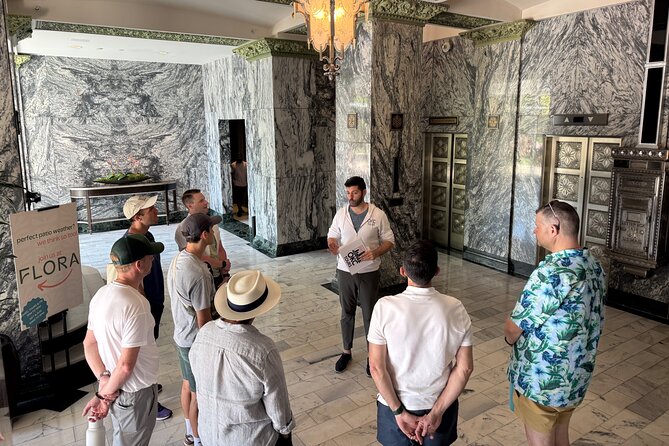
- Two hours, six major stops that cover architecture, industry, and civic memory
- Colcord Hotel’s pioneer-skyscraper story and who built it
- Skirvin Hotel lore plus details in the renovated lobby
- Kerr-McGee Park context tied to Robert S. Kerr and what the land used to be
- Automobile Alley’s auto-industry past and today’s entertainment vibe
- First National Center’s Art Deco inside-and-out (bank turned mixed-use)
Getting Oriented at the Start: 120 N Robinson Ave
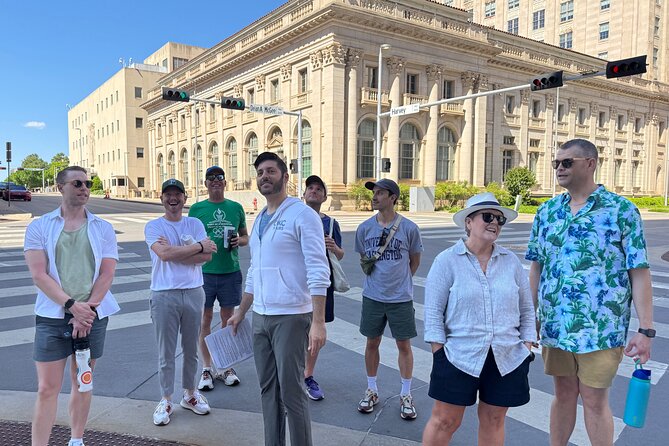
The tour begins at 120 N Robinson Ave, Oklahoma City (start time 10:00 am). That’s a practical meeting spot because you’re right where downtown history clusters—close enough to walk between eras without feeling like you’re doing a long hike.
You’ll go out with a small group (maximum 20 travelers), which matters more than you’d think. Smaller groups usually mean you can actually ask questions when something clicks, like why a building looks a certain way or what a street used to be before it became something else.
Also, this is a mobile ticket tour, so you’re not juggling printed papers while you’re trying to look up at old facades. The guide sets the tone early: it’s not rushed, and it’s built to be a strong introduction to downtown OKC.
You can also read our reviews of more tours and experiences in Oklahoma City.

Stop 1: Colcord Hotel and the Story of a Pioneer Skyscraper
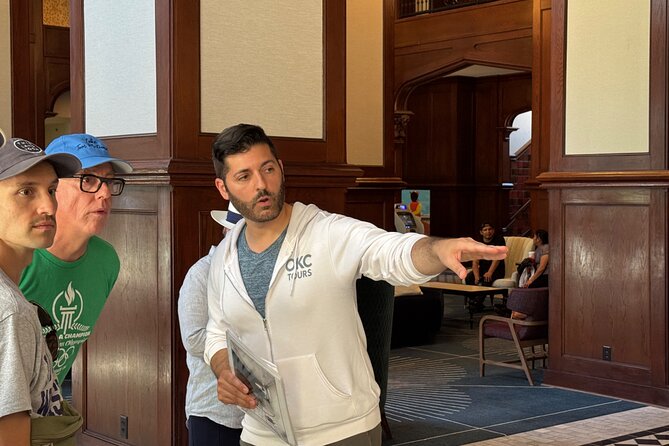
The walk’s first big “wow” lands at the Colcord Hotel Oklahoma City, Curio Collection by Hilton. This is where you start seeing the logic of OKC’s growth—how a city that wasn’t always famous for skyscrapers still built a punchy skyline.
Here, the focus is on how the pioneer skyscraper was built and by whom. That detail is worth paying attention to because it changes your whole way of looking at the building. Instead of seeing it as a static landmark, you start noticing it as a project: money, planning, ambition, and the kind of leadership that helped turn OKC into a place where large buildings made sense.
The stop is about 15 minutes, which is just enough time to catch the key ideas and then keep moving. If you’re the type who reads everything on a plaque but still wants a human explanation, this first stop hits the right balance.
Stop 2: Skirvin Hotel Secrets, Renovations, and Old-World Details
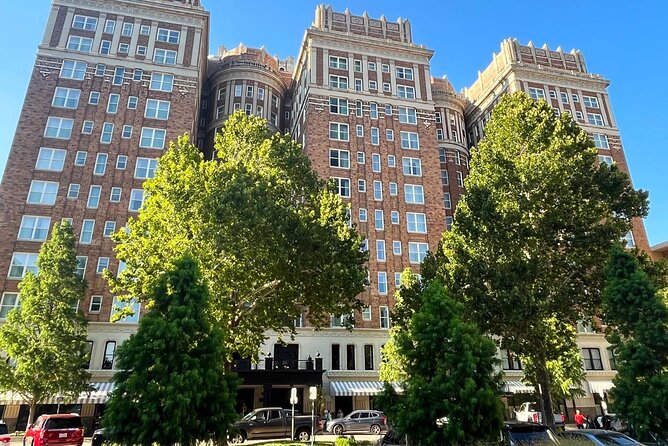
Next comes the Skirvin Oklahoma City, a Hilton Hotel. This is one of those buildings where the stories feel baked in. The tour doesn’t treat the Skirvin like a textbook; it treats it like a character.
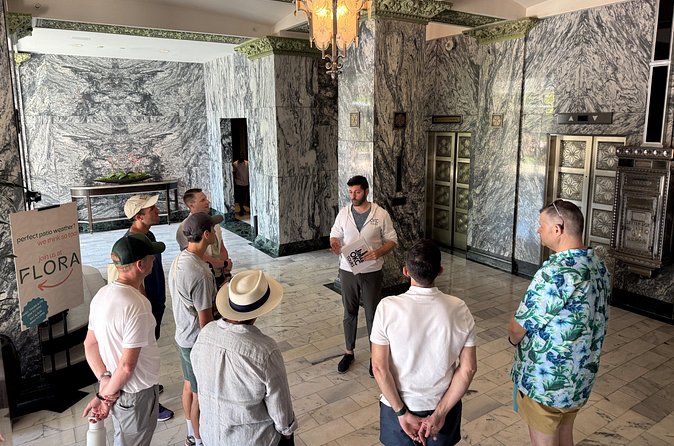
You’ll hear accounts connected to how the hotel grew in size and its reputation over time, including stories about Mr. Skirvin and his socialite daughter. Then the guide shifts into what you can still see today—especially in the newly renovated lobby—pointing out original details that date back more than 100 years.
There are also tales of mysterious hauntings that people still talk about. Whether you’re fully into ghost stories or you just enjoy the folklore, the point of the stop is how the building’s identity evolved and how people attached meaning to it.
It’s about 20 minutes. That duration is ideal for older hotels: long enough to see details, short enough that you don’t feel stuck standing still in one place.
Stop 3: Kerr-McGee Park and What the Land Used to Be
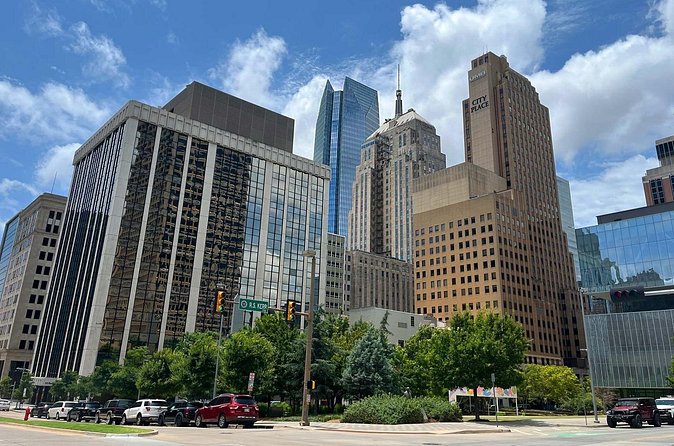
Then you get a change of pace at Kerr-McGee Park, where the tour connects local architecture and development to a specific person: Robert S. Kerr. The big takeaway isn’t just a name on a plaque. It’s how Kerr’s influence shaped Oklahoma’s direction—and how the land that’s now a park fits into that larger story.
You also learn what the site was before it became a park. That’s a small detail, but it’s a powerful way to train your eyes. You’ll start asking: what used to be here? What industries or institutions moved in? What got replaced?
This stop is shorter—around 5 minutes—but it works as a reset. You’re shifting from the built environment (big buildings) to the built environment at the ground level (what’s under your feet, and what replaced it).
Stop 4: Automobile Alley—Old Industry and Modern Fun
After that, you head into the Automobile Alley District, passing the entrance and getting the history behind why this area mattered. A century ago, this was described as the center of Oklahoma’s auto industry, and the tour helps you picture what that meant: businesses clustered, new jobs pulled people in, and the city’s energy shifted toward cars and everything that came with them.
What I liked here is the contrast. The tour doesn’t stop at 100-year-old history. It also connects Automobile Alley to what’s around now—how the area functions today and the entertainment offered in the modern district.
That blend makes the street feel alive instead of frozen in time. It’s also useful if you’re the kind of visitor who wants to know not only what the past was, but also where you can walk afterward and keep enjoying the downtown vibe.
This stop runs about 10 minutes, which keeps the tour moving while still giving enough context to make the district feel more than just a name.
Stop 5: Oklahoma City National Memorial Grounds and What the Symbols Mean
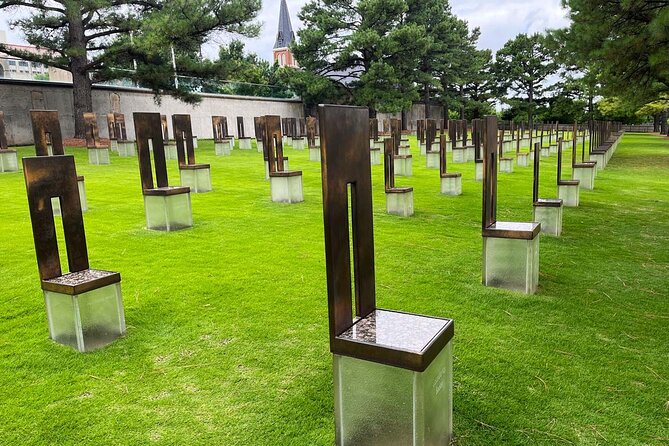
Then the tour turns emotionally serious at the Oklahoma City National Memorial & Museum. The admission to the museum itself isn’t included, but the memorial grounds stop is where the tone changes for the group.
You spend about 20 minutes understanding what happened on Oklahoma’s darkest day, and how the memorial design communicates meaning. You’ll learn about symbolism in the design elements and about how the community responded to the crisis.
This is one of the stops that can feel different depending on your temperament. If you prefer facts and structure, you’ll appreciate the explanations of design and the way the memorial guides your attention. If you’re more reflective, you’ll probably find this is the moment the tour stops being about architecture and becomes about civic memory.
Either way, the guide keeps it respectful. The time window is long enough to process, but short enough that it doesn’t drag.
Practical note: the memorial grounds are outdoors. Dress for comfort and be ready for a bit of open-air exposure.
Stop 6: First National Center Art Deco and the Bank-to-City Transformation
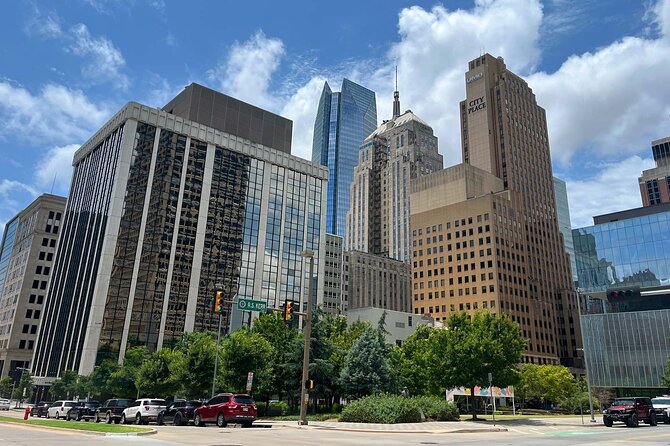
The last major “star” stop is the First National Center. If you like architecture, this is the payoff.
You enter a building that’s often considered the most impressive in the state, and the guide frames it as former bank architecture with standout Art Deco details both outside and inside. You’re not just admiring a style—you’re learning how Art Deco communicates power and optimism through geometry, ornament, and materials.
Then you get the modern twist. Today, it’s a mixed-use complex, including a hotel, apartments, shops, and restaurants. That matters because it shows the full lifecycle of downtown buildings. They weren’t just built to impress. They were built to function—and then they were adapted so the city keeps using them.
This stop is about 15 minutes, and it ends the walk with something you can recognize immediately once you’ve seen it. After this, you’re more likely to notice Art Deco details on your own as you keep exploring OKC.
How Much Is It Really Worth for $35?
At $35 per person, this walk is priced for value in a very specific way: you’re paying for a guided thread through multiple downtown landmarks, and the tour indicates free admission tickets for the stops where entry is needed. That’s meaningful because you’re not stacking paid attractions on top of each other.
You should also note one limitation: Museum admission is not included for the Oklahoma City National Memorial & Museum. So if you want to see the museum exhibits in depth, plan on paying separately.
Still, for a first pass through downtown, the tour’s price makes sense. You get:
- a guided explanation at each stop (not just free time),
- a route that covers both architecture and industry,
- and a time-efficient way to decide what you want to return to later.
Booking tends to happen about 10 days in advance on average, so if you’re traveling during a busy season, don’t wait until the last minute.
Pace, Comfort, and What to Wear
This tour runs about 2 hours on foot. It’s described as having a moderate physical fitness level requirement, which is travel-speak for: comfortable walking shoes matter, and you shouldn’t expect to sit down constantly.
Because it’s downtown and outdoors in parts, I’d plan for heat and sun. One review mentioned the guide working to keep the group in the shade or getting inside historic hotel spaces when possible on a hot day. That’s not a guarantee you can count on every day, but it’s a good sign that guides pay attention to comfort.
For attire: wear breathable layers, bring water if you can, and keep your phone charged for the mobile ticket.
Who This Downtown OKC Walk Best Fits
This tour is a great match if you want an efficient intro to OKC that doesn’t treat the city like a single landmark. The best fit tends to be:
- first-time visitors who want downtown bearings fast
- architecture lovers who like hearing the why behind the what
- anyone who wants history that connects buildings to people and industry
- visitors who value a respectful, structured visit to the memorial grounds
If you’re already a deep-history nerd who knows every building story in town, you might still enjoy it for the organized route and the way the guide ties stops together. But if you’re looking for long museum time or big inside access at every stop, you may find the short durations at each stop less satisfying.
A Note on Guides and Group Energy
A standout theme in the experience is the guide’s ability to keep things engaging. Names like Ryan and Jeffrey have come up in feedback, and the styles described are consistent: they keep the walk manageable, explain clearly, and answer questions without making you feel hurried.
If you’re the type who likes to learn through stories rather than a slideshow of facts, that’s a good sign.
Also, there’s room for optional gratuity for the guide. If you felt you got real value out of the explanations and pacing, that’s a fair way to say thanks.
Should You Book This Oklahoma City History and Architecture Walk?
I’d book this if you want a smart, compact way to understand OKC’s downtown—how skyscrapers, hotels, industry streets, and the Memorial all fit into one bigger picture. The $35 price feels fair when you consider the guided stop-by-stop storytelling and the short, efficient two-hour format.
I’d think twice if you:
- need very low walking,
- plan to skip the memorial grounds because you want only museum time (since museum admission isn’t included),
- or can’t travel on a day with good weather.
For most visitors, though, this is an easy yes. It’s a strong first chapter to Oklahoma City.
FAQ
How long is the Oklahoma City History and Architecture Walk Downtown?
It runs about 2 hours (approx.).
How much does the tour cost?
The price is $35.00 per person.
Where do I meet for the tour?
The meeting point is 120 N Robinson Ave, Oklahoma City, OK 73102, USA.
What time does the tour start?
The start time is 10:00 am.
Is the ticket mobile?
Yes, the tour uses a mobile ticket.
Are admissions included for the stops?
The stops listed as having free admission tickets are included. Oklahoma City National Memorial & Museum museum admission is not included.
How big is the group?
The tour has a maximum of 20 travelers.
What should my fitness level be?
A moderate physical fitness level is recommended.
Are service animals allowed?
Yes, service animals are allowed.
Is the tour affected by weather?
Yes. It requires good weather, and if canceled due to poor weather, you’ll be offered a different date or a full refund.
Can I cancel if plans change?
Free cancellation is available up to 24 hours in advance for a full refund.