REVIEW · BARCELONA
Gaudi & Sagrada Familia Donation-Based Tour in English
Book on Viator →Operated by Runner Bean Tours · Bookable on Viator
Gaudí hits the sidewalk, not a classroom. For a small upfront price, you join an English donation-based tour that strings together major stops and sets you up for great photos. I love how guides such as Ivan and Jarrod help you make sense of the city and the Metro, and I love the tight, attraction-packed route—just note outside views only and no building tickets included.
This is a smart way to start Barcelona, especially if you want Gaudí without waiting in line for every ticket. The walk also threads through charming streets you’d likely wander anyway, from Plaça Reial into the Passeig de Gràcia area.
One thing to consider: you’re moving on foot and doing two short Metro hops, so comfy shoes matter. And if you prefer slower explanations, it’s worth flagging that early so your guide can pace the group.
In This Review
- Key highlights you’ll care about
- How this Gaudí walking tour earns its low price
- Meeting at Plaça Reial, then getting your bearings fast
- Stop 1: Plaça Reial and the Gaudí lamp-post moment
- Stop 2: Palau Güell and the patron story you’ll actually remember
- Stop 3: Manzana de la Discordia on Passeig de Gràcia
- Stop 4: Casa Batlló, the facade you can read like a story
- Stop 5: Passeig de Gràcia as the city’s stylish backbone
- Stop 6: Casa Milà (La Pedrera) and the rooftop imagination
- Stop 7: Sagrada Família—Gaudí’s ongoing masterpiece, minus ticket stress
- Guides make or break the experience (and this one leans hard on them)
- Metro and timing: two short rides, a lot of walking
- Photo strategy: how to get great shots without lingering
- Price and value: what you really get for $3.63
- Who should book this Gaudí tour
- A quick heads-up on pacing and group size
- Should you book this tour?
- FAQ
- Is the tour in English?
- How long is the Gaudí & Sagrada Familia donation-based tour?
- What does the price include?
- Are tickets to the Gaudí buildings included?
- Do I need to take public transportation during the tour?
- Where do I meet the guide?
- What time does the tour start?
- Is there a donation at the end?
- What is the cancellation policy?
Key highlights you’ll care about
- English-first guiding with guides named Julie, Tati, Lisa, Ram, Catherine, and Jarrod from the experience history
- Pay-what-you-want style with a small upfront price, then a satisfaction-based donation at the end
- Photo-friendly Gaudí exteriors at Plaça Reial, Palau Güell, Manzana de la Discordia, Casa Batlló, Casa Milà, and Sagrada Família
- Metro coaching built into the experience, including advice on ticket options and how to transfer fast
- A route that mixes neighborhoods, not just a list of monuments
How this Gaudí walking tour earns its low price
This tour is built around value. You pay a modest upfront amount, then the guide’s payoff is based on how much you enjoyed the experience. That structure changes the vibe in a good way: the guide has a reason to keep you engaged, and you have a say in what it was worth to you.
The other reason it’s good value is practical. You’re shown where to look and what to notice on the outside of world-famous buildings. If you like architecture facts, street-level symbolism, and quick context you can use immediately, this format fits.
The trade-off is also clear. The tour does not include attraction tickets, so you mainly see exteriors. If you want interiors, you’ll need to book those separately (especially for Sagrada Família).
You can also read our reviews of more tours and experiences in Barcelona.

Meeting at Plaça Reial, then getting your bearings fast
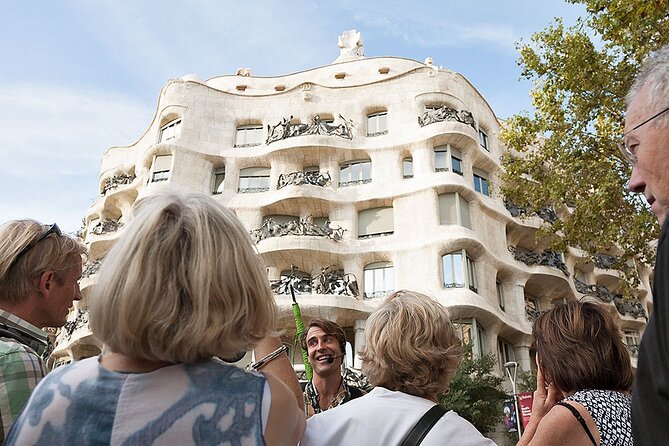
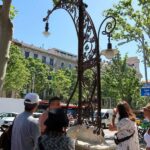
The tour starts at Plaça Reial, near the Ciutat Vella action. This is a fun way to begin because Plaça Reial feels like a set: neoclassical buildings, palm trees, and the famous Gaudí lamp-posts that help you spot the theme instantly.
A good guide here does two things early. First, they give you the story of Gaudí in bite-size chunks so the later stops connect. Second, they help your group handle the logistics with less stress—where to walk, when to cross, and how to avoid losing people in the crowd.
You’ll also see why this first stop matters even though it’s not a major Gaudí building. It’s a warm-up: it teaches you how Gaudí’s details show up in public spaces, not only inside museums.
Stop 1: Plaça Reial and the Gaudí lamp-post moment
At Plaça Reial, the time is short, but the payoff is big for photos. You’ll get that “I’m here” feeling right away, framed by the square’s architecture and the palm-lined layout.
If you’re the type who likes to photograph street details, this is a great warm-up. You can test your camera angle, try a few quick shots, and then carry that attention into the next neighborhoods.
Stop 2: Palau Güell and the patron story you’ll actually remember
Palau Güell is the kind of stop that makes Gaudí feel human. This is where the relationship between architect and patron comes to life through design choices, from the overall structure to the quirky details that make the palace feel alive.
The building is often associated with Eusebi Güell, and it was completed in 1888. That date matters because it anchors your mental timeline: you start to see Gaudí’s progression rather than treating each work as a random masterpiece.
Outside-only tours can feel limiting, but Palau Güell works well in this format because the exterior already gives you strong cues for what’s happening inside. Your guide helps you read those cues instead of just staring at walls.
Stop 3: Manzana de la Discordia on Passeig de Gràcia
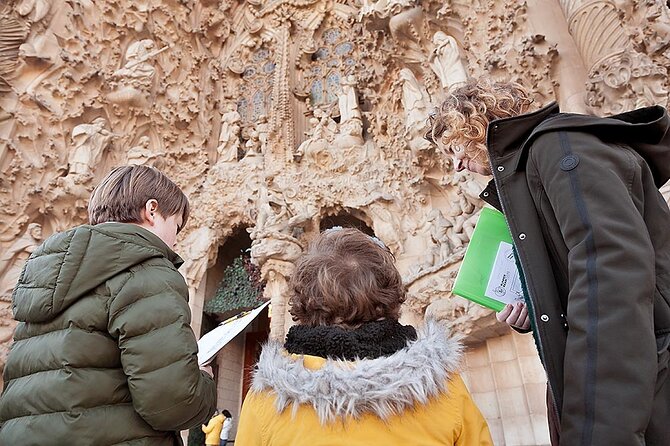
This is the “compare and contrast” moment. Manzana de la Discordia sits right on Passeig de Gràcia, and you’re essentially standing in the middle of an architectural conversation.
You’ll look at three major buildings: Casa Batlló, Casa Amatller, and Casa Lleó-Morera. Even in quick exterior glimpses, the idea lands: Barcelona didn’t just produce one style. It staged competition in stone and ornament.
A drawback here is pacing. Because you move fast between major stops, you won’t have long to soak in every facade detail like you would on a self-guided stroll. The fix is simple: use the photo moment, then zoom in afterward with your own notes.


Stop 4: Casa Batlló, the facade you can read like a story
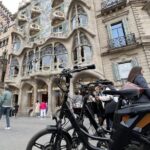
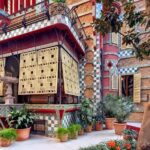
Casa Batlló is one of the easiest Gaudí works to fall in love with. It’s famous for its whimsical facade and color sense, and your guide helps you connect those visual choices to the meaning behind them.
Casa Batlló was built in 1906 and is a UNESCO World Heritage Site. That matters because you’ll often see a lot of marketing photos online, but on the street you’ll learn what the facade is actually doing—how the lines, shapes, and patterns create movement.
Since tickets aren’t included, you can’t go inside on this tour. But you’ll still leave with a better eye. You’ll know where to look for curves, how to interpret the overall silhouette, and which elements are most “Gaudí,” so later visits feel deeper rather than repetitive.
Stop 5: Passeig de Gràcia as the city’s stylish backbone
Between big buildings, Passeig de Gràcia plays a role. It’s the boulevard that ties the route together and gives you breathing space.
This area is chic and busy, with cafes and shopping close by. For practical travelers, it’s also a transit-friendly stretch, which helps when your group needs to move efficiently to the next stop.
If you get hungry, this is a reasonable place to grab a snack before the final heavy hitter. If you get rain, this is also where umbrellas and quick jacket changes become part of the plan.
Stop 6: Casa Milà (La Pedrera) and the rooftop imagination
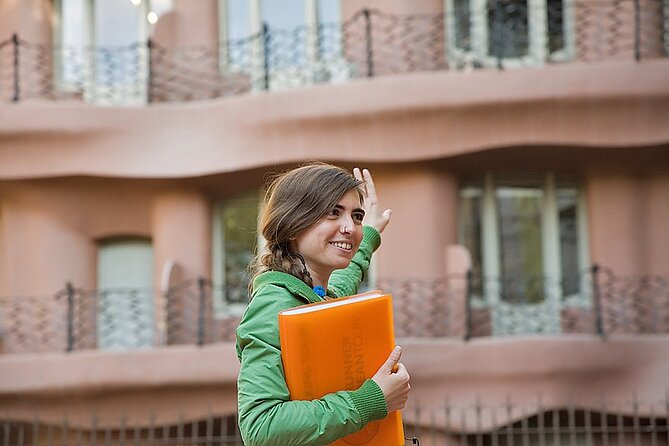
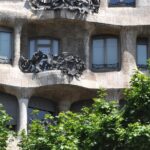
Casa Milà, also called La Pedrera, is the stop that often changes people’s minds about Gaudí. Built in 1912 and also a UNESCO World Heritage Site, it’s known for a facade that feels like it’s been sculpted rather than simply built.
The balconies and stonework details are engaging from the outside, and the rooftop concept is part of the reason the building is so memorable. From the way your guide explains it, you’ll see the rooftop as a kind of sculpture garden in the sky—part architecture, part fantasy.
This is a stop where the guide matters a lot. Without interior access, the “why” behind the shapes can be hard to catch. A strong guide turns what could be just “cool stone” into a set of observations you’ll keep making after the tour ends.
If you’re traveling with kids, this is often where they pay attention most. The architecture reads like a puzzle, and the story gives it a plot.
Stop 7: Sagrada Família—Gaudí’s ongoing masterpiece, minus ticket stress
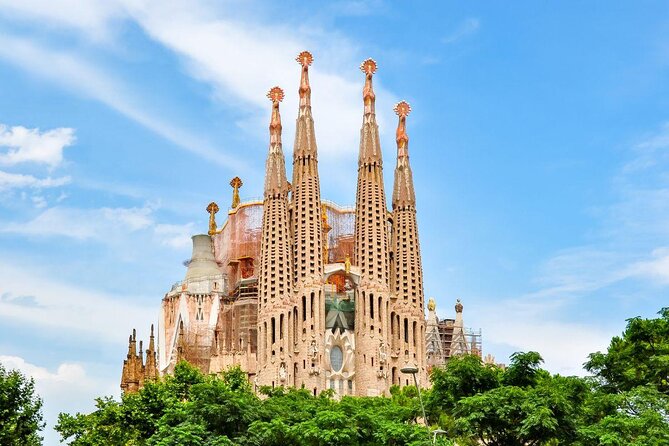
Your final stop is Sagrada Família. This is the architectural superstar of Barcelona, and it’s designed by Antoni Gaudí with influences that mix Gothic and Art Nouveau elements. Work began in 1882 and continues to this day.
Your guide will point out symbolic sculptures and the spires that make the basilica unmistakable from a distance. Even without tickets included, the exterior gives you plenty to react to on the street.
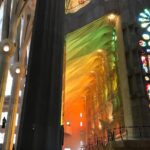
The big “inside” hook is the stained-glass effect. Your guide will likely explain how the light changes the interior mood, even though you won’t be going inside with the tour. If you’re planning an interior visit, this is the moment to decide whether you want to book it later.
One more practical note: the tour ends near all metro and buses at Sagrada Família. That’s helpful if you’re tired, need to get back quickly, or want to keep exploring on your own right after.
Guides make or break the experience (and this one leans hard on them)
The single biggest reason people rate this tour so highly is the guiding. You’ll hear lots of guiding styles, but the common thread is clarity, pacing, and helpful city knowledge.
Different guides have different strengths. For example:
- Lisa is known for using photos to explain what you’re looking at.
- Julie helps you connect Gaudí’s life struggles to how the designs came together.
- Jarrod is often praised for managing movement even in rain.
- Ram and Catherine tend to balance art talk with practical visitor tips.
Even better: several guides explicitly coach you on the Metro. You get advice on ticket options and transfers, which saves time and stress later.
Metro and timing: two short rides, a lot of walking
This isn’t a sit-and-see bus tour. You’ll do a walking route plus two short Metro trips. That combination is why the tour can cover many major Gaudí works in one outing.
Plan for:
- Walking pace that works best with steady shoes.
- A little crowd management in busy sections like Passeig de Gràcia.
- Quick transitions. If you stop to browse every shop, you’ll slow the group.
If you already have a Metro pass, it can make transfers easier. If you don’t, ask the guide early. The tour is designed to help you figure out the best way to move between stops.
Photo strategy: how to get great shots without lingering
Your route is packed, so you have to photograph smart.
Here’s the approach I’d use:
- Take one wide shot first (so you remember the building’s shape).
- Then take two detail shots of the features your guide highlights.
- Finally, shoot one “context” photo showing street life or boulevards around the facade.
This way you get more than Instagram-style postcards. You’ll capture the relationship between Gaudí and the city fabric around him.
Also, don’t underestimate weather. One highlight from the experience history is that guides can keep going in rain, with humor and a plan. Barcelona weather can shift fast, so layer up and keep your phone protected.
Price and value: what you really get for $3.63
At $3.63 per person, the math is simple: the upfront cost is low, but your guide’s compensation comes from your end-of-tour donation. That means your real decision is whether you want a guided, story-led exterior walk across multiple top Gaudí sights.
For me, the value equation looks like this:
- You’re not paying for multiple attraction tickets.
- You’re paying for a local English guide and a structured route.
- You’re buying time and clarity—someone else is sorting the details so you don’t have to.
If you love architecture but hate long ticket lines, this is a strong fit. If you expect inside access to everything, you’ll feel limited.
Who should book this Gaudí tour
This works best if you:
- Want a fast Gaudí introduction across several neighborhoods.
- Prefer exterior architecture with explanations over museum-style deep dives.
- Appreciate practical guidance, including Metro tips.
- Like photo stops and quick city context.
It’s also a good option for solo travelers. You’ll still get group interaction, and the guide helps you move efficiently without feeling lost.
If your main goal is to see the interiors of Casa Batlló, Casa Milà, and Sagrada Família, consider pairing this with separate timed tickets. The walk gives you the story. The ticket visit gives you the wow factor inside.
A quick heads-up on pacing and group size
Group sizes can matter for experience quality. The information you have suggests a cap per reservation of 6, with an overall maximum of 20 travelers for the activity.
In a tour that depends on walking together, bigger groups can mean you move faster with less personal time. If you’re sensitive to that, pick a day when you can accept a lively pace, and arrive ready to listen.
Also, since the tour is in English, make sure your comfort level with spoken English is strong. If a guide’s speaking speed doesn’t work for you, it helps to communicate early and politely so they can adapt.
Should you book this tour?
Yes—if you want the best route into Gaudí’s Barcelona in one outing, without spending money on a stack of tickets. This tour is especially worth it as a first day plan, when you need orientation and a guide to point out what matters.
Skip it or plan to add extra tickets later if you expect to enter the buildings as part of the tour. This is an exterior-focused experience, and Sagrada Família interior access is a separate decision.
If you do book, bring comfy shoes, prepare for Metro transitions, and bring a bit of curiosity. The guides who do well here tend to turn street-level details into stories you can carry all week.
FAQ
Is the tour in English?
Yes. The tour is offered in English.
How long is the Gaudí & Sagrada Familia donation-based tour?
It runs about 2 hours 30 minutes.
What does the price include?
It includes a professional English-speaking local guide. Attraction tickets are not included.
Are tickets to the Gaudí buildings included?
No. Buildings are seen from the outside only, and you’ll need to buy tickets separately if you want to go inside.
Do I need to take public transportation during the tour?
Yes. You’ll be required to take 2 short Metro trips.
Where do I meet the guide?
You meet at Plaça Reial (Plaça Reial, Ciutat Vella, 08002 Barcelona, Spain). The tour ends near Sagrada Família (Carrer de Mallorca, 401, L’Eixample, 08013 Barcelona, Spain).
What time does the tour start?
The start time is 11:00 am.
Is there a donation at the end?
Yes. The tour is donation-based, and you give a donation to the guide at the end based on satisfaction.
What is the cancellation policy?
You can cancel for a full refund if you cancel at least 24 hours before the experience’s start time.