REVIEW · COPENHAGEN
Copenhagen: Guided Architecture and Sustainability Tour
Book on GetYourGuide →Operated by Tropical Bikes · Bookable on GetYourGuide
Copenhagen’s buildings start talking when you pedal. This 3-hour architecture and sustainability bike tour shows how design decisions affect daily life, from harbour areas to modern neighborhoods. I love that it uses a bike route to get you off the main tourist spine and into the parts of town where planning is easiest to spot.
I also really like the way the guides translate big ideas into human-size stories, including guide styles you may hear from Rene’, Jörn, John, and Josephine. One possible drawback: the focus leans strongly toward newer, mostly 21st-century urban design, so if you want deep medieval or older history, you might feel slightly shorted.
Key points to know before you go
- Bike-first touring: you cover roughly 17km in about 3 hours, so you see more than you could on foot.
- Sustainability made practical: you’ll connect architecture choices to how people live, not just pretty façades.
- Off-the-beaten tracks: harbour redevelopment zones and everyday neighborhoods get real attention.
- Smart stops, not rushed sightseeing: you pause often for guided explanations and scenic lookouts.
- Comfort basics included: helmet, rain poncho, luggage storage, and a comfy lounge before and after.
- Choose the right bike: standard frames plus kids’ bikes are available if you reserve ahead.
In This Review
- Enter Copenhagen’s modern design with a bike, not a bus
- Price and what $70 buys you in real value
- Meeting at Tropical Bikes and choosing the right bike size
- The 3-hour route: Blox, bridges, and harbour changes
- Blox: a quick start with modern city thinking
- Lille Langebro: why bridges matter more than you think
- Havnebadet Islands Brygge: public water access as design
- Karen Blixens Plads to Ørestad: modern living with sustainability in the mix
- Karen Blixens Plads: architecture as daily meeting point
- Ørestad: modern architecture built for everyday routines
- Tietgen Residence Hall: housing and city-scale thinking
- Amager Fælled and E/F Gemini Residence: people, movement, and shared space
- Amager Fælled: nature and city life in the same story
- E/F Gemini Residence: housing experiments you can actually see
- Cykelslangen to Kaktus Towers: bicycle infrastructure as architecture
- Cykelslangen: a scenic drive that teaches the city’s rhythm
- Kaktus Towers: a closer look at modern vertical living
- Enghave Plads and Israels Plads: redevelopment with heritage and greener goals
- Enghave Plads: neighborhood-scale sustainability
- Israels Plads: transformation and a greener future
- What the guide actually brings to the ride
- Who should book this architecture and sustainability bike tour
- Practical tips: gear, phone mounts, rain, and keeping your day easy
- Should you book it? My take on when this tour is worth it
- FAQ
- How long is the tour, and how far will I cycle?
- Where do we meet, and does the meeting point ever change?
- Are helmets and rain gear included?
- What bike sizes are available, including for children?
- Can I upgrade to an e-bike or get special seating for kids?
- What language are the guides?
- What’s the cancellation and payment approach?
Enter Copenhagen’s modern design with a bike, not a bus
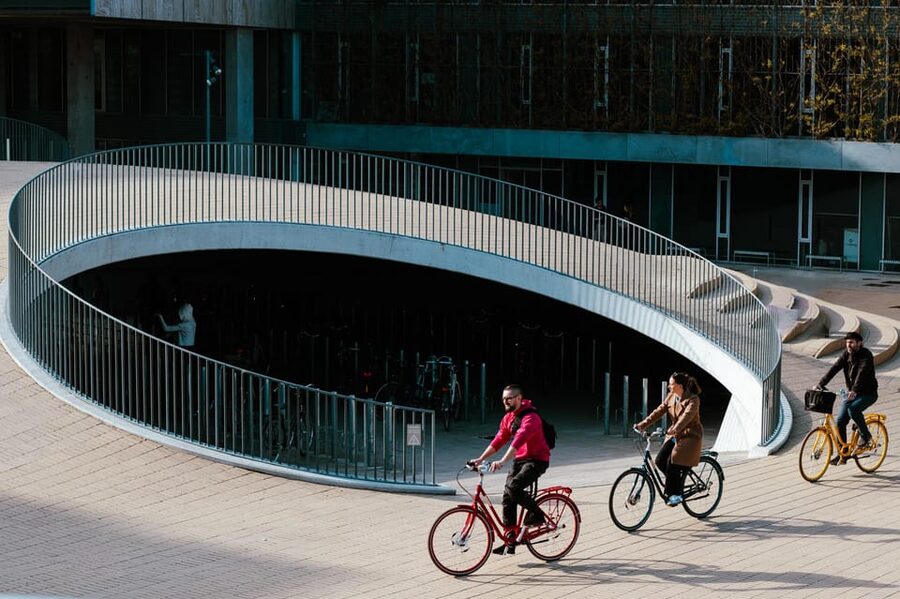
Copenhagen has a talent for mixing old and new, but this tour helps you see the “new” as more than design for design’s sake. You ride through areas where urban planning shows up in how buildings, streets, and public spaces work together. That’s the big idea behind the tour: sustainability isn’t a slogan here; it’s built into the city’s choices.
You’re also not stuck staring through a window. On a bike, you notice scale fast. You feel how wide (or narrow) a street is. You sense where people gather. You catch the rhythm of the city’s infrastructure. And yes, you’ll get the best of Copenhagen’s signature bike culture, which is half the charm.
The ride itself is about 3 hours and roughly 17km total. You start and finish at Tropical Bikes (with options depending on what you book), and you’ll stop regularly to look, listen, and take pictures.
Price and what $70 buys you in real value
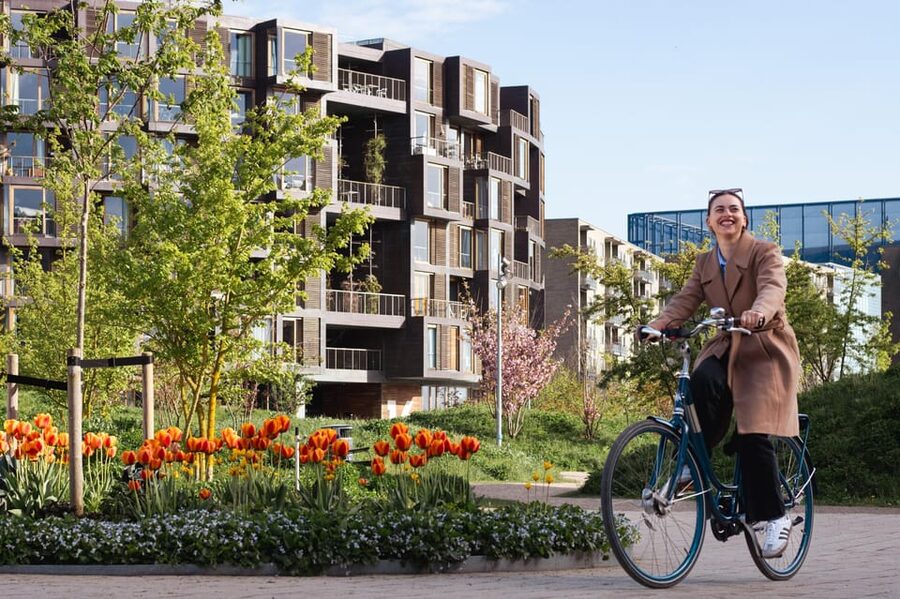
At around $70 per person for a 3-hour guided experience, the value depends on one thing: do you want guided context plus a bike? If yes, this is one of the cleaner deals in town.
Here’s what’s included that usually costs extra on your own:
- A guide (English, with German also available)
- A bike in multiple frame sizes, plus a helmet
- A rain poncho if weather turns
- Luggage storage
- A comfy lounge before and after the tour, with toilets
Add those up and it changes the math. You’re not only paying for the “talk.” You’re paying for the full setup to ride comfortably, even if it’s damp. And the route is designed to teach you something, not just move you between landmarks.
What’s not included:
- Baskets and phone holders (sold on-site for 49 DKK each)
- Bike upgrades like e-bikes, e-cargo, tandem/cargo setups, or child seats (reserve in advance)
You can also read our reviews of more tours and experiences in Copenhagen.


Meeting at Tropical Bikes and choosing the right bike size
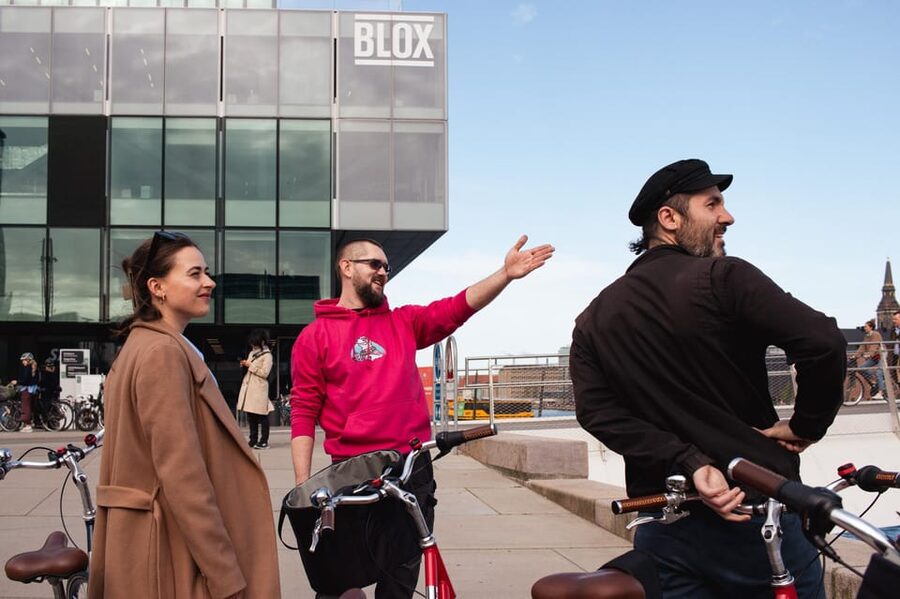
Your meeting point may vary based on the option you book, but it’s all tied to Tropical Bikes around Vester Voldgade 2A. From there, you’re set up quickly and guided onto the right route.
Bike sizing matters here because the tour is about comfort and control. You can get:
- Standard adult frames: 48cm, 51cm, and 56cm
- Kids’ bikes: 24′ and 26′ frames (reserve beforehand)
If you need a boost, you can reserve upgrades in advance, including an e-bike, e-cargo, or cargo/tandem options, plus child-seat add-ons. Since these upgrades aren’t automatic, plan ahead if your family or group has special needs.
The 3-hour route: Blox, bridges, and harbour changes
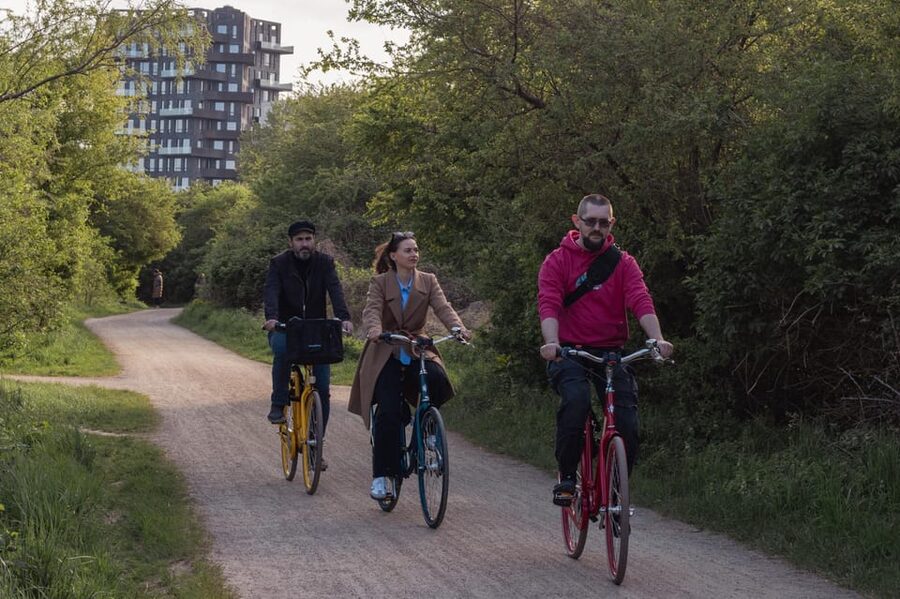
The tour starts with early stops that help you build a mental map before you move into the modern zones.
Blox: a quick start with modern city thinking
You’ll stop at Blox briefly to get oriented. This kind of opening stop works well for bike tours because it gives you a framework for what you’re about to see next. Instead of listing buildings, the guide ties design choices to how Copenhagen plans for people, not just cars.
Lille Langebro: why bridges matter more than you think
At Lille Langebro, you get a guided look at a bridge that’s more than a crossing. In cities like Copenhagen, bridges shape movement and views, and they help knit neighborhoods together. It’s a short stop, but it sets up the bigger theme: infrastructure is part of the architecture story.
Havnebadet Islands Brygge: public water access as design
Next comes Havnebadet (Islands Brygge). This is one of those Copenhagen ideas where the city uses space in a practical, human way. You’re not only looking at buildings; you’re seeing how people actually use the waterfront. A harbour isn’t just scenery here. It’s part of how the city functions day to day.
Karen Blixens Plads to Ørestad: modern living with sustainability in the mix
Once you’re rolling farther out, the tour leans into the Copenhagen that feels planned and intentional.
Karen Blixens Plads: architecture as daily meeting point
At Karen Blixens Plads, you’ll spend a bit of time with the guide. Plazas like this are useful for learning because you can see how space affects behavior. The tour’s sustainability theme shows up in details like how public areas are used, how people move, and how the city balances function with comfort.
Ørestad: modern architecture built for everyday routines
You’ll reach Ørestad with a scenic stretch along the way. This is a key part of the tour’s pitch: Ørestad is where modern design meets sustainable living. You’ll get explanations that connect architectural form with city planning logic, not just visual wow-factor.
If you’re the kind of person who likes to understand why a city looks the way it does, this is a highlight zone. It’s also where the tour feels most “about the point,” instead of just sightseeing.
Tietgen Residence Hall: housing and city-scale thinking
At the Tietgen Residence Hall, the guide helps you read the building as part of a bigger system. Residential architecture tells you a lot about values: what the city prioritizes, how communities are supported, and how daily needs get designed into form.
In places like this, sustainability often shows up in the human experience of housing and neighborhood structure.
Amager Fælled and E/F Gemini Residence: people, movement, and shared space
This is where Copenhagen’s planning starts to feel personal.
Amager Fælled: nature and city life in the same story
The stop at Amager Fælled is guided, which matters because it can be easy to miss what the city is doing if you just look at the greenery. This area helps you understand how outdoor space is planned into urban life, and why that’s part of “sustainability” in Copenhagen’s sense: health, space, and livability.
E/F Gemini Residence: housing experiments you can actually see
At E/F Gemini Residence, you’ll get a guided look at another residential example. The point isn’t to memorize facts. It’s to notice how housing connects to community life and how design decisions influence what feels possible for residents.
In Copenhagen, that’s often the hidden story behind architecture. It’s not only style. It’s behavior and routine.
Cykelslangen to Kaktus Towers: bicycle infrastructure as architecture
You’ll ride past Cykelslangen, known for being a standout piece of bicycle infrastructure. This is one of those stops where you’ll understand the city’s bike love in your bones. The route treats cycling infrastructure like it belongs in the architecture conversation, because it does.
Cykelslangen: a scenic drive that teaches the city’s rhythm
The tour gives you time here for a guided look, but the best part is the feeling of moving through Copenhagen as the city intends: on bikes, with dedicated flows. It’s short, but it’s the kind of moment that sticks.
Kaktus Towers: a closer look at modern vertical living
Next up is Kaktus Towers. You’ll spend about 10 minutes with the guide, which is enough time to spot the big design traits and connect them to the tour’s theme: how modern buildings fit into a greener, more livable city.
Enghave Plads and Israels Plads: redevelopment with heritage and greener goals
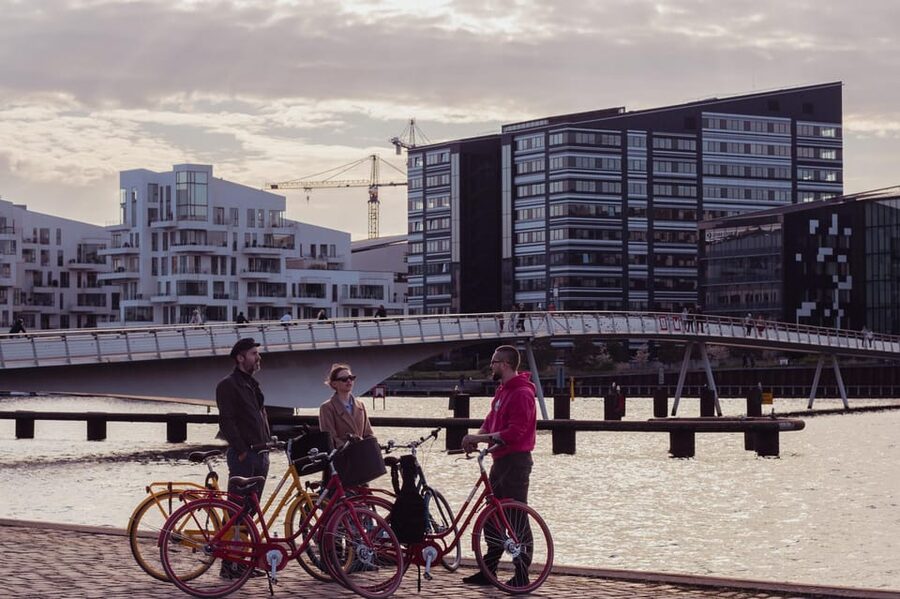
Toward the end, the tour returns to a theme that Copenhagen does well: reworking older industrial spaces into places people actually want to be.
Enghave Plads: neighborhood-scale sustainability
At Enghave Plads, you’ll get a guided stop that helps you read urban design at street level. This is where you can often see sustainability principles most clearly: comfort in public spaces, how areas are used, and how the city supports everyday life without making you fight for it.
Israels Plads: transformation and a greener future
At Israels Plads, the guide focuses on change over time. This area connects directly to the tour’s theme of historic places being reshaped into environmentally conscious spaces while still respecting heritage. The goal is not to “erase the past,” but to repurpose space for modern needs.
As you pass the harbour area, you may also hear about how industrial sites have been turned into community hubs, including places like Kødbyen. Even without a long stop, you get the logic of the transformation: design choices that help old areas become useful again for people and culture.
What the guide actually brings to the ride
A big reason this tour scores well is that the guide isn’t just naming buildings. They explain how Copenhagen’s sustainability thinking affects the city’s structure. You’ll also see that guides try to keep the group moving safely, with regular check-ins and time to look closely at architecture.
The guide experience seems to vary by person, but the pattern is consistent: friendly, competent instruction, lots of short stops, and a style that makes the bike part feel controlled rather than chaotic. If you’re anxious about riding in a group, that’s a comfort factor.
One caution from the overall experience: the content leans modern. You’ll learn a lot about what Copenhagen built and how it thinks now. If you’re hoping for a heavy, early-history lesson, you might find the earlier timeline coverage lighter than expected.
Who should book this architecture and sustainability bike tour
This tour is a strong fit if:
- You can ride a bike confidently and want a guided route in a city built for cyclists
- You like modern architecture and urban design more than museum-style history
- You care about sustainability as a real planning tool, not just a green checklist
- You want a “Copenhagen you don’t have to hunt for” day, with off-main attractions
It may not be for you if:
- You don’t ride bikes, since the tour is not suitable for people who can’t
- You expect a deep dive into older centuries of architecture rather than 21st-century city planning
- You prefer a very slow pace with lots of extra stops for photos. The route is active by nature.
Practical tips: gear, phone mounts, rain, and keeping your day easy
Copenhagen weather can flip, but this tour starts in any weather. Good news: you get a rain poncho. Still, wear comfortable shoes and dress for the conditions.
A few smart things to plan:
- Bring layers. Even when it looks mild, bike wind can change things.
- If you want a phone mount or basket, those aren’t included. You can buy 49 DKK phone holders or baskets on-site.
- If you’re traveling with kids, reserve the children’s bike (24′ or 26′) in advance.
- If you think you might need an e-bike or child-seat setup, reserve upgrades ahead of time, since they’re not automatic.
Also use the luggage storage. You’ll feel better without bags bouncing around while you ride.
Should you book it? My take on when this tour is worth it
I think this is a smart choice for a first or second visit to Copenhagen if you want a guided structure that stays active and practical. The route is built around architecture you can experience at bike speed, plus sustainability ideas that connect to how neighborhoods work. For the $70 price point, the included bike, helmet, poncho, and lounge make the day feel complete rather than piecemeal.
Book it if you want to learn how Copenhagen became one of the greenest and friendliest cities through planning decisions you can actually see. Skip it if you’re chasing older historical monuments above all, or if you’re not comfortable riding for the full distance.
If you want one more planning check: the route doesn’t mention every single major waterfront landmark you might hear about. If you’re targeting very specific towers or extra bridges, compare your expectations with what the route emphasizes for your date.
FAQ
How long is the tour, and how far will I cycle?
The tour lasts about 3 hours, and you’ll cycle a total of roughly 17km.
Where do we meet, and does the meeting point ever change?
The meeting point can vary depending on the option you book, but the tour is connected to Tropical Bikes at Vester Voldgade 2A. The exact start point depends on your selected option.
Are helmets and rain gear included?
Yes. You’ll get a helmet and a rain poncho in case of rain.
What bike sizes are available, including for children?
Adult bikes come in frame sizes of 48cm, 51cm, and 56cm. Children’s bikes are available with 24′ and 26′ frames, but you need to reserve them beforehand.
Can I upgrade to an e-bike or get special seating for kids?
Yes. E-bikes and e-cargo options are available, as well as cargo/tandem upgrades and child seats. These upgrades need to be reserved in advance.
What language are the guides?
Tours run with live guides in English and German.
What’s the cancellation and payment approach?
You can cancel up to 24 hours in advance for a full refund. You can also reserve now and pay later, so you can book your spot and pay nothing today.