REVIEW · FLORENCE
Architectural Florence: Private Tour with a Local Expert
Book on Viator →Operated by LocalBini - The go-to platform for Experiences by Locals in Europe · Bookable on Viator
Florence looks different when someone points out the details. This private architectural tour is built around what makes the city’s buildings tick. I like that you get a focused route—Renaissance and Gothic side by side—without feeling rushed across town.
Two things I really enjoyed: the local expert’s very detailed explanations of Florence’s architecture, and the way the itinerary strings iconic sights together into one coherent story. One thing to consider: it’s not ideal if you have limited mobility, since it’s a walking tour and the pace can’t be made fully wheelchair-friendly.
In This Review
- Key Highlights You’ll Care About
- A 2-Hour Architecture Route That Makes Florence Click
- Getting Started: Santo Spirito to Set Your Architectural Baseline
- Santa Maria Novella: When Gothic and Renaissance Share the Same Stage
- Florence Cathedral and Brunelleschi’s Dome: Seeing Power in Stone
- Giotto’s Bell Tower: The City in View
- Palazzo Vecchio: Civic Power in Medieval Stone
- Santa Croce: Art Treasures and the Human Side of Architecture
- Uffizi Gallery: A More Organized Way to See World-Class Art
- Ponte Vecchio: The Arno Crossing That Feels Like Florence Itself
- Palazzo Pitti: Renaissance Grandeur and Medici Ambition
- The Villa and Gardens: Where Art, Architecture, and Nature Meet
- What Makes This Tour Worth It (And What Might Not)
- Who Should Book This Private Architectural Florence Tour?
- Price and Timing: Is $786 Reasonable for Up to Two?
- Where You’ll Meet and Where You’ll End
- FAQ
- FAQ
- How long is the Architectural Florence private tour?
- What’s the group size for this tour?
- What language is the tour offered in?
- Where does the tour start and end?
- Are entry tickets for the cathedral and museums included?
- What’s included in the price?
- Is a mobile ticket provided?
- Is the tour suitable for people with impaired mobility?
- Are service animals allowed?
- How does cancellation work?
- Should You Book This Private Architectural Tour?
Key Highlights You’ll Care About
- Private, up to 2 people: more conversation time and fewer crowds pressing in
- Architecture-first route across Renaissance, Gothic, and civic Florence
- Uffizi Gallery included in the walk for an easier, more structured visit
- Cathedral complex views and context beyond just taking photos
- Ponte Vecchio and Arno moments where Florence’s charm is physical, not abstract
- Flexible pacing with itinerary adjustments for weather and your interests
A 2-Hour Architecture Route That Makes Florence Click
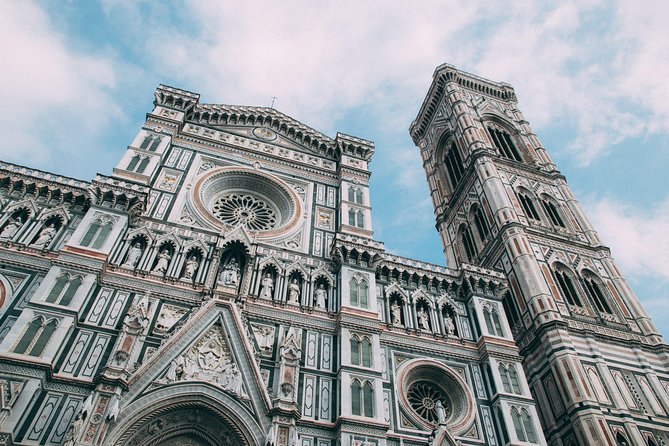
This is the kind of Florence tour that helps your brain stop treating buildings like a list. Instead, you start seeing how designers solved problems—light, space, structure, and power—using the style of their time.
Because it’s a private tour for up to 2, the guide can steer you toward the details you actually care about: domes and engineering, church art and façade design, or the civic identity carved into palaces and towers. The itinerary also adapts to your walking pace and interests, which matters in Florence where you can go from inspiring to exhausted fast.
For value, the math looks a little different than group tours. It costs about $786 per group (up to 2), so the real question is whether you want a custom-feeling, local-led architecture walk for your small group. If you like learning while you travel, the price starts to make sense.
You can also read our reviews of more tours and experiences in Florence.

Getting Started: Santo Spirito to Set Your Architectural Baseline
The tour begins at Basilica di Santo Spirito in Piazza Santo Spirito. This spot is a great opener because it introduces Renaissance thinking in a way that doesn’t feel textbook.
At Santo Spirito, you’re looking at a church associated with Filippo Brunelleschi, famous for elegant simplicity and well-considered interiors. That combination is useful early in the tour: you get a baseline for what Renaissance design often looks like—clarity, proportion, and a sense of controlled calm.
What I like about using Santo Spirito as the start is that it trains your eye before you hit Florence’s bigger, flashier icons. You’ll be more prepared to notice how design choices shift from one building to the next.
Practical note: since the tour is about walking, I’d wear shoes you’re comfortable in for city sidewalks and frequent stops.
Santa Maria Novella: When Gothic and Renaissance Share the Same Stage
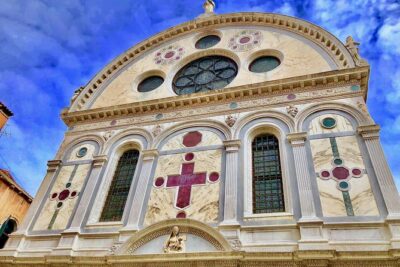
Next up is Santa Maria Novella at Piazza di Santa Maria Novella. This basilica stands out because it mixes Gothic and Renaissance elements, so it’s not just one style museum—it’s a real transition.
Here’s where the architecture focus pays off. A lot of people see facades and move on. On this kind of guided route, you can compare proportions, recognize stylistic “tells,” and understand why a landmark like this became a major religious and architectural reference point in Florence.
If you’re the type who likes reading buildings the way you read a map, Santa Maria Novella is a strong stop. It gives you more than visuals; it gives you something to compare.
Florence Cathedral and Brunelleschi’s Dome: Seeing Power in Stone
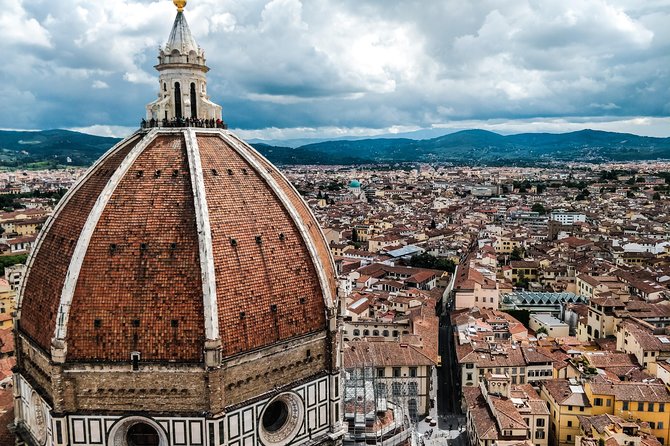
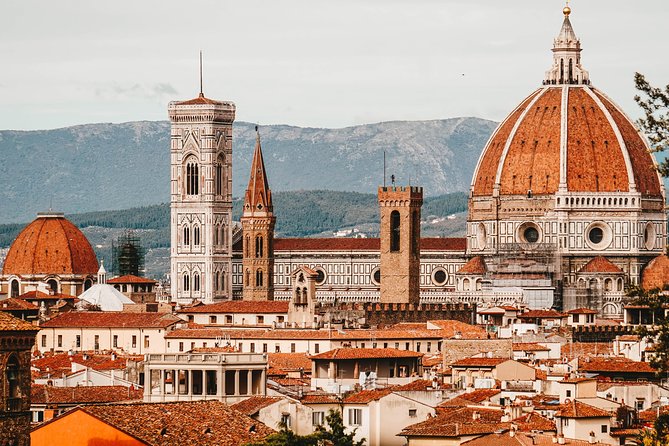
Then you hit the Cathedral (Santa Maria del Fiore) and its famous dome by Brunelleschi, towering over the skyline.
When you arrive here mid-walk, the dome can feel like the obvious highlight—but the guide’s job (and your payoff) is to help you understand why the dome mattered. Renaissance architecture in Florence wasn’t only about beauty. It was also about solving engineering problems and signaling cultural ambition.
Even if you’ve seen cathedral photos a hundred times, I think this stop lands better when you’ve just heard about how earlier buildings used different design logic. The cathedral becomes a conclusion to the style story so far, not just a famous name you recognize.
Giotto’s Bell Tower: The City in View
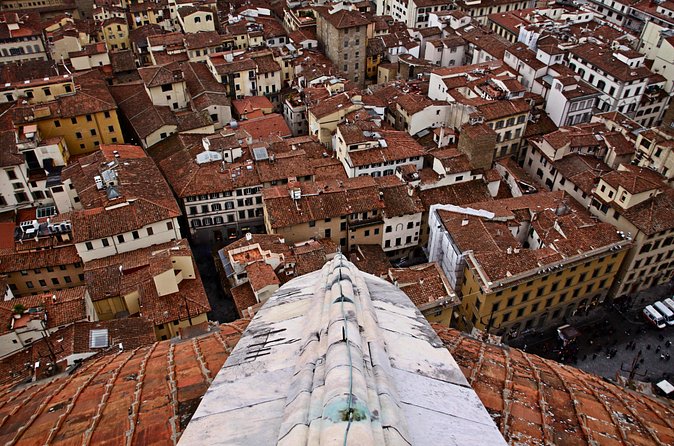
From the cathedral complex you move to the bell tower, a classic example of Florentine Gothic architecture with panoramic views.
This is one of those moments where the guide’s context changes your photos. The goal isn’t only to look. It’s to understand what you’re looking at: how civic and religious Florence sits on the same canvas.
If the weather is clear, take advantage of the view time. If it’s windy or rainy, expect the guide to adjust the route or stop priorities. The itinerary does say stops may vary based on conditions, so I plan for that and don’t treat the day like a checklist.
Palazzo Vecchio: Civic Power in Medieval Stone
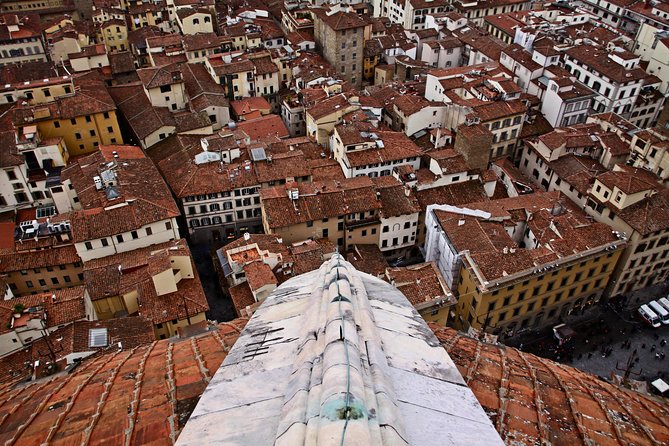
Overlooking Piazza della Signoria, you’ll visit Palazzo Vecchio, a medieval palace with a crenellated tower—basically a visual statement of civic power.
This stop is important because Florence isn’t only church architecture. Palazzo Vecchio gives you the other side of the story: how a city government expressed authority through building design and placement.
Inside the palace complex, you’ll also find important artworks and historic chambers, which helps you connect architecture to governance and public identity. It’s one of the best reminders that Florence’s style choices weren’t limited to churches.
Santa Croce: Art Treasures and the Human Side of Architecture
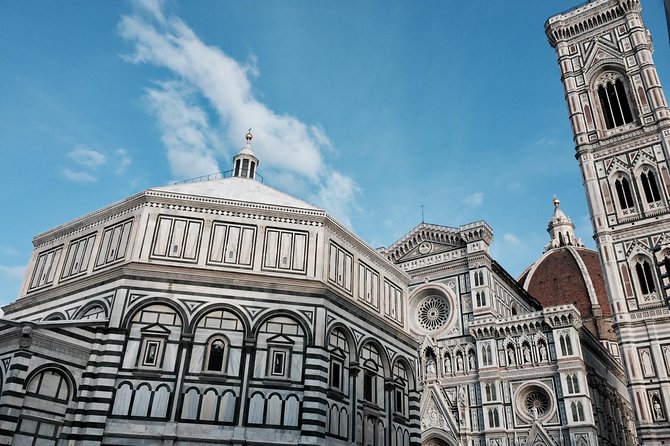
Next comes Santa Croce at Piazza di Santa Croce, the principal Franciscan church in Florence.
This is where you get a strong blend: Gothic and Renaissance styles plus art treasures and tombs of illustrious Italians. I find Santa Croce particularly effective on an architecture-focused tour because it turns stone and structure into something personal. You’re not only studying form—you’re also seeing how Florence remembered its people in sacred space.
Drawback to consider: if you’re not into church interiors or tomb sites, Santa Croce can feel like a lot in a single stop. In that case, ask the guide to point you toward the specific architectural features and key areas you’ll care about most, so it still feels like your tour.
Uffizi Gallery: A More Organized Way to See World-Class Art
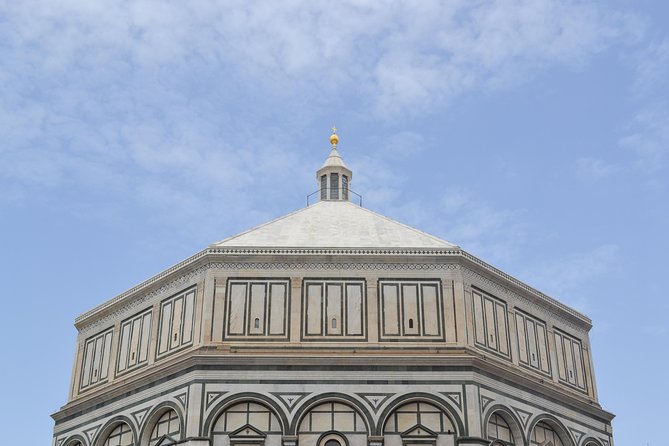
The tour then moves to the Uffizi Gallery near Piazza degli Uffizi. Uffizi is one of the most famous art museums in the world, and doing it “from the right angle” can make a big difference.
On this tour, you’re not just walking into a museum and wandering. You get a framework that helps you understand what you’re seeing, and that makes the visit easier to digest. Also, because this is a private route, you can adapt your attention span—especially important at a museum this size.
A key practical detail: museum entry tickets are not included. You’ll need to plan for that separately. If you’re traveling in busy seasons, I’d also think about timing so your Uffizi time doesn’t feel like it’s competing with everything else.
Ponte Vecchio: The Arno Crossing That Feels Like Florence Itself
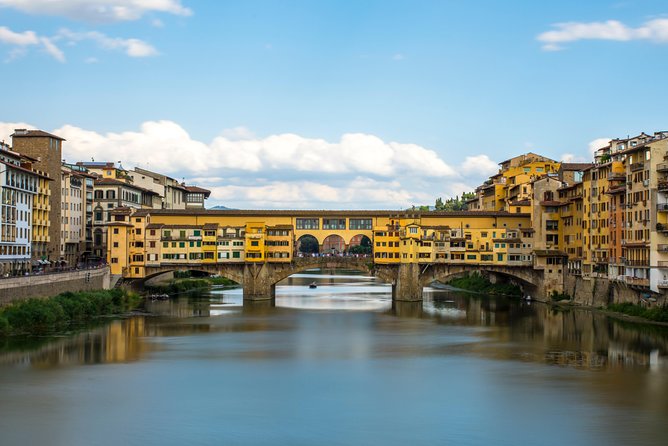
Then you reach Ponte Vecchio, the medieval stone bridge spanning the Arno River. It’s famous for shops built along it and for the way it symbolizes Florence’s historic charm and resilience.
This is a “you don’t need a lecture to enjoy it” stop, but the architecture guide still adds value by helping you connect the bridge’s design and its role in commerce. Instead of treating it as a photo spot, you’ll notice how the bridge functions as both passage and marketplace.
I also like how this stop gives you a physical break in the tour—less concentrated architecture “reading,” more city rhythm and river views.
Palazzo Pitti: Renaissance Grandeur and Medici Ambition
After the bridge, you move to Piazza de’ Pitti and the Palazzo Pitti, a Renaissance palace housing several important museums. It’s closely tied to the grandeur of the Medici family and Florence’s artistic heritage.
Pitti is a strong pivot point in the tour. Earlier you saw civic and religious Florence. Here you see wealth, status, and how power expresses itself through scale and artistic patronage.
If you’ve ever felt like Florence’s palaces blur together, the guide’s architecture framing can help you keep them distinct. You’re not just seeing another big building—you’re comparing what each building is trying to accomplish.
The Villa and Gardens: Where Art, Architecture, and Nature Meet
The final stretch focuses on a villa and its beautiful gardens, representing Renaissance culture and the integration of art, architecture, and nature.
Even without naming every garden detail, the idea matters. Florence’s Renaissance vision wasn’t only about buildings placed in cities. It was also about designing experiences—moving through spaces, controlling views, and blending human-made beauty with landscape.
This last part can also soften the edges of a tour that includes multiple major landmarks. By the time you reach the villa-and-gardens area, you often want something calmer and more atmospheric.
What Makes This Tour Worth It (And What Might Not)
Here’s what I think the best version of this tour delivers:
- The guide’s detailed architecture knowledge (that’s the standout praise you’ll feel in the way each stop is explained).
- A tight route that helps you remember what you saw, because each building connects to the next.
- A private format that keeps you from getting lost in crowds while trying to understand complex sites.
What might not fit everyone:
- If you’re not comfortable with walking, this isn’t the right bet. The tour isn’t recommended for guests with impaired mobility.
- If you’re hoping for a long, deep museum immersion, the total duration is only about 2 hours, so the Uffizi stop is necessarily selective.
Who Should Book This Private Architectural Florence Tour?
I’d point you toward this tour if:
- You like architecture and want explanations that go beyond surface-level facts.
- You’re visiting Florence for a short time and want the key buildings tied together.
- You prefer a small-group pace where you can ask questions and get your day tailored.
I’d skip it or rethink it if:
- You need a mostly seated, low-walking experience.
- You’re only interested in one or two museums and would rather spend more time inside each than walking between them.
Price and Timing: Is $786 Reasonable for Up to Two?
At $786 per group (up to 2), this tour isn’t a “cheap add-on.” The cost makes sense when you compare it to hiring separate guide time or doing a scattered self-guided architecture day.
The value comes from three things:
1) Private time with a local expert
2) A route that balances major landmarks with meaningful architectural context
3) Flexibility for pacing and interest, which you don’t get in bigger group tours
Also, it’s typically booked about 30 days in advance on average, which is a hint that popular dates can sell out. If your schedule is fixed, I wouldn’t wait until the last week.
Where You’ll Meet and Where You’ll End
You start at Basilica di Santo Spirito (Piazza Santo Spirito, 30) and end at Costa S. Giorgio, 2. That matters because Florence has limited “drop-off” options if you’re trying to keep the rest of your day convenient.
Since it ends at Costa S. Giorgio, I’d plan your later sightseeing nearby rather than immediately jumping across the city.
FAQ
FAQ
How long is the Architectural Florence private tour?
It runs for about 2 hours.
What’s the group size for this tour?
It’s an exclusive private tour for your group, up to 2 people.
What language is the tour offered in?
The tour is offered in English.
Where does the tour start and end?
It starts at Basilica di Santo Spirito in Piazza Santo Spirito and ends at Costa S. Giorgio, 2.
Are entry tickets for the cathedral and museums included?
No. Entry tickets for transportation, museums, and monuments are excluded.
What’s included in the price?
The price includes a local expert guide, an exclusive private tour, and a tailored itinerary.
Is a mobile ticket provided?
Yes, the tour uses a mobile ticket.
Is the tour suitable for people with impaired mobility?
It is not recommended for guests with impaired mobility.
Are service animals allowed?
Yes, service animals are allowed.
How does cancellation work?
You can cancel for a full refund up to 24 hours before the experience starts.
Should You Book This Private Architectural Tour?
If you want Florence to feel like more than a photo tour, I’d book it. The biggest win here is the way the architecture tour links buildings together with a local expert’s detailed explanations, especially the Cathedral complex and the mix of Gothic and Renaissance stops.
Book it when you:
- like architecture and want a guided framework
- have a tight schedule and need the right sequence of sights
- prefer private, small-group attention
Skip it if:
- you need a low-walking plan
- you’d rather spend longer inside one museum than cover many iconic exteriors and key interiors
If your ideal Florence day is “learn while you walk,” this private architecture route is a strong, practical choice.