REVIEW · COPENHAGEN
Copenhagen: Harbor Architecture Private Walking Tour
Book on GetYourGuide →Operated by Walk and Tour Copenhagen · Bookable on GetYourGuide
Copenhagen’s harbor tells stories in stone and steel. This 2-hour private walk connects the city’s old port life to newer waterfront design, with stops built around the look and feel of Copenhagen’s modern architecture.
I really like that the tour is small and guided, so you’re not just looking at buildings—you’re learning why they were shaped the way they are. The route also hits the must-see waterfront zones like Nyhavn and the design-minded harbor developments.
One thing to consider: this is a walking tour, and it’s not suitable for people with mobility impairments or wheelchair users. Wear comfortable shoes and bring water, because it runs rain or shine.
In This Review
- Key Takeaways Before You Go
- From Scandic Hotel to Ofelia Plads: The Harbor “Opening Scene”
- Nyhavn’s 17th-Century Waterfront: Color, Commerce, and Creative Life
- Krøyers Plads Pause: A Quick Reset on the Way Between Eras
- Papiroen: When an Old Paper Mill Becomes a Modern Harbor Neighborhood
- Operaen on the Water: Modern Design as a Cultural Landmark
- Cirkelbroen (Circle Bridge): A Pedestrian Crossing With a Design Idea
- Royal Library of Denmark Photo Stop: Quick Views, Big Visual Impact
- Danish Architecture Centre: A Small Culture Stop With Context
- Price Worth Thinking Through: $394 for a Private Group Up to 2
- The Private-Guide Difference: How You’ll Experience the Harbor
- Weather, Shoes, and Simple Prep That Actually Helps
- Who Should Book This Harbor Architecture Walk
- Should You Book This Tour? My Quick Decision Guide
- FAQ
- How much does the Copenhagen Harbor Architecture Private Walking Tour cost?
- How long is the tour?
- Is this a private tour?
- Where do we meet the guide?
- What languages are available for the guide?
- Does the tour run in bad weather?
- What’s included in the price?
- Is hotel pickup or drop-off included?
- Is this tour wheelchair-friendly?
Key Takeaways Before You Go
- Private for up to 2 people means you get a conversation, not a lecture.
- Nyhavn’s 17th-century waterfront sets the tone with colorful facades and port stories.
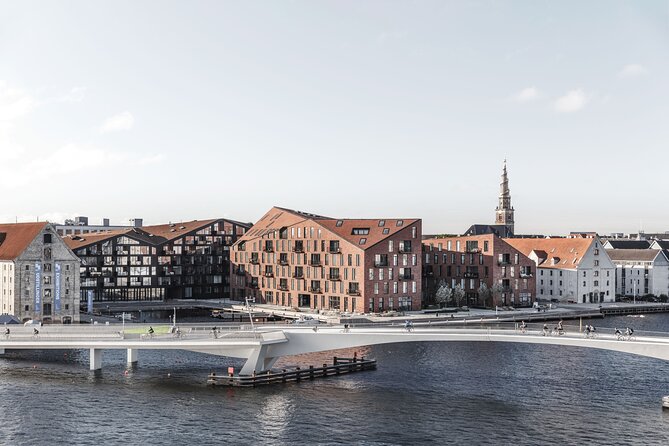
- Papiroen’s paper-mill transformation shows how Copenhagen reuses industrial spaces for daily city life.
- Operaen’s modern waterfront presence gives you a quick lesson in how cultural buildings shape a skyline.
- Cirkelbroen (Circle Bridge) turns a simple crossing into a design moment with a circular theme.
- Danish Architecture Centre and Royal Library photo time add context and great visual payoffs.
From Scandic Hotel to Ofelia Plads: The Harbor “Opening Scene”
The tour starts in a very practical spot: in front of the Scandic Hotel, right on Ofelia Plads. If you’re staying nearby, this is the kind of meeting point that makes it easy to arrive on time without playing detective with transit connections.
Ofelia Plads is close to Nyhavn, so you quickly get into the harbor mindset: canals, quays, bridges, and that Copenhagen rhythm where waterfront architecture feels like it’s part of everyday life, not a separate attraction. You’ll begin with a short guided introduction (about 15 minutes), which is smart—because you’ll understand what you’re seeing before you start snapping photos.
The big value here is that your guide ties buildings to movement. You’re walking along the waterline and learning what the harbor used to do for the city, and what it’s trying to do now. That “why” matters more than memorizing dates.
You can also read our reviews of more tours and experiences in Copenhagen.



Nyhavn’s 17th-Century Waterfront: Color, Commerce, and Creative Life
Nyhavn is the stop most people recognize, but this tour makes it more than a postcard. You’ll spend about 15 minutes there with the guide walking you through what makes the waterfront special—especially its origins as a working port and the way the neighborhood became a social magnet.
What I like about this part is the balance. You get the visual wow (the classic colorful buildings and busy waterfront energy), but you also get the stories that explain why artists and writers were drawn here. Even if you’re not a history person, those human details help you look past the facades and notice the bigger pattern: Copenhagen used the harbor as a stage for city life.
A practical tip: this is a great place to decide which direction you want your photos to go. The harbor lines up nicely for shots that show buildings plus water, and with only a 2-hour total duration, you’ll want to be efficient with your camera time.
Krøyers Plads Pause: A Quick Reset on the Way Between Eras
After Nyhavn, you’ll continue through the harbor area and stop for about 15 minutes at Krøyers Plads. This isn’t framed as a long “main character” stop, but it plays an important role: it’s your breather point where the guide can connect what you just saw to what’s next.
If you’ve ever done architecture walks that hop randomly from landmark to landmark, you’ll appreciate this. The goal here isn’t just to tick boxes. It’s to show you how Copenhagen layers new waterfront thinking on top of older port structure—sometimes right in the same view.
Even a short pause helps in bad weather, too. Rain or shine, you’ll be walking, so having these built-in moments keeps the pace comfortable.
Papiroen: When an Old Paper Mill Becomes a Modern Harbor Neighborhood
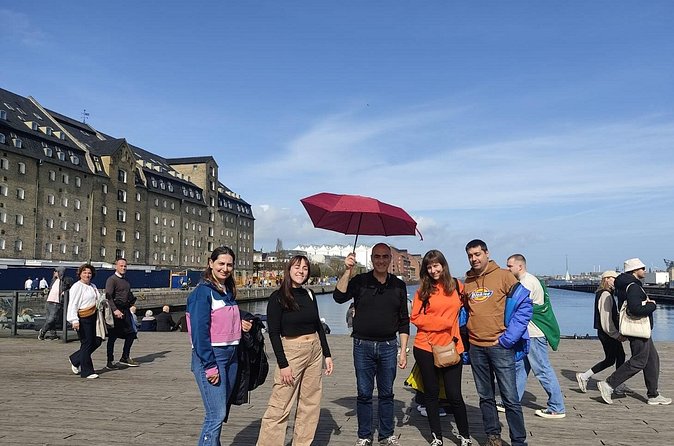
Next comes Papiroen, about a 15-minute stop with guided context. The theme is reuse—specifically, how a former paper mill has been transformed into a lively harbor-side area that still holds onto its industrial past.
What’s most interesting here is the “preserve and adapt” approach. The guide explains the development of the area and points out how the market buildings’ architecture works in the waterfront setting. You also get harbor views from this part of the walk, so it’s not only about buildings; it’s about how the built environment frames the water.
For me, this is where the tour starts to feel more current. Nyhavn shows you the classic face of the harbor. Papiroen shows you how Copenhagen keeps moving without erasing its earlier work.
Operaen on the Water: Modern Design as a Cultural Landmark
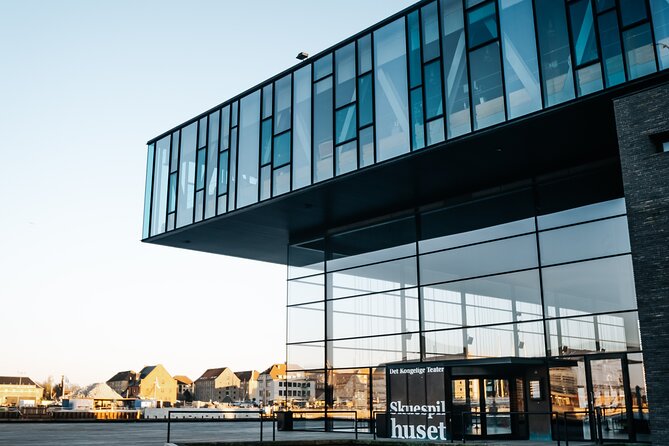
Then you’ll shift toward Operaen, another centerpiece stop (again, around 15 minutes for the guided look). Operaen is described as a modern waterfront building completed in 2005, and it’s already become a landmark for Copenhagen’s cultural scene.
The helpful part is that the guide connects the design to place. You’ll hear the story of how the architecture draws inspiration from the surrounding harbor and Denmark’s cultural heritage. That kind of explanation is exactly what you want on an architecture tour. You’ll start noticing how the building holds itself against the skyline and how it uses its waterfront setting as part of its identity.
Also: if you like architecture with a reason behind it, this stop will land well. It’s not just a visual landmark—it’s a building with a narrative.
Cirkelbroen (Circle Bridge): A Pedestrian Crossing With a Design Idea
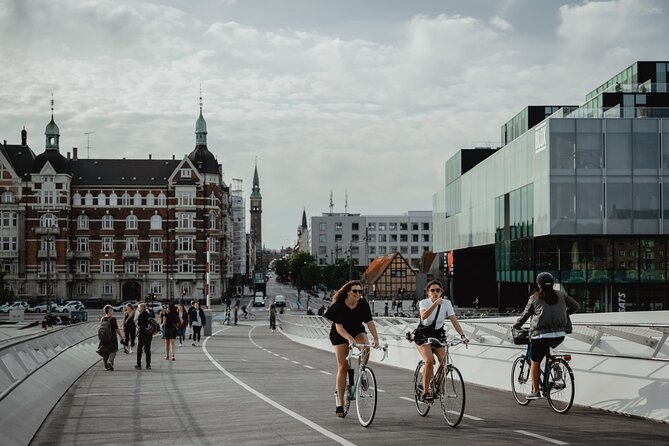
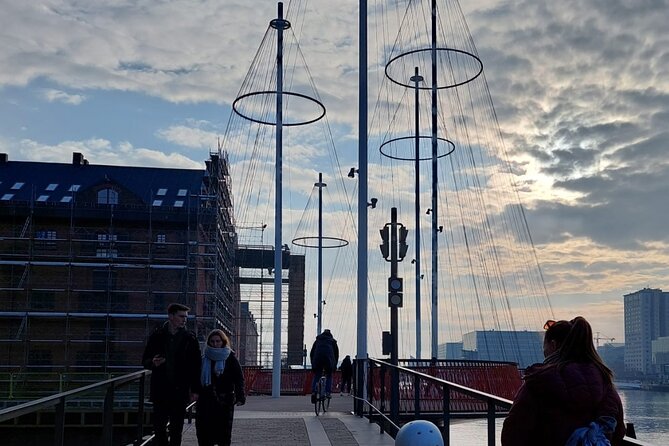
A big highlight is Cirkelbroen, the pedestrian bridge with the “circles of life” inspiration. Expect about 15 minutes here, including guided explanation and photo time.
It’s easy to treat a bridge as a means to an end. This one is designed to be an experience. The guide points out how it functions as a connection between sides of the harbor while still acting like a piece of public architecture—something you notice even if you’re not trying to.
If you’re the type who loves photographing lines, repeating shapes, and structured views, this is a great moment to slow down. The bridge gives you angles that are hard to get from the street, and you don’t need long camera setups because the tour timing keeps everything moving.
Royal Library of Denmark Photo Stop: Quick Views, Big Visual Impact
About halfway to the end, you’ll get a photo stop at the Royal Library of Denmark. This is listed as a 15-minute stop, so think of it as your chance to grab a few solid shots and get a sense of how Denmark’s design language shows up in major civic architecture.
Even though it’s a shorter stop, it’s valuable because it broadens the tour beyond pure waterfront redevelopments. It reminds you that Copenhagen’s architectural thinking includes institutions, public space, and city-scale planning—not only the trendy harbor neighborhoods.
If the weather turns, this stop still works because it’s structured. You get what you came for without getting stuck in a long walk loop.
Danish Architecture Centre: A Small Culture Stop With Context
The last guided architecture-focused stop is the Danish Architecture Centre (about 15 minutes). This is one of those add-ons that makes the tour feel complete. By the time you reach it, you’ll have seen multiple harbor styles and eras, so the centre gives you a chance to ground those observations in a broader view.
This part is also a nice reset if you’ve been walking under tough conditions. You’ll have a short guided visit, and it fits perfectly with the tour’s total 2-hour structure.
After that, you finish at Islands Brygge 4, 2300 København. It’s a good end point if you’re planning to keep exploring on your own right after—without needing to backtrack to your starting area.
Price Worth Thinking Through: $394 for a Private Group Up to 2
This tour costs $394 per group up to 2 for a 2-hour private walking experience. That sounds steep until you do the simple math: if you book with a partner, the cost per person can be close to a mid-range museum day plus guided context—except you’re also outdoors, moving through real neighborhoods.
It’s especially good value if:
- you want direct Q&A with your guide (and not just silent sightseeing),
- you care about architecture reasons, not only photo angles,
- you’re the kind of traveler who learns best when someone points out what to notice.
If you’re solo, it’s still a solid experience if you really want a guided approach and you value seeing several major harbor landmarks in one tight timeline.
The Private-Guide Difference: How You’ll Experience the Harbor
Because this is a private group, the guide can pace the tour to your interests. The reviews highlight exactly that kind of energy—one traveler praised Dalit’s enthusiasm and the way her approach made Copenhagen feel brighter and more alive. Another pointed out that the harbor route is a strong way to learn how the city works, not just what it looks like.
That matters on an architecture tour. Copenhagen’s harbor is full of details. A good guide helps you spot them fast—window rhythms, waterfront choices, how different parts of the city speak to each other across the water.
And with a 2-hour duration, you’ll cover multiple key areas without your day turning into a marathon.
Weather, Shoes, and Simple Prep That Actually Helps
This tour runs rain or shine, so plan for wet pavement and slick sidewalks. Bring water, and wear comfortable clothes you can move in. If you like taking photos, consider a light rain layer so you can keep shooting without constantly checking whether you should stop.
Because it’s not designed for wheelchair users or people with mobility impairments, you should assume steady walking throughout the 2 hours. Pack your energy for the day, not just your camera.
Who Should Book This Harbor Architecture Walk
This tour is a great match if you:
- love modern design and want it tied to Danish context,
- want a structured route through Nyhavn, Papiroen, Operaen, and Cirkelbroen,
- prefer a private guide who can explain what you’re seeing as you walk.
You might skip it if you:
- need fully step-free access or a wheelchair-friendly route,
- don’t want to walk for about two hours in variable weather.
Should You Book This Tour? My Quick Decision Guide
I’d book it if you want a high-impact Copenhagen harbor experience that mixes classic waterfront identity with newer architectural development, all in a compact 2 hours. The private format makes it feel personal, and the stops are chosen to show how the harbor changed—from port life to reuse projects to landmark modern buildings.
If you’re mainly looking for a casual photo walk with no architectural explanation, this may be more guided than you want. But if you like learning the why behind the what, this is a strong pick.
FAQ
How much does the Copenhagen Harbor Architecture Private Walking Tour cost?
It costs $394 per group for up to 2 people.
How long is the tour?
The tour lasts 2 hours.
Is this a private tour?
Yes, it’s a private group tour.
Where do we meet the guide?
You meet in front of the Scandic Hotel, right on Ofelia Plads.
What languages are available for the guide?
The guide is available in English and Spanish.
Does the tour run in bad weather?
Yes, it takes place rain or shine.
What’s included in the price?
The guide and the walking tour are included.
Is hotel pickup or drop-off included?
No, hotel pickup and drop-off are not included.
Is this tour wheelchair-friendly?
No. It is not suitable for people with mobility impairments or wheelchair users.