REVIEW · BUENOS AIRES
100% History and architecture of Buenos Aires
Book on GetYourGuide →Operated by Swell Experiences · Bookable on GetYourGuide
Buenos Aires history starts in one big square. This short, guided center-city walk links Plaza de Mayo politics to the Avenida de Mayo streetscape, with enough stops to make the architecture feel like a story you can follow. I love how the guide connects buildings to major events, not just facts on a wall. I also love that the tour includes entry to the Cathedral and the Chapter.
One thing to consider: it’s anchored to one meeting point. If you’re even a little late or you miss the person with the black umbrella, you may end up waiting. There’s also been at least one complaint about the guide not appearing on time, so arrive early and confirm you’re in the right spot.
In This Review
- Key highlights worth your time
- Buenos Aires center-city in 2 hours: what you’ll actually get
- Plaza de Mayo: starting at the Pyramid of May and the city’s power center
- Avenida de Mayo: European-style facades and the grand-street effect
- Plaza de Mayo, second visit: turning the square into a story you can follow
- National Congress finish: where democracy becomes a landmark
- Café Tortoni and Barolo Palace: what to do with these “icon” sightings
- Price and value: is $12 reasonable for 2 hours with entry?
- Accessibility and pace: who will feel comfortable here?
- Should you book this Buenos Aires architecture tour?
- FAQ
- How long is the tour?
- How much does it cost?
- Where do I meet the guide?
- What are the main stops on the route?
- What’s included in the tour?
- What language is the guide?
- Is the tour wheelchair accessible?
- What’s the cancellation and payment policy?
Key highlights worth your time
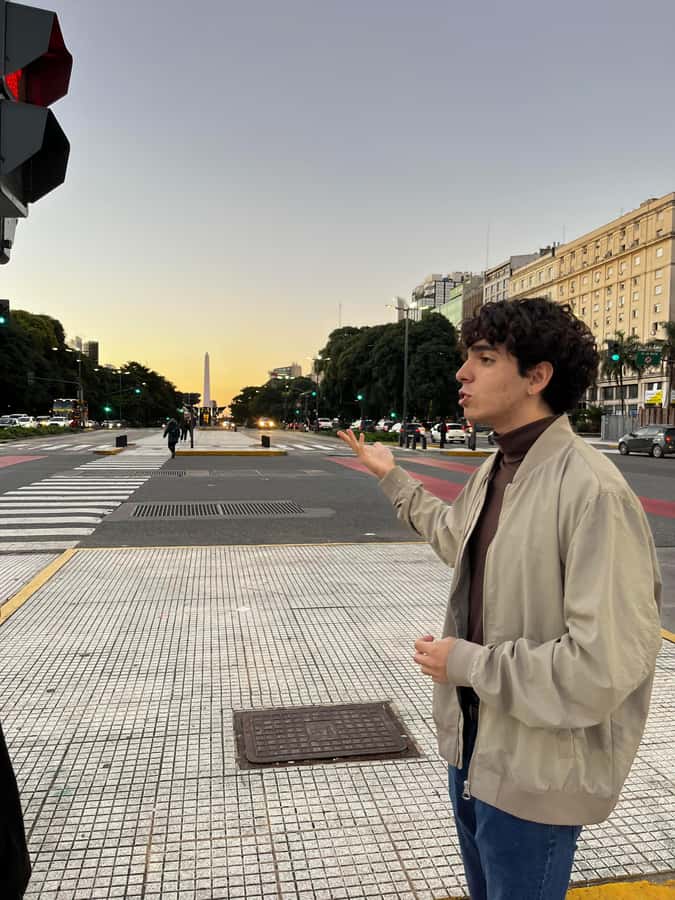
- Meet by the Pyramid of May under a black umbrella (easy to spot)
- Plaza de Mayo gets serious attention, including time on the square twice
- Avenida de Mayo’s European feel is the main architectural theme
- Photo stops along the way, including Café Tortoni and Barolo Palace
- Cathedral + Chapter entry is included, so it’s more than street-watching
- End at the National Congress, a strong final stop for democracy in stone
Buenos Aires center-city in 2 hours: what you’ll actually get
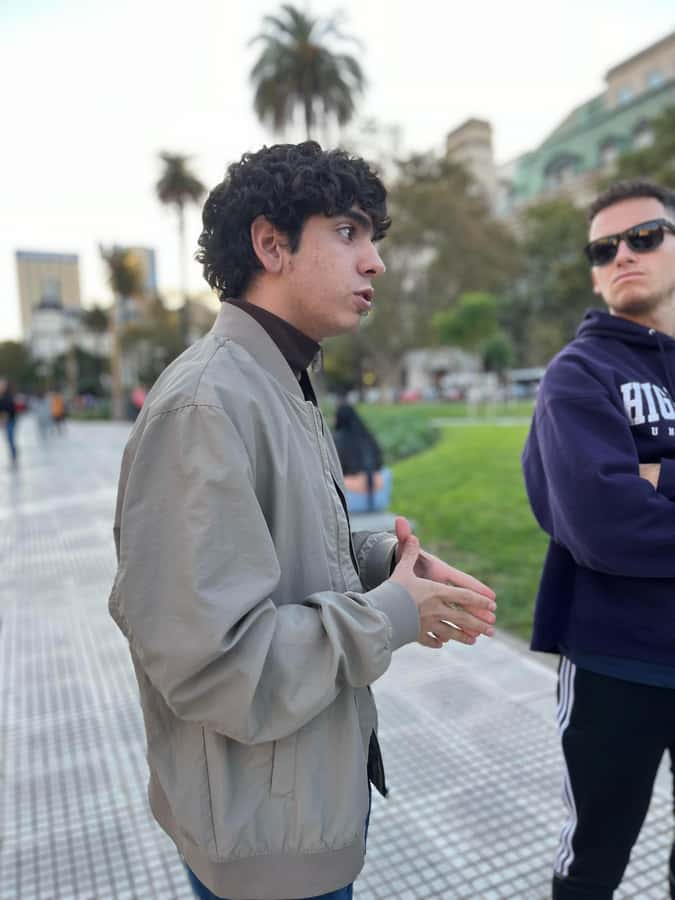
A lot of Buenos Aires tours try to do everything. This one is built around a tight loop in the historic core, so you get a clear arc instead of a random march.
In practice, you’ll spend your time reading the city. Plaza de Mayo is where Buenos Aires shows its power. Avenida de Mayo is where the city shows its European ambition. Then you land at the National Congress, where politics turns into architecture you can stand in front of and really take in. That structure matters because you start noticing patterns: the facades, the grand public spaces, and the way important buildings line up with major streets.
The pacing is also important. You’re getting guided time on the square and a full guided hour along Avenida de Mayo. That usually means you won’t just glance at buildings and move on. You’ll get context as you look—what the place is, why it mattered, and how it fits into Argentina’s big story.
And yes, it’s budget-friendly. The listed price is $12 per person for a 2-hour live guided experience with Cathedral and Chapter entry. For a city like Buenos Aires, that’s solid value if you like history that connects to what you see outside your window.
Plaza de Mayo: starting at the Pyramid of May and the city’s power center
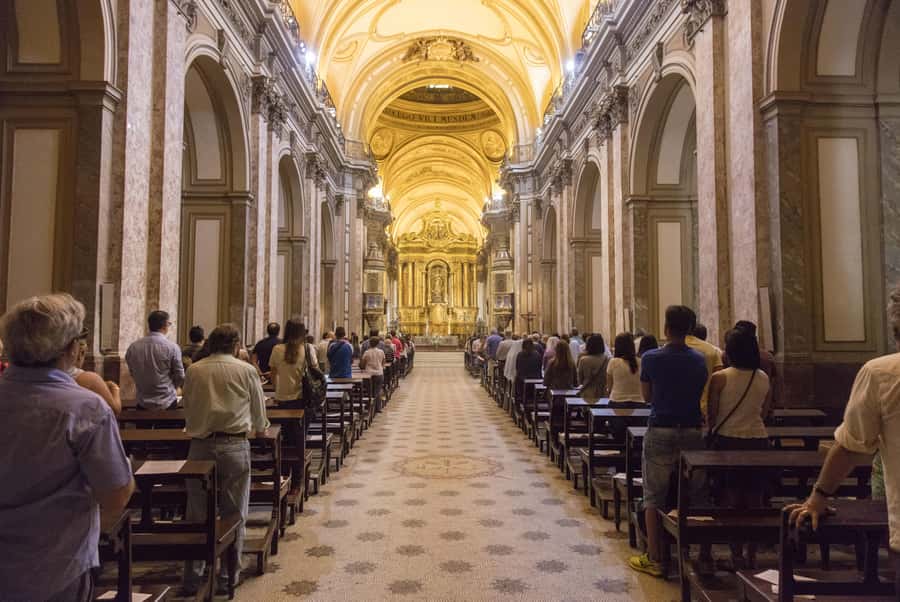
You start where the story is loudest: Plaza de Mayo. The meeting point is simple—be in front of the Pyramid of May and look for the guide with a black umbrella. That matters because this tour runs from one clear starting point, and the easiest way to avoid stress is to be there a bit early.
From the moment you meet, the tone is political and social. Plaza de Mayo is described as the epicenter of Argentine history, tied to countless events. Even if you don’t know the dates and names yet, you can feel why this square holds such weight. It’s the kind of public space that makes sense for rallies, speeches, and national moments.
A key part of why this stop works is that you’re not only walking around the edges. The tour includes entrance to the Cathedral and the Chapter, which is a major add-on in terms of value. Instead of treating the plaza like a photo backdrop, you get access to a more grounded, interior side of the area—another layer to the same central square.
If you like architecture, this is also where you start training your eye. You’ll notice how the surrounding buildings are built to be seen, how the space is designed for crowds, and how the city’s important institutions cluster around this central node.
Quick practical tip: since the guide starts at the Pyramid, check the exact street-side location before you arrive. A plaza can look “one big area,” but the difference between one end and the other can feel huge when you’re trying to find a specific umbrella.
Avenida de Mayo: European-style facades and the grand-street effect
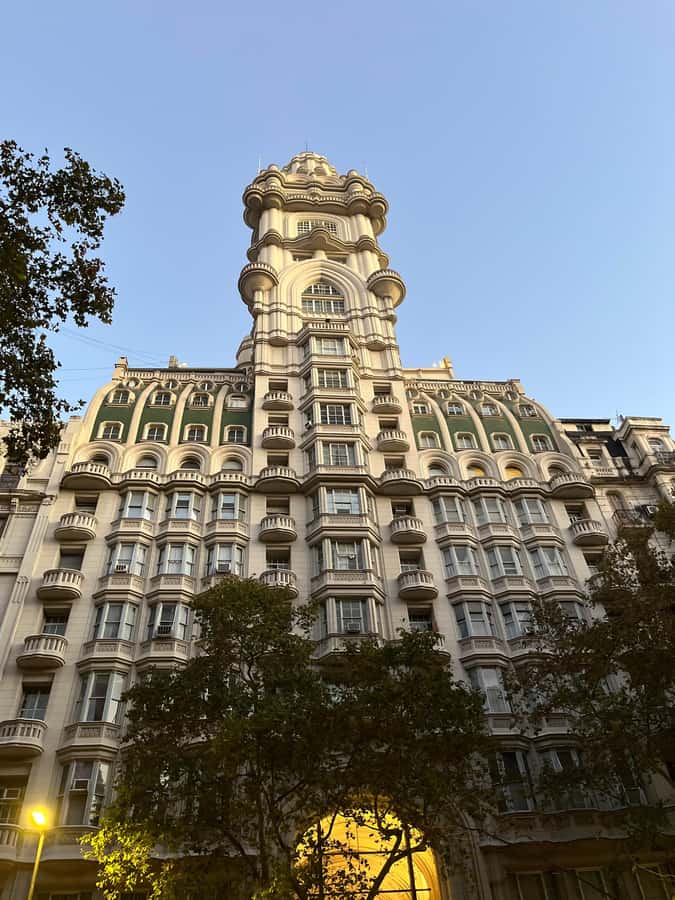
After the first plaza introduction, you move to Avenida de Mayo, where the tour leans hard into architecture. The big idea here is the street’s European charm—think of a wide boulevard feel, with historic buildings lining the route and a sense of pageantry in the built form.
You’ll have one guided hour here, which is a smart chunk of time. It’s long enough for the guide to connect multiple landmarks, but not so long that you lose focus. Along the way, this is where Café Tortoni and Barolo Palace fit into the experience. You’re likely to see them as part of the streetscape—these are the kind of addresses Buenos Aires is proud of, and they help break up the walk with recognizable “wait, that’s it” moments.
What I like about this segment is that it encourages slow looking. You start asking different questions than you do on a typical sightseeing walk:
- Why does a building look the way it does?
- How does the street design steer your attention?
- What did a grand avenue mean in a city developing its identity?
And because the guide is with you while you walk, you’re not stuck guessing. You get the story behind the facade while you can still relate it to the building right in front of you.
One consideration: this is still a walking tour through a main street corridor. If your plan is to pack in lots of extra stops on your own, this segment can be a bit of a pace-setter. I’d treat it as your “structured history hour” for the day, not something you multitask with errands.
Plaza de Mayo, second visit: turning the square into a story you can follow
You circle back for a second guided stop at Plaza de Mayo. That double-visit is more useful than it sounds. It gives the guide time to reposition what you’re seeing.
First pass: you get oriented. You understand the square’s role as a historic and political hub. Second pass: you see it with context. The architecture and surrounding institutions don’t change, but your interpretation does. By the time you return, you’re less likely to treat the plaza as a single landmark and more likely to recognize it as a system—public space plus power buildings plus the way the city operates around it.
This is also where the tour’s theme—history and architecture—really clicks. Plaza de Mayo isn’t just a pretty square. It’s presented as a place that has witnessed major moments. Even when you don’t know all the names, the “why this place matters” explanation helps you connect the physical space with the emotional weight of national events.
If you enjoy architecture, second stops like this often do two things at once:
1) They let you notice details you missed the first time.
2) They help you understand why those details exist—how the design supported the role the place played.
It’s also a good moment to reset your legs and orient yourself before the final leg toward the Congress. Since the tour is only 2 hours total, that reset is part of why this itinerary feels efficient.
National Congress finish: where democracy becomes a landmark
The final stop is the Congreso de la Nación Argentina (National Congress). It’s described as a symbol of Argentine democracy and a witness to transcendental moments in the country’s history. That’s a strong ending, because it ties the tour theme together: civic space leads to civic architecture.
Ending here also works visually. A lot of walking tours end at something that’s purely scenic. This one ends at something symbolic. Even if you’re not going inside, you get the sense of scale and intent. Congress buildings tend to be designed to look official from far away, and in a city where power has a visible presence, that makes the final photos more than souvenir snapshots.
The best part of ending at Congress is that you can step back and summarize the route in your head:
- Plaza de Mayo as the epicenter of events
- Avenida de Mayo as the grand, European-flavored corridor where identity shows through architecture
- Congress as the end point where civic purpose is literally built into the skyline
If you like guided tours that leave you feeling like you understood the logic of a place, this ending does that. It’s also close to the kind of landmark energy Buenos Aires is famous for.
Café Tortoni and Barolo Palace: what to do with these “icon” sightings
The highlights list includes both Café Tortoni and Barolo Palace, and those matter even if the tour doesn’t turn them into a long detour. Icons in walking routes are useful because they give you memorable anchors.
Here’s how I’d think about them as part of your day:
- Café Tortoni helps you see that Avenida de Mayo isn’t only about institutions and stone. It’s also about daily culture—where people pause, talk, and turn a street into a social stage.
- Barolo Palace gives you a visual “wow” stop that keeps the architecture theme tangible. When the guide references key features, your brain tends to store it better because the building already feels dramatic.
Don’t expect this segment to replace a dedicated deep-dive on cafés or one-on-one architecture study. But for a 2-hour tour, having these two stops on the route is smart. They add recognition value without blowing up the schedule.
One practical approach: if you care about photos, position yourself for quick shots as you walk. Then listen first, shoot second. That keeps the guide’s story from getting lost behind a camera screen.
Price and value: is $12 reasonable for 2 hours with entry?
At $12 per person, this tour is priced like a deal—especially because Cathedral and Chapter entry is included. You’re not just paying for a guide’s voice while you stroll. You’re paying for time plus an actual included visit.
Now, value isn’t only math. It’s also about what you prefer:
- If you like architecture and want it tied to history as you walk, this price feels fair.
- If you only want broad sightseeing with no depth, you might find the paid guidance less essential.
But the itinerary structure suggests the guide is doing more than reciting obvious facts. Plaza de Mayo and Avenida de Mayo each get their own guided time blocks, and you end at an anchor civic building. That’s typically what makes short tours feel worth it.
Also consider group format. The tour is listed as a private group and the guide language is Spanish. A private group setup often means the guide can adjust pacing to the people in the group—useful for questions, photos, and slowing down when something catches your eye.
If you’re budgeting time in Buenos Aires, this is the kind of tour that can fit cleanly into a day. It’s short enough that you can still make room for independent strolling afterward in the same general area.
Accessibility and pace: who will feel comfortable here?
The tour is listed as wheelchair accessible, and it’s a private group. That combination usually matters because it can mean a bit more flexibility in how you move and where you pause.
Still, this is a historic center walking route. Even with accessibility notes, expect that you’ll be on city streets and around major public spaces. If you have mobility limitations, I’d plan to wear supportive shoes and take it slow during photo moments.
As for the group size, the listing says private group, but it doesn’t specify numbers. In most private tours, you tend to get a calmer experience than huge group bus tours. That can be great if you like to hear explanations clearly and not compete with crowd noise.
If you’re traveling solo, a private group can feel like the best of both worlds: you don’t lose the guide, but you also aren’t stuck in a packed herd. If you’re traveling with friends who want a structured “history and architecture” outing, this format helps keep everyone focused.
Should you book this Buenos Aires architecture tour?
I’d book it if you want a 2-hour hit of Plaza de Mayo + Avenida de Mayo architecture with a guided story and a real included entry at the Cathedral and the Chapter. The finish at the National Congress gives the tour a satisfying endpoint, and the $12 price makes it easier to justify even on a tighter budget.
I’d be a little cautious if you’re the type who hates uncertainty. This tour is tied to a specific meeting spot by the Pyramid of May with a black umbrella, and there has been at least one complaint about the guide not showing on time. The fix is simple: arrive early, double-check you’re in the right place, and keep a close eye on time.
If you want a short, meaningful, center-city walk that connects major landmarks to how Buenos Aires tells its national story, this one fits well.
FAQ
How long is the tour?
The duration is listed as 2 hours.
How much does it cost?
The price is listed as $12 per person.
Where do I meet the guide?
The meeting point is in front of the Pyramid of May, with a black umbrella.
What are the main stops on the route?
The tour goes from Plaza de Mayo to Avenida de Mayo, returns to Plaza de Mayo, and finishes at the Congreso de la Nación Argentina.
What’s included in the tour?
It includes a guided tour and entrance to the Cathedral and the Chapter.
What language is the guide?
The live tour guide is listed as Spanish.
Is the tour wheelchair accessible?
Yes, the activity is listed as wheelchair accessible.
What’s the cancellation and payment policy?
Free cancellation is listed as available up to 24 hours in advance for a full refund, and there’s also a reserve now & pay later option (you can book your spot without paying today).