REVIEW · COPENHAGEN
Copenhagen: Harbor Architecture Private Walking Tour
Book on Viator →Operated by Walk and Tour · Bookable on Viator
Copenhagen’s waterfront tells stories in steel and stone. This private harbor architecture walk strings together modern and historic waterfront design, from Nyhavn’s canal life to Copenhagen’s newer cultural buildings along the water—so the whole trip feels like one big architectural lesson.
I especially love two things: the chance to see big-name buildings close up (Opera House, Black Diamond, Circle Bridge) without turning it into a museum day, and the way the guide turns street views into clear explanations. Guides such as Martin Thomsen and Damian Sanfilippo are praised for being fun on the move and for answering questions on the spot.
One consideration: the tour price is $405.53 per group (up to 2), so it’s best value when you’re traveling with someone. Also, it ends at the Danish Architecture Center rather than back at your starting point.
In This Review
- Key highlights you’ll feel immediately
- Two Hours, One Harbor Loop: What This Private Tour Teaches You
- Price and Logistics: What You’re Really Paying For
- Start at Ofelia Plads: The Waterfront Square That Sets the Tone
- Nyhavn and Inderhavnsbroen: Colorful Houses Meet City-Connecting Design
- Papirøen: From Paper Mill to Modern Market Neighborhood
- Operaen Christiania and Krøyers Plads: Culture at the Waterline
- Black Diamond: The Library That Feels Like an Urban Public Room
- Cirkelbroen and the Copenhagen Harbour “Circle” Feeling
- Finish at Danish Architecture Center (DAC): Turn the Walk Into a Deeper Stop
- Guide Style Matters: What the Best Guides Do
- Who Should Book This Harbor Architecture Walk
- Should You Book This Tour? My Practical Recommendation
- FAQ
- How long is the Copenhagen harbor architecture private walking tour?
- How much does the tour cost?
- Is this a private tour?
- Where does the tour start and end?
- What’s included in the price?
- What’s not included?
- Do I need a printed ticket?
- Is admission required for the stops?
- Are service animals allowed?
- What are DAC’s opening hours if you want to go in after the tour?
- What is the cancellation policy?
Key highlights you’ll feel immediately
- A tight 2-hour route focused on Copenhagen’s waterfront architecture instead of random stops
- Nyhavn’s canal front plus the bridges that connect the city’s sides
- Papirøen’s reuse story—a former paper mill area turned into a new neighborhood
- Modern landmarks in real life like Operaen Christiania and the Black Diamond library
- Cirkelbroen’s design concept made walkable—a functional bridge with a design message
- Finish at DAC (Danish Architecture Center), right near City Hall Square
Two Hours, One Harbor Loop: What This Private Tour Teaches You

This is a walking tour built around one idea: how Copenhagen’s design choices affect real people. You’re not just looking at pretty buildings. You’re learning why they were placed where they are, how they work at street level, and what the city values along its water edges.
The route is compact—about two hours—and it keeps you close to the waterfront action. That matters, because harbor architecture makes more sense when you can see the relationship between buildings, bridges, squares, and boats in the same view. You’ll get that here, with enough time to stop, look, and ask questions without the tour turning into a fast shuffle.
Because it’s private, you’re not stuck in a crowd. You can slow down for photos, ask for clarification, or spend an extra minute on a detail you care about, like materials, layout, or how public spaces are shaped.
You can also read our reviews of more tours and experiences in Copenhagen.



Price and Logistics: What You’re Really Paying For
At $405.53 per group (up to 2), this isn’t a budget stroll. But it’s not priced like a “just show up and walk” thing either. You’re paying for a guide who can connect what you’re seeing—Nyhavn’s historic canal front, then newer cultural and civic architecture—to a bigger design story.
If you’re traveling as a couple, with a friend, or with a partner you’d actually enjoy talking architecture with, the cost becomes easier to justify. If you’re solo, you may want to think hard about whether you’d rather split the experience with a larger group tour.
You also end at the Danish Architecture Center (DAC) at Vester Voldgade 108. That’s a plus for many people because DAC is in a convenient area near City Hall Square, but it does change how you plan your rest of the day. If you’re trying to return exactly to your starting neighborhood, you’ll need to plan that short transfer.
The good news: it’s a mobile ticket experience, and the tour is near public transportation. Service animals are allowed, and most people can participate—so you’re not signing up for anything that sounds extreme or technical.
Start at Ofelia Plads: The Waterfront Square That Sets the Tone
You begin at Sankt Annæ Pl. 31, starting your walk near the harbor’s modern cultural scene. The first stop is Ofelia Plads, a waterfront square opened in 2016. It’s the kind of place designed for people to hang around—watch the water, take in views toward major landmarks, and catch free cultural events like concerts and plays.
What I like about starting here: Ofelia Plads works like a “setup chapter” for the rest of the walk. You see how the city uses open public space right on the water, and you get your bearings quickly before moving into the older, postcard-famous canal area.
A small practical note: because you’re near Nyhavn, you’ll feel a shift right away. One area is newer public-space thinking; the next is older waterfront urban life. If you’re into contrast, this start does a lot of heavy lifting.
Nyhavn and Inderhavnsbroen: Colorful Houses Meet City-Connecting Design
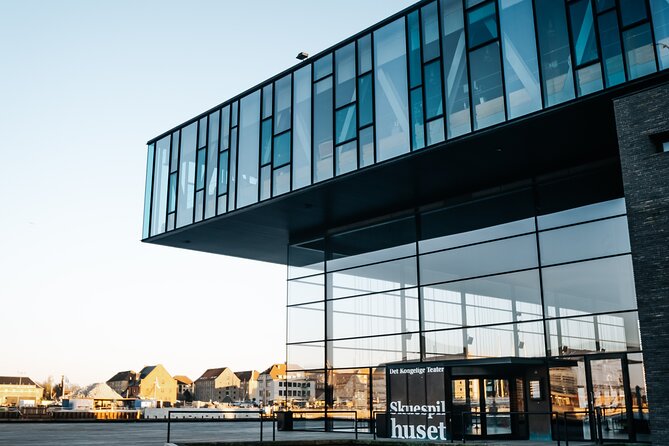
Next comes Nyhavn, the iconic canal district with 17th-century waterfront buildings and lively restaurants. Your guide leads a leisurely stroll along the canal front, focusing on history and how the district became what it is today.
Nyhavn can feel like a “yes, I’ve seen this” stop from a distance—but it works better with context. With a guide explaining what you’re looking at, you’ll notice patterns in building placement, how the waterfront functions as a social space, and how the canal edge shapes the street experience.
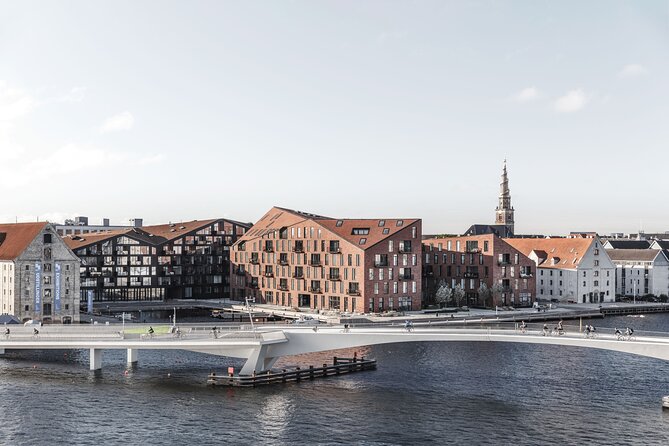
After that, you move to Inderhavnsbroen, a pedestrian and cyclist bridge. It’s not a detour for detour’s sake. It connects Nyhavn to Christianshavn, and it completes a scenic harbor-circle experience. Bridges like this are where you understand the city’s logic: instead of treating each harbor side like its own world, Copenhagen ties them together with crossings that are comfortable for walking and biking.
If you care about urban design that’s actually usable, this is one of the stops that connects architecture to everyday movement.
Papirøen: From Paper Mill to Modern Market Neighborhood
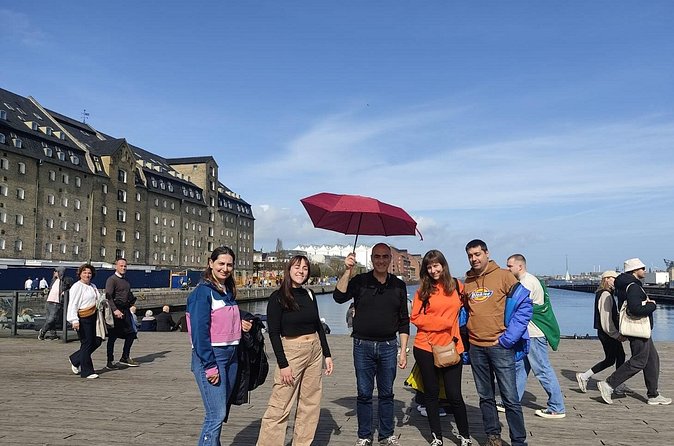
Then you head to Papirøen, described as a newer neighborhood that used to be a paper mill. The point here is reuse. The waterfront isn’t just about new construction—it’s also about turning old industrial space into places people want to be.
At Papirøen, you’ll admire the architecture around the market buildings and take in the harbor views. The atmosphere you get from this stop is different from Nyhavn. Where Nyhavn shows older waterfront streets, Papirøen shows how cities can keep industrial roots while updating function for modern daily life.
Why this stop is valuable: repurposing changes what a neighborhood teaches you. You see how a structure’s original purpose can be reimagined, and you start noticing how design choices support a new role—like shopping, gathering, and staying near the water.
Potential drawback: because this is a walking tour, you don’t get hours to wander. You’ll see and understand the big ideas, but if you want deep exploring time, you may want to add free time afterward.
Operaen Christiania and Krøyers Plads: Culture at the Waterline
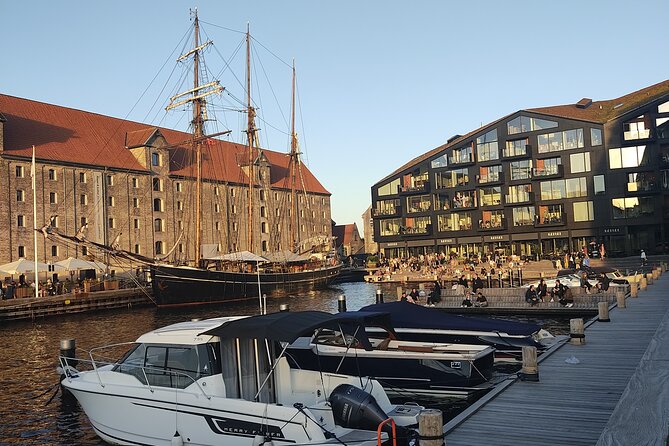
You’ll get a view of Operaen Christiania, the modern waterfront building completed in 2005. It’s become a recognizable cultural landmark for Copenhagen, and the location makes it more than a standalone structure. Standing near it, you can read how the building relates to the harbor—how it claims a spot in the city’s visual line toward the water.
From there, you continue toward Krøyers Plads, a neighborhood of modern buildings inspired by historic warehouses. This is another moment where Copenhagen’s design approach shows up clearly: respect for older forms, updated for contemporary needs.
The nice thing here is variety without chaos. In a single stretch, you move from a major cultural building to an area that references industrial history. If you like architecture that carries meaning instead of just aesthetics, these stops are where the tour’s theme clicks.
Black Diamond: The Library That Feels Like an Urban Public Room
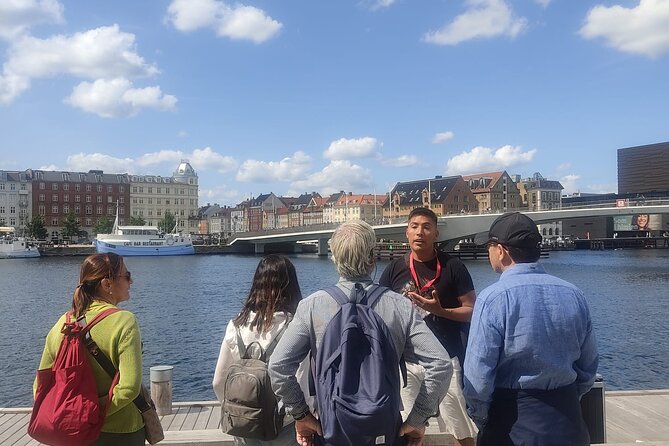
One of the tour’s most distinctive stops is Black Diamond, the modern library building. It’s known for its polished black granite, and the interior is described as having a light-filled atrium—the kind of space that turns reading into a shared civic experience.
This stop also isn’t just about the architecture. It’s connected to what people do there: there’s a popular café, and the building even references an exhibition spa in the way it’s presented as a multipurpose cultural stop.
If you’re the type who likes to see how architecture affects behavior, this is worth your attention. Libraries don’t have to feel closed-in or purely quiet. Here, the design suggests openness—light, space, and a place that can serve many moods through the day.
The only consideration: the tour stops are timed within the walking format. If you’re planning to go inside, you’ll want to check hours and make sure you have time, especially since the tour finishes at DAC.
Cirkelbroen and the Copenhagen Harbour “Circle” Feeling
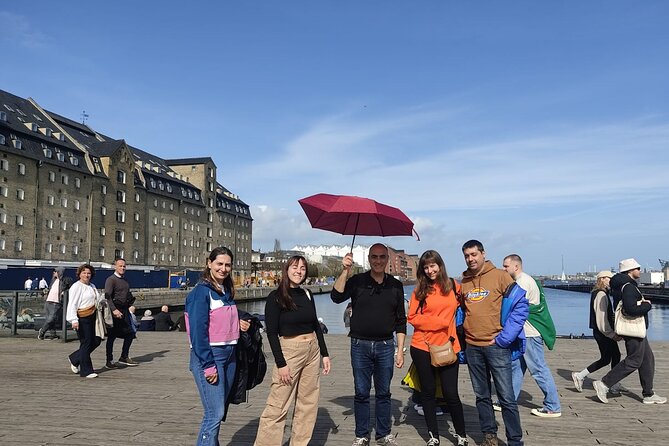
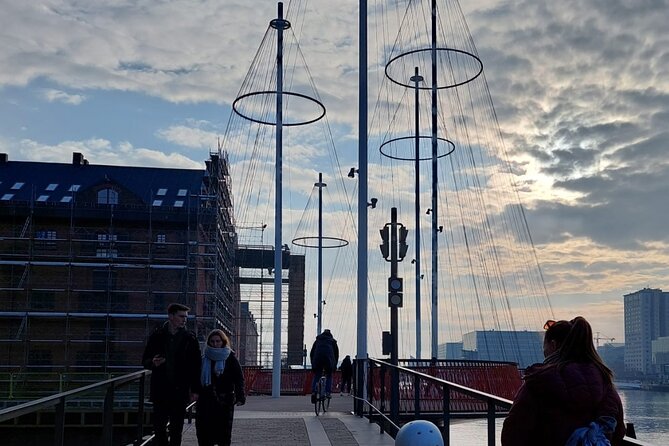
Next is Cirkelbroen, the Circle Bridge. It’s designed for pedestrians and functions as a crossing that also acts like an architectural statement. The bridge is inspired by the idea of circles of life, which is a more poetic way of saying: design that points to a concept while staying useful.
What I like about this stop is that it gives you a “wraparound” feeling. After seeing multiple sides of the harbor and major buildings, crossing here helps you connect the dots: where you were, what’s across the water, and why the city’s layout makes sense as one system.
It’s also a good photo stop, because bridge viewpoints give you a different angle than canals and squares do. You’ll see how the buildings line up with the harbor edges.
Finish at Danish Architecture Center (DAC): Turn the Walk Into a Deeper Stop
The tour ends at the Danish Architecture Center (DAC), located at Vester Voldgade 108, close to City Hall Square. This is an excellent finish point because it gives you a natural “next step” if you still want more context.
One practical note from the tour details: DAC admission is not included. So if you’re hoping to go in, you’ll want to plan for that ticket separately.
DAC opening hours listed are Monday through Saturday, 10:00 AM to 4:00 PM (with the provided date range). If your timing lines up, you can turn your architectural walk into a fuller day by pairing the street-level explanations with indoor exhibits.
Guide Style Matters: What the Best Guides Do
A big part of why this kind of tour works is the guide’s ability to turn what you see into what it means. The tour experience you’re aiming for isn’t just pointing and moving—it’s explanations that help you notice details.
In particular, guides associated with this route have been praised for humor and for answering questions broadly, even when the questions drift beyond the exact stops. That’s a useful style, because it keeps the tour feeling like a conversation instead of a script.
If you like asking why something is shaped a certain way—or how a building affects daily life—this format tends to fit you well. And since it’s private, your questions don’t get dropped into a random group shuffle. Your guide can respond in a way that actually sticks.
Who Should Book This Harbor Architecture Walk
You’ll likely enjoy this tour if:
- You want a first-time Copenhagen orientation centered on design and waterfront logic
- You care about how buildings affect public life, not just how they look
- You prefer smaller, private pacing instead of a crowd workflow
- You’re the type who likes to keep learning while you walk—short stops, clear explanations, and chances to ask questions
You might want to reconsider if:
- You’re traveling solo and the group price doesn’t feel comfortable
- You want long free time inside museums or buildings (this is a walking route with set stops)
- You need a tour that ends where it starts, without any transit afterward
Should You Book This Tour? My Practical Recommendation
I’d book this harbor architecture walk if you want Copenhagen’s waterfront story in a tight, guided loop. The combination of Nyhavn’s historic canal edge, major modern landmarks like Operaen Christiania and Black Diamond, and the bridge-and-harbor connections gives you a sense of the city’s design thinking without wasting half your day.
If you’re going with one other person, the value improves fast. Even if you’re not an architecture fanatic, the tour helps you “read” the city—what you’re seeing, why it’s there, and how design choices translate into real public spaces.
If the price feels high for you, consider whether you’d rather join a larger-group option. But if you want a private guide and a focused route with strong stop-to-stop variety, this one is a very solid choice.
FAQ
How long is the Copenhagen harbor architecture private walking tour?
It runs for about 2 hours.
How much does the tour cost?
The price is $405.53 per group, for up to 2 people.
Is this a private tour?
Yes. It’s a private experience with only your group participating.
Where does the tour start and end?
It starts at Sankt Annæ Pl. 31, 1250 København and ends at Vester Voldgade 108, 1552 København, at the Danish Architecture Center (DAC).
What’s included in the price?
The tour includes a guide.
What’s not included?
The price does not include private transportation, snacks, food, or drinks. DAC admission is not included.
Do I need a printed ticket?
No. It uses a mobile ticket.
Is admission required for the stops?
The stops listed show free admission for most parts, but DAC admission is not included.
Are service animals allowed?
Yes, service animals are allowed.
What are DAC’s opening hours if you want to go in after the tour?
The listed hours are Monday to Saturday, 10:00 AM to 4:00 PM (based on the provided date range).
What is the cancellation policy?
You can cancel for a full refund up to 24 hours in advance. If you cancel less than 24 hours before the start time, the amount paid is not refunded.