REVIEW · COPENHAGEN
Copenhagen Architecture and Sustainability Tour with local Guide
Book on Viator →Operated by Tropical Bikes · Bookable on Viator
Copenhagen runs on bikes and ideas. I like how this tour mixes architecture with real-world sustainability, and I love that you cover serious ground on a guided ride instead of stopping every few minutes like a walking tour. One heads-up: in summer the first harbor area can feel crowded, so you’ll want to follow your guide’s timing and route.
What makes it work is the small group size (max 15) and the hands-on local explanation. In past groups, guides such as Jörn and Julia have a knack for turning buildings into stories you can actually picture, not just facts you forget. The only trade-off is physical effort: you’ll pedal about 11 km and you should have moderate fitness, even though the pace is relaxed.
In This Review
- Key points before you pedal
- What this 3-hour eco-architecture tour is really buying you
- Getting rolling with Tropical Bikes: helmets, bike types, and practical extras
- The ride itself: 11 km, moderate fitness, and summer crowd management
- Blox and the new harbor crossings: sustainability you can see at street level
- Stop 1: Blox and the Denmark Architecture Center angle
- Stop 2: Lille Langebro and the city’s move toward public harbor life
- Stop 7: Cykelslangen and why the bike got its own bridges
- Havnebadet at Islands brygge: the harbor becomes for people, not just industry
- Living as a design concept: the Tietgen Residence Hall and Folkehuset Absalon
- Stop 4: Tietgen Residence Hall and social sustainability through shared rooms
- Stop 9: Folkehuset Absalon, recycled into a community center
- DR Koncerthuset: architecture that still matters after dark
- Amagerfælled and Enghave Park: nature, memory, and rain control
- Stop 6: Amagerfælled, from training grounds and dumps to rare nature
- Stop 8: Enghave Park and stormwater-focused redesign
- Stop 13: Oerstedsparken and defense converted to a park with a lake
- Kødbyen (Meatpacking District) and Israel’s Square: how planning shaped food and industry
- Stop 10: Kødbyen and industrial architecture built for healthier business
- Stop 11: Israel’s Square and Torvehallerne, from market to parking to meeting point
- The final stretch and how to keep the momentum afterward
- Should you book this Copenhagen Architecture and Sustainability Tour?
- FAQ
- How long is the Copenhagen Architecture and Sustainability Tour?
- How far do you bike during the tour?
- How big is the group?
- Is the tour offered in English, and will I get a ticket on my phone?
- What’s included with the tour price?
- Do I need to pay for admission at the stops?
Key points before you pedal
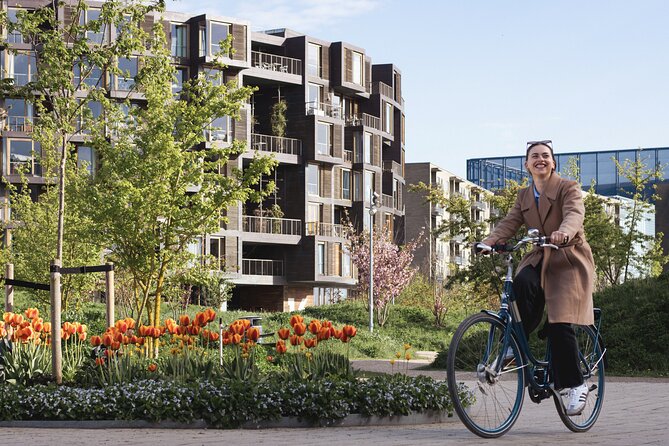
- Small-group ride (max 15) keeps the pace easy to manage and the guidance personal
- About 11 km total means you see more than on a typical stroll
- All the stops are free in terms of admission tickets, so you’re not paying entrance fees along the way
- Eco theme, not just pretty buildings: you’ll connect design choices to daily life and city goals
- Harbor and bike infrastructure focus: you’ll ride bridges and parts of Copenhagen’s public-realm transformation
What this 3-hour eco-architecture tour is really buying you
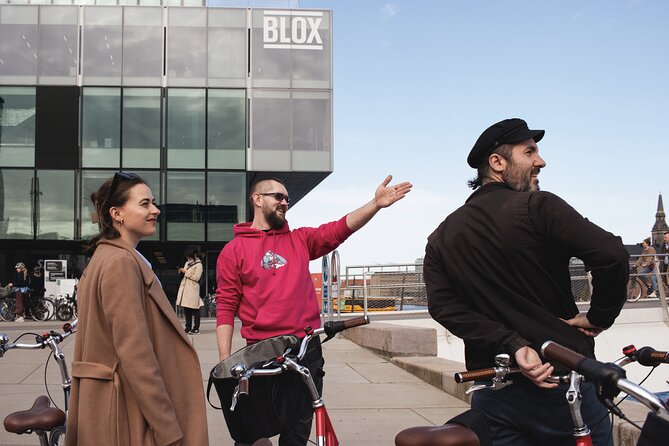
For $72.57, you’re paying for a guided cycling route that’s about 3 hours long, with a bicycle included and a local guide doing the heavy lifting. The value is that you get a structured path through places many visitors only glance at—or miss entirely—without spending your own time figuring out bike-friendly logistics.
You also get a “systems view” of Copenhagen. The tour isn’t just about individual landmarks; it ties together buildings, shared spaces, stormwater-minded parks, and even how the city built bike crossings to move people safely. When you connect those dots, Copenhagen’s sustainability stops feeling like a slogan.
And because the group is capped at 15, you’re not fighting for sidewalk position. Instead, you’ll glide between stops, which is exactly what makes this work for time-poor travelers.
You can also read our reviews of more tours and experiences in Copenhagen.



Getting rolling with Tropical Bikes: helmets, bike types, and practical extras
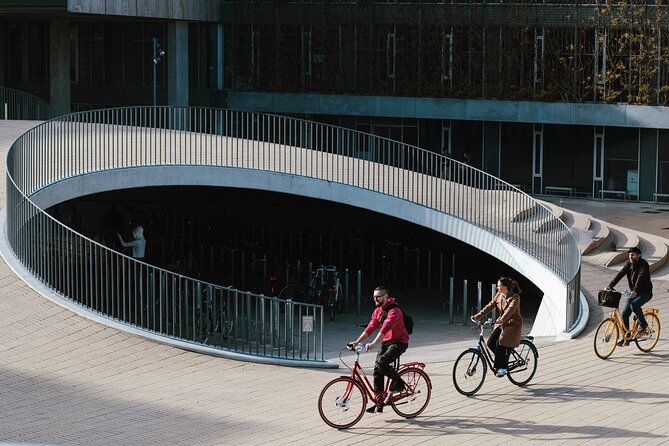
The tour starts at Vester Voldgade 2, 1552 København and ends back there. You’ll use the bicycles provided by Tropical Bikes, and the pace is designed so you can actually enjoy the stops rather than treating it like a workout.
Helmets are available upon request. There are also toilets at their store, which sounds small until you’re out in the city and wondering how long you can hold it.
A few gear notes if you want to plan ahead:
- Bike extras like phone holders and baskets can be booked for an extra fee
- Special upgrades can be reserved (for example e-bikes or cargo/e-cargo bikes)
- Child bikes in different sizes are available if you contact in advance
If you’re tempted to buy a big upgrade, think first about what you really need. Most people will be perfectly fine with the standard bike—this tour’s whole concept is confidence on Copenhagen’s bike network.
The ride itself: 11 km, moderate fitness, and summer crowd management
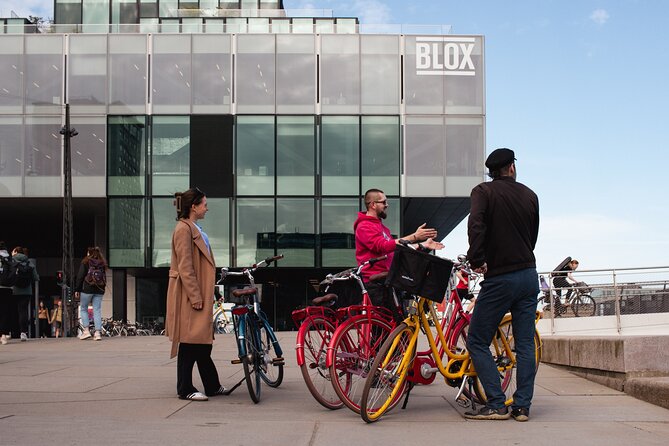
Expect about 11 km of biking between stops, spread across a route that includes one longer cycling segment near the end (roughly 1 hour 5 minutes total for the riding time). You’re not doing constant sprinting, but you will be on the bike for meaningful stretches.
Your best comfort move is to match your effort to the guide’s pace. Copenhagen cycling is smooth, yet you still need to stay alert, especially near busy crossings.
Crowds are the one recurring friction point. On a hot day, the harbor area (and especially canal-adjacent spots near the center) can feel packed. The fix is simple: lean on your guide’s route choices and don’t treat the first stop like a leisurely photo break.
Blox and the new harbor crossings: sustainability you can see at street level
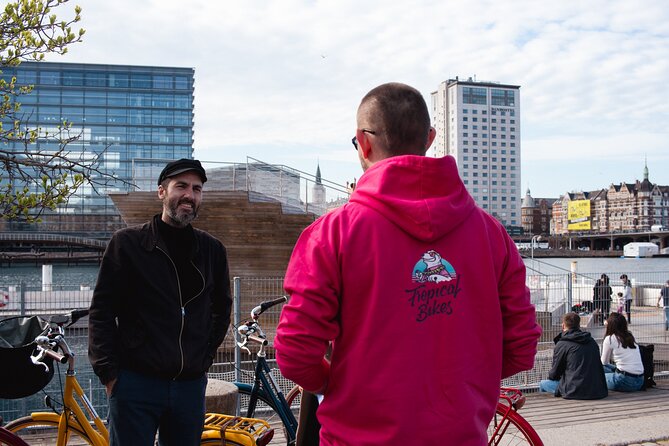
This is where the tour earns its eco label. Instead of abstract “green” talk, you’ll stand close to buildings and see how sustainability is built into daily use, design, and neighborhood life.
Stop 1: Blox and the Denmark Architecture Center angle
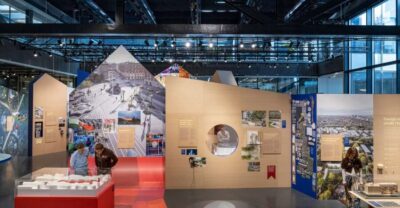
At Blox, you’ll see a mixed-use building developed with sustainability built in both technically and socially. The most “visitor-useful” detail here is that Blox is tied to the Denmark Architecture Center (DAC), which runs exhibitions about Copenhagen architecture—so the building isn’t static. You can check what’s on in the moment and treat the stop as an information reset before you ride onward.
A quick practical note: this stop is free to enter, so it’s a low-pressure way to get context without budgeting time for a ticketed attraction.
Stop 2: Lille Langebro and the city’s move toward public harbor life
Next is Lille Langebro, a newer bridge designed for pedestrians and cyclists. It’s part of Copenhagen’s effort to transform older merchant and navy harbor space into something that feels like public life—places you use, not places you pass through.
If you care about sustainability, this matters. A city that plans for safe walking and biking isn’t just being nice; it’s shaping how people move and how much car dependency shrinks over time.
Stop 7: Cykelslangen and why the bike got its own bridges
The tour later revisits the idea of bike-first infrastructure at Cykelslangen (the cycling-bridge concept). With Bryggebroen, it was among the first new harbor crossings built exclusively for cyclists. That separation is a subtle but huge design choice: it makes bike travel feel predictable and safer, which is how bike culture actually scales.
If you’ve ever felt nervous cycling in a new city, pay attention here. Copenhagen’s infrastructure is built to reduce that anxiety.
Havnebadet at Islands brygge: the harbor becomes for people, not just industry
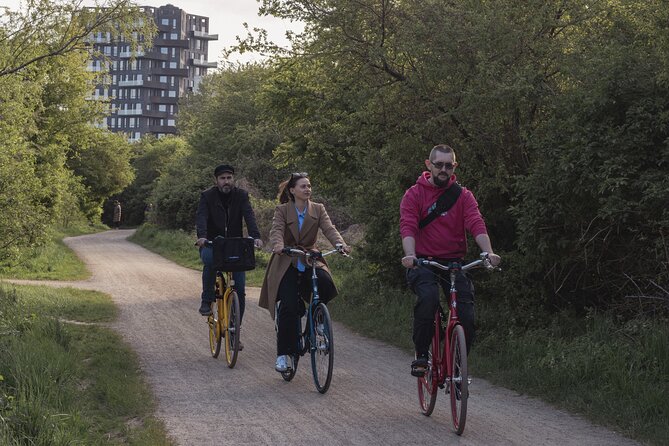
When Havnebadet opened in 2003, it marked a major shift in how Copenhagen relates to its harbor. This isn’t a theoretical change. You’re looking at the idea in practice: turning water-adjacent space into a place for everyday recreation.
At Islands brygge, you’ll get a feel for that transformation in the landscape you can actually ride along. It’s one of the most “feel it” stops on the whole route because it shows a city using its natural assets in a way that makes sense for modern urban life.
Drawback? On very busy days, the area can be active. Don’t fight for every angle. Just take a breath, soak in the change, and move on when the guide says.
Living as a design concept: the Tietgen Residence Hall and Folkehuset Absalon
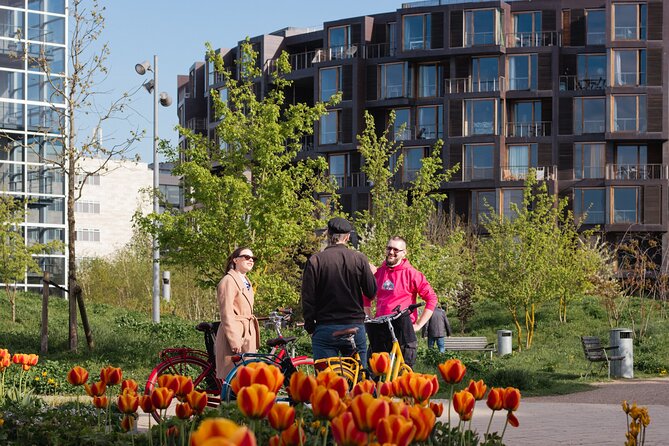
Not every sustainable building is about energy efficiency alone. Some sustainability is about people—how they share space, form community, and develop as individuals.
Stop 4: Tietgen Residence Hall and social sustainability through shared rooms
The Tietgen Residence Hall is built for personal development of about 400 inhabitants. The clever part is how the design balances individual space with community support through shared rooms.
You’ll notice the practical trade-off: private rooms are smaller and come with a washroom, while many life functions happen in shared kitchens, living rooms, and amenities. That model can sound strict if you’ve only lived in traditional private apartments, but it’s also a way to reduce isolation and get social energy without forcing social plans.
This stop is short, but it’s a powerful mental prompt: sustainable housing doesn’t just mean green materials—it means reducing friction for community life.
Stop 9: Folkehuset Absalon, recycled into a community center
Then comes Folkehuset Absalon, a former church turned into a privately run community center. Reuse like this is one of the most honest forms of sustainability: you keep the structure, keep a recognizable shell, and redirect it to serve new needs.
If you like your Copenhagen with a human voice, this is the stop that brings it.
DR Koncerthuset: architecture that still matters after dark
At DR Koncerthuset, you’ll see a concert-focused space that also signals how the city values culture as public infrastructure.
The building houses a concert hall with 1,800 seats and connects to the Royal Symphony Orchestra, plus smaller stages and recording studios. This is a good reminder that sustainability isn’t only about parks and roofs. A well-designed civic building can shape the city’s identity for decades.
Even if you never attend a concert, it’s worth pausing here because it’s the clearest example on the route of architecture as a platform for shared experiences.
Amagerfælled and Enghave Park: nature, memory, and rain control
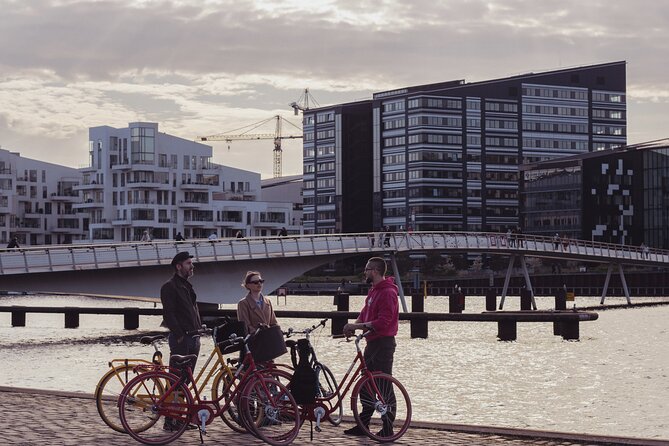
This part of the tour is where “green” gets complicated—in a useful way. Copenhagen’s nature isn’t always untouched. It’s often recovered, repurposed, and improved.
Stop 6: Amagerfælled, from training grounds and dumps to rare nature
Amagerfælled has a layered past. It was used by the military as training and shooting grounds from the 1700s until the 1950s, then became a garbage dump afterward. Copenhageners even joke about it with lorteøen (shit island), which is exactly the kind of blunt local humor that helps you remember this wasn’t always a park.
Today, though, it’s presented as a rare example of relatively untouched nature in Copenhagen, ironically situated on partly artificially reclaimed land. It’s a stop that makes sustainability feel real: change happens, even when the origin story is messy.
Stop 8: Enghave Park and stormwater-focused redesign
Enghave Park started life in the late 1920s on allotment gardens, laid out in a neoclassical style with a bandstand, playground, and sports fields. Between 2017 and 2019 it was redesigned to play a key role in controlling torrential rains.
That’s the big idea: this park isn’t only for leisure. It’s part of Copenhagen’s plan to manage water during heavy downpours. If you’re the kind of traveler who likes to see how design prevents problems rather than just looks pretty, you’ll appreciate this stop.
Oerstedsparken adds another reuse story.
Stop 13: Oerstedsparken and defense converted to a park with a lake
Ørsteds Park was once part of the city’s defenses outside the walls. After the city wall was demolished, it became a park, keeping parts of the old moat as a lake inside the park. You’ll also see the dramatic hills and crooked paths that reflect older defensive geography.
This stop ties back to the larger theme: the city reuses space instead of pretending history can be erased.
Kødbyen (Meatpacking District) and Israel’s Square: how planning shaped food and industry
Now the tour shifts from parks and public life to how the city organized its economy—and why that organization still shapes where people gather.
Stop 10: Kødbyen and industrial architecture built for healthier business
The historic meatpacking district, Kødbyen, was planned by the city to create sanitary, healthier conditions as Copenhagen grew. The district expanded in phases into the size you see today, showcasing industrial architecture from the 19th and 20th centuries.
It’s a reminder that sustainability isn’t always about replacing old buildings. Sometimes it’s about improving systems—like regulations and layout—so workers and the city benefit as industry expands.
Stop 11: Israel’s Square and Torvehallerne, from market to parking to meeting point
At Israels Plads (with Torvehallerne adjacent), you’re in a modern food hub. But the spot has moved through roles over time. There was a farmers market here since the strict no-building policy of the walled city ended in the 1890s until the 1950s. Then it became a huge parking lot.
That change tells you a lot about city priorities—and it explains why this stop feels like a place people actually use now, not just a relic of the past.
The final stretch and how to keep the momentum afterward
After the last major stops, the remaining time is spent cycling between locations, bringing you back to the meeting point. Use this final stretch to check in with what clicked for you.
If the infrastructure grabbed you most, look for more bike routes while you’re in town. If community design stuck, keep an eye out for reused buildings and shared spaces. Copenhagen makes it easy to keep learning without paying for extra tickets.
Should you book this Copenhagen Architecture and Sustainability Tour?
I’d book it if you want a smart mix of architecture, city planning, and cycling confidence in just a few hours. It’s a strong value because you get a local guide, a provided bike, helmets on request, and a route with multiple free stops—no constant ticket math.
Skip it (or at least consider your timing) if you hate pedaling or if you’re easily overwhelmed by crowds near the harbor on busy summer days. This tour can still be enjoyable, but you’ll need to go with the guide’s flow rather than expecting quiet photo time.
If you like Copenhagen for how it works as a city—not just how it looks—you’ll get a lot out of this one. The buildings are the lesson, but the real payoff is understanding the choices behind them.
FAQ
How long is the Copenhagen Architecture and Sustainability Tour?
It’s about 3 hours in total, and the hours given are approximate, based on the time spent on the journey between stops.
How far do you bike during the tour?
You’ll cover roughly 11 km of biking between stops on the tour.
How big is the group?
The tour has a maximum of 15 travelers, so it stays small-group sized.
Is the tour offered in English, and will I get a ticket on my phone?
Yes. The tour is offered in English and you’ll receive a mobile ticket.
What’s included with the tour price?
The price includes use of a bicycle, a local guide, toilets at their store, and free bike helmets upon request. Children bikes in different sizes are also available if you contact us for availability.
Do I need to pay for admission at the stops?
All the listed stops have admission tickets marked as free.