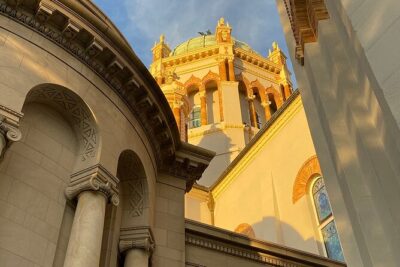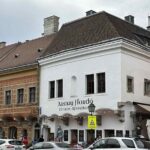
Art Nouveau in Budapest is not quiet. It’s theatrical, detailed, and built to make you look twice. I like that this tour gives you the history behind the style and pairs it with buildings you can actually see up close, inside when possible.
Two things I especially like: the private guiding (real conversation, not a lecture) and the built-in coffee break in an Art Nouveau setting. One practical downside: the whole route is best with normal walking stamina, since most stops are short but you will be moving between them.
If you want a smart way to learn Budapest’s Secession story without getting lost in guidebook chaos, this is a strong pick for your first full afternoon.
In This Review
- Key points to know before you go
- Budapest’s Art Nouveau, in one tight 4-hour circuit
- Hotel pickup plus an actually memorable first stop
- Parisian Passage Café: coffee with the design turned up
- Liszt Academy: Hungarian music meets Secession architecture
- Váci Street walk: shopping street, palace-style façades
- Torok-Bankhaz: the handoff from Art Nouveau to Art Deco
- Postatakarek Bank: Lechner’s Hungarian Secession flavor
- House of Hungarian Art Nouveau: the National Style explained in buildings
- Budapest Zoo architecture: a walk that shows variation
- Museum of Applied Arts: Secession façade views during renovation
- Guides make the difference: Michael, Suzy, Szőke Zsuzsanna, Bogata
- Price and logistics: why $243.53 per group can be a smart deal
- Timing: what the 20-days-ahead booking trend means for you
- Who this tour is best for (and who might want something else)
- Should you book the Private Art Nouveau Tour Budapest?
- FAQ
- How long is the Private Art Nouveau Tour Budapest?
- Is this tour private, and how many people can join?
- What’s included in the price?
- Are admissions included?
- How does pickup work?
- Can I cancel for a full refund?
Key points to know before you go
- Private, small-group feel: your guide can tailor pacing and what you focus on.
- Coffee/tea included: you’ll pause in an Art Nouveau place, not just on a street corner.
- Secession icons in one circuit: you’ll connect Hungarian National Style to the bigger European mix.
- Multiple architectural styles in dialogue: Art Nouveau meets Art Deco right in the same story.
- Free admission for the listed indoor moments: several stops explicitly note free tickets.
- Hotel pickup and drop-off: less friction, more time looking at façades and details.
Budapest’s Art Nouveau, in one tight 4-hour circuit
This is a focused tour built around Budapest’s Secession and Art Nouveau landmarks. In about four hours, you get a clear line from the style’s roots to the specific Hungarian version, with stops spaced so you’re not sprinting across the city.
The tour is priced per group (up to 15), not per person. That matters, because it turns a “private tour” concept into something you can split with friends or family. The tour also tends to get booked in advance, so don’t treat it like a last-minute museum impulse.
You can also read our reviews of more tours and experiences in Budapest.

Hotel pickup plus an actually memorable first stop
The experience starts with hotel or port pickup, which is a big deal in Budapest. It saves you from figuring out buses and trams before you’ve even looked at a façade.
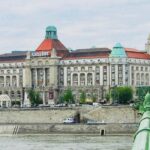
Your first stop is a major Art Nouveau landmark where you can explore both the exterior and interior. One previous group began at the Four Seasons Hotel area (Gresham Palace), and that’s exactly the kind of “walk in, then look up” building that makes this theme click fast. Even if your exact first building differs, the intent stays the same: you start with the kind of architectural masterpiece that has details everywhere—so your guide can point out what you’d miss on your own.
Parisian Passage Café: coffee with the design turned up
The tour’s coffee moment isn’t an afterthought. At the Parisian Passage Café, you get a complimentary coffee or tea in a recently renovated passage setting that keeps the Art Nouveau spirit front and center.
The key value here is perspective. After you’ve seen plenty of façades, this stop teaches you how Art Nouveau design shows up in smaller spaces—passages, furnishings, and the way the interior frames your eye. In one group experience, the coffee shop setting included Art Nouveau tables and chairs you could actually sit at, so the style wasn’t just a photo backdrop.
If you’re the type who likes to slow down for 15 minutes and absorb the atmosphere, this is one of the smarter pauses on the whole route.
Liszt Academy: Hungarian music meets Secession architecture
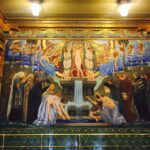
Next comes the Liszt Academy, described as a homage to Hungarian music and a grand example of the international secession style. The point isn’t just to say the building is pretty. Your guide focuses on what those decorative choices communicate—national pride, modern identity, and the European design language of the era.
You’ll head inside the hall to see mosaics and interior details. That’s where the tour earns its keep: this is the moment you stop treating Art Nouveau like a façade-only style. Even a short stop here can change how you interpret the rest of the city’s ornament.
Váci Street walk: shopping street, palace-style façades
Váci Street is Budapest’s famous historic fashion and shopping street, but on this tour you’re looking past storefronts. You pause to examine urban palaces along the way and connect them to their Art Nouveau heritage.
This part works well because it mixes motion with analysis. You’re not stuck in one place. You can look up, then walk, then look up again—your guide ties the visuals back to the Hungarian version of Secession design.
Practical note: this street can be busy, especially around peak hours. If you prefer quiet photo time, ask your guide to time the pauses so you catch the best angles without stopping in the thickest foot traffic.
Torok-Bankhaz: the handoff from Art Nouveau to Art Deco
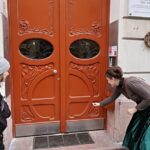
The Torok-Bankhaz Building is used to explain a transition between the two major pre-war styles: Art Nouveau and Art Deco. That’s a useful lesson because a lot of visitors assume styles change abruptly. Here, you see the bridge.
You’ll spend a short, focused stop, with the architect explicitly tied to the building—MIKSA ROTH. If you like knowing names, this is one of the stops where the information feels concrete instead of abstract.
Also, this is the kind of architecture where small differences matter. Your guide helps you spot how ornament and form shift as tastes evolve.
Postatakarek Bank: Lechner’s Hungarian Secession flavor
At Postatakarek Bank, the theme turns to the Hungarian National branch of Secession. Expect castle-like details and architectural elements that feel more personal to Hungary than the purely “international” look.
You’ll see the architect credit—LECHNER—which helps you connect what you’re seeing to the larger design story. For many visitors, this is where the tour makes the style feel less like random decoration and more like a clear design language.
This stop is short, so come ready to look at both the overall shape and the smaller ornamental work. A good guide will point out exactly which parts to focus on.
House of Hungarian Art Nouveau: the National Style explained in buildings
The House of Hungarian Art Nouveau is dedicated to the period of Secession in Hungarian architecture. This stop is about context: what the Hungarian National Style means, and how it pulls from influences while still expressing local identity.
You’ll get a guided look with a “why it matters” angle rather than a checklist of decorations. In plain terms, this is where you start understanding how Hungary’s version of Art Nouveau fits into its culture and self-image.
Even if you only get 15 minutes here, it’s a stop that can make the rest of the architecture feel less confusing.
Budapest Zoo architecture: a walk that shows variation
One section of the tour takes you past buildings connected to the Budapest Zoo, described as a journey through the diversity of Art Nouveau and Secession architecture. The value here is variety.
Instead of repeating the same look, you get a sense that the style has multiple expressions. Your guide keeps the thread by comparing details you can see from stop to stop, helping you recognize patterns and differences faster.
Because this part includes walking through an area, wear comfortable shoes. You’ll be doing a lot of short “look up and move on” moments, and that adds up.
Museum of Applied Arts: Secession façade views during renovation
The last named stop is the Museum of Applied Arts. The building carries trademarks of the Hungarian National Style of Secession, and you’ll discuss those design features as you stop there.
Important practical detail: the museum is still under renovation, so you can only explore the façade. That said, a façade-only stop can still be satisfying when you know what you’re looking for—ornament placement, structural rhythm, and the way the façade “reads” from street level.
If you’re someone who loves exterior details, this finale can feel like the tour’s last puzzle piece.
Guides make the difference: Michael, Suzy, Szőke Zsuzsanna, Bogata
This tour lives or dies on the guide. And the standout theme in past experiences is that guides go beyond names and dates.
- Michael: has tailored tours even on short notice, using a mix of history and art so it feels personal rather than scripted.
- Szőke Zsuzsanna: has a habit of weaving architecture and country story together, so the buildings make sense in a broader cultural frame.
- Suzy: described as a walking encyclopedia, and also as charming and professional. One added bonus mentioned was a side stop at a beautiful art museum along the way, when timing allowed.
- Bogata: known for showing spectacular Art Nouveau examples and keeping the experience fun, with a strong focus on architectural details.
One more practical advantage: some guides adjust for limited walking ability, using taxis and even public transportation when needed. That means the tour can be more flexible than a typical “march from stop to stop.”
Price and logistics: why $243.53 per group can be a smart deal
The price is $243.53 per group for up to 15 people, lasting about 4 hours. That sounds like a lot until you split it.
Here’s a simple way to think about value:
- If you’re 4 people, you’re paying roughly $60 per person.
- If you’re 8, it’s about $30 per person.
- If you’re 12–15, it can drop to around $16–$20 per person.
Now add the built-in perks: hotel/port pickup and drop-off, a professional art historian guide, and coffee/tea. Also, several stops explicitly note admission free, which helps keep the total spend predictable.
So the tour is a particularly good deal if you have a small group that likes architecture, or if you’re traveling with someone who enjoys learning but gets restless with long classroom-style tours.
Timing: what the 20-days-ahead booking trend means for you
On average, this tour gets booked about 20 days in advance. That tells me two things: (1) the time slots sell out, and (2) the theme is popular with people who want a structured introduction on a limited schedule.
If your dates are firm, book earlier rather than later. You’ll get the slot you want and reduce the stress of building an itinerary around an art focus.
Who this tour is best for (and who might want something else)
This works best for you if you want:
- A clear, guided path through Budapest’s Secession/Art Nouveau story
- Multiple stops in a short time without DIY map fatigue
- A guide who talks architecture and explains why it looks the way it does
You might want a different plan if you only care about one building, because this tour is built as a sequence. It’s not one long visit—it’s a set of short, well-chosen moments.
Also, if you’re very sensitive to crowds, you’ll be happiest with your guide timing the Váci Street pauses carefully.
Should you book the Private Art Nouveau Tour Budapest?
Yes, if you’re the kind of traveler who wants Budapest to make sense. This is one of the better ways to connect the look of Secession architecture to the Hungarian identity behind it, and you do it with inside access, coffee, and a real guide—not a list of photos.
Book it especially if:
- You’ll split the cost with at least a few people
- You want hotel pickup to make the day easier
- You enjoy architectural details you can learn to “read” on your next street walk
Skip it only if your goal is purely casual sightseeing with no interest in explanations. The tour is designed for people who like their history and design paired together—and it sounds like the guides know how to make that fun.
FAQ
How long is the Private Art Nouveau Tour Budapest?
The tour runs about 4 hours (approx.).
Is this tour private, and how many people can join?
Yes, it’s a private tour. The group size is up to 15 people.
What’s included in the price?
You get a professional art historian guide, hotel/port pickup and drop-off, a private tour, and coffee and/or tea.
Are admissions included?
The itinerary notes free admission for the stops listed (including the café passage, Liszt Academy hall visit, and the other architectural buildings). The Museum of Applied Arts stop is described as façade viewing during renovation.
How does pickup work?
Pickup is offered from any ports or hotels you specify (examples are given, but you tell them where you want to be collected).
Can I cancel for a full refund?
Yes. You can cancel for free up to 24 hours in advance for a full refund, based on local experience start time.