REVIEW · CHICAGO
Chicago’s Secret Interiors Architectural Walking Tour
Book on Viator →Operated by Chicago River Boat Architecture Tours · Bookable on Viator
Chicago hides luxury behind ordinary doors. This walking tour is built for people who want more than a postcard view, with rare interiors and stories that connect the buildings’ look to the money, ambition, and engineering behind them. I especially love the tight focus on interior details like mosaic floors and ornate domes, because you often walk past these places without knowing what’s inside.
One thing to plan around: the route depends on good weather, and the Rookery is closed on Sundays, so the exact lineup can shift.
For a $35 ticket and a mobile ticket, you get an expert guide and multiple stops in about two hours, with time indoors during many of the highlights—so the day still feels doable even when Chicago weather gets rude.
In This Review
- Key highlights to know before you go
- A Walking Tour of Rare Chicago Interiors in the Loop
- Value at $35: What You Actually Get (and Why It’s Worth It)
- Route Logistics: Meeting at Union Station and Staying Together
- Inside the Buildings: The 9 Key Stops on the Route
- Stop 1: The Loop core and the finance skyline
- Stop 2: La Salle and the Chicago Financial Canyon
- Stop 3: Union Station’s Great Hall and skylight
- Stop 4: The Rookery Building and Frank Lloyd Wright’s lobby magic
- Stop 5: The Field Building and Art Deco design details
- Stop 6: Marquette Building’s Chicago window and mosaic story
- Stop 7: Palmer House Hilton and the Gilded Age lobby
- Stop 8: Chicago Cultural Center or the Monadnock Building
- Stop 9: Marshall Field and Company Building (Macy’s) and Tiffany-style glass
- The Patterns You’ll Start Spotting in Chicago’s Architecture
- Who Should Book This Tour (and Who Might Skip It)
- Should You Book Chicago’s Secret Interiors Architectural Walking Tour?
- FAQ
- How long is the Chicago Secret Interiors walking tour?
- How much does the tour cost, and do I get a mobile ticket?
- Where do I meet, and where does the tour end?
- Is the Rookery Building included on Sundays?
- What’s included in the ticket price?
- What happens if the weather is poor or I need to cancel?
Key highlights to know before you go
- $35 value for multiple interior stops in the Loop, not just street-level photos
- Union Station’s Beaux-Arts main hall with its huge skylight and grand details
- The Rookery’s light court and oriel staircase plus Frank Lloyd Wright’s later lobby work
- Mosaics and domes everywhere, from Tiffany-style glass to peacock doors
- A small-group feel (the max is listed as 15), with guides working to keep everyone together
- Sunday planning matters, since the Rookery won’t be included then
A Walking Tour of Rare Chicago Interiors in the Loop
If you like architecture, Chicago is basically a living textbook. The trick is that the best pages are often behind lobbies, doors, and “members only” vibes. This tour is designed to get you into that better half of the story: the interior spaces people miss when they’re only focused on the skyline.
I love that the guide doesn’t treat these buildings like isolated monuments. Instead, you get the who-and-why: the magnates, stars, and big personalities from the Gilded Age and Roaring Twenties, plus the architects and engineers who had to solve real structural problems. You’re also not stuck in one style. Over the course of the walk, you’ll see Romanesque/Moorish mixing, Beaux-Arts grandness, Art Deco flourishes, and the Chicago School idea of repeating window forms.
The other reason I’m a fan: you get lots of “wait, how did I not notice this before?” moments. That’s not just about beauty. It’s about craftsmanship—ironwork, mosaics, terra cotta details, and glasswork that makes the city feel more handmade than steel-and-concrete.
You can also read our reviews of more tours and experiences in Chicago.


Value at $35: What You Actually Get (and Why It’s Worth It)
At $35 for roughly two hours, the value is mostly about access and time. Many of the most impressive Chicago interiors aren’t things you’ll stumble into on your own unless you already know exactly where to go. This tour stacks multiple stops so you can see the highlights without spending the whole day route-planning.
The tour also includes an expert guide, and the stops are presented as admission-free with the ticket. In practical terms, that means you’re not constantly deciding whether another building is worth extra fees. You focus on seeing and learning.
It also helps that the route is concentrated in the Loop area. That matters because Chicago walking can be a lot. When you’re moving building-to-building quickly, a good guide can make the pace feel manageable. Based on real experiences shared for this tour, the group stays together well, and there’s even mention of a short break mid-tour—around 15 minutes—so you don’t feel like you’re marching nonstop.
Route Logistics: Meeting at Union Station and Staying Together
You start at Chicago Union Station, 225 S Canal St. You end at the Marshall Field and Company Building, 111 N State St. That end point is useful: you finish in the center of downtown retail and transit options, so you can keep your day rolling instead of turning right around.
The tour uses a mobile ticket, and service animals are allowed. It’s also listed as near public transportation, which helps if you need to adjust your arrival.
The tour is weather-dependent. Since it’s a walking format, plan like it’s a real day outside: bring layers and expect some time on the street. In colder or rainy conditions, guides have still managed the schedule by spending a lot of time indoors where possible, so you’re not stuck out there the whole time.
One small caution from experience shared: once in a while, a guide can fail to show up. It’s rare, but it does happen. If you’re anywhere near the meeting window and the guide isn’t in place, message or call right away rather than waiting on hope.
Inside the Buildings: The 9 Key Stops on the Route
Stop 1: The Loop core and the finance skyline
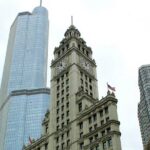
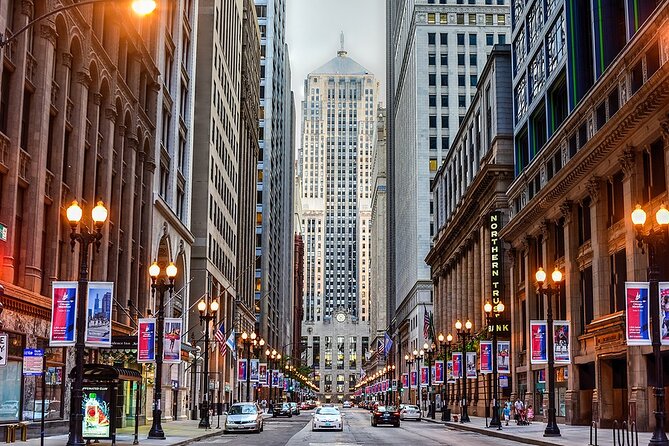
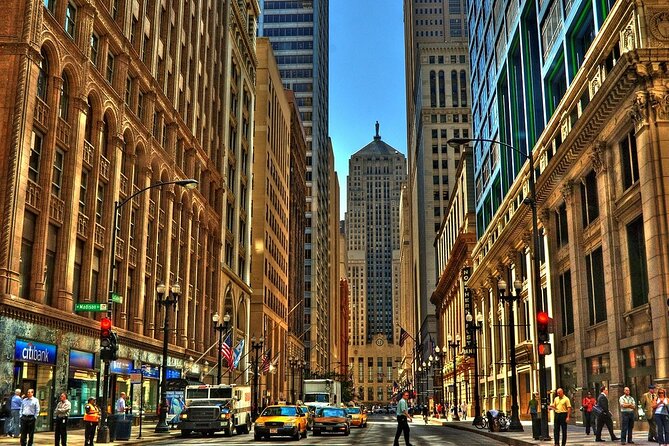
Your first taste of Chicago architecture comes in the Loop, where the economic backbone of the city is literally built into the streets. You’ll notice the contrast between different eras and styles: the art deco presence associated with the Board of Trade and the vertical punch of Willis Tower.
This stop works well because you’re set up for everything that comes next. You learn the storyline early—commerce, innovation, and the visionaries who shaped what you see. The downside is simple: this part is mostly about orientation and street views. If it’s windy or rainy, you may want to keep your outer layer handy and your camera protected.



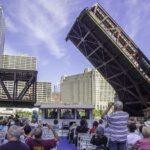


Stop 2: La Salle and the Chicago Financial Canyon
Next you get a more focused look at the “canyon” effect created by tall buildings along the Loop blocks. The theme here is how the city’s structure funnels you down a corridor of finance and power—again, with Willis Tower and the Chicago Board of Trade mentioned as key anchor points.
This segment is great for architecture nerds because it shows how mass and spacing create the mood of a district. It can also be a quick one, so if you’re hoping for lots of time in interiors at this stop, adjust your expectations. Think of it as a setup stop that sharpens your eye before the bigger interior moments.
Stop 3: Union Station’s Great Hall and skylight
Union Station is where the tour really gets cinematic. You’ll see the Beaux-Arts facade and then step into the Great Hall, highlighted by a major skylight and intricate details that reflect early 20th-century ambition. The building is credited to Daniel Burnham and completed in 1925, which gives the whole stop extra historical weight.
This is one of the best stops for first-timers because it’s both a transportation hub and an architecture landmark. You’re looking at a building that has welcomed millions of arrivals and departures, and that sense of movement adds energy to the experience.
The possible drawback is crowds and motion. Union Station is active. If you get easily distracted by people walking through, you may have to work a bit to pause and look carefully at details.
Stop 4: The Rookery Building and Frank Lloyd Wright’s lobby magic
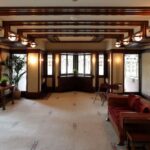
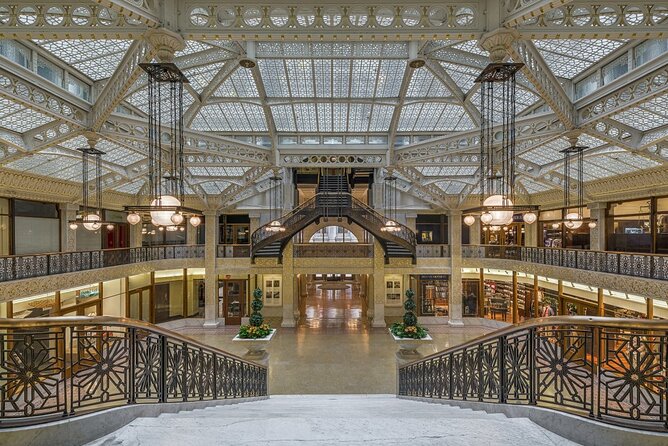
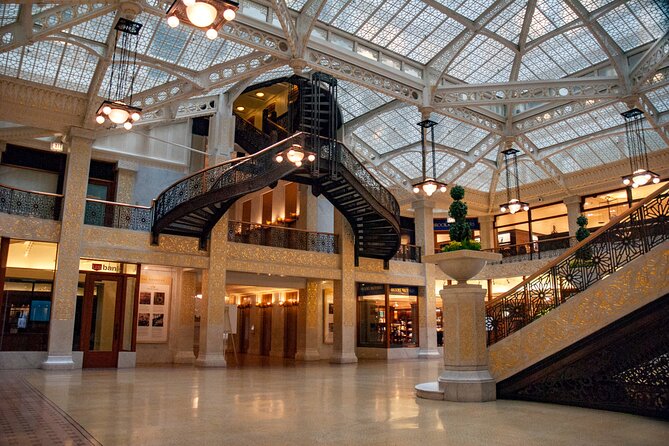
The Rookery is the standout for many architecture fans for a reason. It’s tied to Daniel Burnham and John Wellborn Root (1888), and later Frank Lloyd Wright reimagined the lobby. Expect style mixing—Romanesque and Moorish—and features you don’t see in ordinary office buildings.
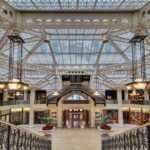
What you’ll care about here: the light court, intricate ironwork, and the famous oriel staircase. This stop is valuable because it makes the building feel intentional, not just expensive. The layout and lighting do the heavy lifting, and you can understand that once you see how the space is shaped.
Important planning note: The Rookery is closed on Sundays, so it won’t appear on Sunday routes.
Stop 5: The Field Building and Art Deco design details
After the Rookery, you shift into Art Deco territory with the Field Building. This part of the route is for people who like crisp lines and decorative impact. Even without a giant “one exact feature” listed, the description emphasizes the design intricacies and how the building contributes to Chicago’s skyline identity.
The practical consideration here is time allocation. Some stops feel like you’re in one room for a while; others are more about a structured walkthrough. If you prefer longer time indoors, focus on the stops with clearly defined interior features (Union Station, Rookery, Marquette, Palmer House, Marshall Field) for your most attentive looking.
Stop 6: Marquette Building’s Chicago window and mosaic story
The Marquette Building is a smart stop for anyone who wants to understand how Chicago architecture solved practical problems with style. You’ll hear about the pioneering use of the Chicago window and the terra cotta facade—plus how it fits into the Chicago School of Architecture.
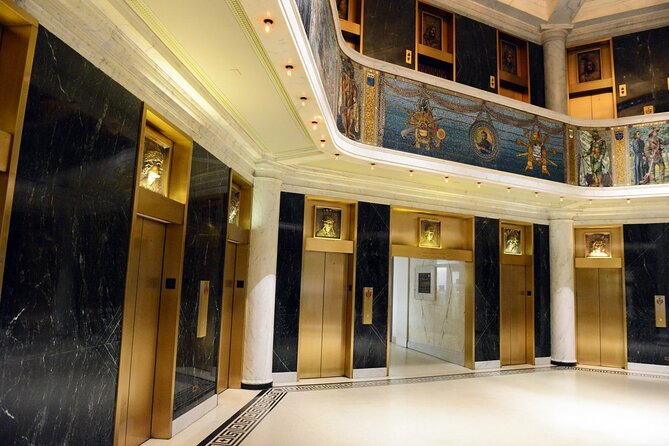
Inside, the lobby includes ornate mosaics that connect to Jacques Marquette’s exploration of Illinois. That detail matters because it turns decoration into storytelling. You’re not just looking at ornament; you’re reading a local history theme in the design.
If you enjoy art-as-education, this is a strong stop. The only drawback is that mosaics reward slow looking. If your guide has the group moving quickly, you might need to pause for an extra beat when you spot the most detailed panels.
Stop 7: Palmer House Hilton and the Gilded Age lobby
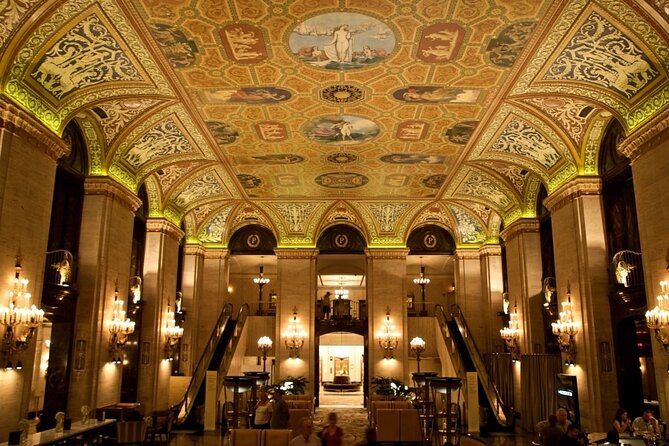
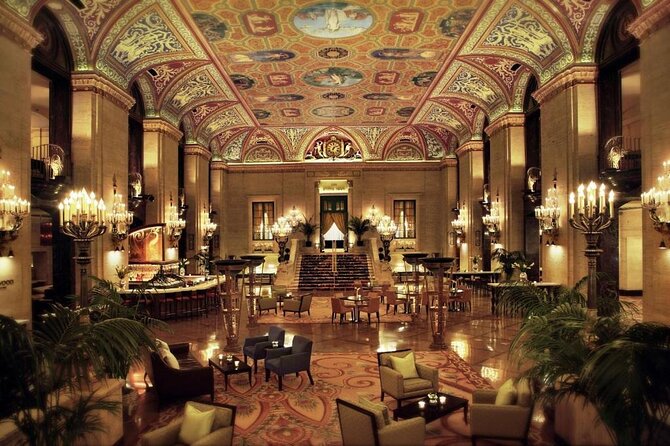
Palmer House is the kind of hotel interior that makes you act more quietly. It’s one of Chicago’s grandest historic hotels, with Beaux-Arts architecture and lavish interiors tied to the Gilded Age. You’ll also hear that it was rebuilt in 1871 after the Great Chicago Fire.
The interior features called out for this stop are the frescoed ceiling, mosaic floors, and bronze peacock doors. There’s also the celebrity and dignitary history angle—Palmer House as a place where notable people have passed through over time.
A realistic consideration: hotels can be security-aware spaces. Even if the lobby is accessible, you may not have total freedom to linger wherever you want, so be ready to look, then move when the group does.
Stop 8: Chicago Cultural Center or the Monadnock Building
This stop gives you a choice based on what’s on the day’s route: Chicago Cultural Center or the Monadnock Building.
The Cultural Center option is framed as architectural beauty plus cultural heritage. The Monadnock option is described as a commercial style beacon from the late 19th century, which makes it a good contrast to the more decorative interiors elsewhere on the route.
The drawback is out of your control: you can’t fully predict which one you’ll see. Still, both are positioned as architecture highlights for the day, so you’re not left with a bland filler stop.
Stop 9: Marshall Field and Company Building (Macy’s) and Tiffany-style glass
The tour ends at Marshall Field and Company Building, now home to Macy’s. This is a fitting closer because the building is associated with retail grandeur and standout craftsmanship.
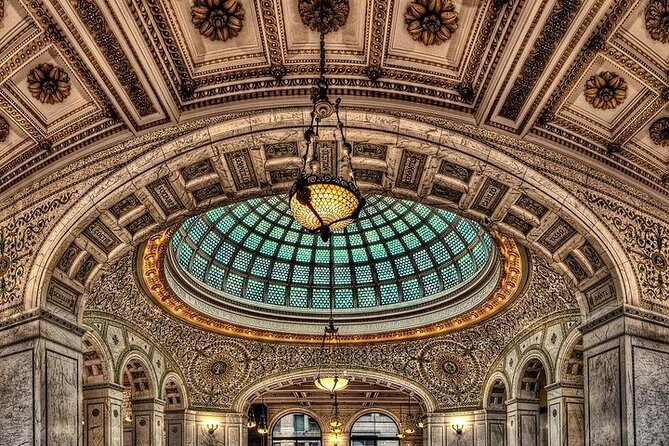
Two signature features to look for: the Tiffany glass mosaic dome and a walnut-paneled Tea Room. Those details make the building feel like a luxury space even if you’re just passing through. It’s also a strong final stop because it’s still very much a working commercial building, so the “past meets present” feeling is real in the moment.
If you’re sensitive to retail crowds, pick your moments. This area can feel busy, especially in peak times, and you may want to step back slightly from the busiest paths so you can focus on the dome.
The Patterns You’ll Start Spotting in Chicago’s Architecture
Once you’ve seen a few of these interiors back-to-back, the city’s logic starts to click. You’ll notice how design choices line up with what the building was meant to do—finance districts with confident massing, hotels with theatrical entrance details, department stores with decorative luxury, and office buildings with practical window systems that still look intentional.
You’ll also start reading materials differently. Terra cotta facades show up as texture and color work. Mosaics become wayfinding for stories—especially with the Marquette theme. Even in places focused on grand rooms like Union Station, you’re learning how the architects used light and proportion to make big spaces feel usable.
The guide storytelling is what connects it all. Names like Daniel Burnham, Frank Lloyd Wright, and the building dates tied to specific works give you anchors, so you don’t just see pretty spaces—you remember what you saw and why it mattered.
And if you love comparing eras, the tour makes that easy. Art Deco, Chicago School design, Romanesque/Moorish blending, and Beaux-Arts grandness all share the same walkable day.
Who Should Book This Tour (and Who Might Skip It)
This is a strong pick if you want a structured way to see Chicago interiors in a short window—especially if you like architectural detail, mosaics, domes, and grand lobbies. It also fits well if you enjoy history tied to actual places: the magnates and stars of the Gilded Age and Roaring Twenties are part of the story you’ll hear.
You might want to think twice if:
- You dislike walking outdoors and dealing with weather, since the tour requires good conditions.
- You’re visiting on a Sunday and really want the Rookery specifically, since it won’t be included.
As for guide style, the experiences shared for this tour strongly point to energetic, organized leadership. People have singled out guides like Grant for warmth and organization, Ethan for enthusiasm and keeping the group moving on weather days, Ty for being accommodating and funny, and Matt for clear, informative pacing. That matters because in a day packed with interiors, a guide’s timing changes everything.
Should You Book Chicago’s Secret Interiors Architectural Walking Tour?
Yes, if you want a compact, high-impact architecture day. For $35, you’re getting multiple famous Chicago interior moments—Union Station, the Rookery, Palmer House, and Marshall Field/Macy’s—plus a guide who connects design to the people behind it.
Book it when:
- You’re staying in the Loop area and want an efficient two-hour plan.
- You enjoy looking closely at domes, mosaics, window design, and lobby craftsmanship.
- You want something different from an exterior-only architecture experience.
Skip or adjust plans when:
- Your date is Sunday and you’re hoping for the Rookery.
- Weather is shaky and you don’t want to walk in it.
If you’re doing the Chicago River architecture boat vibe too, this walking tour pairs nicely. One focuses on skyline and the other on what’s behind the doors.
FAQ
How long is the Chicago Secret Interiors walking tour?
It runs about 2 hours (approximately), with multiple stops in and around the Loop.
How much does the tour cost, and do I get a mobile ticket?
The price is $35, and you’ll receive a mobile ticket.
Where do I meet, and where does the tour end?
You start at Chicago Union Station, 225 S Canal St, and end at the Marshall Field and Company Building, 111 N State St.
Is the Rookery Building included on Sundays?
No. The Rookery is closed on Sundays, so it will not be included on a Sunday route.
What’s included in the ticket price?
The tour includes an expert tour guide.
What happens if the weather is poor or I need to cancel?
The experience requires good weather. If it’s canceled due to poor weather, you’ll be offered a different date or a full refund. You can cancel for a full refund up to 24 hours in advance.