REVIEW · BRUSSELS
Brussels 3-Hour Guided Art Nouveau Tour
Book on GetYourGuide →Operated by Bravo Discovery · Bookable on GetYourGuide
Art Nouveau in Brussels is shockingly practical. In just 3 hours, this tour turns architectural details into something you can actually spot on your own, from Victor Horta to lesser-known houses in the Bailli district. You also learn how iron, glass, wood, and stone get combined into that flowing, organic look.
I love two things most. First, I like the way the guide connects buildings to the period around them, including social and technological context—plus the tour leader’s own research and photo materials help you follow along. Second, I love the route choice: it pushes beyond the usual quick-hit streets, so you see a thicker slice of Brussels’ Art Nouveau story.
One possible drawback: the program focuses on exteriors. Most houses are viewed from outside, and if you’re craving interior rooms, you’ll need to plan that separately—either via the Victor Horta Museum time after the tour or by doing extra reading later.
In This Review
- Key Things You’ll Notice on This Art Nouveau Tour
- What You Learn (Besides Pretty Facades)
- The Grand-Place Start: Easy to Find, Quick to Get Oriented
- Bailli District: Where Art Nouveau Concentrates
- The Stop-by-Stop Route (And Why Each One Matters)
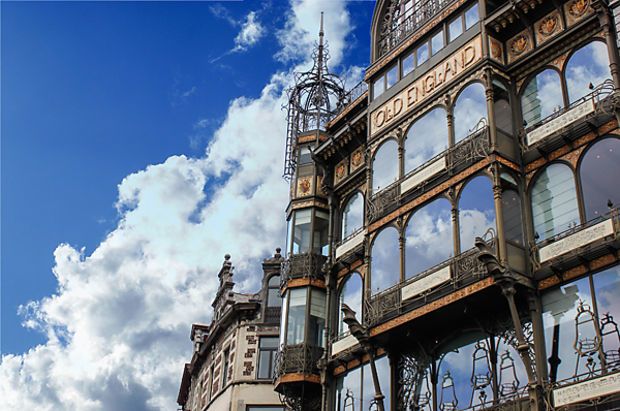
- Old England House (Music Instrument Museum): A Strong Opening Scene
- Hotel Tassel: Horta’s Signature Starts to Click
- Hotel Goblet d’Alviella: A Different Kind of Elegance (1882)
- Hotel Otlet: Where Multiple Designers Leave a Mark (1894–1898)
- Hotel Ciamberlani (1897) and the René Janssens House (1898)
- Beukman House (1900) and Paul Hankar’s Private Home
- Van Rysselberghe House (1912) and Armand Van Waesberghe
- The Best Part of the Tour: Photos, Q&A, and Context
- Ending at the Victor Horta Museum: Plan Ahead or Wait
- Price and Value: Is $35 a Good Deal?
- Who This Tour Is Best For (And Who Might Skip It)
- Practical Tips That Make It Feel Easier
- Should You Book This Brussels Art Nouveau Tour?
- FAQ
- Where is the meeting point for the tour?
- What time does the tour start, and how long is it?
- What languages are offered for the live guide?
- What is included in the $35 price?
- Is Victor Horta Museum admission included?
- Do you go inside the Art Nouveau buildings during the tour?
- Is the tour wheelchair accessible, and is cancellation free if plans change?
Key Things You’ll Notice on This Art Nouveau Tour
- A 3-hour, guided intro that teaches you to spot Art Nouveau traits fast, not just memorize names
- Bailli district by tram, so you get to the dense “pocket” of Art Nouveau without wasting time
- A stop list packed with major architects, including Victor Horta, Paul Hankar, and others who shaped the look
- Photo-based support for interior design, since you can’t go in most houses
- Guides praised for energy and careful answering, with frequent mentions of Maria (and sometimes Danielle) by name
- Finish at Victor Horta Museum, which makes it easy to extend your visit if you plan tickets
What You Learn (Besides Pretty Facades)
Art Nouveau can feel like a style you either love or don’t. This tour helps you love it by teaching you what to look for: the way structural materials and decoration work together. You’re not just chasing curves—you’re learning why those curves show up, and what they’re doing on the building.
Expect the guide to frame the style historically and practically. You’ll hear how designers used ironwork, glass, wood, and stone not as separate “features,” but as parts of a single design language. That’s why once you catch the pattern, you start seeing it everywhere.
You can also read our reviews of more tours and experiences in Brussels.
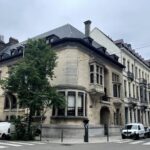
The Grand-Place Start: Easy to Find, Quick to Get Oriented
The meeting point is Brussels’ Grand-Place, starting at 10:00. You’ll find the guide holding a white umbrella, which makes the first moment low-stress—no wandering, no guessing.
From there, the plan is to move by tram toward the Bailli area, the part of the city often described as the Art Nouveau village within Brussels. For first-timers, that tram ride is more than transport. It’s your transition from postcard Brussels into the neighborhoods where the architecture becomes the main event.
I’d bring one pair of shoes and commit to them. The tour is built around walking between stops, and one theme in feedback is that the early part can involve uphill stretches.
Bailli District: Where Art Nouveau Concentrates
Bailli is key because it’s where Art Nouveau isn’t scattered. It feels clustered, which means your eye gets trained quickly: you spot motifs, then you see the same ideas repeated and reworked by different architects.
This tour’s big value is that it keeps the story moving. You’re not parked in front of one building for an hour. Instead, you’re following design evolution as you go—from early experiments to later refinements.
Also, you get more of the “real city” feel. Several people point out that this walks into areas you might not choose on your own, even if you’re doing Brussels on foot.
The Stop-by-Stop Route (And Why Each One Matters)
This tour strings together a sequence of standout buildings, ending with the Victor Horta Museum. You’ll see major works tied to Victor Horta, and also houses by other architects who carried the style in new directions. Here’s what each named stop adds to the bigger picture.
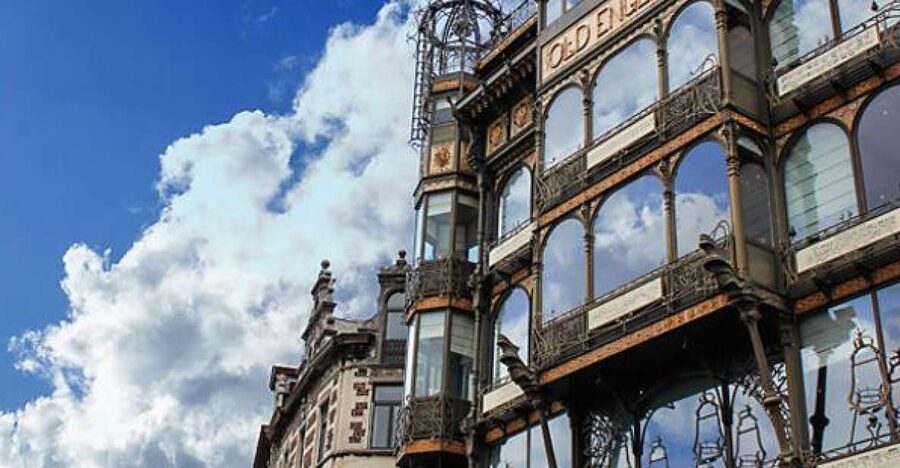
Old England House (Music Instrument Museum): A Strong Opening Scene
You start with Old England House (Music Instrument Museum). Even though it’s not the “typical house facade” people picture first, it sets your eye up for scale and detail. In a short tour, that matters: you want to start seeing patterns before your legs get tired.
This is the kind of stop that helps if you’re trying to understand Art Nouveau as an architectural movement, not just interior design. You’ll likely notice how materials and ornament work as one composition.

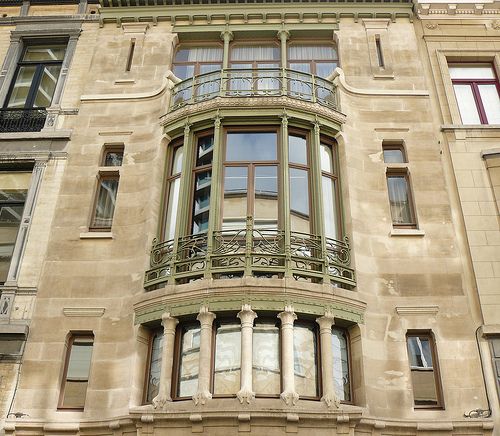
Hotel Tassel: Horta’s Signature Starts to Click
Next is Hotel Tassel, built by Victor Horta in 1893–1894. This is one of the names you’ll hear if you study Art Nouveau, and that’s for a reason. It’s the style’s logic on display—how structure and decoration communicate.
When a guide is good (and many mentions highlight that), they help you see beyond the obvious. You’re learning what Horta is doing, and why it became influential. That makes the later stops feel connected, not random.
Hotel Goblet d’Alviella: A Different Kind of Elegance (1882)
Then you move to Hotel Goblet d’Alviella, built in 1882. That early date helps you understand Art Nouveau’s timeline. You’re not only seeing “the final form,” you’re seeing a style developing with confidence.
Even if your favorite building is the one with the most drama, it helps to compare the “mood” across dates. This stop lets you feel that timeline shift.
Hotel Otlet: Where Multiple Designers Leave a Mark (1894–1898)
Hotel Otlet follows, built by Octave Van Rysselberghe and Henry van de Velde from 1894–1898. This is a helpful reminder that Art Nouveau isn’t a single-person story. Architects collaborated, influenced, and built on shared ideas.
It’s also a stop that reinforces the theme of combining materials—iron, glass, wood, stone—into unified design rather than decoration pasted on top.
Hotel Ciamberlani (1897) and the René Janssens House (1898)
The tour then goes to Hotel Ciamberlani by Paul Hankar (1897), and the house of painter René Janssens (1898), also connected to Hankar’s circle.
This is where many people start noticing “line” more. Hankar is often associated with a particular rhythmic look—where forms feel drawn instead of built. Even if you don’t know Art Nouveau terms, you’ll probably start recognizing what feels Hankar-ish by the end of this stretch.
If you love art as much as architecture, adding Janssens here is a smart link between visual culture and built form.
Beukman House (1900) and Paul Hankar’s Private Home
You’ll also see the Beukman house (Albert Roosenboom, 1900) and a private home of architect Paul Hankar. This part of the route is useful for two reasons.
One, you see how Art Nouveau works for real people and real domestic life, not only for grand statements. Two, it gives your brain a chance to compare: public-facing elegance vs more personal design choices.
Van Rysselberghe House (1912) and Armand Van Waesberghe
The route includes the Van Rysselberghe House (1912) and a stop noted as Architect Armand Van Waesberghe. These later-era stops help you sense how the movement kept evolving after its earlier breakthroughs.
If you’re the kind of person who likes pattern recognition, later stops can be surprisingly satisfying. You start seeing what stayed consistent, and what shifted as tastes changed.
The Best Part of the Tour: Photos, Q&A, and Context
A standout theme in feedback is how guides support the exterior-only format. People mention that the guide brings photo printouts and explanations of interiors, since you can’t enter most houses on this route.
That approach is a big deal for value. You leave with a fuller mental picture, not just a “cool wall to photograph.” Also, guides described as energetic and prepared tend to answer questions in a way that makes your brain store the information, not just hear it for a few minutes.
Guides named in reviews include Maria (frequently praised for deep knowledge and thoughtful links between Art Nouveau and politics) and Danielle (praised for enthusiasm). Others noted guides like Mary/Marie. If your guide is one of these, you’ll likely feel the tour moves at a human pace, with room for questions.
One more practical point: if your group includes multiple languages, the dialogue may run more than once, which can make the tour feel a bit longer than the clock says. The good news is the guide still keeps it structured.
Ending at the Victor Horta Museum: Plan Ahead or Wait
The tour finishes in front of the Victor Horta Museum. This is a smart ending because you’re walking toward the person who basically defined modern Belgian Art Nouveau for many visitors.
But here’s the key planning note: museum admission is not included. So if you want to actually step inside right away, you’ll want tickets sorted in advance. One review specifically calls out the frustration of ending there and not being able to visit without tickets, even though the tour made everything click.
If you’re deciding whether to tack on museum time, do it while the style is still fresh in your mind. That’s when the details land hardest.
Price and Value: Is $35 a Good Deal?
At $35 per person for a 3-hour guided experience, the value depends on what you want from Brussels.
If your goal is to understand Art Nouveau quickly, the price makes sense. You’re paying for a local guide, a crafted route, and a teaching approach that includes interpretation plus photo support. You’re also getting a tram connection built into the day, which reduces transit hassle.
If your goal is purely to go inside famous homes, then the value is weaker. The route is exterior-focused, and multiple pieces of feedback mention that disappointment. In that case, think of this tour as the framing session, then add interior access separately.
Given the strong overall rating (4 out of 5 from 282 reviews), it’s fair to call the tour a strong budget-intro to Brussels’ Art Nouveau scene—especially if you enjoy architecture explanations and want your photos to mean more than decoration.
Who This Tour Is Best For (And Who Might Skip It)
This tour is a great fit if you:
- love architecture but don’t want to spend a day researching individual houses
- enjoy learning how design works with materials
- like the idea of a structured walk with a guide who answers questions
- want a focused first taste before you go deeper on your own
It may not be ideal if you:
- only want interior access during the tour window
- hate uphill walking and tight schedules
- prefer a small, silent experience where the group pace is very fast
Practical Tips That Make It Feel Easier
A few small moves help:
- Wear comfortable shoes. You’ll be walking between multiple stops in one compact block of time.
- Have your phone camera ready, especially for facade details. The guide’s explanations make what you photograph afterward more meaningful.
- If you’re tight on museum time, plan ahead for Victor Horta Museum tickets separately.
Also, keep an open mind about building choices. Some stops may hit your personal taste more than others, but the route is designed to show the style’s development and variety, not to give everyone the exact same favorites.
Should You Book This Brussels Art Nouveau Tour?
If you want an organized, high-impact way to understand Brussels Art Nouveau in a short time, I think this tour is worth it. The guide quality is a clear strength, the route into Bailli is smart, and the photo-based explanations help compensate for the exterior-only format.
I’d book it especially if this is your first Art Nouveau experience in Brussels and you want the names, dates, and design logic tied together. If interior access is your top priority, treat this as your pre-game: enjoy the exterior lessons now, then add museum or other interior visits separately.
FAQ
Where is the meeting point for the tour?
The meeting point is the Grand-Place in Brussels. You’ll find the guide holding a white umbrella.
What time does the tour start, and how long is it?
The tour starts at 10:00 and lasts 3 hours.
What languages are offered for the live guide?
The live guide speaks Spanish, English, and French.
What is included in the $35 price?
The price includes the guided tour.
Is Victor Horta Museum admission included?
No. Museum admission is not included. The tour ends in front of the museum, so you’ll need to plan museum entry separately.
Do you go inside the Art Nouveau buildings during the tour?
Based on what’s described, the tour focuses on viewing the buildings from outside, with interior concepts supported by the guide’s materials.
Is the tour wheelchair accessible, and is cancellation free if plans change?
Yes, the tour is wheelchair accessible. Cancellation is free up to 24 hours in advance for a full refund.