REVIEW · BOSTON
Downtown Freedom Trail Walking Tour – History & Architecture
Book on Viator →Operated by Boston CityWalks · Bookable on Viator
Boston’s Freedom Trail moves fast in the best way. In about 70 minutes, you get a guided walk through downtown’s key stops, with the stories tied to the buildings and street corners you’d otherwise skim past. I like that this tour doesn’t try to cover everything. It focuses on a tight slice of the city, from the Old State House area down toward Boston Common, with clear pacing and frequent photo moments.
Two things I really like: first, the guide format gets a lot of ground covered without turning into a sprint—especially with a maximum group size of 20. Second, the route is packed with big “wow” architecture and major turning points, including the Old State House and the Boston Massacre site, plus churches and meetinghouses that explain how Boston organized itself. One drawback to keep in mind is that the tour depends on outdoor walking and downtown street conditions—rain, crowds, or even activity near Boston Common can affect comfort and timing.
In This Review
- Key highlights you’ll feel on this tour
- Freedom Trail, done in one smart stretch (about 70 minutes)
- Where you start, where you finish: State Street to Boston Common
- The Freedom Trail route, stop by stop: what each place adds
- Faneuil Hall and the “Cradle of Liberty” vibe
- Quincy Market and the feel of a working public space
- Old State House: colonial government, balcony readings, and the stakes of power
- The Boston Massacre site: the exact spot matters
- Park Street Church and the neighborhood of civic change
- King’s Chapel: one church, centuries of change
- Old South Meeting House and a store corner tied to famous authors
- A building tied to the Boston Tea Party signals
- The Boston Irish Famine Memorial: another layer of Boston migration
- Old City Hall: French Second Empire architecture in action
- The Boston Latin School site: education as a legacy
- Tremont Temple: the first integrated church story
- The Granary area: final resting places and Boston’s big names
- Boston Common and the New State House: the tour’s ending logic
- What the guide adds (and what to watch for)
- Architecture matters here: churches, government buildings, and education sites
- Price and value: why $45 can make sense for a short day
- Weather, crowds, and protest-day reality
- Who should book this Freedom Trail walk?
- So, should you book it?
- FAQ
- FAQ
- How long is the Downtown Freedom Trail walking tour?
- How much does the tour cost?
- Where do I meet the guide?
- Where does the tour end?
- What language is the tour offered in?
- Is there a mobile ticket?
- How big is the group?
- What weather should I plan for?
- Are there age restrictions for children?
- What sites are included on the route?
Key highlights you’ll feel on this tour
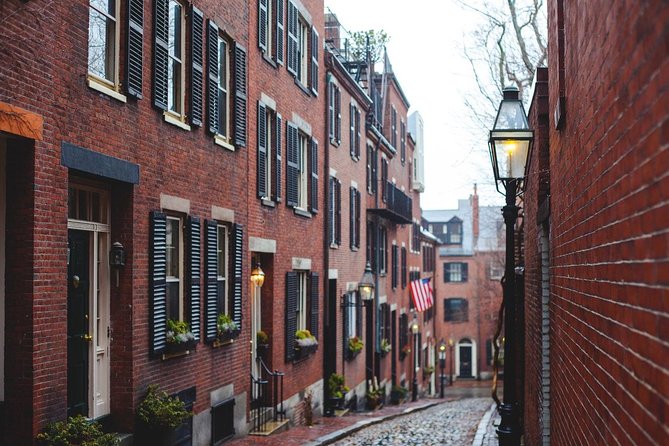
- A compact 70-minute loop that still hits major Freedom Trail landmarks, not just a few quick stops
- Small-group size (up to 20) that helps people hear the guide and ask questions
- Old State House + Boston Massacre site with clear explanations of why these places mattered
- Church and meetinghouse architecture that shows how religion, protest, and civic life overlapped
- Boston Common at the end so you can continue exploring on your own right away
Freedom Trail, done in one smart stretch (about 70 minutes)
This is the kind of tour I recommend when you’re short on time but want more than a self-guided stroll. You’re walking a dense downtown corridor, and the guide keeps the story moving so you can connect what you see—street layout, church facades, meetinghouse history—to what happened there.
The tour runs about 1 hour 10 minutes (70 minutes), which is long enough to get context but short enough to fit into a busy day. If you’re trying to do Boston efficiently—especially with kids, jet lag, or limited stamina—that time window is a big deal.
You can also read our reviews of more tours and experiences in Boston.
Where you start, where you finish: State Street to Boston Common
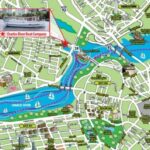
You’ll meet at State Street at Congress Street (Boston, MA 02203) and the tour ends at Brewer Fountain on the Freedom Trail near Boston Common. The start time shown is 10:00 am.
Why I like this setup: it puts you right into the downtown grid where you can easily connect to other plans afterward. Boston Common is a natural reset point. When you finish, you’re in the right place to branch out to nearby neighborhoods without hunting for transit or backtracking.
The Freedom Trail route, stop by stop: what each place adds
This walk follows the Freedom Trail connection through downtown landmarks, starting in the market and government core and working your way toward Boston Common. The big win here is the way the stops build on each other—famous names, yes, but also the physical spaces where people organized.
Faneuil Hall and the “Cradle of Liberty” vibe
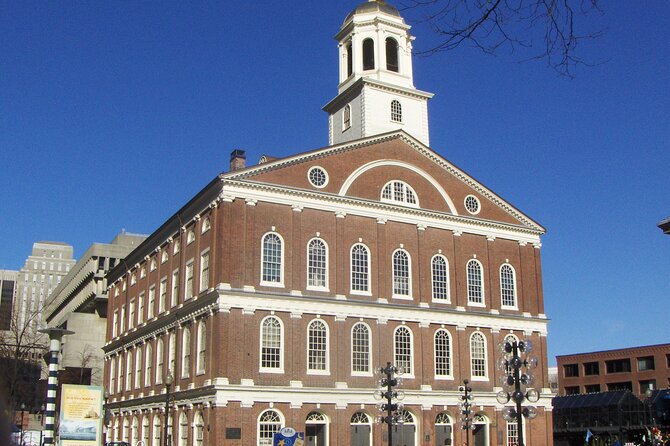
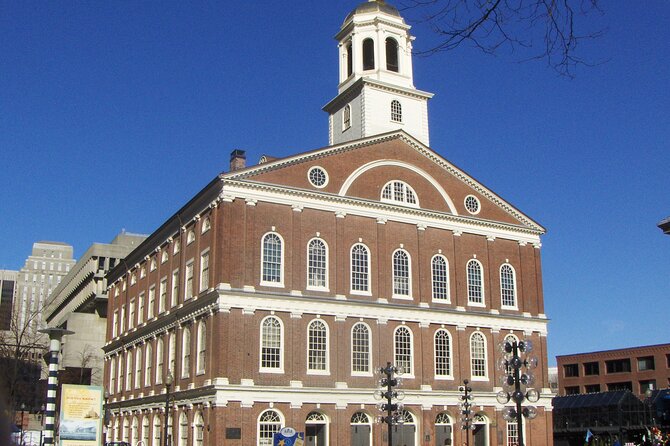
You start at the heart of protest history. Faneuil Hall was the marketplace linked to fiery discussions that fed the American Revolution. I like this stop because it’s both symbolic and practical: you get the idea of political debate happening in a public, everyday space.
Look around and don’t rush the details. There’s even the famous grasshopper weathervane mentioned as a signature landmark—one of those small reminders that Boston loves its visual history.
Quincy Market and the feel of a working public space
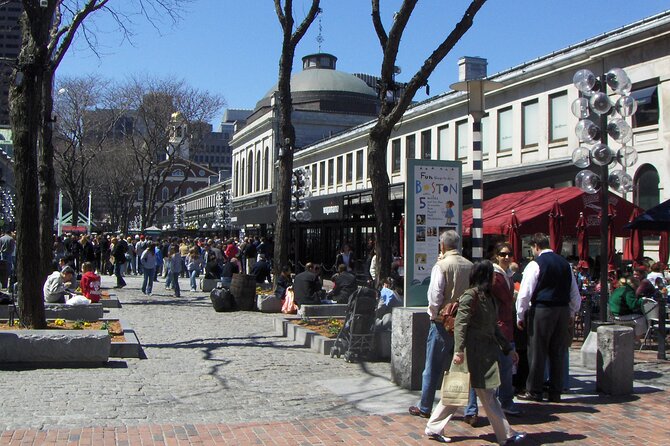
Right along the same downtown area you’ll be near Quincy Market. Even if you don’t spend time shopping, the stop helps you understand why these early meeting places mattered. Revolutionary-era Boston was city life, not just speeches in a hall. The surroundings still feel like a gathering place, which makes the stories easier to picture.
Old State House: colonial government, balcony readings, and the stakes of power
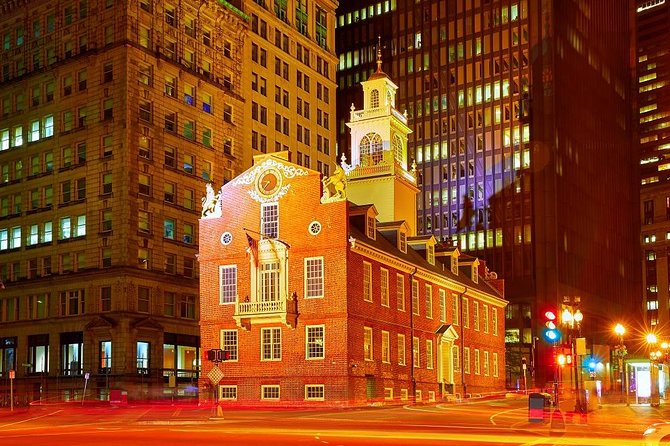
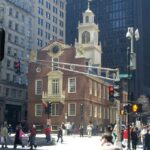
One of the strongest stops on the route is the Old State House. It’s described as the seat of British colonial government, and it’s where the Declaration of Independence was first read to Bostonians from the balcony.
This is where the tour earns its history points. You’re not only hearing dates—you’re standing at the physical location where authority was displayed and where the narrative shifted from empire to new nation. It’s also the kind of stop that works for different ages. Kids can focus on the “what happened here” part; adults tend to latch onto the layers of power and propaganda in plain sight.
The Boston Massacre site: the exact spot matters
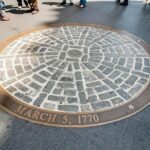
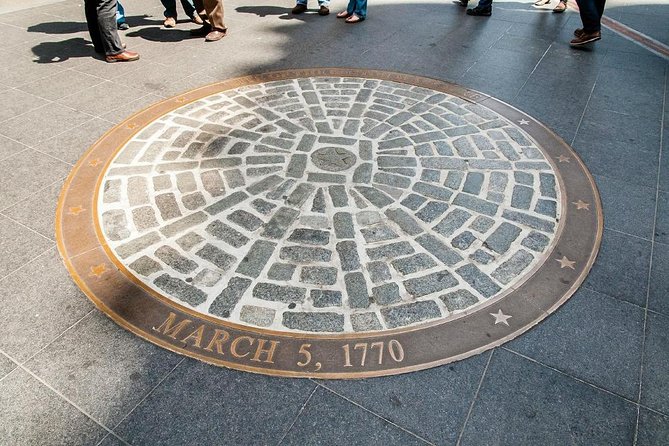
The walk includes the area marked by a cobblestone ring in the pavement, described as the exact point where the 1770 confrontation between Redcoats and colonists sparked rebellion.
If you’ve only read about the Boston Massacre, this stop gives it weight. The setting helps you understand why it wasn’t abstract. People were close. Tensions were real. And the “spark” idea suddenly makes sense when you’re standing at a specific spot instead of guessing distances.
Park Street Church and the neighborhood of civic change
Along the way you’ll see Park Street Church. This is one of those Boston churches that looks like it’s always been part of the city center—because it effectively has. In a short tour, the guide’s job is to explain why this kind of place shows up repeatedly in civic stories: churches weren’t just for Sundays. They acted like community anchors.
King’s Chapel: one church, centuries of change
King’s Chapel is included, and it’s highlighted as having a history spanning more than 330 years, from its founding in 1686 through the American Revolution and into modern-day Boston.
What you get here is a feeling for continuity. Buildings last. Ideas shift. A single site can track both. I find that helpful when I’m trying to understand Boston as a living city, not a museum.
Old South Meeting House and a store corner tied to famous authors
You also pass the Old South Meeting House and the Old Corner Bookstore.
The Old Corner Bookstore is a standout because it’s described with a clear timeline: built in 1718 as a residence and apothecary shop, then became a bookstore in 1828. It’s also tied to gatherings of famous writers like Ralph Waldo Emerson and Charles Dickens (and other authors).
This stop adds something practical for modern visitors: it links political change to the flow of ideas. If your brain wants “where did stories spread,” this gives you a real answer.
A building tied to the Boston Tea Party signals
The itinerary also includes a massive brick church described as the place where signals were given to start the Boston Tea Party in 1773.
This is one of those details that makes you look twice at a building you might otherwise treat as scenery. You start realizing Boston’s rebellion wasn’t only about crowds—it depended on coordination and timing.
The Boston Irish Famine Memorial: another layer of Boston migration
One surprising and meaningful stop is the Boston Irish Famine Memorial, a memorial park on a plaza between Washington Street and School Street. The description contrasts statues of an Irish family suffering during the Great Famine (1845–1852) with a prosperous family that immigrated to America.
This is where the tour earns relevance beyond the Revolution. It reminds you that Boston history doesn’t stop at 1776. It keeps reshaping as new groups arrive, suffer, and rebuild.
Old City Hall: French Second Empire architecture in action
You’ll see Old City Hall on School Street, built with French Second Empire style design elements (including architects noted in the description). It housed the Boston City Council from 1865 to 1969.
I like this stop because it makes architecture part of civic storytelling. You can see how government presentation changes across centuries, from colonial authority to city governance in a later era.
The Boston Latin School site: education as a legacy
The route also references the Boston Latin School, founded April 23, 1635 and described as the first public school in America. It was originally on School Street, and the original site is now marked by a statue of alumnus Benjamin Franklin and a sidewalk mosaic.
Even if you don’t know much about the school, the message lands quickly: Boston invested early in formal education, and that legacy shaped the city’s future leadership.
Tremont Temple: the first integrated church story
Tremont Temple is included with a specific emphasis: it’s described as the first integrated church in America. The tour’s description also notes that the church offered open attendance without charge, fostering a community that embraced racial diversity. It also points to its history hosting public events, including a unique display of an Egyptian mummy in 1850, and speeches against slavery by figures like Sam Houston and Frederick Douglass.
This stop can change how you think about religion in public life. It’s not just a “pretty church” moment. It’s about inclusion, activism, and who had access to space.
The Granary area: final resting places and Boston’s big names
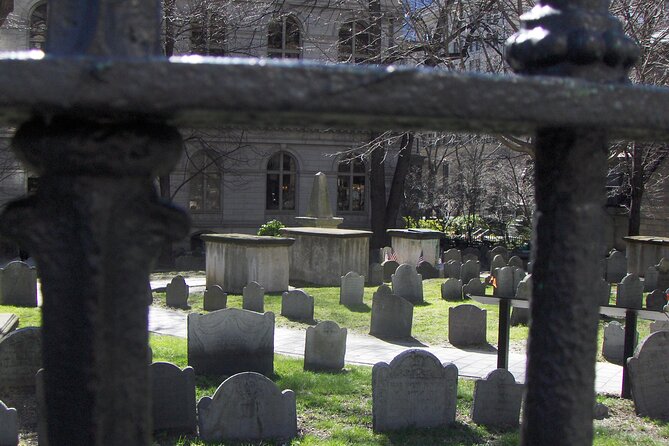
The route includes a historic cemetery stop described as the final resting place of Paul Revere, Samuel Adams, and John Hancock. It’s also noted as one of the most visited cemeteries in the country.
This is a powerful close to the historical arc. When you see where key figures are remembered, it adds a “what became of these people” layer to your walk.
Boston Common and the New State House: the tour’s ending logic
The tour finishes at the Boston Common, described as the oldest city park in the United States and spanning 50 acres. The end point is near the New State House, with its iconic 23-karat gold dome and built in 1798.
This ending works because it gives you an easy off-ramp. You’re placed at a major open space where you can rest, grab a snack, or continue onward to other neighborhoods without feeling like you must keep walking to justify the tour.
What the guide adds (and what to watch for)
A guided Freedom Trail walk lives or dies on the delivery. And this one gets strong notes for that.
Many reviews highlight guides who are friendly, funny, and willing to adjust—including instances where guides helped with lost guests and kept things welcoming for families. Names that show up in the feedback include Alan and Andrew, both described as entertaining and effective at making history connect to the present. That matters because Boston can feel like “big facts on big plaques” unless someone adds the human thread.
Still, I’ll flag the most practical caution: some people report that it could be hard to hear at times, and at least one review explicitly wished for a microphone. If you’re planning to bring kids or you need clear audio, pick good spots in the group early so you’re not stuck at the edge of the crowd.
Architecture matters here: churches, government buildings, and education sites
What makes this tour feel different is the emphasis on how architecture supports the story. You’re moving through places that look like they’ve always belonged to Boston, but the guide connects each structure to its role—government messaging, protest coordination, education culture, and community identity.
King’s Chapel’s long timeline, Old City Hall’s French Second Empire style, Tremont Temple’s integration story, and the educational legacy at Boston Latin School all build a theme: buildings are clues. They show what communities valued, what they wanted people to see, and how they organized daily life.
You’ll also get more out of Boston if you’re the type who likes seeing “why” behind what’s standing still. If that’s you, this walk is a strong fit.
Price and value: why $45 can make sense for a short day
At $45 per person for about 70 minutes, this isn’t a “do it if you have extra time” purchase. But it also isn’t just paying for walking. You’re paying for:
- a tight route through high-signal landmarks
- a professional guide to connect sites to story
- a group format capped at 20 people, which helps the tour feel interactive
If you were to self-walk, you could absolutely follow the Freedom Trail with your own reading. The catch is time and context. This tour compresses the context so you spend your effort looking at buildings instead of deciphering history on the fly.
One more practical value point: the major included stops are listed with admission ticket free for the main parts shown. So you’re not trying to juggle entrances and lines while still learning.
Weather, crowds, and protest-day reality
Boston weather can be chaotic. The tour operates in all weather conditions, and you’ll be outdoors, so dress for wind and rain. One review praises the guide for making shelter part of the plan when the rain started.
Also, downtown Boston can throw curveballs. The tour end near Boston Common, and activity in that area—like a demonstration—can affect the closing minutes. That’s not the guide’s fault, but it’s real. I’d treat the walk as a morning plan that’s flexible, especially if you’re sensitive to crowds or noise.
Who should book this Freedom Trail walk?
This tour is a great match if:
- it’s your first time in Boston and you want a fast orientation through the most important downtown history corridor
- you like history but want it explained in a way that’s easy to follow in real time
- you’re traveling with families and want a route that doesn’t require museum stamina
- you care about architecture and want the “story behind the facade”
It can be less satisfying if you prefer very deep dives at each site or want a lot of free time inside buildings. This is a “many stops, clear connections” format, not a stop-and-stay long lecture.
So, should you book it?
I’d book this when you want maximum context per hour. The route is efficient, the guide-led connections to architecture and civic change are the real value, and the small group size helps the experience feel personal instead of chaotic.
If you know you’ll struggle in loud outdoor crowds, arrive a little early and position yourself where you can hear. And if you’re picky about how history is presented, keep in mind the tour touches more than Revolutionary-era events, including later immigration and social history markers like the Irish Famine Memorial.
FAQ
FAQ
How long is the Downtown Freedom Trail walking tour?
It runs about 1 hour 10 minutes (approximately 70 minutes).
How much does the tour cost?
The price is $45.00 per person.
Where do I meet the guide?
You meet at State Street at Congress Street, Boston, MA 02203.
Where does the tour end?
The tour ends at Brewer Fountain on the Freedom Trail in Boston Common area.
What language is the tour offered in?
The tour is offered in English.
Is there a mobile ticket?
Yes, the tour includes a mobile ticket.
How big is the group?
The tour has a maximum of 20 travelers.
What weather should I plan for?
It operates in all weather conditions, so dress appropriately for outdoor walking.
Are there age restrictions for children?
Children must be accompanied by an adult.
What sites are included on the route?
The tour includes major Freedom Trail landmarks such as Faneuil Hall, Old State House, Boston Massacre site, Park Street Church, King’s Chapel, Tremont Temple, Old Corner Bookstore, Old City Hall, Boston Latin School site, Granary area, Boston Common, and the New State House area.