REVIEW · CHICAGO
Chicago: Secret Interiors Architecture Walking Tour
Book on GetYourGuide →Operated by Empire Tours & Productions (Chicago River Boat Architecture Tours) · Bookable on GetYourGuide
Chicago’s secret interiors change how you see the skyline. This 2-hour walk in the Loop trades the usual exterior photos for domes, mosaics, and craftsmanship you’d miss on your own, wrapped in clear stories about why Chicago became the architecture shorthand for America.
I especially like the inside access—you stop in buildings you’d never think to enter just by walking past them. I also like how the guide explains design choices, including the light-and-structure challenges architects and engineers had to solve. You’ll hear names and motives tied to the city’s power years, from industrial ambition to the trickier characters of the Gilded Age and Roaring Twenties.
One thing to consider: the day is mostly outside (one winter review notes about 90%), so you’ll want real winter gear—or at least layers—even though you’ll get indoor breaks at several stops.
In This Review
- Key things to know before you go
- Union Station Great Hall: Your perfect starting line in the Loop
- Two hours on foot: How to pace yourself (and protect your knees)
- South LaSalle to the Loop core: learning the city’s layout like a local
- Rookery Building interior stop: why this “classic” feels secret
- Field Building and Marquette Building: ornament plus engineering brainpower
- Palmer House and Chicago Cultural Center: when luxury meets public space
- Marshall Field and Company Building: the satisfying finish at a department-store icon
- The people stories: industrial magnates, infamous figures, and famous personalities
- Guides are the multiplier: what makes the commentary work in 2 hours
- Price and value: Is $35 worth it for interior-focused architecture?
- Seasonal and comfort tips: what to bring so you enjoy every stop
- Should you book this secret interiors Chicago tour?
- FAQ
- Where do I meet the tour guide?
- How long is the tour?
- How much does it cost?
- Is the tour wheelchair accessible?
- What should I bring?
- What happens if I book on a Sunday?
Key things to know before you go
- Union Station Great Hall is your starting point, under the Clinton Street sign
- Inside stops focus on domes, mosaics, and ornate details, not just sidewalk scenery
- Design-by-design explanations cover how lighting and structural issues shaped what you see
- A Sunday swap happens since the Rookery is closed Sundays
- Comfortable shoes matter because it’s a brisk downtown walk with stairs at some entrances
- Many guides bring personality—names you might hear include Grant, Talia, Angel, Annie, Matthew, and Avery
Union Station Great Hall: Your perfect starting line in the Loop
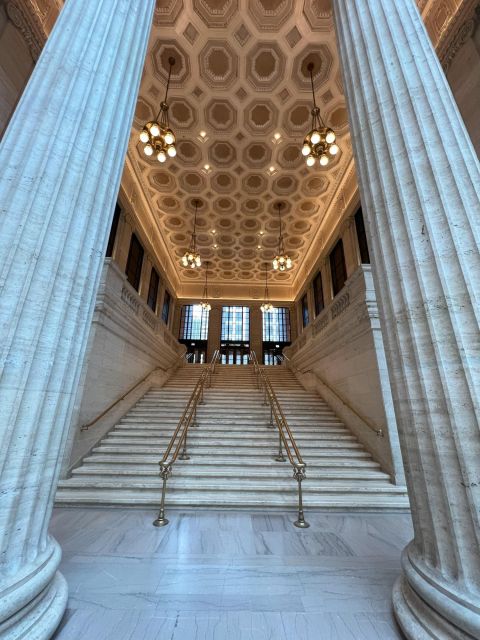
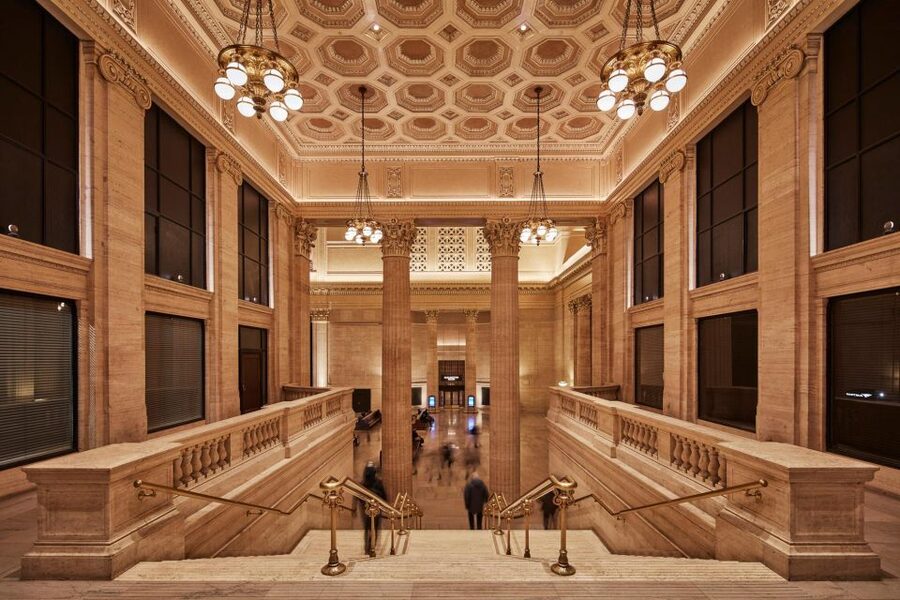
Your tour kicks off inside Union Station in the Great Hall, meeting your guide under the Clinton Street sign. That’s a smart way to begin because the station is already a mini-lesson in scale and planning. You’ll also get oriented fast: this is a downtown walk, so you’ll move through the Loop core with clear wayfinding.
If you’re coming in from the suburbs or another part of the city, starting at Union Station saves you stress. You don’t need to hunt for a random street corner. You just show up in one major, easy-to-find building and let the guide do the rest.
You can also read our reviews of more tours and experiences in Chicago.


Two hours on foot: How to pace yourself (and protect your knees)
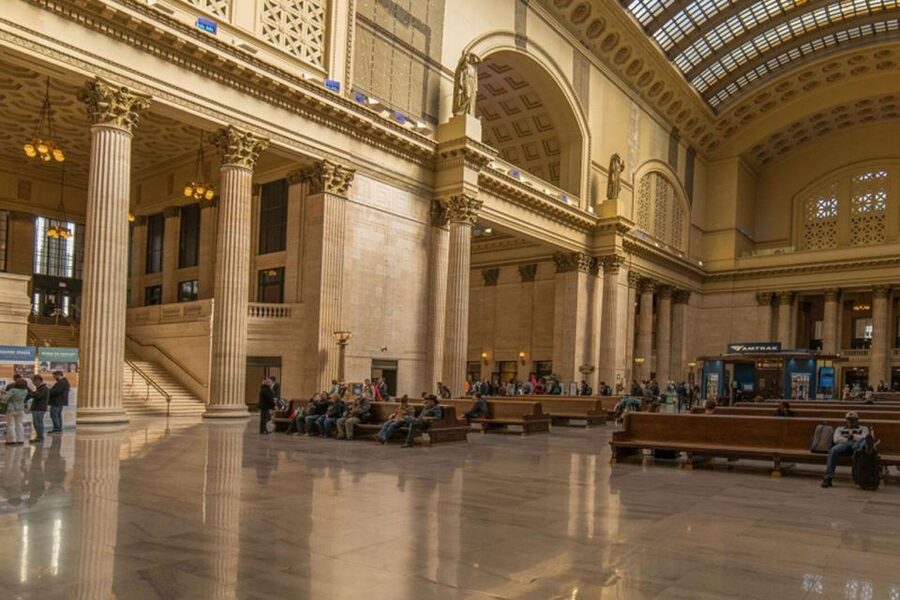
This is a 2-hour walking tour with a route through the Loop. The timing is tight enough to feel satisfying, but not so long that you’re wandering Chicago for half a day. Still, you’ll be on your feet for stretches, and at several points you’ll go in and out of buildings.
A practical heads-up from winter bookings: about 90% can be outside. So bring layers that actually work when the wind slips between downtown towers. If you get cold easily, think gloves and a hat, not just a coat.
Also, plan for stairs. Even though the tour is listed as wheelchair accessible, one review calls out stairs during indoor stops. If stairs are a deal-breaker for you, it’s worth confirming the day’s exact entry routes when you book—so you can enjoy the architecture without your body filing a complaint.
South LaSalle to the Loop core: learning the city’s layout like a local
After Union Station, you’ll head into the Chicago Loop area. The tour isn’t only about individual buildings; it’s also about how the city’s street grid and commercial center create sightlines and momentum. This is where you start understanding why Chicago became a place of ambitious builders: it’s compact, vertical, and constantly in motion.
You’ll also have a photo stop on South LaSalle Street, which is useful because it gives you a chance to step back and frame the big picture. A lot of architecture makes more sense when you can pause and look at how it sits in the streets around it.
Rookery Building interior stop: why this “classic” feels secret
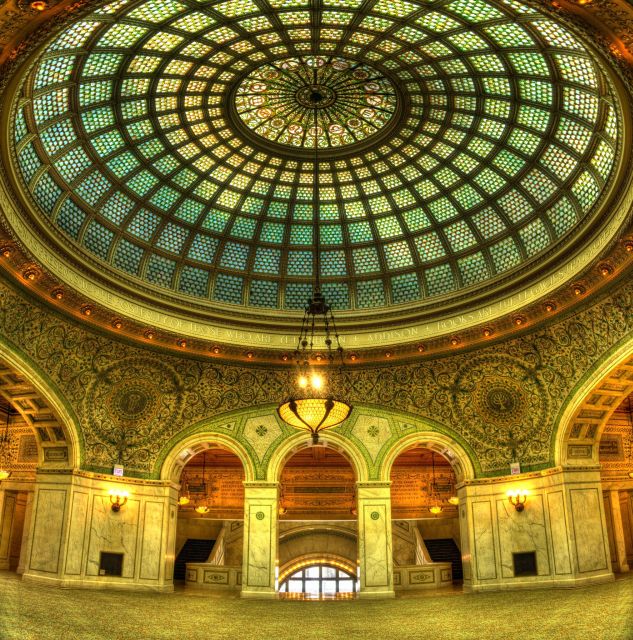
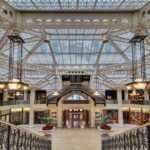
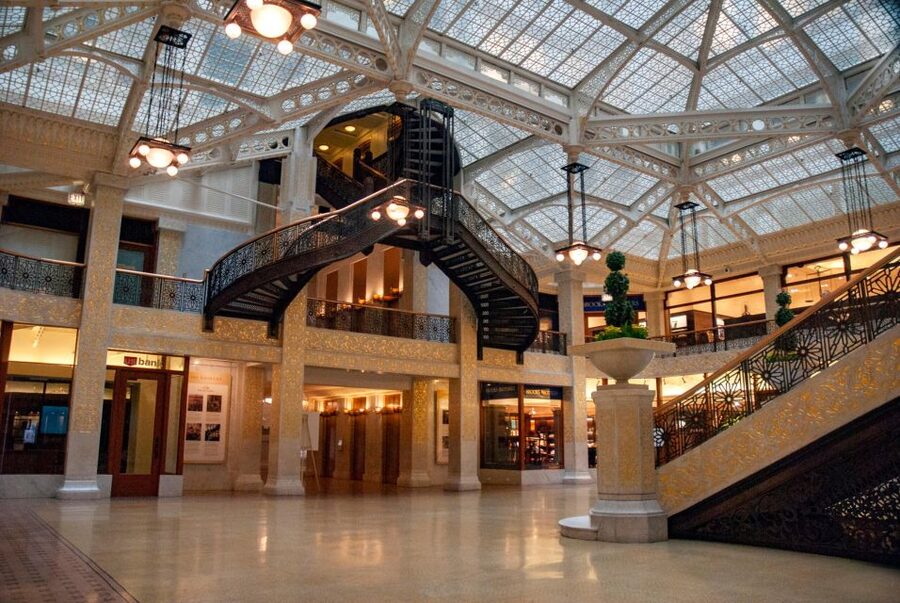
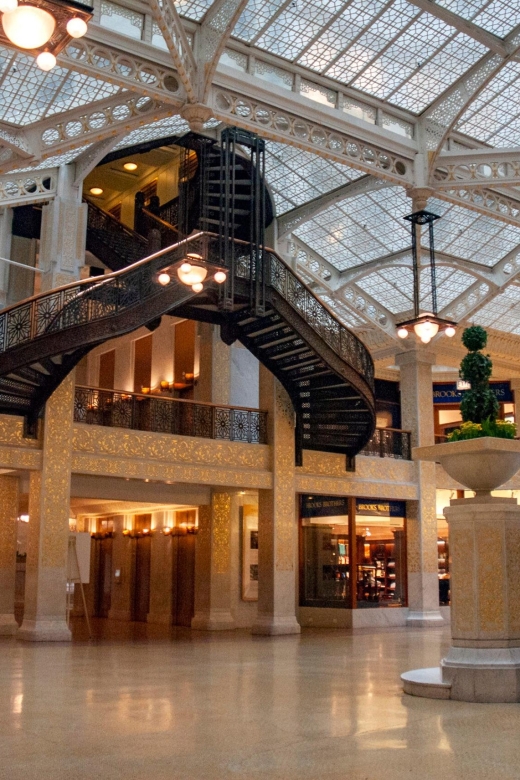
One of the main interior moments is the Rookery Building. Even if you’ve walked by it before, this stop is designed for the reverse experience: instead of treating the building like a postcard, you get the guided walk that points you to the details that make people stop and stare.
What matters here is not just the beauty, but the thinking behind it. The tour is built around architectural problem-solving—how structures hold up, how light gets handled, and how design elements support the building’s purpose. In other words, you’ll learn to see the why, not just the wow.
Important scheduling note: Rookery is closed on Sundays, so the tour includes an alternative stop on those days. If you’re planning for a Sunday visit, don’t worry—you’ll still get the interior-focus you paid for.
Field Building and Marquette Building: ornament plus engineering brainpower
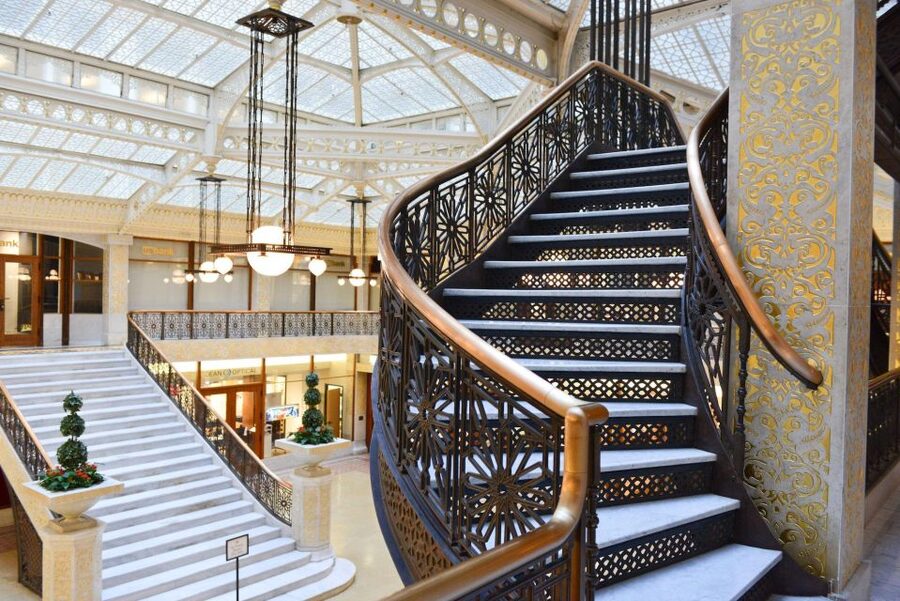
Next up, you’ll visit the Field Building and Marquette Building with photo stops and guided commentary. These are the kinds of buildings that can look similar in a skyline shot, but feel different when you’re actually standing near (and inside, when the tour allows) the spaces.
This is where the tour’s theme really lands: you’ll connect decorative elements to real constraints. Chicago architects and engineers had to solve daylight, structural integrity, and the practical needs of tall buildings. When the guide points out design choices, you start noticing patterns—how windows, ceilings, and transitions guide people through public space.
If you’re an art-and-design person, you’ll also like this part because it’s not only about one style. The tour aims to show the evolution of Chicago architecture, from early skyscraper thinking to later modernist directions.





Palmer House and Chicago Cultural Center: when luxury meets public space
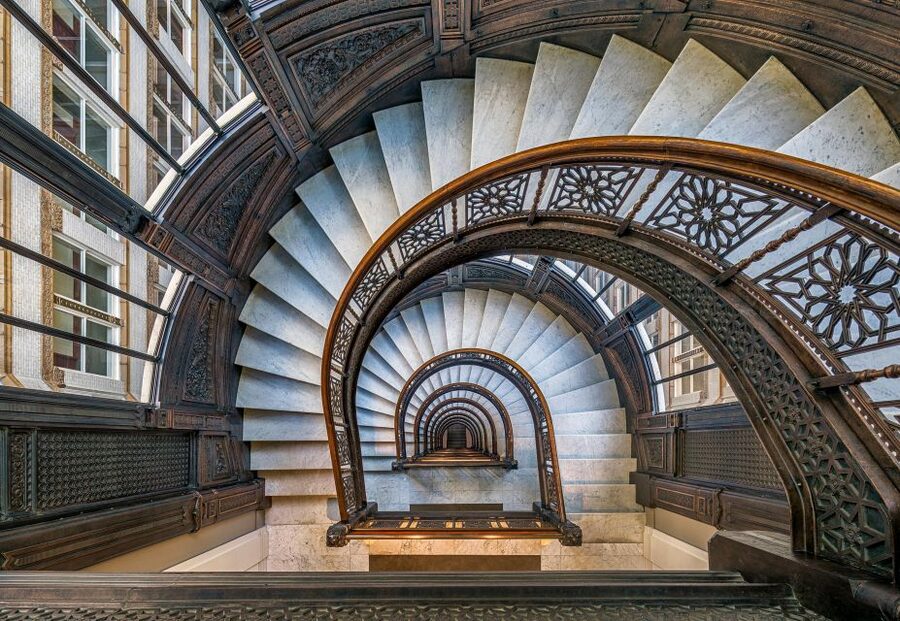
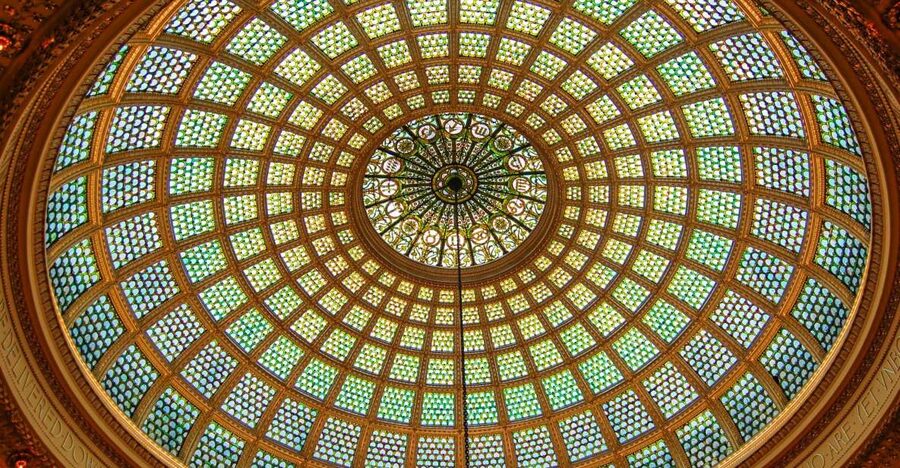
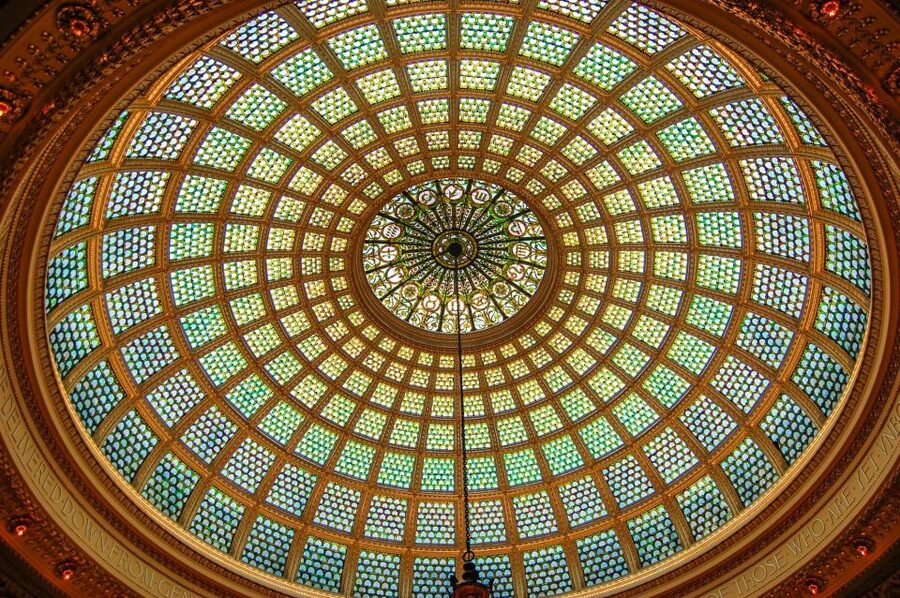
The tour continues with a stop at Palmer House, followed by Chicago Cultural Center. These are different types of buildings, and that contrast helps you understand Chicago’s architectural range. You’ll see how the city uses landmark interiors for gatherings—whether it’s a grand hotel atmosphere or a cultural public setting.
The guide commentary connects the dots between style and function. Look for the moments where interior details support the experience: how people move, how space feels, and how surfaces interact with light. Even without technical training, you can follow along because the tour keeps pointing back to the same big ideas—light and structure—while also telling stories about who built and why.
Marshall Field and Company Building: the satisfying finish at a department-store icon
The tour ends back at the Marshall Field and Company Building, which makes for a strong finish. You’ve spent two hours learning how to read Chicago’s architecture like a language—materials, ornament, and layout. Ending at a major commercial landmark gives you a final chance to absorb the connection between big design and everyday use.
If you like architecture that’s tied to public life—shopping, gathering, commuting—this last stop hits well. It’s not just a monument; it’s part of how Chicago worked during the power years and still shapes how downtown feels today.
The people stories: industrial magnates, infamous figures, and famous personalities
One reason this tour beats a pure sightseeing walk is the human angle. You’ll hear about the industrial magnates and notorious figures who moved through Chicago during the Gilded Age and the Roaring Twenties, along with celebrated personalities connected to the city’s growth.
You don’t need a Chicago history degree to enjoy this. The tour makes the point clear: buildings weren’t built in a vacuum. Ambition funded steel. Rivalries shaped skyline competition. Reputation and money decided what got designed and how it was marketed.
Guides also bring that era to life in different voices. If your guide is Grant, Angel, Talia, Annie, Matthew, or Avery, you may notice a similar pattern: they connect architectural features to stories so the details don’t feel random.
Guides are the multiplier: what makes the commentary work in 2 hours
With a short tour like this, your guide matters. The standout feedback you’ll likely hear from a day like this is consistent: the best guides keep things engaging, pacing the walk so you can actually look at what you’re being told to notice.
Here’s what I’d watch for while you go:
- When the guide points out design elements, they also explain why those choices mattered
- When the guide talks about lighting, they connect it to the building’s layout and structure
- When questions pop up, the guide handles them without turning the tour into a lecture
If you’re the type who likes asking why something was built the way it was, this format works well because the commentary is tied to what you see right in front of you.
Price and value: Is $35 worth it for interior-focused architecture?
At $35 per person for about 2 hours, you’re paying for three things you don’t get on a self-guided stroll: interpretation, timing, and access. The value isn’t just that buildings are pretty. It’s that the guide helps you spot the signals—how Chicago’s architects tackled structural problems and shaped the way interiors feel.
If you’re choosing between an architecture boat tour and a walking tour, think about what you want most. Boats are great for sweeping river views. This tour is great for stepping into the spaces and details that make the skyline work as more than an outline.
This is also a strong pick if you’re the only architecture fan in your group. A guided tour gives everyone a reason to pay attention, because the story is built into the route instead of being left for you to research later.
Seasonal and comfort tips: what to bring so you enjoy every stop
Bring comfortable shoes. The walk is downtown and the tour includes repeated in-and-out moments. Even on a “not too much walking” day, you want footwear that stays friendly.
If you’re going in winter, treat it like a real outdoor activity. One winter booking noted that most of the time is outside, so plan for wind-chill and long pauses for photo stops.
Camera-wise, you’ll have plenty of chances to shoot. There are photo stops at multiple buildings, plus exterior views you can frame while the guide explains the interior story behind what you’re seeing.
Should you book this secret interiors Chicago tour?
Book it if you want Chicago architecture to make sense, not just look impressive. You’ll get a compact Route-through-the-Loop experience with real interior moments, design explanations tied to structural and lighting challenges, and the human stories behind the city’s power era.
Skip it (or ask questions before booking) if you know you can’t handle stairs during indoor stops or you need lots of fully accessible, step-free interior time. Otherwise, it’s a smart, high-value way to see the Loop as more than a skyline.
If you only have one architecture experience in Chicago, I’d lean toward something like this when you care about interiors. If you’re chasing maximum skyline views, pair this with a river-focused option later. Either way, your camera roll will look better, because you’ll know what you’re looking at.
FAQ
Where do I meet the tour guide?
Meet your guide inside Union Station within the Great Hall, under the Clinton Street sign.
How long is the tour?
The tour lasts 2 hours.
How much does it cost?
The price is $35 per person.
Is the tour wheelchair accessible?
Yes, the tour is listed as wheelchair accessible.
What should I bring?
Bring comfortable shoes.
What happens if I book on a Sunday?
The Rookery is closed on Sundays, so the tour includes an alternative stop instead.