REVIEW · CHICAGO
Chicago History and Architecture Walking Tour
Book on GetYourGuide →Operated by See Sight Tours Inc · Bookable on GetYourGuide
Chicago’s best landmarks are better on foot. This 2.5-hour small-group walk strings together Chicago’s big sights with a guide who turns architecture and history into a simple story you can follow, starting at Millennium Park and ending near the city’s shopping-and-skyline stretch. You’ll hit Cloud Gate (The Bean) for photos, then keep moving through the pedway, the Riverwalk, and the Magnificent Mile.
I especially like the small-group setup, capped at 10 people, which makes it easier to ask questions instead of shouting over traffic. I also like the mix of places: Millennium Park, the Chicago Riverwalk, and the Magnificent Mile (Wrigley Building, Tribune Tower, and John Hancock) all in one tight route.
One thing to consider: this can lean more history-first than hardcore architecture, even though you do get skyline and building details along the way. Also, rare mishaps happen—one recent booking had a guide issue with a late start, so I’d plan to communicate quickly if anything feels off on your day.
In This Review
- Quick hits before you go
- Where the tour starts: McCormick Tribune Plaza in plain view
- Millennium Park and Cloud Gate: getting the angle on The Bean
- Pedway tricks and Riverwalk payoff: indoor route, big views
- Magnificent Mile with a storyline: Wrigley, Tribune Tower, John Hancock
- DuSable Bridge and the Chicago Fire: the story behind the skyline
- The guide matters: Andrew’s style and the family-history touch
- What about food: Chicago classics and the Starbucks Reserve stop
- How long is 2.5 hours, really? Pacing, weather, and comfort
- Skip-the-line value: why this helps even without big-ticket entries
- Price and value: what $49 buys in central Chicago
- Who should book this tour (and who might want a different style)
- Should you book the Chicago History and Architecture Walking Tour?
- FAQ
- Where do I meet for the Chicago History and Architecture Walking Tour?
- How long is the tour?
- How big is the group?
- What stops are included in the tour?
- Is food included in the price?
- What language is the tour guide?
- Is there free cancellation?
Quick hits before you go

- Small-group (10 max) keeps the pace human and the explanations clear.
- Cloud Gate at Millennium Park is the anchor photo stop, plus time for context.
- Pedway to Riverwalk gives you a smart contrast between indoors and waterfront views.
- Magnificent Mile highlights include Wrigley Building, Tribune Tower, and John Hancock.
- DuSable Bridge + Chicago Fire ties the skyline to the city’s rebuilding story.
- Starbucks Reserve Roastery stop adds a taste option, while meals are still on your own.
Where the tour starts: McCormick Tribune Plaza in plain view
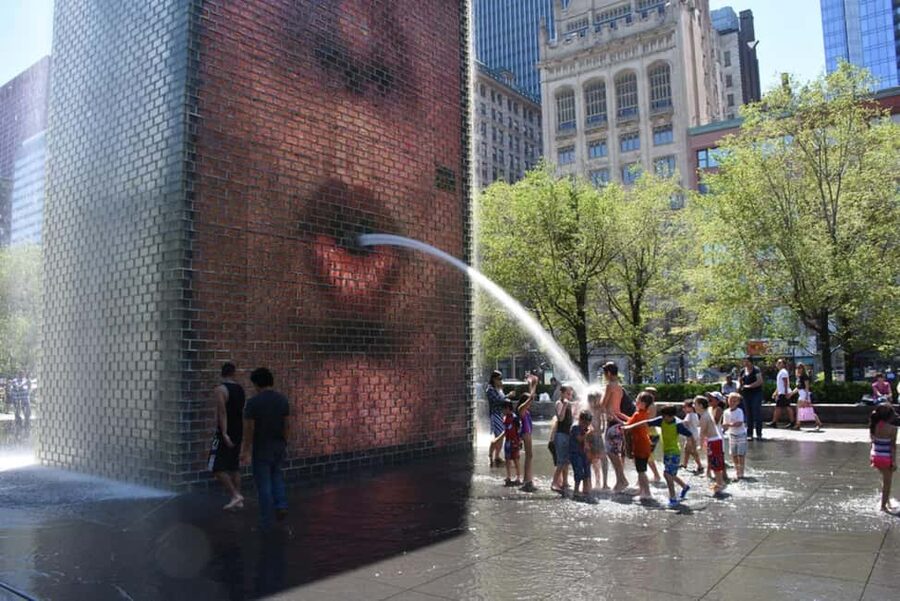
You meet your guide at the McCormick Tribune Plaza in front of the Park Grill. It’s a solid spot to get oriented fast, and there are restrooms available right before you start, which helps if you’re arriving from an early stop.
From there, the tour sets a steady rhythm: you walk, you stop, and you get the “why it matters” for what you’re seeing. Even if you know Chicago already, you’ll probably pick up a new way to connect these places in your head.
You can also read our reviews of more tours and experiences in Chicago.
Millennium Park and Cloud Gate: getting the angle on The Bean
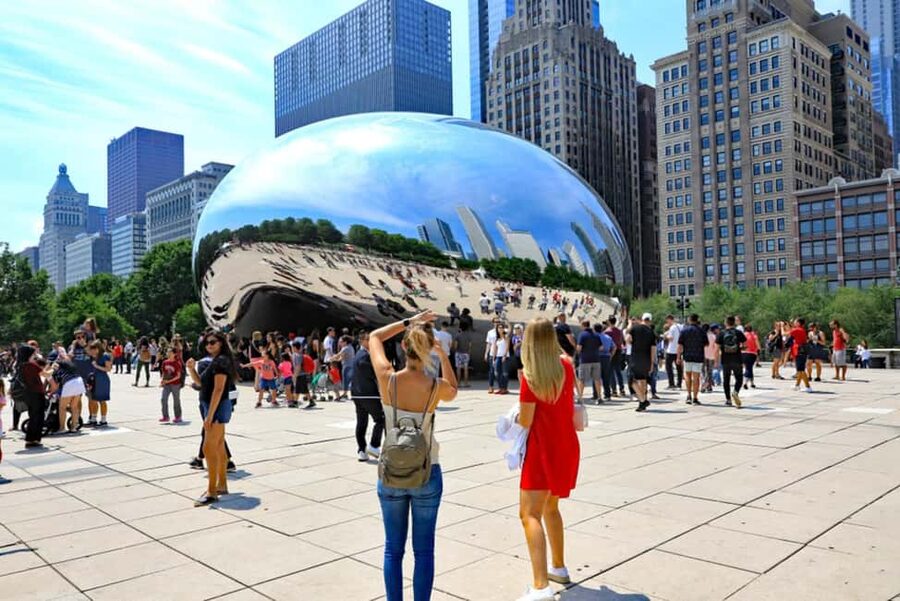
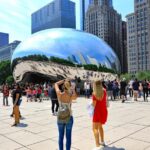
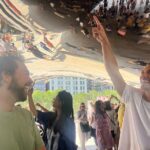
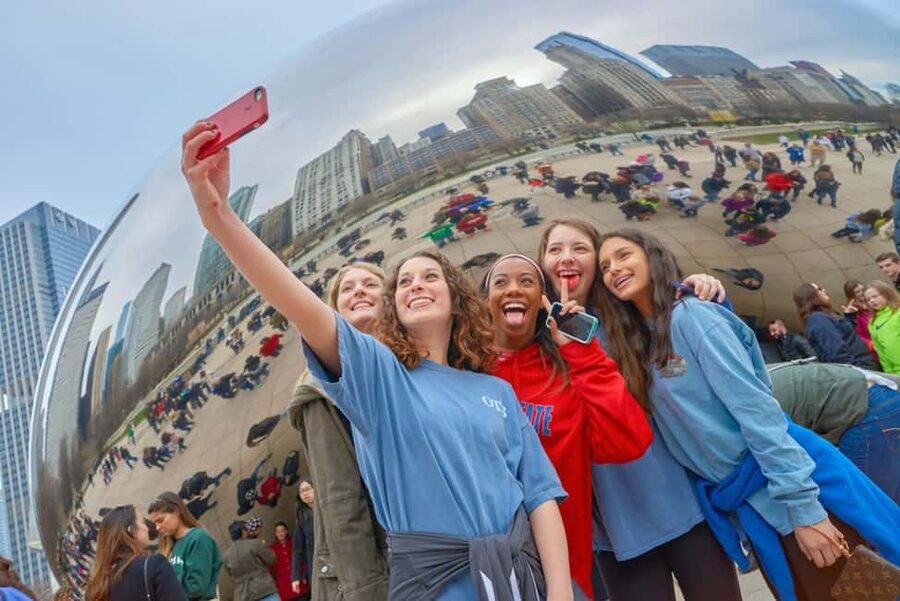
The tour spends real time at Millennium Park, with Cloud Gate as the headline moment. You’ll have the chance to snap photos right at the reflective sculpture, which is exactly what people come for—then you’ll also hear what makes it more than just a selfie wall.
What I like about this stop is that it’s not only visual. The guide’s explanations help you read the surroundings: public art here is meant to be used, not just watched from a distance. Plus, Millennium Park is one of those places where you can feel the city’s confidence, because it blends art, space, and people moving through.
Practical tip: wear shoes you can keep moving in. Millennium Park is easy to navigate, but you’re still on foot for the full tour, and you’ll want to stay comfortable for photo time.
Pedway tricks and Riverwalk payoff: indoor route, big views
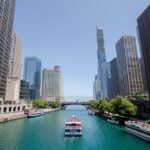
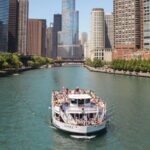
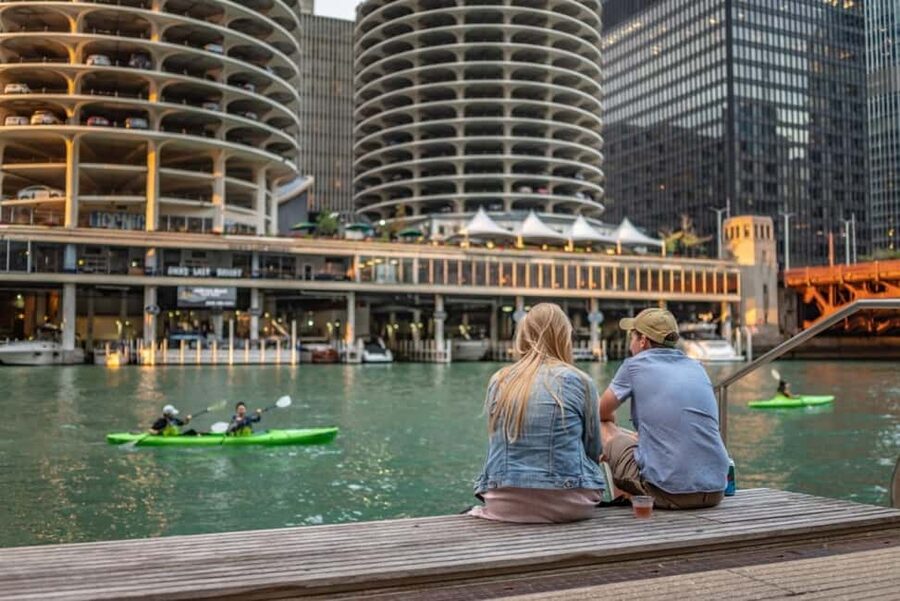
One of the tour’s best moves is walking through the Chicago Pedway area before emerging onto the Chicago Riverwalk. The contrast is the whole point. Indoors (or semi-indoors) you see how Chicago keeps people moving efficiently, then outside you get the full skyline effect.
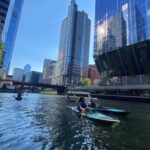
On the Riverwalk, you’ll see iconic skyscrapers with water-level perspective. That’s a different angle than most first-time photos, and it makes the architecture feel closer and more layered. You’re also in a part of the city where you can understand Chicago’s obsession with the river without needing a lecture hall.
If you’re coming on a hot or cold day, this pacing is smart. You still get the outdoors, but you’re not stuck outside for every second.
Magnificent Mile with a storyline: Wrigley, Tribune Tower, John Hancock

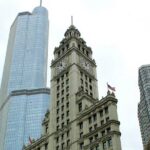
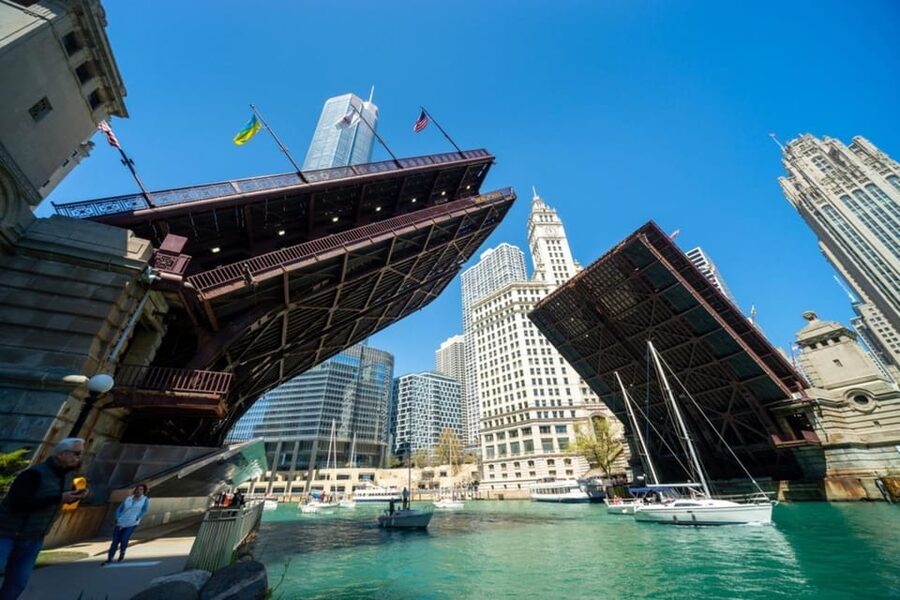
After the Riverwalk, the tour heads along the Magnificent Mile, where the building lineup turns into a street-level museum. You’ll see the Wrigley Building, Tribune Tower, and John Hancock as you walk, with the guide explaining what you’re looking at and how it fits into Chicago’s growth.
I like this part because it’s not treated like a checklist. The guide ties the buildings to the city’s identity, so you’re not just memorizing names. You get the sense of how Chicago used architecture to announce itself, then kept evolving.
Also, the Magnificent Mile is where it’s easy to accidentally speed-walk past details. Having a guide slows you down in the right places, so you notice design choices you’d otherwise miss.
DuSable Bridge and the Chicago Fire: the story behind the skyline
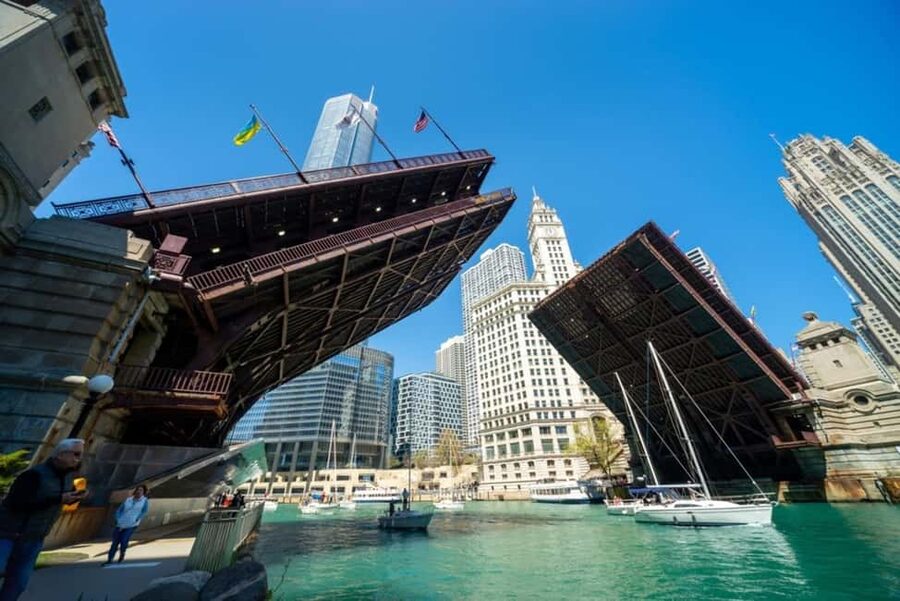
The tour crosses the DuSable Bridge, and that’s where the history stretches beyond the immediate skyline. You’ll learn about the Chicago Fire and the way the city rebuilt with resilience and determination. It’s a turning point that helps you understand why Chicago’s downtown looks the way it does today.
This stop matters because it adds cause-and-effect. Instead of treating big buildings as isolated landmarks, you connect them to a city that had to recover and reshape itself. That’s why some people come expecting architecture and end up staying for history, or the other way around.
One note: if you’re expecting pure technical architecture talk, you might find the fire-and-rebuilding narrative takes the lead. Still, that context makes the buildings easier to “read” while you’re walking.

The guide matters: Andrew’s style and the family-history touch
This tour’s quality often comes down to the guide, and the name Andrew (also referred to as Andy) shows up in multiple experiences. In the best cases, he’s described as having deep insight into Chicago’s history, geography, architecture, and culture, with stories that feel personal rather than scripted.
One review highlights how he connected Chicago back through his family ties, which adds texture to the facts. Another points out that the explanations can reach surprisingly far back, even to ancestors from the 16th century. That kind of storytelling is exactly what turns a walking route into a memorable understanding of the city.
What to do on your end: ask one question that connects two stops. For example, you can ask how the fire story connects to the way downtown was later rebuilt. Guides like Andrew tend to answer with a timeline, not just a fact.
What about food: Chicago classics and the Starbucks Reserve stop
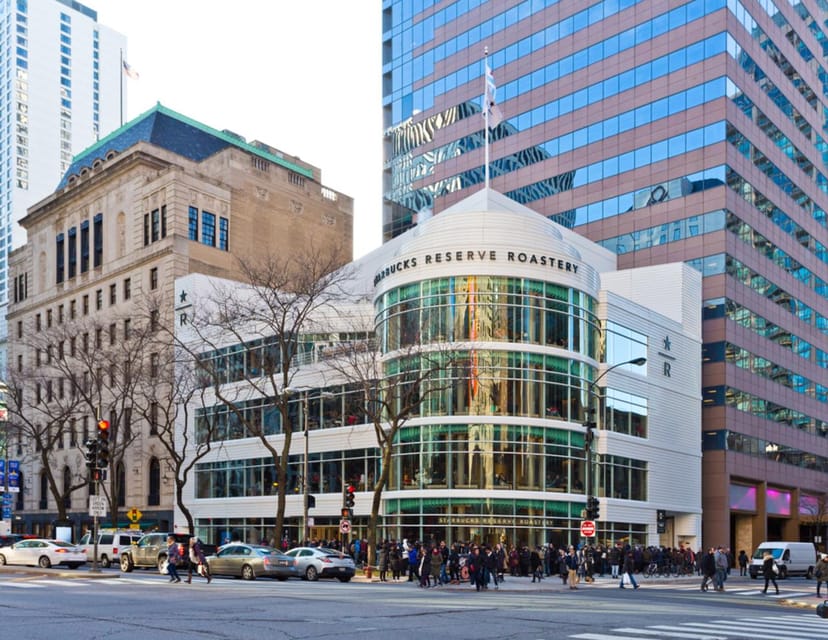
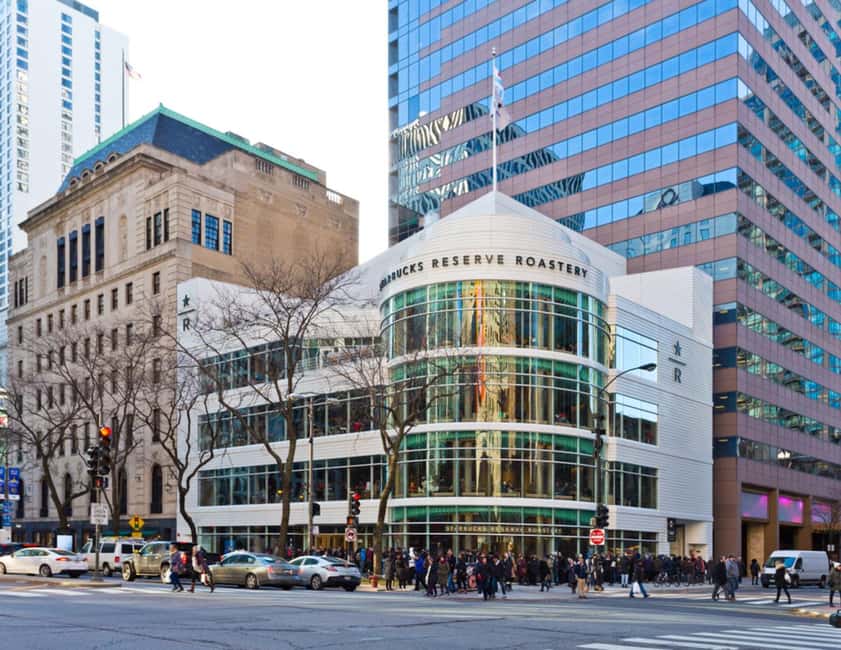
Food and drinks are not included in the tour or the price, so don’t plan your meal budget around this. That said, the tour includes an option to enjoy a classic Chicago savory treat, and it also stops at the Starbucks Reserve Roastery for a taste of local flavor.
Here’s the smart way to handle this: treat those moments as a bonus, not the main event. If you want a full meal, you’ll need to do that on your own before or after. If you want to sample something, you can use the tour’s stop as an excuse to try it.
Also, since you’re walking for 2.5 hours, you’ll likely feel better if you eat lightly first. Chicago days can change fast, and walking on a full stomach is fine, but walking on an empty one can be rough.
How long is 2.5 hours, really? Pacing, weather, and comfort
A 2.5-hour walking tour is long enough to feel like you actually toured the city, but short enough that you won’t feel trapped in a full-day schedule. With up to 10 people, the pace should stay manageable, especially because the group size helps the guide keep everyone together.
Still, you’re on your feet. Plan for uneven sidewalks, lots of short stops, and extra time if you linger for photos at The Bean and along the Riverwalk. If you’re wearing shoes that look good but hurt, this is the kind of day that makes regrets bloom.
Weather matters in Chicago, so dress in layers. If it’s windy near the river, you’ll feel it. If you’re lucky, you’ll get a perfect Riverwalk light where the skyscrapers look extra sharp.
Skip-the-line value: why this helps even without big-ticket entries
The tour notes skip the ticket line, which usually matters most around attractions that have any entry steps or time pressure. Even if you’re not buying tickets for every stop, reducing waiting time can help you keep the route moving and avoid losing half your tour to bottlenecks.
In plain terms: you’re paying for time with a guide and a planned route. Saving minutes here and there protects the main value—the storytelling and the sequence of views.
Price and value: what $49 buys in central Chicago
At $49 per person, this tour sits in the “pay for guidance, not for admission” category. That’s a good deal if you want the highlights of central Chicago without spending your day piecing together routes, maps, and one-off museum stops.
You’re getting:
- a live English guide,
- a small-group walk (10 max),
- multiple major landmarks across Millennium Park, the Riverwalk, and the Magnificent Mile,
- and a history thread that connects the stops, including the Chicago Fire.
If you’re traveling with someone who prefers structure, a guided walking route is also a value win. You can keep moving and still feel like you learned something, instead of just collecting photos.
Who should book this tour (and who might want a different style)
This is a great fit if you:
- want an efficient overview of Chicago’s signature sights in a single sitting,
- like architecture stories that connect to real history,
- enjoy walking but don’t want a multi-hour, stand-alone “wander.”
It’s also a solid option for your first day in the city, because it helps you learn how downtown pieces fit together.
If you’re an architecture deep-dive person and want building engineering detail at every stop, you might still enjoy it, but treat it as a big-picture story. For ultra-technical architectural commentary, you’d likely want a more specialized format on top.
Should you book the Chicago History and Architecture Walking Tour?
If you want a guided walk that hits the big icons—Cloud Gate, the Chicago Riverwalk, and the Magnificent Mile—while also giving you the Chicago Fire context, this is an easy yes. The small-group cap and the chance to hear Andrew’s storytelling style are strong reasons to book.
My only hesitation is the style balance. This isn’t guaranteed to be pure architecture lecture mode, and one recent issue shows that meeting-point hiccups can happen. If you’re flexible and you’re the kind of person who likes stories as much as photos, the value looks strong.
FAQ
Where do I meet for the Chicago History and Architecture Walking Tour?
Meet your guide at the McCormick Tribune Plaza in front of the Park Grill. Restrooms are available to use prior to starting the tour.
How long is the tour?
The duration is 2.5 hours.
How big is the group?
The group is small, limited to 10 participants.
What stops are included in the tour?
You’ll visit Millennium Park (including photo time at Cloud Gate, also known as The Bean), explore the Chicago Riverwalk and see iconic skyscrapers, walk the Magnificent Mile (including the Wrigley Building, Tribune Tower, and John Hancock), cross the DuSable Bridge, and stop at the Starbucks Reserve Roastery. The tour also covers Chicago Fire history.
Is food included in the price?
Food and drinks are not included in the tour or the price.
What language is the tour guide?
The live tour guide speaks English.
Is there free cancellation?
Yes. You can cancel up to 24 hours in advance for a full refund.