REVIEW · ROTTERDAM
Rotterdam Architecture Highlights Walking Tour
Book on Viator →Operated by Walk Rotterdam · Bookable on Viator
Rotterdam has a talent for reinventing itself fast. This 2-hour architecture walk zeroes in on the city’s big modern landmarks, with an architect guide to connect the buildings to the people and the postwar comeback. You’ll move at an easy city pace while picking up the why behind what you see.
I especially like the small-group setup (up to 15) and the fact that you’re walking with a professional architect guide who can answer questions and tailor the commentary to the group. I also love how the stops mix star buildings with everyday places, so you don’t just learn names—you see how design shapes daily life.
One thing to consider: this is not a museum-style inside-only tour. You get strong exterior views and key photo moments, but you may not walk into every highlight, and the Maas waterfront can make the walk feel colder on windy days.
In This Review
- Quick architecture wins on this Rotterdam walk
- Rotterdam modern architecture: why this 2-hour walk works
- Rotterdam Centraal and Schouwburgplein: the city’s front door and cultural stage
- From a postwar national monument to Rotterdam’s rebuilding logic
- Timmerhuis (OMA): reading a skyline like a design brief
- Markthal: the indoor market building that changes how you picture the city
- Cube Houses from the outside: when bold form meets real limitations
- Boompjeskade and Maas views: where the tour ends with air and perspective
- What you get with an architect guide (and what you shouldn’t expect)
- Price and timing: planning your day around a 2-hour architecture hit
- Who should book this Rotterdam Architecture Highlights Walking Tour
- Should you book this tour?
- FAQ
- How long is the Rotterdam Architecture Highlights Walking Tour?
- What is the price per person, and what’s included?
- Where does the tour start and where does it end?
- Is the tour offered in English?
- How big is the group?
- What age and fitness level do I need?
- Are admission tickets included for the stops?
- Is hotel pickup or drop-off included?
- What happens if the weather is poor?
Quick architecture wins on this Rotterdam walk
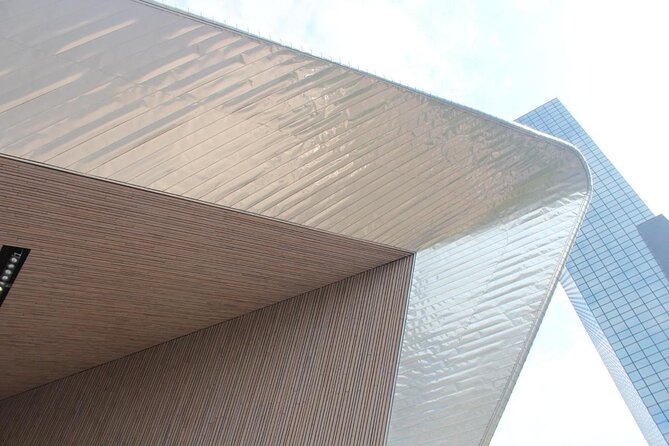
- Start at Rotterdam Centraal’s modern city entrance and get oriented fast
- Schouwburgplein shows how culture and public space sit right in the middle of the action
- Timmerhuis by OMA turns the skyline into a lesson in design intent
- Markthal proves Rotterdam can do serious architecture without forgetting food and shopping
- A walk to Boompjeskade ends with big river views over the South Bank
Rotterdam modern architecture: why this 2-hour walk works
Rotterdam’s architecture isn’t stuck in the past. It’s built for change—new ideas, bold forms, and practical solutions in a city that had to rebuild after WWII. Doing this as a tight, guided walk is smart because you can actually connect what you’re seeing to the story behind it, without spending half a day in transit.
This tour is priced for a short format: $54.31 per person for about 2 hours, led by a professional architect guide in English. For me, the value is that you’re not just paying for “seeing buildings.” You’re paying for someone who can point out what matters: proportion, form, and the city’s planning logic, plus the real-world reasons these choices happened.
You’ll also get a mobile ticket and group discounts, and the route stays within a walkable area that’s handy if you want to fit architecture into a day that also includes food, shopping, or a museum visit later.
You can also read our reviews of more tours and experiences in Rotterdam.
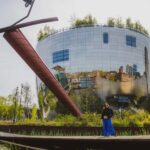
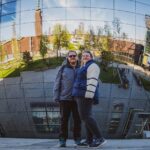
Rotterdam Centraal and Schouwburgplein: the city’s front door and cultural stage
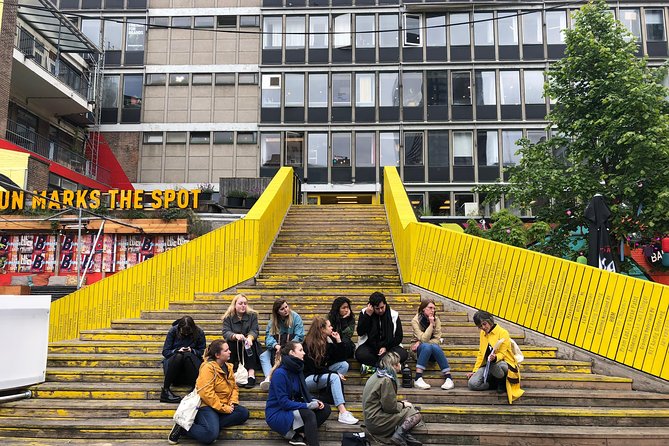
Most architecture tours start with a “check out this famous building” moment. This one starts with direction and context.
At Rotterdam Centraal Station, you focus on the station’s newer entrance to the city. It’s a good opener because stations are where architecture meets movement. You’ll learn how the station functions as a gateway—socially and visually—helping the modern city feel connected rather than chopped into pieces.
Then you shift to Schouwburgplein, the cultural podium square. This stop matters because it shows you how Rotterdam uses open space. Instead of treating plazas as leftover bits between buildings, the square becomes part of the cultural identity: a place for gatherings, performances, and the city’s public life. If you like architecture that affects how people behave, you’ll get a lot from this kind of stop.
Time-wise, these are shorter moments (around 10 minutes each), which keeps the tour moving. The benefit is that you’ll see several highlights without being stuck at one spot freezing your hands off.
From a postwar national monument to Rotterdam’s rebuilding logic
Between the big modern icons, you also get a stop focused on the postwar national monument. It’s the reminder that Rotterdam’s architecture didn’t just evolve. It was rebuilt.
This matters because modern Rotterdam can feel like it arrived all at once: clean lines, bold silhouettes, innovative public spaces. But the guide’s narrative—especially when the tour is led by an architect—puts that modern look into a cause-and-effect framework. You start understanding why certain choices were made: planning under pressure, rebuilding in a smarter way, and designing for a future that had to work economically and socially.
I like that this stop prevents the tour from feeling like a collection of postcards. You get a theme you can carry from building to building: reconstruction mindset plus modern ambition.
Timmerhuis (OMA): reading a skyline like a design brief
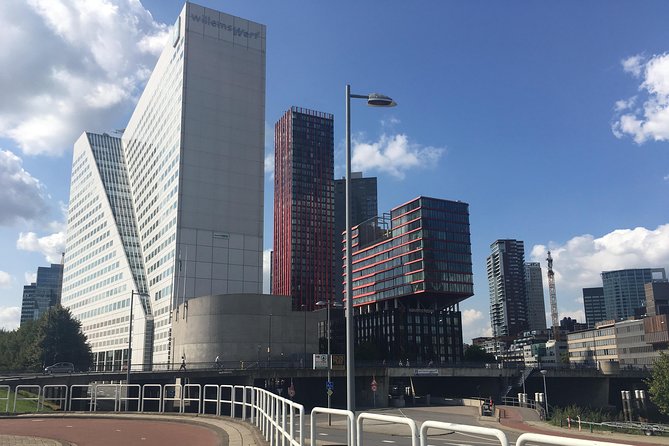
If you want one building to set the tone for Rotterdam’s modern architecture, it’s the Timmerhuis, designed by OMA. This stop is brief (about 5 minutes), but it’s high impact.
What I find useful here is how an architect guide teaches you to look. Instead of telling you just what the building is called, the guide helps you “read” the choices—how the massing and structure signals a certain confidence and how the form interacts with the surrounding city.
A detail I’d pay attention to: you’re not learning the building in isolation. You’re seeing it as part of an urban system. Rotterdam often treats architecture as a tool for city-making, not just a single object. That’s the kind of context you only get when the guide can connect design decisions to city needs.
On some departures, guides like Tania or Sylvia may lead your group, and you’ll often hear the kind of clarity that comes from training as an architect plus real enthusiasm for Rotterdam’s evolution. The result is that Timmerhuis stops being “a cool thing” and becomes a clue.
Markthal: the indoor market building that changes how you picture the city
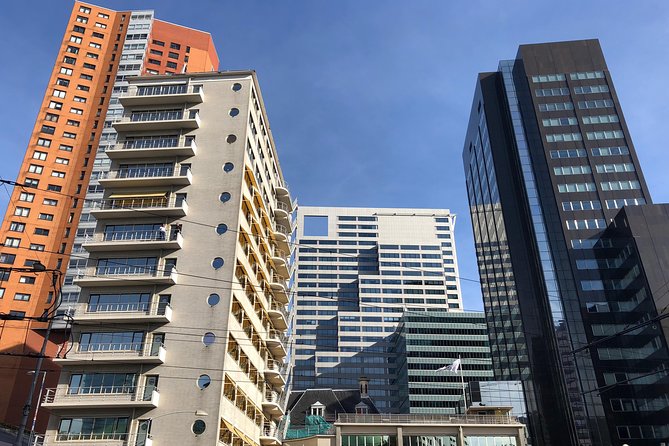
Next comes Markthal, described as the most fancy indoor market in the world—and you’ll feel the truth of that right away once you’re inside the architecture of it. Even if your priority isn’t food, Markthal is one of the best Rotterdam stops because it merges culture, commerce, and design in one place.
This is where you’ll understand a key Rotterdam idea: modern architecture isn’t only for offices and monuments. It’s for daily routines too. Markthal is a place you can spend time in without feeling like you’re “waiting around for the tour.” It’s functional, public, and designed to be used.
You’ll likely get around 15 minutes here, so it’s not about a slow wander. It’s about using the time to notice how the space works: how people move, how the building frames the market, and how the interior environment changes the mood compared with the streets outside.
Practical note: since it’s indoor, it’s also a good weather reset. If the wind from the river is messing with your plans, this stop gives you a chance to breathe and warm up.



Cube Houses from the outside: when bold form meets real limitations
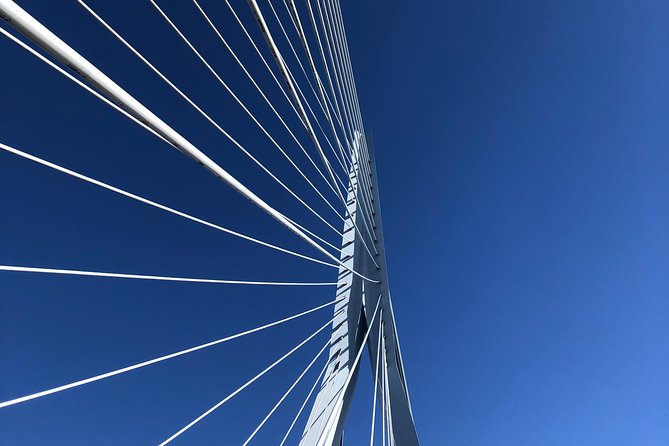
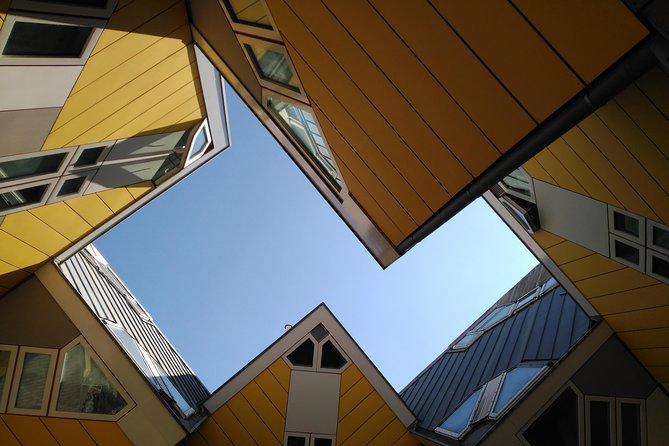
Rotterdam loves iconic shapes, and the Cube Houses are part of the highlights you’ll hear about and often get to photograph as you pass. Even when you’re not walking through every famous detail, they’re useful for learning how Rotterdam does “fun” with structure.
Here’s the key takeaway: the Cube Houses look playful, but they’re still architecture first—an engineered response to living space and design curiosity. You’ll get a better appreciation if your guide explains the context around them while you’re seeing them from the street.
One drawback to keep in mind: for some groups, the experience can be more about views than stepping fully inside. If your dream is to tour interiors extensively, plan to do extra exploring later on your own.
That said, the exterior moments work well in a 2-hour format. You’ll see the landmark, understand what makes it different, and move on without losing the flow.
Boompjeskade and Maas views: where the tour ends with air and perspective
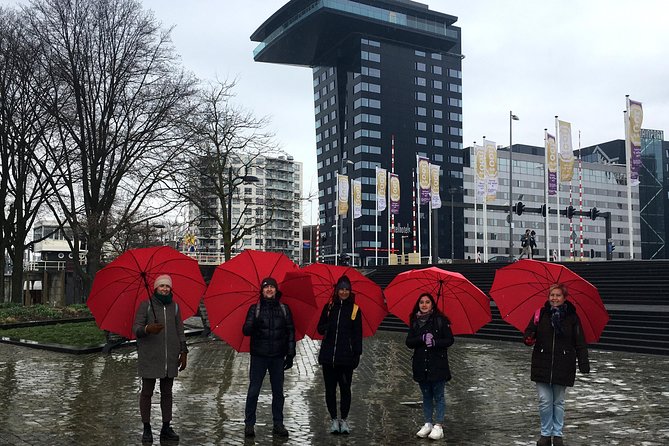
The tour finishes at Boompjeskade, on the riverside with views toward the South Bank and the Maas (Meuse) river. Ending here isn’t random. It’s a smart shift from dense architecture to open space and horizon lines.
This is one of those parts where you’ll feel Rotterdam’s geography. The river is a major player in how the city looks and how it feels. You can stand, take photos, and actually “see” the skyline from a different angle than you got earlier on the walk.
Also, the timing is nice: after you’ve been learning about modern forms, the river view gives your brain a break and helps everything click. You stop noticing only buildings and start noticing the city as a whole.
If the day is cold, this is also where you’ll feel it most. Pack for wind: a hat or hood and a layer you can zip up will keep the end of the tour pleasant instead of miserable.
What you get with an architect guide (and what you shouldn’t expect)
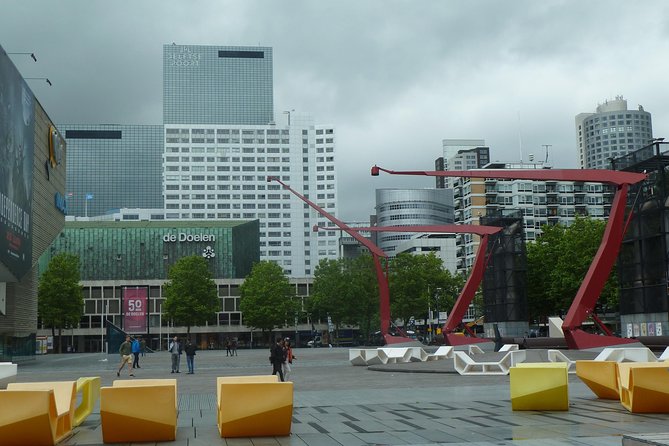
The headline feature is a professional architect guide, and that’s the real engine of the experience. This guide style is about interpretation: not only what the structures are, but what they solve—how they respond to reconstruction, city planning, and modern needs.
In the best moments, guides like Tania and Silvia/Sylvia (you may see different spellings depending on the roster) can answer the kind of questions you’d normally ask only after reading a book. You’ll also get practical city hints. Some groups report that the guide shares restaurant and timing suggestions after the walk, which is exactly what I like a guide to do: help you keep enjoying Rotterdam once the tour ends.
What you might not get: a long time inside multiple buildings. This is a walk-and-spot tour with short visits, so you’re prioritizing context and orientation over deep interior inspection. If you want hours in each building, pair this with one follow-up activity after you finish at Boompjeskade.
Price and timing: planning your day around a 2-hour architecture hit
At $54.31 per person for about 2 hours, you’re paying for three things:
1) a guided route through major modern sites,
2) interpretation from a trained architect, and
3) a small-group experience that keeps questions alive.
Given that the tour is capped at 15 travelers, it usually feels less like a lecture and more like a conversation that happens to move from stop to stop. That makes a short tour work better. In a large group, you lose time and attention. Here, the format supports both.
Timing-wise, the flow is efficient: short stop durations at each highlight, with enough time to look, ask, and take photos. If you’re the type who always asks why things are designed a certain way, you’ll appreciate how the schedule leaves room for explanations.
Expect a solid walking day. Even with short stops, you’re outdoors between areas and you’ll cover enough ground that moderate physical fitness is the right call. If you’re sensitive to cold wind near water, dress for it.
Who should book this Rotterdam Architecture Highlights Walking Tour
This one fits best if you want:
- a fast intro to Rotterdam’s modern architecture,
- an architect guide who can connect buildings to the city’s rebuilding and planning,
- a small-group walking format that ends near a scenic riverside.
It’s also a good match if you’re staying in central Rotterdam and want a guided plan without complicated transfers. The meeting point is at Rotterdam Central Station (3013 AJ Rotterdam) and you finish at Boompjeskade (3011 Rotterdam) by the river, which is convenient for continuing your day.
Minimum age is 12, and the tour calls for moderate physical fitness. Also, service animals are allowed, and the tour is offered in English (with the possibility of a multilingual guide).
If you’re a total architecture purist who only wants structural or construction-level detail, you may want to treat this as a big-picture city design walk. You’ll still learn a lot, but the commentary can also touch on how architecture relates to society and how the city functions.
Should you book this tour?
Yes—if your goal is to get your bearings and understand why modern Rotterdam looks the way it does, this is a strong value. The architect-led format plus the compact 2-hour length makes it easy to slot into a tight itinerary, and the stops are well chosen: gateway station, civic square, a postwar reminder, a flagship by OMA, and the river-ending perspective at Boompjeskade.
Book it especially if you like architecture that connects to real life—markets, public spaces, and city rebuilding. Skip or supplement it if you want long interior visits at every landmark, or if you hate wind and don’t want to dress for the riverside.
FAQ
How long is the Rotterdam Architecture Highlights Walking Tour?
It runs for about 2 hours.
What is the price per person, and what’s included?
The price is $54.31 per person. It includes the 2-hour walking tour and a professional architect guide.
Where does the tour start and where does it end?
The tour starts at Rotterdam Central Station, 3013 AJ Rotterdam and ends at Boompjeskade, 3011 Rotterdam, on the riverside.
Is the tour offered in English?
Yes. The tour is offered in English.
How big is the group?
The tour has a maximum of 15 travelers.
What age and fitness level do I need?
The minimum age is 12 years, and the tour requires a moderate physical fitness level.
Are admission tickets included for the stops?
The listed stops show free admission.
Is hotel pickup or drop-off included?
No, hotel pickup and drop-off are not included.
What happens if the weather is poor?
This experience requires good weather. If it’s canceled due to poor weather, you’ll be offered a different date or a full refund.