REVIEW · ROTTERDAM
Rotterdam Must Do Tour: Highlights, History, WW2 and Architecture
Book on Viator →Operated by Trigger Tours · Bookable on Viator
Rotterdam can feel like a whole argument between past and future. This 2-hour walking tour makes that contrast easy to read, stop by stop, with a local guide. You’ll hit big-ticket architecture like the Cube Houses and Markthal, plus key spots tied to Rotterdam’s WWII rebuilding story.
I love that the route is practical: you walk central streets, then you switch scale—from major buildings near Rotterdam Centraal to human-scale details like the wooden Luchtsingel bridge. I also like the guide factor. In past groups, guides such as Mr. Ed, Michel, Susan, John, Edwin, and Stephan are praised for bringing Rotterdam to life with history and architecture that actually clicks.
One possible drawback: it’s fast and focused. With around 10–20 minutes at several stops (and about 30 minutes at Markthal), you won’t have unlimited time to wander inside or linger at every photo spot.
In This Review
- Key highlights worth marking on your map
- The value of a tight 2-hour walk through Rotterdam’s “readable” city center
- Rotterdam Centraal as your starting lecture in steel and purpose
- WWII to 1950s rebuilding: the route’s hidden backbone
- What to watch for at these stops
- A small consideration
- Markthal: the stop that turns architecture into a place you’d actually hang out
- Quick tip for the best experience
- Oude Haven and the Cube Houses: where the story turns personal
- The main drawback to keep in mind
- Luchtsingel: a 390-meter pedestrian bridge with a “why should this exist?” story
- How to make it work for you
- Delft Gate echoes at Nieuwe Delftse Poort (and why reconstructions matter)
- What you’ll get from the stop
- Sint-Laurenskerk: the medieval remnant you can still step into
- Practical nuts-and-bolts: pace, shoes, and what to plan around
- When to book
- Should you book the Rotterdam Must Do Tour?
- FAQ
- FAQ
- How long is the Rotterdam walking tour?
- How much does it cost per person?
- Is the tour in English?
- How many people are in the group?
- What’s included in the tour price?
- Are food and drinks included?
- Where does the tour start?
- Is the tour near public transportation?
- Can I bring a service animal?
- Can I get a full refund if I cancel?
Key highlights worth marking on your map
- Small group size (max 15) keeps the pace from feeling random and makes questions easier
- WW2 rebuilding explained through real buildings you can see nearby, not just in theory
- Markthal time (around 30 minutes) gives you a chance to appreciate the interior artwork and food-hall atmosphere
- Luchtsingel bridge (390 meters) shows how Rotterdam revived a forgotten stretch with a simple pedestrian link
- Free entry stops throughout means you’re paying for guiding, not ticket lines
- Guide style matters here—people often mention storytelling and pride in the city from guides like Michel and Susan
The value of a tight 2-hour walk through Rotterdam’s “readable” city center
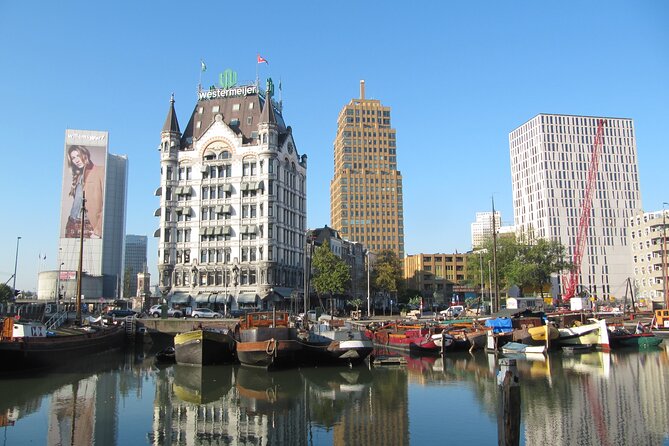
If you’re in Rotterdam for a short window, this tour is built for quick orientation. In about two hours, you get a guided tour of the city’s main architectural ideas: modern form, postwar recovery, and street life that grew back around the harbor and Maas river.
At $29.41 per person, the price feels reasonable because you’re paying for a local guide plus a structured route that hits the top landmarks people actually want. And since the stops you visit are free to enter, you’re not stuck adding surprise costs once you’re on the ground.
The other value is focus. Rotterdam’s architecture can look “random” if you don’t know what you’re seeing. This walk gives you the why behind the what—especially around WWII rebuilding, when entire areas had to be reimagined.
You can also read our reviews of more tours and experiences in Rotterdam.
Rotterdam Centraal as your starting lecture in steel and purpose
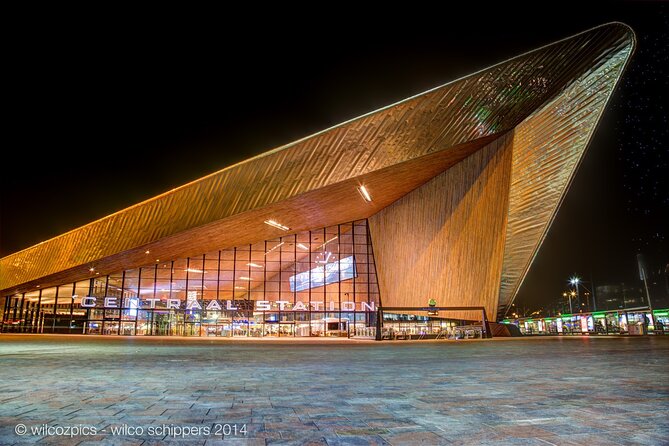
You meet at Stationsplein 10 (a central, practical location close to transit). The tour also begins by connecting you to the city’s layout right away, before you start clocking miles on foot.
At Rotterdam Centraal Station, your guide introduces the city’s architecture and sets the tone: Rotterdam is not just a pretty modern city. It’s a city shaped by rebuilding, planning decisions, and shipping-and-harbor logic.
What I like about starting here: it reduces the “where am I?” feeling. Once you understand the station area and the direction your walk heads, the rest of the route feels like one continuous story instead of separate photo stops.
WWII to 1950s rebuilding: the route’s hidden backbone
A big part of why this tour works is that it doesn’t treat history like a separate museum visit. It threads WWII consequences into what you see walking the street.
Near the city center, you’ll spend a short stop at Groot Handelsgebouw (completed in 1953). This building is one of the first major constructions after Rotterdam’s bombing in the Second World War. Even if you only catch it from the street, the point lands: Rotterdam rebuilt fast, and it rebuilt with big ambitions.
Then the tour flows into commercial streets that show the city’s postwar shopping plan. You’ll walk through the West-Kruiskade area and then onto Lijnbaan, Rotterdam’s main pedestrian shopping street opened in 1953 after the older shopping district was destroyed. That context matters. It turns a street you might otherwise treat like any other shopping corridor into a marker of where people’s everyday life restarted.
What to watch for at these stops
- Look for how the streets feel planned rather than medieval or organic. This is a modern city choice made visible.
- Pay attention to street-level energy. Even short stops here help you connect buildings to how people move and shop.
A small consideration
These portions are quick (often around 10 minutes). If you want to photograph every facade detail or you’re a slow walker, you may feel the timing. Bring comfortable shoes and expect a “see it, learn it, move on” rhythm.




Markthal: the stop that turns architecture into a place you’d actually hang out
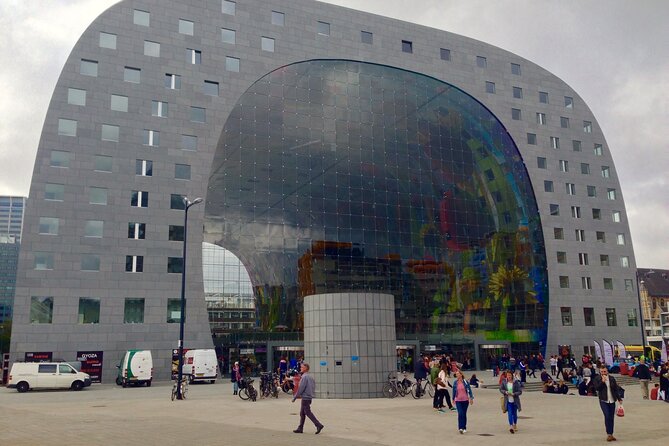
Markthal is the kind of building that can steal your attention—even if you’re mostly there for history. The Markthal stop includes time to appreciate the exterior form and then get inside the building’s main space.
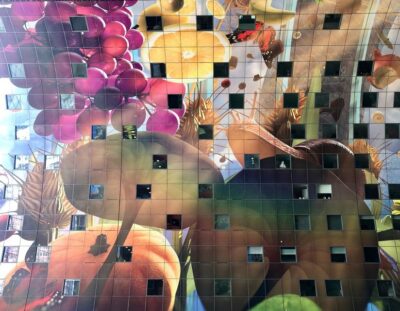
Architecturally, it’s described as a grey nature-stone structure with a horseshoe-like, archwise shape. The inside is where it becomes memorable: you’ll find places to eat and a major artwork featuring strongly enlarged fruits, vegetables, seeds, fish, flowers, and insects.
Even with limited time (about 30 minutes), this is still a worthwhile payoff stop. It’s not only about viewing a facade; it’s about how architecture creates a public room—part market hall, part art installation, part social space.
Quick tip for the best experience
If you care most about the artwork, position yourself early once you enter. If you’re more interested in browsing, you can use the time to pick through what’s open, but do it with an eye on the group’s walk schedule.
Oude Haven and the Cube Houses: where the story turns personal
As you head toward Oude Haven, you’re moving into Rotterdam’s historical center area near the north side of the Maas river. This is described as a hotspot in the city center that developed into a lively area over time.
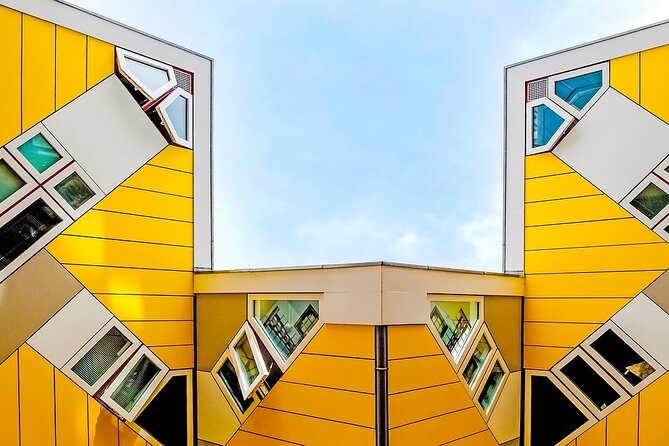
Oude Haven is also where you’ll connect to the Cube Houses, Rotterdam’s iconic tilted-house design. These buildings aren’t just a quirky skyline element. They reflect Rotterdam’s willingness to experiment with form—especially in contrast to older, flatter urban patterns.
This is often the emotional highlight of the tour for first-timers. You can see how the city keeps layers: WWII rebuilding around it, then a modern-cool identity that includes playful, memorable architecture.
The main drawback to keep in mind
This stop is around 20 minutes. It’s enough for photos and quick orientation, but not for long sitting, slow-stroll wandering, or deep shopping. If you want to linger, treat this as your anchor stop and plan to return later on your own.
Luchtsingel: a 390-meter pedestrian bridge with a “why should this exist?” story
One of my favorite kinds of city visits is when a simple structure explains a bigger idea. Luchtsingel is exactly that: a wooden pedestrian bridge about 390 meters long, connecting Rotterdam North with the city center.
What makes it more than a nice walk is the mission behind it. This area had been abandoned for years, dominated by vacancy and neglect. The bridge brings new life by giving people a safe, attractive route to use the space differently.
Even if you just walk a section with the group, it helps you understand Rotterdam’s mindset: redesign movement first, and you change how people feel about a neighborhood.
How to make it work for you
If the weather’s good, linger for a couple photos at a natural pause point. If it’s windy or rainy, keep moving with the group and save the slow look for later.
Delft Gate echoes at Nieuwe Delftse Poort (and why reconstructions matter)
Next comes Nieuwe Delftse Poort (also referred to as the Delft gate). The original Delft gate was the last of several city gates built in 1764. Then, decades later, a reconstruction in steel—designed by the artist Cor Kraat—was erected on virtually the original site of the Delft gate.
This is one of those stops that can be easy to miss if you only care about modern landmarks. But as part of the tour’s theme, it makes sense: Rotterdam rebuilds, and it also chooses what to preserve and what to reinterpret.
What you’ll get from the stop
In around 10 minutes, the guide’s explanation turns the structure into a timeline marker. You understand that not every reference to the past is a fully original medieval building. Sometimes it’s a purposeful modern echo.
Sint-Laurenskerk: the medieval remnant you can still step into
Rotterdam is famous for being largely rebuilt. So when you get a genuine medieval survivor, it hits harder.
You’ll visit the Sint-Laurenskerk (the stop notes it as the only remnant of the medieval city). This is a Protestant church, and the tour indicates you can go inside for free.
The value here isn’t just the architecture. It’s perspective. After passing lots of postwar and modern design, stepping inside a historic remnant lets you feel the scale of what was lost—and what got rebuilt afterward.
If you enjoy atmosphere, this stop gives you a break from outdoor walking. If you’re in a hurry, it’s still easy to do quickly since it’s free to enter.
Practical nuts-and-bolts: pace, shoes, and what to plan around
This walk is about 2 hours and includes 10 stops with short segments at each one. That structure is efficient, which is good for time-crunched trips, but it does mean you won’t have long “wander time” anywhere besides the guided windows.
Here’s how I’d plan your day around it:
- Wear comfortable shoes. You’ll be covering central streets and moving between landmarks.
- Don’t plan on buying a meal during the tour. Food and drinks are not included, so either eat before you start or set aside time after.
- Bring a phone for the mobile ticket experience, if you’re the type to check details on the spot.
- If you’re a shopper, you’ll pass key shopping streets like Lijnbaan and the Kruiskade area. But keep in mind the walk includes guided learning first, shopping second.
When to book
This tour is offered in English and has different tour times to fit schedules. It’s also described as something booked fairly far ahead on average, so if you want a specific slot, I’d avoid waiting until the last week.
Should you book the Rotterdam Must Do Tour?
If you want a quick way to understand Rotterdam’s architecture and WWII rebuilding without renting a car or stitching together multiple self-guided walks, I think this is a smart booking. The mix of Cube Houses, Markthal, the Luchtsingel bridge, and the WWII-related rebuild markers gives you a “whole city” feeling in two hours.
Book it if:
- you’re short on time but want the top sights and the story behind them
- you like walking with a guide who explains what you’re seeing
- you want free-entry stops so your budget stays predictable
Skip or adjust expectations if:
- you want lots of time inside buildings beyond the short guided windows (especially at Markthal)
- you prefer slow travel and long photo sessions rather than a tight route
FAQ
FAQ
How long is the Rotterdam walking tour?
It runs for about 2 hours.
How much does it cost per person?
The price is $29.41 per person.
Is the tour in English?
Yes, the tour is offered in English.
How many people are in the group?
The group size is capped at a maximum of 15 travelers.
What’s included in the tour price?
A local guide is included. Admission tickets for the listed stops are free.
Are food and drinks included?
No, food and drinks are not included.
Where does the tour start?
The tour starts at Stationsplein 10, 3013 AJ Rotterdam, Netherlands, and ends back at the same meeting point.
Is the tour near public transportation?
Yes, it’s near public transportation.
Can I bring a service animal?
Service animals are allowed.
Can I get a full refund if I cancel?
You can cancel for a full refund if you cancel at least 24 hours before the experience starts.