REVIEW · SAN MIGUEL DE ALLENDE
Queretaro: colonial architecture and history
Book on Viator →Bookable on Viator
Queretaro tells its story in stone and faith. This guided walk links the city’s colonial buildings to big moments in Mexican history, with Armando keeping the route moving and the explanations clear. You’ll cover a lot of ground without feeling rushed, and you’ll leave knowing how these sites connect.
I especially like the story-first style. Armando doesn’t just name places; he ties each stop to why Queretaro mattered, and he connects local events to Mexican—and even world—history so the city feels less like a postcard and more like a living timeline.
One possible drawback: if your priority is deep architectural analysis (materials, dates, styles, design details), this tour may feel heavier on history and religion than on architecture. It’s still worth it, but I’d go in ready to ask questions if architecture is your main goal.
In This Review
- Key Highlights
- A Queretaro History Walk That Gets You Oriented Fast
- El Acueducto de Queretaro: The Aqueduct That Started the City’s Myth
- Panteón de los Queretanos Ilustres: History Buried in Plain Sight
- Santa Cruz de los Milagros: Franciscan Legends on the Founding Hill
- Plaza de Armas: Neo-Classical Details and the City’s Main Stage
- Santuario de Nuestra Señora de Guadalupe: Why This Temple Matters
- San Francisco de Asís and Santa Clara: Convent Power, Reuse, and Architecture Clues
- Price and Pacing: Is $50 Worth It?
- Practical Tips Before You Go (So You Get More Out of It)
- Should You Book This Queretaro Tour?
- FAQ
- How long is the Queretaro colonial architecture and history tour?
- Where does the tour start and end?
- Is the tour offered in English?
- How much does it cost?
- Do you pay admission at the sites?
- What’s the group size limit?
- What walking level should I expect?
- Are service animals allowed?
- How flexible is cancellation?
- When should I book?
Key Highlights
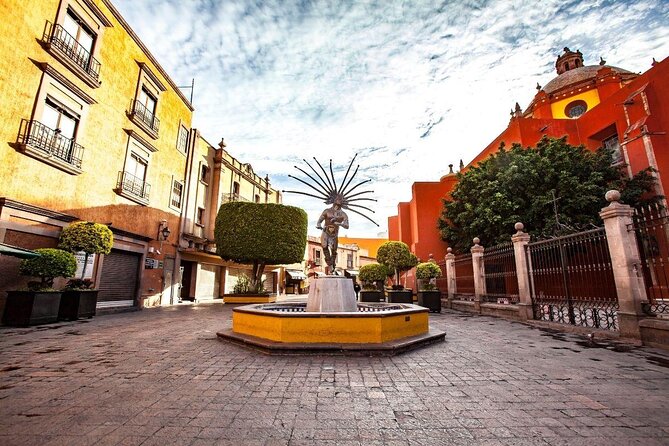
- Armando’s storytelling that ties Queretaro’s sites to wider Mexican and world events
- A tight 3–4 hour flow through major landmarks across old-town Queretaro
- Free admission at each stop, so your money goes to the guide and time—not entrance fees
- Convents and churches up close, including Santa Clara and San Francisco
- A small group size (max 6), which makes questions easier
A Queretaro History Walk That Gets You Oriented Fast
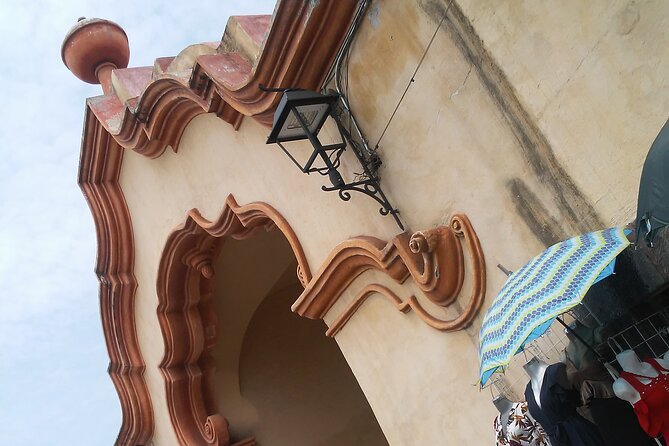
Queretaro can look like a tidy colonial picture, but that’s the trick: the meaning is hiding behind the stone. This tour is built to pull that meaning forward. You start in the historic zone and end in the central museum area, so it works like an orientation session for your whole visit.
The group stays small—no big bus feeling. That matters, because you’ll hear more than surface facts. Armando’s approach is conversational and story-driven, and the route is designed so each stop sets up the next one. The result is that you start seeing patterns: how faith, power, and trade shaped what got built, where it sat, and what it became later.
Timing is part of the value too. The tour is listed as 3 to 4 hours, but it can run longer if you’re the type who asks questions or if the old town is busy. Either way, it’s a great use of a morning because you’ll know where to return on your own later.
You can also read our reviews of more tours and experiences in San Miguel de Allende.
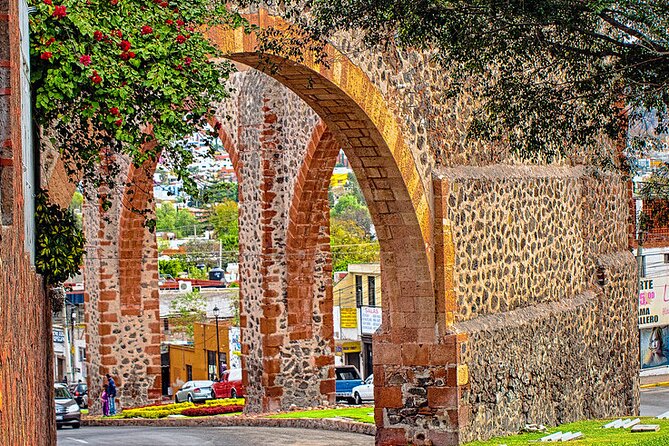
El Acueducto de Queretaro: The Aqueduct That Started the City’s Myth
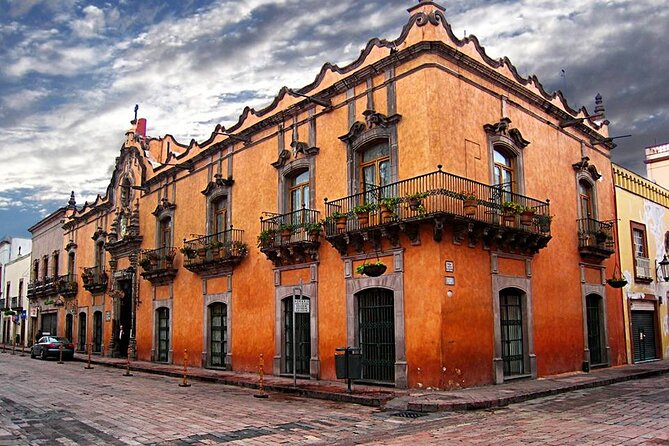
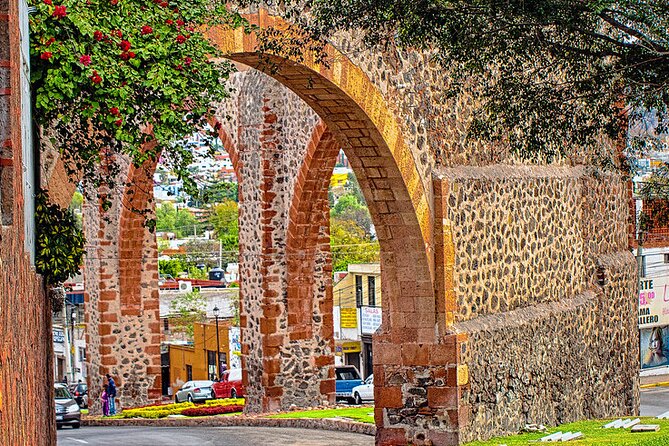
You begin with El Acueducto De Queretaro, an early anchor for the city’s identity. Even before you hit the churches and convents, you get the foundations of Queretaro—how the city took shape and why water and engineering mattered so much.
The tour focuses on a key detail that makes this stop more than a pretty structure: the love story behind the aqueduct’s construction. That kind of legend does two jobs. First, it helps the aqueduct feel human, not just historic. Second, it gives you a narrative hook you can carry to later stops, when the guide starts connecting Queretaro to larger historical forces.
This stop is quick, about 15 minutes. That can feel short if you’re hoping for time to linger for photos, so I’d use that window to get oriented: notice the structure’s location in the town fabric and the way it frames the area’s early growth. If you want architecture details, this is a fine moment to ask what to look for—since it’s one of the fewer stops where engineering is the star.
Panteón de los Queretanos Ilustres: History Buried in Plain Sight
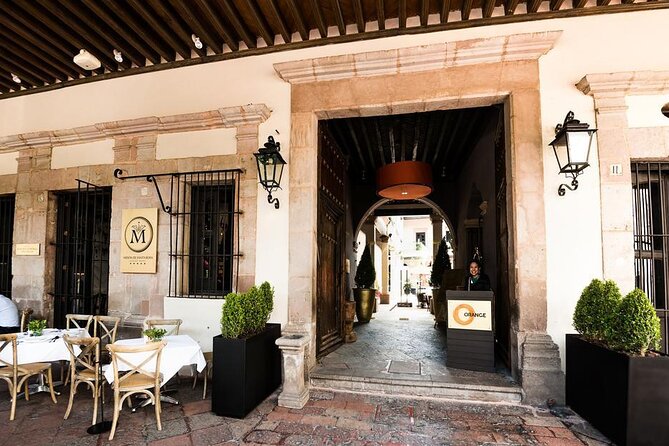
Next up is Panteon de los queretanos Ilustres, where the tour turns from buildings into people. You’ll hear about important figures connected to the city’s history and how their actions influenced the country. It’s a sobering stop, but it also makes Queretaro feel real.
This is one of those places where the guide’s job is to translate names and dates into meaning. When you’re told what these individuals did—and why it mattered—you start understanding why the city remembers them here. You also get a sense of how local history feeds national story.
The time is again around 15 minutes, and the best way to get value is to listen for the connections. I’d treat this like a “thesis stop.” Ask yourself: which themes keep coming up—religion, independence, power shifts, or cultural identity? Once you notice those themes, the next hilltop convent stop becomes easier to understand.
Santa Cruz de los Milagros: Franciscan Legends on the Founding Hill
Stop three is Templo y ex-convento de la Santa Cruz de los Milagros, perched at the top of the hill where Queretaro was founded for the second time. That alone gives the location meaning. Hills matter in old cities: they’re strategic, symbolic, and often tied to the earliest reshaping of a place.
Here, the tour leans into legends and “chapters” of national history that the Franciscan convent was involved in. That mix is part of why the tour works for many people: you don’t just get a straight lecture. You get stories—some legendary, some historical—that show how religious institutions shaped social life and political developments.
Expect around 40 minutes at this stop, which is longer than most. Take advantage of that extra time to look around before the guide moves on. Even if you’re not going to become a church-architecture expert today, you’ll come away with a sense of scale and purpose: why the Franciscans were here, what they likely needed to build, and how the site fits into Queretaro’s larger “rebirth” moment.
Plaza de Armas: Neo-Classical Details and the City’s Main Stage
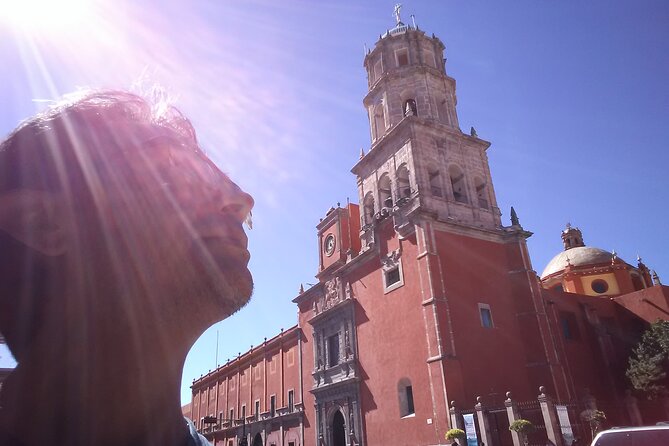
After the hilltop stop, the tour heads to Plaza de Armas, the kind of main square where you can feel daily life and old history overlapping. Before you get to the square itself, you’ll pass Neo-Classical examples—small side stops that help you place what you’re seeing in broader design trends.
Then it’s onto the plaza, where the guide shares more historical tales. This stop works best when you let it reset your pace. The churches and convents can feel like heavy topics; the plaza gives you breathing room while still connecting you to the city’s story.
This segment is about 35 minutes. I’d use that time to notice how the plaza is positioned relative to the surrounding institutions you saw earlier. When you understand the “main stage,” it becomes easier to navigate on your own later—and you’ll recognize where key buildings sit once you’re wandering without a guide.
If you’re prone to getting lost in photo mode, this is a good place to focus on one thing: the layout. Orientation is real travel value, and this tour is good at giving you that.
Santuario de Nuestra Señora de Guadalupe: Why This Temple Matters
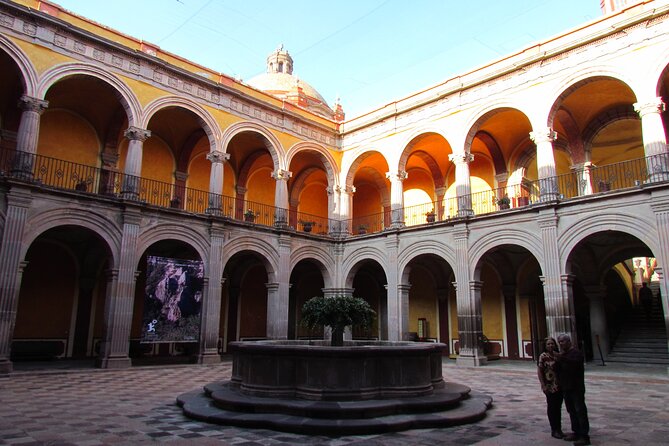
Stop five is Santuario de La Congregacion de Nuestra Senora de Guadalupe, devoted to the Virgin of Guadalupe. This isn’t just a religious stop; the tour frames it as historically important in Mexico and explains the temple’s builder.
The value here is context. Many visitors know the name Guadalupe, but the tour helps you understand why this figure carried so much weight in Mexican identity and why certain buildings became meaningful anchors. The guide’s storytelling keeps it from feeling like a lecture.
Time is about 15 minutes, so it’s not a long “sit and study” experience. Instead, think of it as a concentrated piece of the city’s spiritual and cultural map. If you’re curious about how faith influenced public life, this is a stop where I’d linger a few seconds after the guide finishes—just long enough to look for symbols and details that match what you heard.
San Francisco de Asís and Santa Clara: Convent Power, Reuse, and Architecture Clues
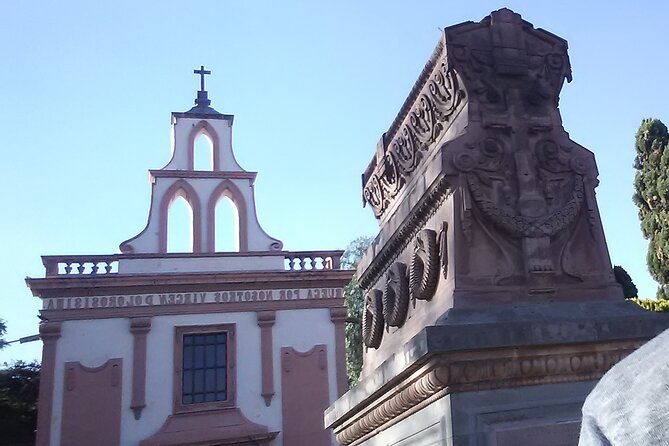
The tour ends with a cluster of major sites, and this is where Queretaro’s layers really show.
First is Templo y Exconvento de San Francisco de Asis de Queretaro. Inside the convent premises, you’ll learn about transformations the building went through as the country went through major historical moments. That idea—buildings changing with history—is often the difference between seeing a monument and understanding one.
You’ll also hear about the spot where an ancient “inner-land road” started. That’s a great detail because it turns a quiet historic place into a crossroads story. It helps you imagine what movement looked like before modern streets.
Expect about 15 minutes here. It’s short, but the guide’s narrative helps you see why the site matters beyond aesthetics.
Then comes Convento de Santa Clara, about 20 minutes, and it’s a standout because so much is happening in one corner. You’ll hear that it’s the first and largest female convent in the city. You’ll also learn it served as the ancient city’s hospital and see a Neo-Classical fountain plus an excellent example of Baroque private house architecture nearby.
That side-by-side mix is important for readers who love architecture, even if today’s tour isn’t trying to be an architecture seminar. When styles and functions sit together, you start to understand how a city grows and repurposes. You stop seeing “random old buildings” and start seeing a system.
Price and Pacing: Is $50 Worth It?
At $50 per person for roughly 3 to 4 hours, the value comes from three things: the guide, the small group size, and the fact that admission is free at the listed stops.
If you’ve ever paid for a walking tour where you still have to add entrance fees, this feels cleaner. Your money goes to the human part: explanations, connections, and the ability to ask questions as you walk. With a maximum group size of 6, it’s easier to get answers instead of listening to a lecture over a crowd.
Pacing is another big deal. The route is short on dead time—most stops are around 15 minutes, with a couple longer ones to build context. Reviews also point to the guide not rushing answers and being patient when questions come up, which is exactly what you want from a history-focused walk.
One caution: because it’s a walking route and involves multiple religious sites, plan for a moderate pace. You don’t need to be an athlete, but you should be comfortable walking and listening for a half day.
Practical Tips Before You Go (So You Get More Out of It)
A few small choices can upgrade your experience:
- Start your morning rested. You’ll be outdoors and moving between sites, and the tour works best when you can pay attention.
- Bring comfortable shoes. The “3–4 hour” label still adds up in walking time.
- If architecture is your priority, say so early. One downside that shows up is that the tour can lean more into history and religious context than architecture details, so asking targeted questions can steer the conversation.
- If you love stories, keep an eye out for names and cause-and-effect links. The route is built around connections, so your brain will start “clicking” as you go.
Also note the tour runs in English and uses a mobile ticket. Confirmation comes at booking. All of that helps you reduce the small friction that can ruin a morning.
Should You Book This Queretaro Tour?
If you want a focused, story-driven introduction to Queretaro’s colonial-era places—and you’re happy to prioritize history and cultural context over pure architecture—this is an excellent match. The small group size, the English delivery, and the way Armando ties sites into bigger Mexican and world events make it a smart first-day style activity.
I’d pass or adjust your expectations if you’re looking for a heavy architecture class. You’ll still see a lot—convents, churches, plaza spaces, fountains—but the emphasis may lean more toward narratives than toward architectural technicalities.
If you book, go in with one attitude: ask why these buildings matter. This tour is built for that kind of curiosity.
FAQ
How long is the Queretaro colonial architecture and history tour?
It’s scheduled for about 3 to 4 hours.
Where does the tour start and end?
The meeting point is Mirador de los Arcos (Ejército Republicano 47, La Santa Cruz, La Pastora, Santiago de Querétaro). The tour ends at the Museo de la Ciudad (Calle Vicente Guerrero Nte. 27, Centro).
Is the tour offered in English?
Yes, it’s offered in English.
How much does it cost?
The price is $50.00 per person.
Do you pay admission at the sites?
The listed stops show free admission tickets for this experience.
What’s the group size limit?
There’s a maximum of 6 travelers.
What walking level should I expect?
You should have a moderate physical fitness level, since it’s a walking tour with several stops.
Are service animals allowed?
Yes, service animals are allowed.
How flexible is cancellation?
Cancellation is free up to 24 hours in advance of the experience for a full refund.
When should I book?
On average, this tour is booked about 10 days in advance.