REVIEW · ROTTERDAM
Rotterdam Walk: Hilights, Gems, Architecture & WWII | 2 or 3hrs
Book on Viator →Operated by Rottourdam · Bookable on Viator
Rotterdam is rebuilt, not erased. This 2–3 hour walk strings together the city’s WWII story with the look of modern Rotterdam—so each landmark makes sense in context, not as a random photo stop. You’ll move through places tied to the harbor, the skyline, and the courage (and stubbornness) behind the rebuild.
I especially like the way the tour uses clear visual storytelling—photos and explanations that connect destruction in WWII to what you see today. I also like that the stops are mostly admission-free, so your money goes to the guide and the walk, not ticket math.
One thing to plan for: it’s a weather-based walking tour. If rain hits, you’ll want a real rain layer, since the route depends on good conditions.
In This Review
- Key Highlights You’ll Get on This Rotterdam Walk
- Rotterdam’s WWII + Architecture Story in 2–3 Hours
- Depot Boymans Van Beuningen: A Mirrored Art Depot as a Starting Point
- Nieuwe Werk on the Maas: Harbor Views That Many Locals Skip
- Erasmusbrug: The White Bridge and the WWII Turning Point
- Maritiem Museum Rotterdam: Boats Outside, Time Moving Inside
- Square 1940 and the Destroyed City by Ossip Zadkine
- Witte Huis and Oude Haven: Skyline Icon Meets Old Harbor Cozy
- Cube Houses on Overblaak: The Concrete Forest Explained on Foot
- Markthal Finale: A Modern Indoor Market with Serious Color
- Price, Pace, and What You’re Really Paying For
- Who This Rotterdam Walk Is Best For
- Should You Book This Rotterdam Highlights and WWII Walk?
- FAQ
- How long is the Rotterdam Walk tour?
- Where does the tour start and where does it end?
- Is the tour offered in English?
- What is the group size?
- Are the sightseeing stops free to enter?
- Is this tour suitable for most people?
- Are service animals allowed?
- What happens if the weather is poor?
- What is the cancellation window for a full refund?
Key Highlights You’ll Get on This Rotterdam Walk

- WWII landmarks in the open air, including Erasmusbrug and the Square 1940 statue
- Harbor-quarter views from Nieuwe Werk with sightlines toward Erasmusbrug and iconic ships
- Architecture you can read on foot, from Witte Huis to cube houses on Overblaak
- A practical ending inside Markthal, where you can refuel immediately after the walk
- Small groups (max 15) with guide storytelling strong enough to keep the pace easy
Rotterdam’s WWII + Architecture Story in 2–3 Hours
This is the kind of Rotterdam introduction that saves you time. Instead of hopping between disconnected sights, you get a single line through the city: river, war damage, rebuild, and then the bold architecture that followed.
The pace feels built for first-time orientation. You’ll cover a lot of ground without feeling rushed, and the group size stays small (up to 15), which makes it easier to hear the guide and ask questions as you go. The tour is offered in English, so you won’t need a translation app for the main story.
If you’re coming to Rotterdam with a ship schedule, this is also a smart fit. It lands you near the core sights and ends in a place that’s easy to turn into dinner plans.
You can also read our reviews of more tours and experiences in Rotterdam.
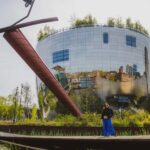
Depot Boymans Van Beuningen: A Mirrored Art Depot as a Starting Point
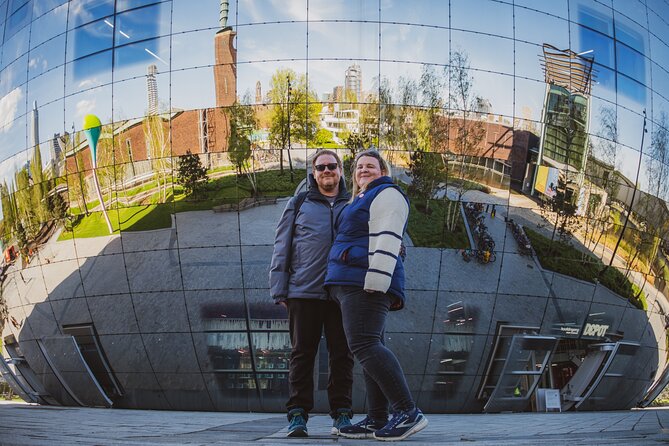
You begin at Depot Boijmans Van Beuningen, in the Museumpark area. The depot is known for its striking mirrored look, and it’s a clever opener because it cues the tour’s theme: Rotterdam’s relationship with art, history, and the future.
From here, the guide sets up how to think about the wider museum district and the area described as the Land of Hoboken. You’re not just learning dates—you’re learning how Rotterdam organizes its culture in space, and why that matters when you move into the older harbor neighborhoods next.
Practical tip: arrive a few minutes early and get oriented. The depot stop is short, and the value is in how the guide frames the rest of the walk.
Nieuwe Werk on the Maas: Harbor Views That Many Locals Skip
Nieuwe Werk is where the tour turns from “city facts” to “place feeling.” This part of Rotterdam sits in the Scheepvaartkwartier, the Shipping Quarter, and it gives you open width along the Maas (Meuse) river.
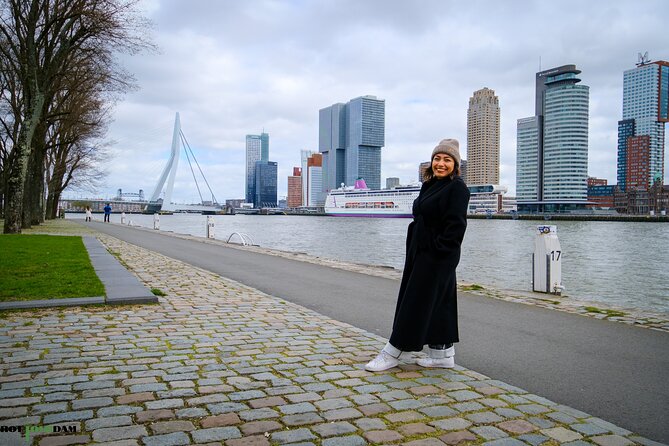
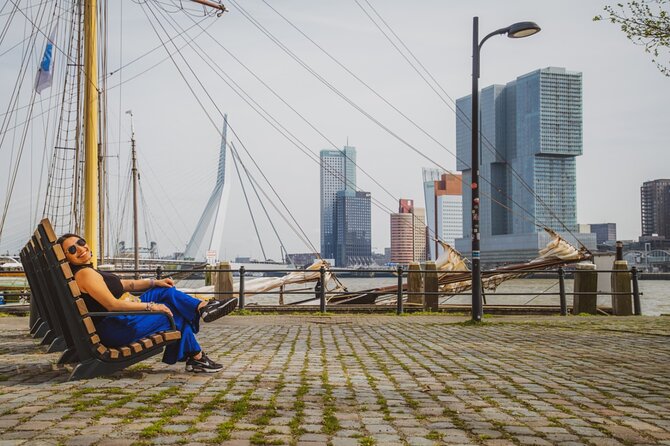
From the river side, you’ll take in sightlines toward Hotel New York, Steam Ship Rotterdam, and—yes—Erasmusbrug in the same visual frame. That matters, because Rotterdam’s identity is tied to the water and the movement of ships, not just its buildings.
This stop is also a reminder that you don’t have to stay glued to the busiest streets to see the city’s best angles. You’re getting a Rotterdam view that feels less “tour bus” and more “standing where the city breathes.”
Erasmusbrug: The White Bridge and the WWII Turning Point
Erasmusbrug is the big white bridge that crosses the Maas and connects north to south. You’ll pause here long enough for the guide to connect the bridge to Rotterdam’s WWII experience—specifically the invasion and the bombardment of the city.
Why this stop works: bridges are natural storytelling anchors. You can look across the river while the guide explains what was lost and what had to be rebuilt. It’s easier to understand Rotterdam’s rebuilding philosophy when you’re literally looking at how the city connects again.
This is also where the tour’s visuals help most. The guide’s photos make it less abstract—destruction in WWII becomes something you can point to as the skyline and riverbanks reappear around you in the present.
Maritiem Museum Rotterdam: Boats Outside, Time Moving Inside
Next you head into the Maritime District, where the Maritiem Museum Rotterdam functions like an open-air time capsule. You’ll see boats that have been aging for more than a century, and the effect is simple: history feels physical here.
This stop gives you a break from architecture talk while keeping the same theme—Rotterdam as a working port city. It’s not only about what happened in the 1940s; it’s also about what kept going afterward: ships, shipping skills, and the idea that the city’s future has to be built around trade.
Because the stop is short, treat it like a “look closely” moment. Spend a minute scanning details—signs, materials, the shapes of the vessels—before you move on.



Square 1940 and the Destroyed City by Ossip Zadkine
At Square 1940 you’ll meet the statue The Destroyed City by Ossip Zadkine. This is one of Rotterdam’s key WWII monuments, and the power is in how it interrupts the everyday city space with a clear message.
The tour’s approach helps here. Instead of just naming the artwork, the guide links what you’re seeing to what Rotterdam experienced. It’s a moment that slows you down without making it heavy or overly academic.
If you like meaning in public art, this is the stop that tends to stick in your head after the walk ends. It’s Rotterdam’s grief made visible—and its refusal to forget.
Witte Huis and Oude Haven: Skyline Icon Meets Old Harbor Cozy
After the WWII monument, the tour moves into two different “moods” of the city: a landmark office tower and an older harbor street scene.
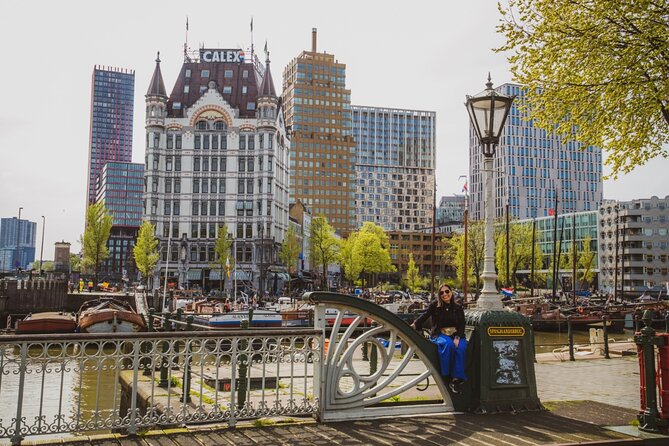
First is Witte Huis (the White House). It’s a historical icon and, according to the tour description, it used to be the tallest office tower in Europe. Even if you only glance up, it helps you understand Rotterdam’s post-war ambition—how quickly the city started building up again and how bold it was willing to be.
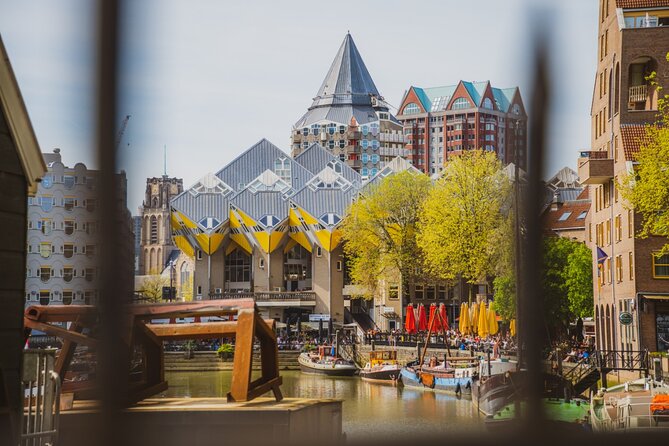
Then you shift to Oude Haven, one of the oldest harbors in the Netherlands. It’s described as cozy, and the big payoff is the view: from here you get a strong angle toward the cube houses that you’ll see up close soon.
If your legs start complaining, Oude Haven is a great moment to let your eyes do the walking. The setting supports it.
Cube Houses on Overblaak: The Concrete Forest Explained on Foot
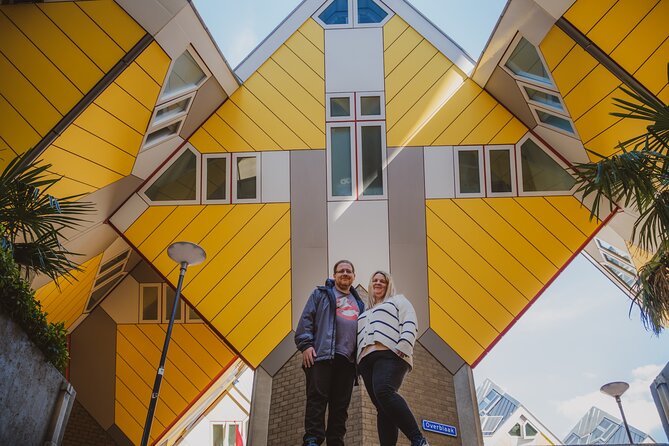
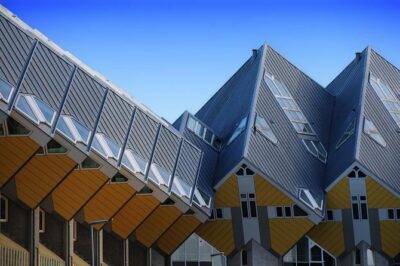
The cube houses (Kubuswoningen) are one of Rotterdam’s most famous sights, and the tour treats them the right way: not just “look at the cubes,” but why they exist and how their design works.
You’ll walk through the street of cube houses on Overblaak, then toward the market square along what the tour describes as a concrete forest effect. That phrase makes sense once you’re walking the geometry. The architecture feels like a planned neighborhood rhythm rather than random shapes dropped into a city grid.
What I like about this part: you’ll get the architecture explanation while you can still connect it to what you’re seeing. It’s the rare city tour moment where the structure, not just the story, becomes memorable.
Helpful tip: even if you don’t go inside, the street-level approach makes the design easier to grasp. If you’re curious about interiors, the tour notes you can visit the demo cube house on your own after it ends.
Markthal Finale: A Modern Indoor Market with Serious Color
You finish inside Markthal, Rotterdam’s big modern indoor market. The guide will walk you through the concept and then explain why it’s often called a modern Sistine Chapel—because the interior artwork and ceiling-like visuals create that “look up and take it in” feeling.
The practical value is big: you’re ending in a place made for food. After a walking tour, this is where the city’s energy turns into real plans—snack now, browse next, and settle in for a proper meal.
Also, since the tour ends inside Markthal, you get a smooth transition from sightseeing to downtime. It’s an easy way to avoid the classic problem of finishing a tour somewhere inconvenient.
Plan it like this: give yourself time after the walk. If you rush out immediately, you’ll miss what Markthal is best at—lingering.
Price, Pace, and What You’re Really Paying For
At $49.60 per person for about 2–3 hours, this tour isn’t trying to be the cheapest walking experience. It’s paying for something more valuable than distance: a tight storytelling route plus guide-led visual context for WWII changes and Rotterdam’s rebuilt form.
The stops are marked as admission ticket free, so you’re mostly paying for interpretation, not entry fees. That matters if you’re already planning to spend on museums or activities later in the week.
Group size maxes at 15, and the tour uses a mobile ticket. Those two details usually mean less crowd chaos and smoother coordination. Add the fact that the tour is booked well in advance on average, and you’ve got a sign that this walk is a popular “first Rotterdam day” choice.
One more real-world note: you’ll want comfortable shoes. Rotterdam’s famous modern architecture can pull you into long looking sessions, so pick footwear that won’t punish you by hour two.
Who This Rotterdam Walk Is Best For
This works especially well if you’re:
- visiting Rotterdam for the first time and want the city’s story in a logical order
- interested in how WWII affected the city’s physical shape and identity
- drawn to architecture that has meaning, not just style
- the kind of person who likes photos and comparisons while walking through real places
If you’re not into history at all, you can still enjoy the buildings and the Markthal finish, but the WWII context is part of the tour’s backbone. You’ll likely appreciate it more if you’re okay with learning as you go.
Should You Book This Rotterdam Highlights and WWII Walk?
Yes—if your goal is to understand Rotterdam fast, with a strong WWII thread and architecture you can actually see and connect to the story. The free-entry stops and small group size help it feel like solid value for the price.
I’d skip it only if you hate walking or if your schedule can’t handle the weather risk. Otherwise, this is a smart, efficient way to get oriented and leave the city with a map in your head, not just photos on your phone.
FAQ
How long is the Rotterdam Walk tour?
The tour lasts about 2 to 3 hours.
Where does the tour start and where does it end?
It starts at Vaimoo deelfietsstation, Melkkoppad Museumpark 20, Rotterdam, and it ends inside Markthal at Verlengde Nieuwstraat, Rotterdam.
Is the tour offered in English?
Yes, the tour is offered in English.
What is the group size?
The maximum group size is 15 travelers.
Are the sightseeing stops free to enter?
The stops listed on the tour are marked as admission ticket free.
Is this tour suitable for most people?
The tour states that most travelers can participate.
Are service animals allowed?
Yes, service animals are allowed.
What happens if the weather is poor?
The tour requires good weather. If it’s canceled due to poor weather, you’ll be offered a different date or a full refund.
What is the cancellation window for a full refund?
You can cancel up to 24 hours in advance for a full refund. If you cancel less than 24 hours before the start time, the amount paid is not refunded.