REVIEW · SAVANNAH
2 Hours Savannah Architectural Tour
Book on Viator →Operated by Noble Jones Tours, LLC · Bookable on Viator
Savannah reads like an architect’s notebook. This 2-hour walking tour shows how specific buildings connect to the people and decisions that shaped the city, including names you’ll keep seeing on Savannah strolls. I also like that you get a take-home landmark map so the tour doesn’t end when you reach the final square.
I love how the guide uses clear “listen-to-talk” tech (with optional headphones) so you can actually catch the details without craning your neck. The group stays small—max 10 travelers—which helps the pace stay relaxed and questions don’t feel rushed.
One possible drawback: this is an outdoor-only tour. You won’t be using the time to go inside house museums as part of the ticket, and you do need good weather since you’re outside the whole time.
In This Review
- Key Highlights You’ll Notice Right Away
- Why Savannah’s Architecture Tour Works Better Than a Usual Walking Route
- Price, Timing, and What $50 Really Buys
- The Audio Setup That Lets You Hear Every Detail
- The Route: A Stop-by-Stop Walk Through Savannah’s Architects
- Stop 1: Juliette Gordon Low Birthplace Museum (William Jay)
- Stop 2: Harper Fowlkes House (Charles Klusky)
- Stop 3: Orleans Square (Harper Folkes House and the Bullochs House site)
- Stop 4: SCADstory (Savannah’s original armory, William Gibbons Preston)
- Stop 5: Gryphon Tea Room (Scottish Rights Temple and Hyman Witcover)
- Stop 6: Mercer Williams House Museum (John Norris and preservationist Jim Williams)
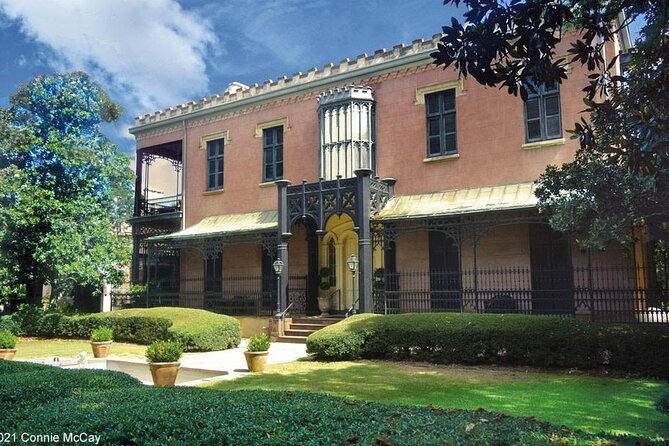
- Stop 7: Green-Meldrim House (John Norris)
- Stop 8: Girl Scout First Headquarters (Andrew Low and John Norris)
- Stop 9: Lafayette Square (St John the Baptist Cathedral and J.D. Hall’s Hamilton-Turner House)
- The Map You Take Home: How to Extend the Value
- What You Learn About Preservation (and Why It Changes How You Look)
- Pace, Comfort, and Who This Works For
- Should You Book This Savannah Architectural Tour?
- FAQ
- FAQ
- How long is the Savannah Architectural Tour?
- What does it cost?
- Where does the tour start and end?
- Is this tour inside house museums?
- How many people are in each group?
- What language is the tour offered in, and do I get a ticket?
- Is there anything special about hearing the guide?
- Is this tour allowed with service animals, and is it near transit?
Key Highlights You’ll Notice Right Away

- Out-of-the-way stops that often miss most general walking routes
- Take-home landmark map to keep exploring after you finish
- Listen-to-talk audio designed so you can hear the guide from far away
- Focus on architects and preservation, not just random photos and facts
- Small group size (10 max) for a more personal, question-friendly walk
Why Savannah’s Architecture Tour Works Better Than a Usual Walking Route
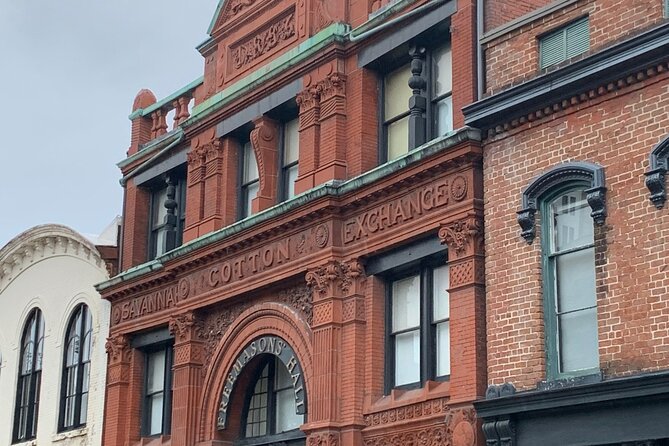
Savannah is famous for squares, but squares are only half the story. The part most people miss is the human chain behind the buildings: the architects, the master builders, and the preservation choices that helped certain structures survive when styles changed or neighborhoods evolved.
This tour is built around that idea. You’re not just told what you’re looking at—you’re guided through why it looks the way it does and how the city’s layout and building traditions connect. The result feels like walking through a timeline made of brick, wood, and stone.
Another smart touch: the tour is designed so you still get value even if you’ve been to Savannah before. If you already know the “big hits,” this route tends to steer you toward lesser-noticed structures and quieter residential streets, so you’re not stuck only in the most crowded photo zones.
You can also read our reviews of more tours and experiences in Savannah.

Price, Timing, and What $50 Really Buys

At $50 per person for about 2 hours, this isn’t a long, expensive day-trip type of tour. It’s timed for the sweet spot where your feet get you across meaningful distances, but you’re still fresh enough to absorb details.
Two things make the price feel fair:
- You get structured stops with themed discussions, so it’s not just “walking and hoping you notice.”
- You also get a map to continue on your own, which stretches the value beyond those 2 hours.
The practical side matters too. The tour averages booking about 27 days in advance, which usually means schedules fill and the experience is in demand. If you’re going in peak season, don’t wait until the last minute.
Also, keep the time frame realistic. Most stops are around 10 minutes, and a few stretch 15 minutes, so you’ll get sharp context rather than a slow museum-style experience.
The Audio Setup That Lets You Hear Every Detail
Savannah’s streets can be noisy. The good news is this tour plans around that.
You’ll use a listen-to-talk system (by Noble Jones Tours) so you can hear the guide from up to 150 feet away. There are also optional headphones, which can make a noticeable difference when you’re near intersections, traffic, or groups taking photos.
This matters because architectural stories often include specific names and connections—architects tied to multiple buildings, and preservationists who helped keep places standing. When you can hear clearly, you retain more than just the big visual takeaways.
And since the group stays at 10 travelers maximum, the guide can keep the pacing smoother. Several guides have been described as personable and willing to answer questions, which is much easier when the group is small.
The Route: A Stop-by-Stop Walk Through Savannah’s Architects
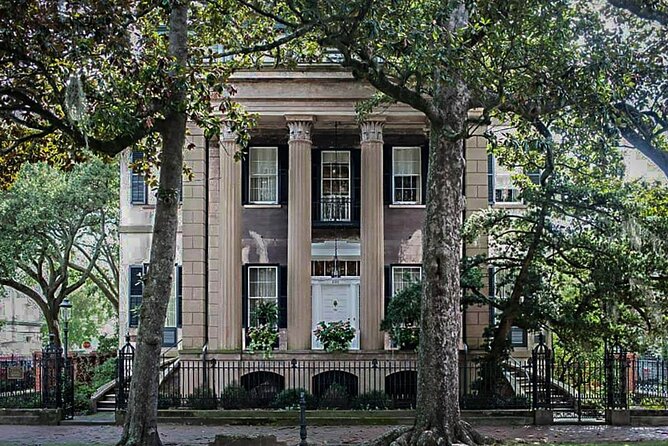
The tour starts at 124 Abercorn St, Savannah, GA and ends at 330 Abercorn St at Lafayette Square, in front of the fountain in the center. It’s a compact loop through the historic core, but it’s built to keep you moving while still giving you time to look.
Here’s what you can expect at each stop, and what makes each one worth your time.
Stop 1: Juliette Gordon Low Birthplace Museum (William Jay)
You begin at the Juliette Gordon Low Birthplace Museum area for a focused discussion on William Jay, often tied to Savannah’s architectural legacy. Even if you’ve walked nearby before, this first stop sets the tone: the guide frames Savannah buildings as part of a broader design story, not isolated landmarks.
What you’ll likely take away here is how a single “architect lens” helps you read later stops more easily. You’ll start noticing patterns—stylistic choices and building logic—before the tour moves deeper into residential streets.
Stop 2: Harper Fowlkes House (Charles Klusky)
Next is the Harper Fowlkes House, where the discussion turns to Charles Klusky. This is one of those stops that helps you connect the street-level beauty with the mind behind the work.
A practical benefit of this stop: it trains your eye. You start watching for design clues that hint at the architect’s approach—details you might otherwise skim right past.
Stop 3: Orleans Square (Harper Folkes House and the Bullochs House site)
At Orleans Square, you’ll hear about Harper Folkes House and the site of what was once The Bullochs House. Squares in Savannah aren’t only “nice open space”—they’re organizing tools for the whole town plan.
This stop is especially good if you want the tour to help you understand layout, not just admire buildings. The square framing makes it easier to see how the city’s plan influences what you’re seeing on the ground.
Stop 4: SCADstory (Savannah’s original armory, William Gibbons Preston)
Your fourth stop is SCADstory, where the topic shifts to Savannah’s original armory and William Gibbons Preston. This is a change of pace from the home-centered stops, and that variety keeps the walk from feeling repetitive.
It also broadens your understanding of the city. Architecture isn’t only private houses. Civic and military structures shaped the “built identity” of Savannah too, and the guide helps you notice that.
Stop 5: Gryphon Tea Room (Scottish Rights Temple and Hyman Witcover)
At the Gryphon Tea Room, the conversation moves into the world of the Scottish Rights Temple, linked as an appendage of the Freemasons, and architect Hyman Witcover. If you like architecture that includes social history, this stop can be a real attention-grabber.
Even if you’re not into fraternal organizations, the key value here is how you’ll learn to interpret architectural function and symbolism. Buildings aren’t only form—they reflect communities and traditions.
Stop 6: Mercer Williams House Museum (John Norris and preservationist Jim Williams)
Next comes the Mercer Williams House Museum, where the guide connects architect John Norris with preservationist Jim Williams. This is where the tour’s “how it was preserved” theme becomes very real.
Preservation stories can sound abstract until someone ties them to a specific place. By pairing an architect with a preservationist, the tour shows the bridge between original design and what kept it alive long enough for us to see.
Stop 7: Green-Meldrim House (John Norris)
The Green-Meldrim House continues the thread on John Norris. Repetition here is a feature, not a bug. Coming back to the same architect theme at different buildings helps you recognize the kinds of design decisions a particular architect favored.
If you like comparison, this stop is one of the better chances on the route to start mentally grouping buildings by architect signatures.
Stop 8: Girl Scout First Headquarters (Andrew Low and John Norris)
At the Girl Scout First Headquarters, you’ll hear about Andrew Low and architect John Norris. This stop adds another layer to the city’s architecture story: how historic buildings became part of long-lasting community life.
It’s also a good reminder that “historic” doesn’t always mean abandoned. Some of these spaces shifted roles over time, and the tour keeps that continuity in view.
Stop 9: Lafayette Square (St John the Baptist Cathedral and J.D. Hall’s Hamilton-Turner House)
You finish at Lafayette Square with a focus on St John the Baptist Cathedral and J.D. Hall’s Hamilton-Turner House. This end point feels like the right payoff: it’s an open square setting with prominent civic and notable residential architecture in view.
By the time you reach Lafayette Square, the earlier stops should have trained your eye. Instead of seeing it as just another pretty square, you’ll have a clearer sense of how the surrounding architecture fits into the city’s plan and identity.
The Map You Take Home: How to Extend the Value
One of my favorite parts is the simple idea that you don’t lose momentum at the end of the walk. You’ll receive a take-home landmark map so you can guide yourself afterward.
Here’s how I’d use it:
- Circle the stops that most grabbed your attention.
- Plan a short follow-up walk to re-spot the design clues your guide pointed out.
- If you’re short on time, pick just 1 or 2 extra landmarks instead of trying to do everything.
The tour’s goal is partly education, but it’s also about helping you see Savannah better on your own time.
What You Learn About Preservation (and Why It Changes How You Look)
A good architecture tour doesn’t stop at naming buildings. It helps you understand what it takes to keep old structures standing through centuries of change.
This route focuses on that through its choice of topics: architects like William Jay and John Norris show the “creator” side, while preservation figures like Jim Williams show the “survival” side. When you put those together, you start recognizing preservation as a process, not luck.
You may also notice how the guide ties architecture choices to materials and practical constraints. One recurring theme is that the city’s design story includes not just artistic decisions, but weather, craftsmanship, and long-term upkeep—things you won’t see in a single quick photo.
Pace, Comfort, and Who This Works For
This experience is described as easygoing, and it fits most travelers. Since it’s an outdoor walk, comfortable shoes matter, and you’ll want to be ready for normal Savannah sidewalk conditions.
It also helps if you like asking questions. The small group size gives you more chances to get straight answers instead of hearing your question disappear into a crowd.
This tour is a great match for:
- First-timers who want a structured way to understand the historic district
- Couples and friends who enjoy history through architecture
- Architecture fans who like seeing lesser-known landmarks
- People who prefer quieter residential streets over only the busiest stops
It may be less ideal if you want a tour built around going inside multiple museums. Since it’s an outdoor walking experience, house museum admissions aren’t part of what you’re paying for during the tour.
Also remember it runs in good weather. You’ll want to check forecasts when planning your day.
Should You Book This Savannah Architectural Tour?
If you’re in Savannah for a short stay and want real value, I’d book this. $50 for about 2 hours is a solid deal when you consider the stop-by-stop structure, the small group size, and the take-home map that keeps you exploring after the walk.
Choose it if:
- You want architecture and preservation stories tied to real names like William Jay, John Norris, and Jim Williams.
- Clear audio matters to you, especially in city streets.
- You’d rather see a mix of major and overlooked buildings instead of repeating the same few downtown corners.
Skip it if:
- You’re specifically hunting for an inside-the-house museum day with admissions included.
- You’re traveling when weather is unreliable, since this is outdoors the whole time.
FAQ
FAQ
How long is the Savannah Architectural Tour?
It lasts about 2 hours.
What does it cost?
The price is $50.00 per person.
Where does the tour start and end?
It starts at 124 Abercorn St, Savannah, GA 31401 and ends at 330 Abercorn St, Savannah, GA 31401, at Lafayette Square in front of the fountain.
Is this tour inside house museums?
No. It is an outdoor walking tour, and admission to house museums is not included.
How many people are in each group?
The tour has a maximum of 10 travelers.
What language is the tour offered in, and do I get a ticket?
It’s offered in English, and you’ll use a mobile ticket.
Is there anything special about hearing the guide?
Yes. Noble Jones Tours uses listen-to-talk technology so you can hear the guide up to 150 feet away, and optional headphones are available.
Is this tour allowed with service animals, and is it near transit?
Service animals are allowed, and it is near public transportation.