REVIEW · LONDON
London: Modern Architecture & Building Guided Walking Tour
Book on GetYourGuide →Operated by Ridge Trips Ltd · Bookable on GetYourGuide
Skyscrapers are everywhere in London, but this walk reads them like a story. You’ll see big-name modern buildings up close, then hear what construction crews and planners had to solve to make them work. I like that the route is short enough to stay sharp, yet varied enough to show how London’s skyline was built and is still changing.
Two things I genuinely like: Sam runs it with a clear, technical way of explaining buildings, and the tour ends with a free model-room at the NLA where you can stitch the whole picture together. One thing to consider: you do a lot of pavement, so it is not a good fit if you have mobility limits or use a wheelchair.
In This Review
- Key things that make this London modern-architecture walk worth your time
- Why this tour is a smart use of your time in London
- Starting at Sugar Quay Jetty: getting oriented before you hit the towers
- City Hall and the river: modern London’s mood board
- The Shard up close: design drama with real engineering constraints
- The Walkie Talkie (Fenchurch Building) and Lloyd’s: why this district grew up
- Leadenhall Building and the St Mary Axe twins: looking for the logic in the shapes
- Liverpool Street Station and the Barbican: modern London isn’t only glass towers
- The NLA finale: free models and the context you need
- Price and value: is $52 per person a good deal?
- Who this tour suits best (and who should rethink)
- What to bring (so weather and pavement don’t ruin your photos)
- Should you book this Modern Architecture & Building Guided Walking Tour?
- FAQ
- Where does the tour start?
- How long is the London modern architecture walking tour?
- Where does the tour end?
- Is entry to the buildings included?
- Which landmarks will I see?
- What will I learn about besides the buildings?
- Can I enter the NLA at the end of the tour on any day?
- What language is the tour guide?
- What should I bring?
- Is this tour suitable for wheelchair users or people with mobility impairments?
- What’s the cancellation policy?
- Does the tour run in bad weather?
Key things that make this London modern-architecture walk worth your time
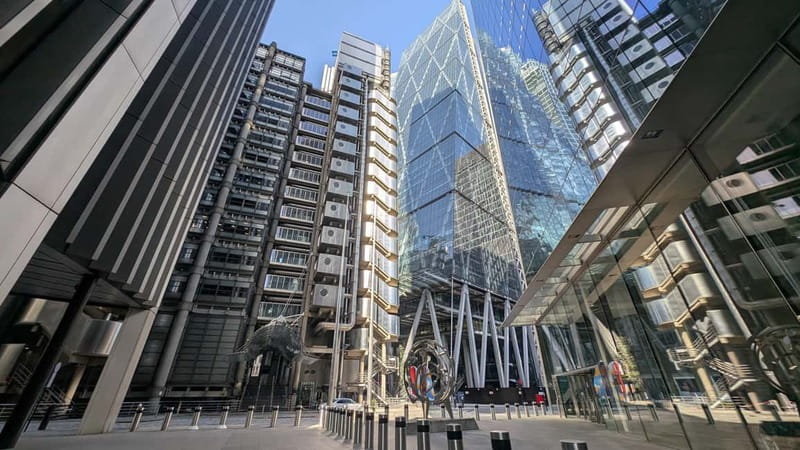
- Street-level views of icons: the Shard, the Walkie Talkie, the Gherkin, the Can of Ham, and more
- Construction-management style stories: you get practical explanations, not just pretty photos
- An “above and below” theme: what lies beneath the streets matters to what you see overhead
- A skyline lesson at the end: scale models at the NLA help everything click
- A guide who welcomes questions: Sam is open to technical follow-ups and keeps the pace steady
Why this tour is a smart use of your time in London
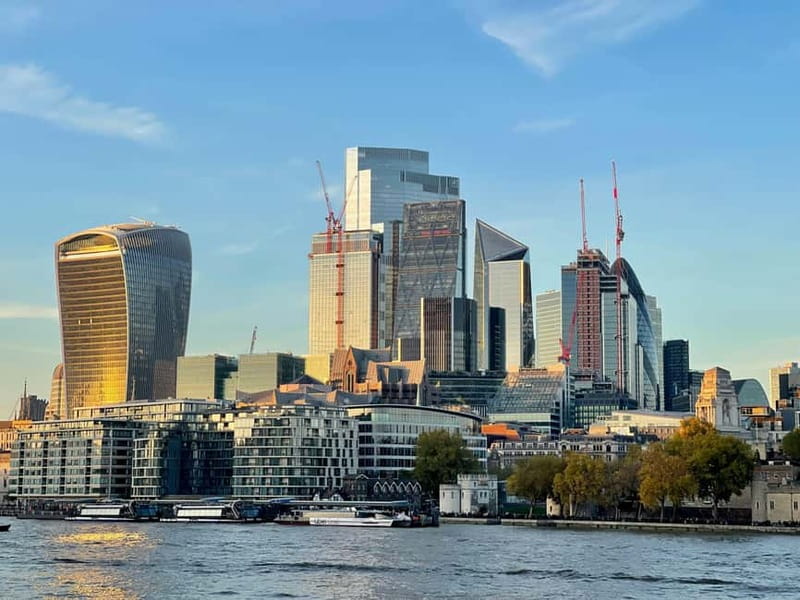
London’s modern architecture can feel like random vertical chaos until someone gives it a framework. This tour does that fast. In about two hours you move through the City of London’s power-district core, see the headline skyline shapes, and get the “why” behind them.
I also like that the tour keeps its promises. You are not wandering aimlessly. You follow the guide from landmark to landmark, with enough pauses to look up, look around, and take photos without feeling rushed.
The guide, Sam, is a professional tour guide with a background in construction management in London and Sydney. That matters because the explanations lean toward how buildings are made and how projects get delivered in a dense, high-demand city.
You can also read our reviews of more tours and experiences in London.


Starting at Sugar Quay Jetty: getting oriented before you hit the towers
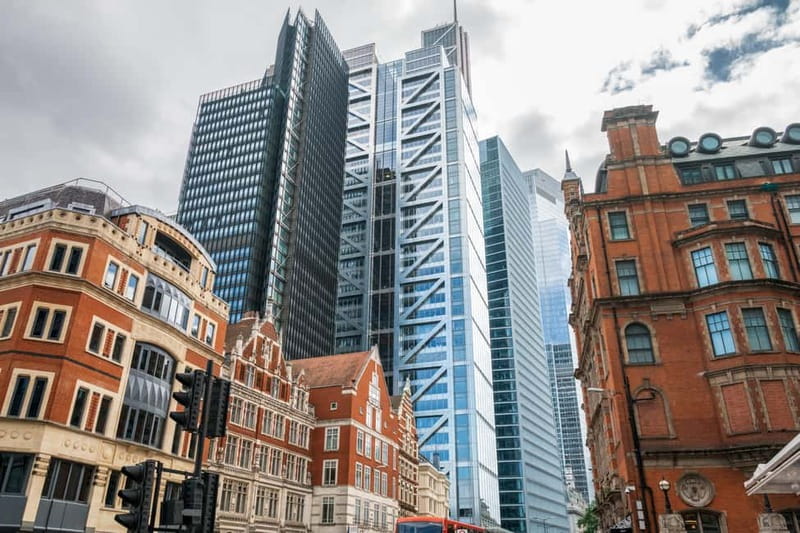
You begin on the Northern side of the Thames at Sugar Quay Jetty, close to the Tower area. That opening matters. Before you hit glass-and-steel icons, you get context for how the river edge shapes movement, sightlines, and development choices.
From the start, the walk sets up a simple idea: the skyline is not just architecture. It is logistics, engineering, and long-term planning stacked on top of an ancient city that never stops working.
If you like a clear beginning, this is it. You get your bearings fast and you start seeing the City of London as a designed space rather than a pile of buildings.
City Hall and the river: modern London’s mood board
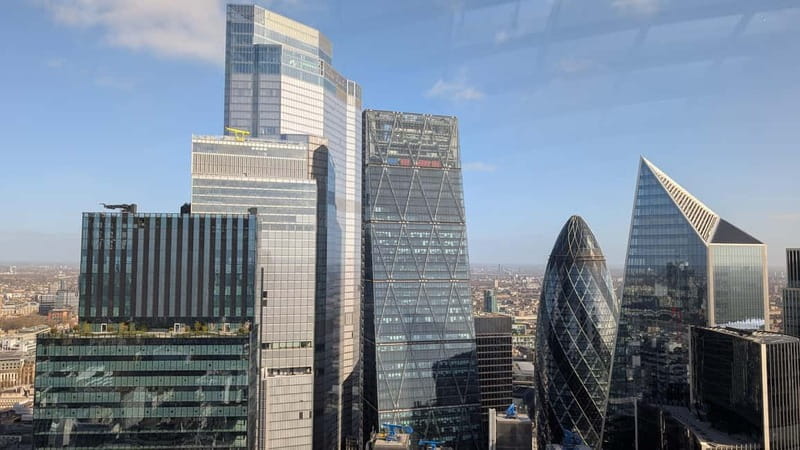
The first proper stop is City Hall, London, followed by time with views of the River Thames. This is not a detour. It is part of the story of why modern buildings look the way they do.
You’ll get explanations tied to place—how London positions civic buildings and how the river acts like an organizing line through the city. Even if you are more interested in architecture than politics, you will still appreciate the planning logic behind the way the City presents itself.
And yes, it’s also good photo time. If you like skyline shots, you’re learning where to stand before the tour shifts into the densest cluster of towers.
The Shard up close: design drama with real engineering constraints
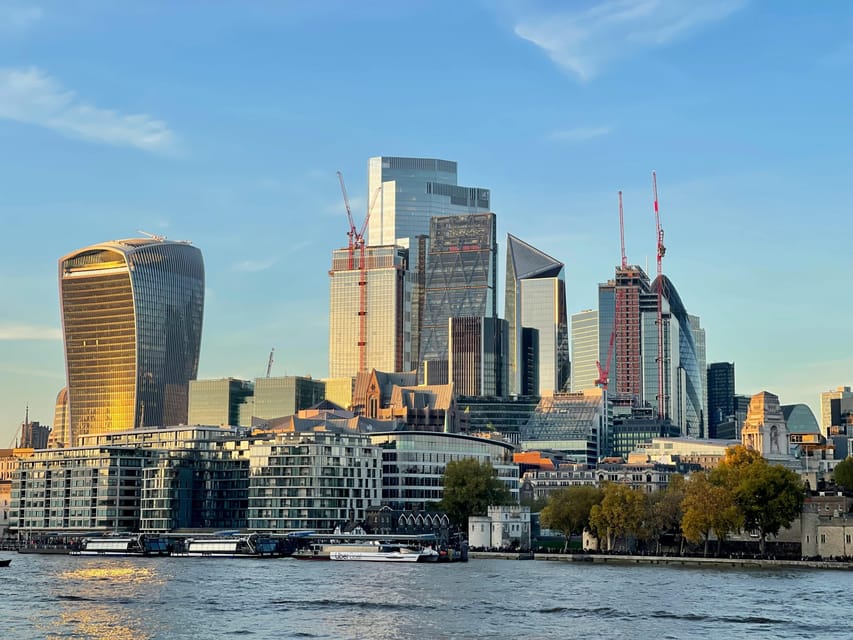
Next comes the Shard, one of the most recognizable silhouettes in London. Up close, it stops being a postcard. You start noticing how a tower’s form isn’t only aesthetic—it has to behave structurally, handle wind forces, and perform as a vertical machine in a city full of constraints.
This is where Sam’s construction mindset shows. You’re not just hearing the headline facts. You’re learning the types of choices that turn a bold idea into something that can be built and maintained safely in the middle of London’s busiest zones.
Look for how the building’s shape interacts with the streets around it. From ground level, you can feel how height changes perception—angles tighten, and details become the story.
The Walkie Talkie (Fenchurch Building) and Lloyd’s: why this district grew up
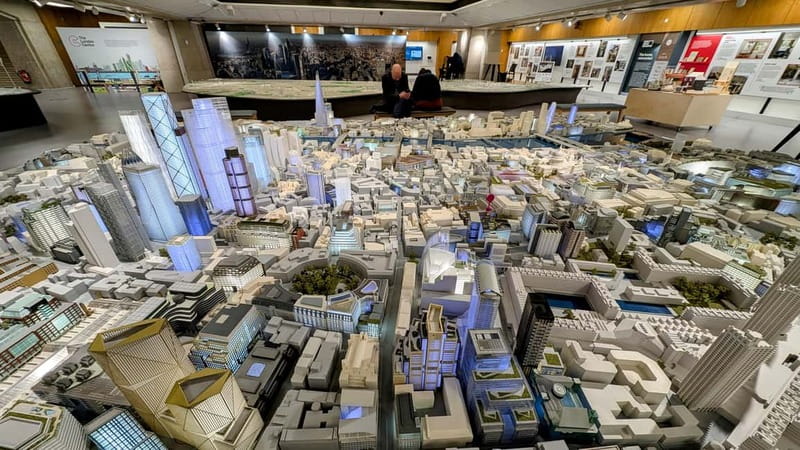
After the Shard, the route lands on The Fenchurch Building, also called the Walkie Talkie. Then you move through the area near Lloyd’s of London.
These stops are perfect for understanding how the City’s modern architecture isn’t just one style. It is a sequence of projects built for specific needs: business identity, office space demands, and the engineering reality of putting high-rise works onto older urban ground.
I like that the tour keeps connecting the buildings. Each one fits into a bigger development pattern rather than being treated like a one-off landmark.
If you have even mild interest in architecture, this part makes it easy. Sam explains the basics clearly, and you still get enough technical detail for your curiosity to stay fed.


Leadenhall Building and the St Mary Axe twins: looking for the logic in the shapes
Now the tour enters the zone where London’s modern skyline really starts to feel like a set of characters. You’ll see:
- The Leadenhall Building (nearby on the route)
- 30 St Mary Axe, the Gherkin
- 70 St Mary Axe, the Can of Ham
These three stops are great for teaching your eye. The buildings are iconic, but the fun comes from learning how their forms solve problems—shape, efficiency, and the relationship between facade design and how the building stands up over time.
From the pavement, the Gherkin and Can of Ham are especially good for understanding why London’s modern towers are not just tall. They are designed objects with specific silhouettes, and those silhouettes affect how light, views, and airflow play out at street level.
This section also supports the tour’s bigger theme: engineering doesn’t stay hidden. The choices you make underground and at foundation level influence what you can do above ground. Sam ties that concept to the larger story of what lies beneath the streets.
Liverpool Street Station and the Barbican: modern London isn’t only glass towers
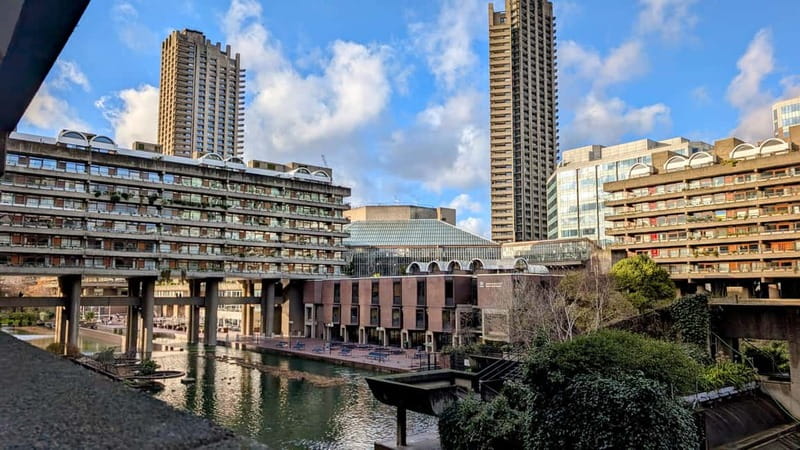
A nice surprise in this tour is that it doesn’t treat modern architecture as only skyscrapers. You pass Liverpool Street Station and then reach the Barbican.
This is where you broaden your definition of modern London. Towers grab attention, but stations and major cultural complexes show another side of building work: the human scale, transit flow, and large-site planning.
The Barbican, in particular, is a reminder that modern design can feel grounded and enclosed at the same time. You see how the district balances high-speed business life with spaces shaped for longer stays.
Even if you came for the biggest names, this mid-to-late stretch helps you understand the whole ecosystem. London’s skyline is the visible part of a much larger construction effort.
The NLA finale: free models and the context you need

The tour finishes at the NLA (London Centre), and this is where the pieces click into place. Entry is free, and you can read information and browse at your own pace.
The highlight here is that you can view scaled models of London’s skyline. After walking around the City of London’s modern architecture, those models help you connect what you saw street by street to a wider skyline map.
It is also a practical way to keep your budget sensible. You already paid for the guided walk. At the end, you get a free learning space with no ticket pressure—just time to look.
One timing note that matters: NLA is open Tuesday to Saturday until 17:00. That means if your walk lands on a day outside that window, you might not be able to enter. The tour itself is about two hours, but I’d plan an extra 15–30 minutes at the NLA so you don’t rush the models.
From what I’ve learned about how Sam closes the tour, the ending can be more than educational. There are usually local suggestions to round out your afternoon, including a tip for a fine nearby pub.
Price and value: is $52 per person a good deal?

At $52 per person for about two hours, the main value is the guided storytelling and the technical lens. You’re not paying for entry into the buildings—you’re paying for the person who helps you understand them.
That’s important. Modern architecture can look obvious until you learn what’s under the surface: how buildings are planned, how construction decisions shape the final form, and why engineering projects beneath London affect what rises above.
You also get a structured route from the Thames edge into the City of London core. That saves you decision fatigue. Instead of trying to map a skyline safari on your own, you follow a plan designed to hit the key modern landmarks in a tight timeframe.
If you like self-guided walking, this might feel pricier than a free stroll. But if you want to understand the meaning behind the shapes, this is one of those tours where the guide is the product.
Who this tour suits best (and who should rethink)
This works best for:
- People who want modern London’s big landmarks without spending all day on them
- Anyone who likes architecture with practical explanations (how projects get delivered, not just who designed what)
- Mild-interested beginners too, as long as you can enjoy looking up and asking questions
It is less suitable if:
- You have mobility impairments or use a wheelchair
- You strongly dislike walking long stretches between viewpoints
The pace is designed to be steady. It doesn’t feel like a sprint, but it also does not linger at every corner. If you’re comfortable with city walking, you’ll be fine.
What to bring (so weather and pavement don’t ruin your photos)
This tour runs outdoors through normal conditions, so pack like you’re touring London on foot:
- Comfortable shoes
- Water
- Camera
- Weather-appropriate clothing
I’d also bring your curiosity. Ask questions when Sam offers technical context. Based on how Sam runs the experience, he’s open to dig-ins, and you’ll get clearer answers on building techniques and why certain designs exist.
And one practical tip: if you want great skyline photos, keep your phone/camera ready while you’re stopping. The best angles happen when you pause and look up, not after you’ve started moving again.
Should you book this Modern Architecture & Building Guided Walking Tour?
Book it if you want the modern City skyline with an engineering brain attached. For $52, you get a guided route that hits the headline towers, plus a thoughtful finish at the NLA where skyline scale models give you perspective.
Skip it if you need step-free access or prefer indoor-only sightseeing. Also consider that the NLA has hours—open Tuesday to Saturday until 17:00—so pick a day that lets you benefit from the models.
If you’re standing in London wondering what to do with two hours, this tour gives you a coherent storyline: the skyline overhead, the work that made it possible, and what’s next for the City.
FAQ
Where does the tour start?
Meet at Sugar Quay Jetty, near the Tower of London.
How long is the London modern architecture walking tour?
The walk takes about 2 hours, plus extra time you may want at the end.
Where does the tour end?
It finishes at NLA – The London Centre.
Is entry to the buildings included?
No. You’ll view the buildings from outside, and entry into any buildings is not included.
Which landmarks will I see?
You’ll see iconic modern buildings including the Shard, the Walkie Talkie (Fenchurch Building), the Gherkin (30 St Mary Axe), 70 St Mary Axe (Can of Ham), Lloyd’s of London, the Leadenhall Building, City Hall, Liverpool Street Station, and the Barbican, plus more along the route.
What will I learn about besides the buildings?
You’ll hear stories and fun facts about the buildings and also learn about major engineering projects beneath London and current and future building developments.
Can I enter the NLA at the end of the tour on any day?
NLA is open Tuesday to Saturday, until 17:00. Sunday, Monday, and evening tours won’t be able to enter.
What language is the tour guide?
The tour is in English.
What should I bring?
Bring comfortable shoes, a camera, water, and weather-appropriate clothing.
Is this tour suitable for wheelchair users or people with mobility impairments?
No. It is not suitable for people with mobility impairments or wheelchair users.
What’s the cancellation policy?
You can cancel up to 24 hours in advance for a full refund.
Does the tour run in bad weather?
It proceeds unless conditions are extreme, so you should check the forecast and dress for it.