
REVIEW · GEORGETOWN WASHINGTON DC
Washington, DC: Georgetown Architecture Walking Tour
Book on GetYourGuide →Operated by DC Design Tours · Bookable on GetYourGuide
Georgetown’s buildings tell their own story. This walking tour strings together key architecture stops with the neighborhood’s rise-and-change tale, from canal life to elite boarding-school days. I like how the route hits both grand landmarks and smaller “wait, what is that?” details, and I also like the way the guide keeps the stories tied to what you can actually see.
You’ll start in the heart of Georgetown, then move at a leisurely pace through about 2 miles of walking. You get a professional local guide, and the day feels well paced from canal to campus to the waterfront finish. One thing to consider: it’s rain or shine unless conditions turn dangerous, so you’ll want real shoes and a plan for weather.
Key things to know upfront
- Baked & Wired is your meeting point, with a DC Design Tours guide in a branded t-shirt
- You’ll cover about 2 miles at a relaxed walking pace for 150 minutes
- The route connects Georgetown’s evolution from canal and taverns to academia
- Expect stops that mix homes, churches, schools, and campus landmarks
- You end at the Georgetown Waterfront, a natural place to decompress after the walk
In This Review
- Georgetown Architecture, Best Experienced at Walking Speed
- Meeting at Baked & Wired and Rolling Out on Time
- Chesapeake and Ohio Canal to Historic Georgetown Homes
- Tip for this stretch
- Grafton Tyler Double House, Christ Episcopal Church, and the Tavern Pivot
- Pomander Walk and the Little Row House Illusion
- Alexander Graham Bell’s Volta Laboratory and Georgetown’s Academic Core
- The Tombs, the Car Barn, and How DC Moves Forward
- Cady’s Alley to the Georgetown Waterfront Finish
- Price and Value: Is $43 Worth It for 150 Minutes?
- What to Bring and How to Plan Your Day
- Who This Georgetown Architecture Walk Is Best For
- Should You Book This Georgetown Architecture Walking Tour?
- FAQ
- How long is the Georgetown Architecture Walking Tour?
- How much walking is involved?
- Where do I meet the guide?
- What should I bring?
- Does the tour run in bad weather?
- What language is the tour guide?
- How much does the tour cost?
- Where does the tour end?
- What is the pace like?
- Is there a cancellation option?
Georgetown Architecture, Best Experienced at Walking Speed
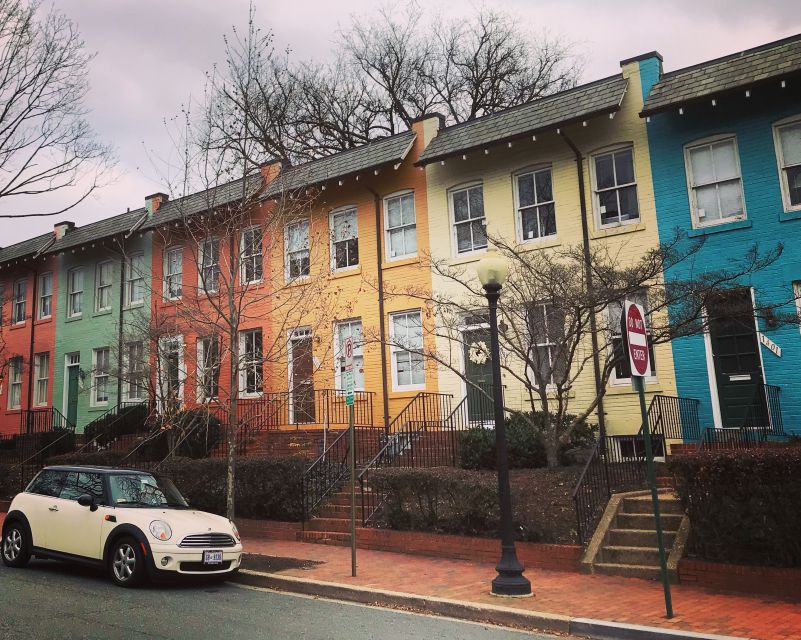
Georgetown is one of those DC neighborhoods where the street-level stuff matters. You can’t really clock the scale and spacing of row houses, the charm of tucked-in alleys, or how buildings sit next to canals and older civic sites from a bus window. On foot, you see what the designers and builders were responding to: access to water, the pull of institutions, and the practical needs of daily life.
This tour leans into that idea. It’s set up so you don’t just collect dates and names. You’re meant to notice the architectural details in context—why a house or school looks the way it does, why a church belongs where it is, and how the neighborhood’s story shifted over time. It’s an easy sell because Georgetown really does reward slow looking.
And it helps that the pace is leisurely. You’ll be walking around 2 miles total, so it’s not an all-day hike, but it’s enough movement that it won’t feel like you’re standing still the whole time.
Meeting at Baked & Wired and Rolling Out on Time
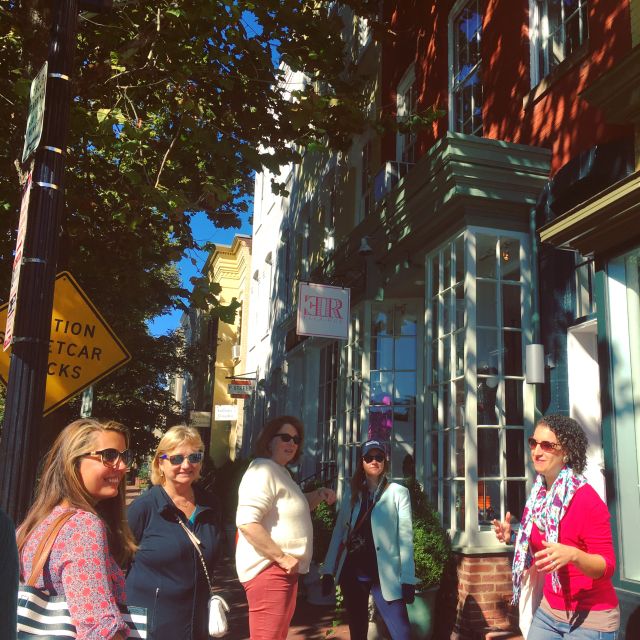
Your tour meets outside Baked & Wired in Georgetown. The guide wears a DC Design Tours t-shirt, so it’s usually straightforward to spot them. Arrive about 5 minutes early, because the walk departs on schedule.
I like tours that keep the departure time real. It means you’re not burning half your trip waiting for the last person to show up, and you get a smoother flow through the stops. Also, if you’re planning photos, give the group a beat when the guide calls a pause. That little moment makes a big difference for getting a photo without stepping on the next group’s timing.
Chesapeake and Ohio Canal to Historic Georgetown Homes
The tour kicks off by heading to the Chesapeake and Ohio Canal, a connector between Potomac-side communities and markets that moved goods and people through the area’s working past. Even if you’re not a history buff, canals give architecture a reason to exist. They explain why certain spots mattered, why people clustered near transport routes, and why Georgetown’s development didn’t happen in a vacuum.
From there, you move into the older Georgetown residential fabric, with several named stops that help you see how different buildings represent different eras and social layers. You’ll visit the Laird-Dunlop House, the Newton D. Baker House, and the Lydia English Seminary School for Girls—a boarding school that served the upper class.
That boarding-school stop is a great reminder that Georgetown wasn’t just homes and churches. It also ran on education and institutional power. When you stand in front of a building like this, you can imagine the difference between a neighborhood built for families versus one built to support a school culture with its own routines, status, and staffing.
Tip for this stretch
Keep your water handy. The tour moves with a relaxed rhythm, but you’ll still cover ground, and canal-adjacent walking can feel longer than you expect if you stop often for photos.
Grafton Tyler Double House, Christ Episcopal Church, and the Tavern Pivot
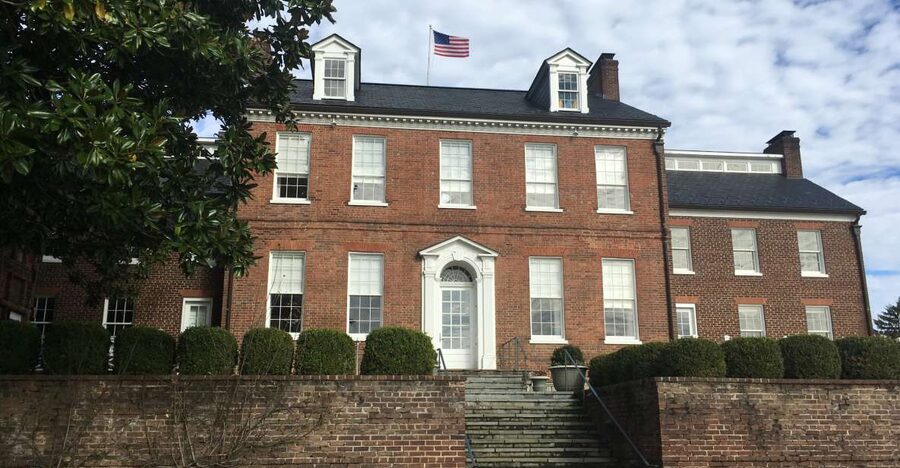
Next, the tour leans into variety—because Georgetown’s architecture isn’t one-note. You’ll see the Grafton Tyler Double House, pass Christ Episcopal Church, and view Hyde-Addison School.
Double houses like the Grafton Tyler stop you from thinking of architecture as only “big and pretty.” They show how families and wealth worked in shared or paired structures, and how form followed practical living arrangements.
Then comes the church, and this matters because Georgetown’s spiritual and civic buildings often anchor the visual story. Even without going into details beyond the building itself, churches tend to be landmarks: they pull your eye, they mark community identity, and they help you understand why certain corners became meeting points.
The tour then hits one of the most famous breaks in the schedule: the historic Yellow Tavern, also called the White Horse Tavern. A tavern visit can feel like a fun detour, but it’s actually a smart architectural choice. Taverns are social infrastructure. They help you understand Georgetown as a place where stories got exchanged alongside goods and services—right where today you may just think of strolling.
Pomander Walk and the Little Row House Illusion
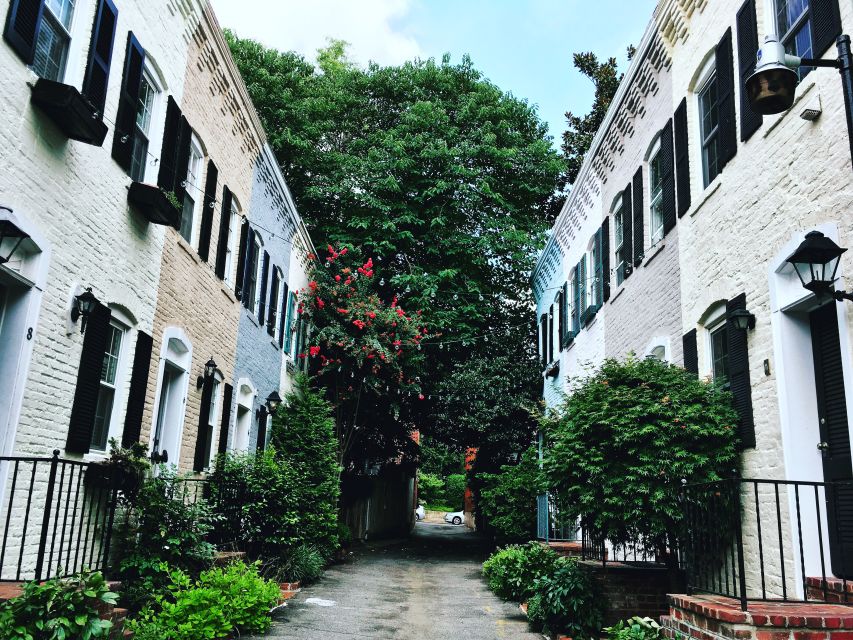
After the tavern, the walk continues through Pomander Walk, known for its tiny, pastel row houses. This is one of those stops where you’ll see why people love Georgetown photos so much. The spacing, the colors, the “small-world” layout—it all creates a scale you can feel, not just measure.
It’s also a moment where you learn something useful for self-guided exploring later. Once you know Pomander Walk exists and what to look for, you start spotting the neighborhood’s smaller-scale architectural quirks more easily. That’s a big reason guided tours beat a quick stroll with no plan: you come away with a mental map of what’s worth slowing down for.
Alexander Graham Bell’s Volta Laboratory and Georgetown’s Academic Core
Then the tour shifts from neighborhood life to intellectual life with Volta Laboratory, where Alexander Graham Bell founded it. It’s a high-interest stop because it ties a world-changing figure to a real physical location you can stand in front of. This is the kind of detail that makes you walk away thinking, Georgetown wasn’t only a pretty district—it was also part of the broader story of innovation and institutions.
After that, you move through a run of academic landmarks:
- Georgetown Preparatory School
- Healy Hall
- the University Library
Even without turning this into a campus tour that lasts all day, this sequence gives you a clear sense of how the neighborhood’s architecture aligns with school life. Buildings like Healy Hall and the University Library tend to do two things at once: they provide function and they project identity. Seeing them in a walking route helps you connect the look of the buildings to the role the campus played (and continues to play) in the area’s character.
The Tombs, the Car Barn, and How DC Moves Forward
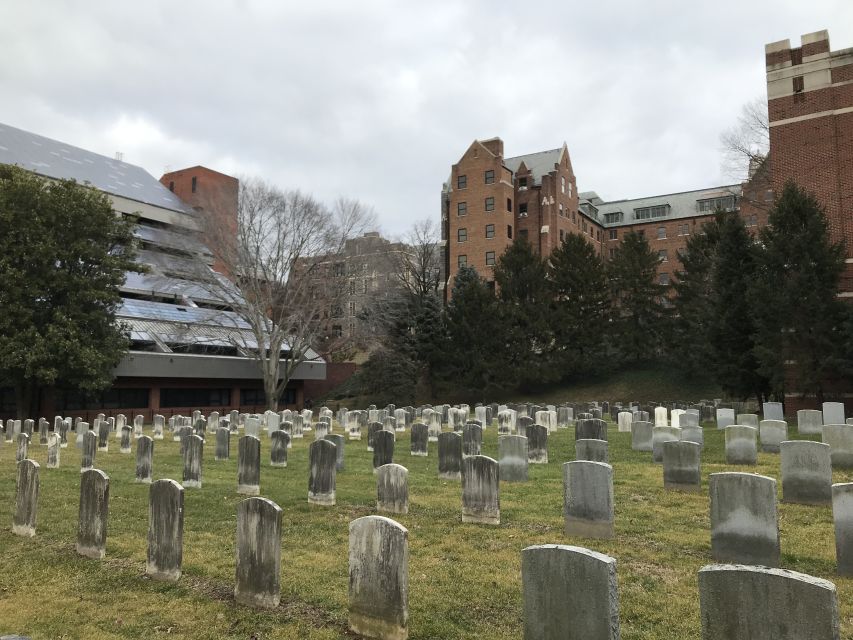
Next comes a fun contrast: The Tombs, known for campus nightlife. That stop changes the tone from “historic and formal” to “lived-in and social.” It’s a reminder that architecture isn’t only museums and memorials. It’s also where people gather, even if the official story is about academics.
Then the tour visits the Car Barn, described as a renovated streetcar depot. This is a particularly practical architectural lesson: old transportation structures don’t vanish. They get reused, and that reuse can keep a neighborhood’s story visible. If you’ve ever wondered why some older districts feel layered instead of erased, seeing a repurposed transport building helps explain it.
And the tour doesn’t forget civic memory. You’ll also see the Francis Scott Key Memorial, which adds another layer to the walk: Georgetown isn’t only about education and residences. It also carries public remembrance that adds weight to the street corners.
Cady’s Alley to the Georgetown Waterfront Finish
Near the end, the route brings you to Cady’s Alley, another small-scale space where Georgetown’s layout becomes part of the architecture. Alleys like this are where you learn how the neighborhood works beyond the main streets. They’re tighter, older-feeling, and they show how movement through Georgetown was designed for people and daily needs.
Finally, you reach the Georgetown Waterfront, where your tour concludes. This is a smart ending point. After hours of looking at buildings, porches, churches, schools, and canal-adjacent history, the water gives your eyes room to breathe. It also gives you options for what to do next—grab a meal nearby or just keep wandering with your new “what to notice” filter turned on.
Price and Value: Is $43 Worth It for 150 Minutes?
At $43 per person for 150 minutes, the value depends on what you want from Georgetown. If your goal is just to take a pleasant walk and randomly spot pretty buildings, you could do it solo.
But if your goal is to understand why the neighborhood looks the way it does—and to get a guided thread connecting the stops—this price makes sense. You’re paying for:
- a professional local guide
- a curated route that hits major architectural and institutional landmarks in one sitting
- an easy, low-stress pace that doesn’t require you to build an itinerary yourself
Also, you only walk about 2 miles. That’s not nothing, but it’s manageable. For the time invested, you’re getting a lot of “sites per hour” without feeling like you need to train for it.
What to Bring and How to Plan Your Day
Bring comfortable shoes. You’ll walk enough that cheap shoes will turn your feet into a negotiation.
Also bring water. It’s especially helpful if you’ll stop for photos and spend a little extra time at each site.
Pack weather-appropriate clothing. The tour runs rain or shine unless conditions get dangerous, so you should assume you’ll walk in less-than-ideal weather at least once.
If you’re sensitive to rain, check your clothing strategy. A light jacket and a way to protect your phone/camera go a long way.
Who This Georgetown Architecture Walk Is Best For
This is a strong choice if you:
- enjoy architecture but want the story attached to the structure
- like walking tours that feel planned, not chaotic
- want Georgetown’s big-name institutions without missing the neighborhood’s smaller details
- appreciate education, civic memory, and transportation history in the same itinerary
It might feel less ideal if you:
- want long museum-style stops instead of walking segments
- dislike rain and don’t like the idea of walking anyway unless the weather is truly unsafe
- need a completely step-free, very short outing (the tour involves about 2 miles of walking, so you’ll want to think carefully)
Should You Book This Georgetown Architecture Walking Tour?
If you want a Georgetown experience that’s more than just scenery, I’d book it. The best reason is the balance: you get named architectural and institutional stops, a clear walking route with a real narrative arc, and a professional guide who can connect what you’re seeing to why Georgetown developed the way it did. The finish at the Georgetown Waterfront is a nice reward for keeping your feet moving.
I’d consider skipping only if you’re not comfortable with roughly 2 miles of rain-or-shine walking. Otherwise, this is the kind of tour that leaves you better oriented for the rest of your DC time—because you’ll know what to notice when you wander on your own.
FAQ
How long is the Georgetown Architecture Walking Tour?
The tour lasts about 150 minutes.
How much walking is involved?
You’ll walk about 2 miles during the tour.
Where do I meet the guide?
Meet outside Baked & Wired in Georgetown. The guide will be wearing a DC Design Tours t-shirt.
What should I bring?
Wear comfortable shoes, bring water, and dress for the weather.
Does the tour run in bad weather?
The tour runs rain or shine unless conditions become dangerous.
What language is the tour guide?
The tour is offered in English.
How much does the tour cost?
The price is $43 per person.
Where does the tour end?
The tour concludes at the Georgetown Waterfront.
What is the pace like?
It’s a leisurely paced walking tour.
Is there a cancellation option?
Yes. You can cancel up to 24 hours in advance for a full refund.