Chicago’s Prohibition past hides in plain sight. This Loop walk connects 1920s culture to the skyline you see every day, with architecture stories and iconic photo stops like the Bean. I love the small-group feel (max 15) and how the guide points out details you’d walk right past, and you’ll finish in Millennium Park for great views. One thing to plan for: it’s a steady route covering about 3 miles total, and the Prohibition emphasis can be more or less focused depending on the pace that day.
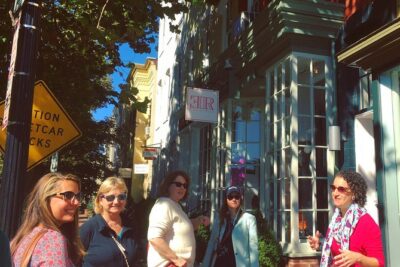
I also like the human touch. Guides I’ve seen praised by name, like Rich, Dave, Dash, and Kevin, tend to keep the storytelling clear and engaging, with a friendly rhythm that makes it feel like a walk with someone who cares. Plus, there’s actual tasting value built in, including Chicago-style popcorn along the way.
In This Review
- Key Highlights You’ll Feel On This Walk
- Prohibition Era clues in the Loop: what you’ll actually notice
- Starting at the Chicago Theatre: get oriented fast
- The Chicago Pedway (weather permitting): a commuter shortcut with personality
- Daley Plaza: Picasso and the civic punch of public art
- Along the river: skyline views plus a daily-commute rhythm
- The Chicago Riverwalk: when the city slows down
- Wrigley Building, Tribune Tower, and the Magnificent Mile storyline
- Chicago Cultural Center: stepping inside a Landmark
- Millennium Park and Cloud Gate: ending with the best photo light
- Snack value: popcorn and surprise local treats that break the monotony
- Price and value: what you’re paying for at about $50
- How the walk feels: 3 miles in the Loop, plus indoor moments
- Who this tour is best for (and who should pick another option)
- Should you book Explore Chicago’s Hidden Past: Prohibition Culture & Architecture?
- FAQ
- FAQ
- How long is the tour?
- Where does the tour start and end?
- How much walking is involved?
- Is anything included for food or snacks?
- Does the tour run in bad weather?
- How many people are in the group?
Key Highlights You’ll Feel On This Walk
- Small group, real conversation: Maximum 15 travelers keeps questions in play.
- Prohibition through architecture: You’ll link 1920s culture to the buildings and city layout you see today.
- Weather-friendly stops when possible: The Pedway and Riverwalk depend on conditions.
- Iconic skyline photo sequence: Start near landmark facades, end at the Bean/Cloud Gate.
- A Cultural Center moment: You step inside a Chicago Landmark tied to major visitors and events.
- Included snack breaks: Popcorn plus some local treats during the tour.
Prohibition Era clues in the Loop: what you’ll actually notice
This is billed as a Prohibition culture and architecture walk, and the payoff is how the story shows up in the city’s design. You’re not just collecting famous addresses. You’re learning why certain places feel important, why the city built where it did, and how the 1920s shaped what Chicago wanted people to see.
Chicago’s skyline is world-class, but the Loop has another layer: it’s a machine for movement—walking, commuting, and gathering. When your guide ties the theme to streetscapes and building choices, you start looking at the city like it has a memory. That’s where the experience earns its keep.
The tour also works well if you like a bit of variety. You’ll mix classic architecture stops with commuter-style routes and public art, then cap it with Millennium Park. It’s a satisfying mix for a short visit.
You can also read our reviews of more tours and experiences in Chicago.
Starting at the Chicago Theatre: get oriented fast
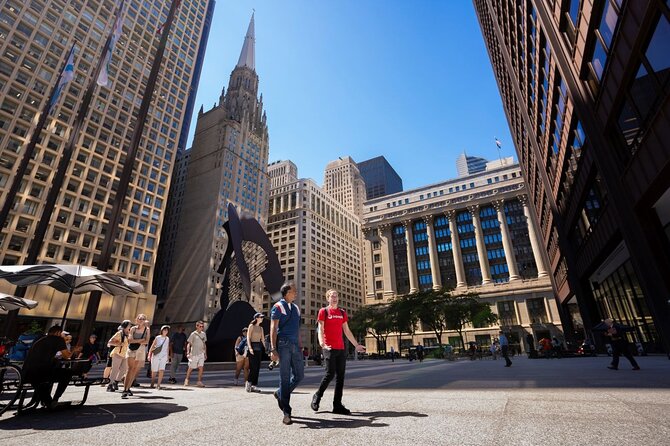
You meet at the Chicago Theatre at 175 N State St. It’s a strong start point because the marquee anchors you in the Loop right away, and it helps you orient before the walk turns into story mode.
From there, you’ll move through the downtown core with quick, guided stops that set the tone: what you’re about to see matters, even when it looks familiar. You’ll hear insider context as you pass major landmarks, including the kind of “why this, why here” details that make architecture feel less like trivia and more like city planning.
Stop times are relatively short at the front of the route, so you get momentum. The downside is that if you’re the type who wants long museum-style explanations, this format may feel like it’s always moving. On the bright side, it stays efficient.
The Chicago Pedway (weather permitting): a commuter shortcut with personality
One of the smartest parts of this itinerary is the Chicago Pedway. If conditions allow, you’ll explore the underground network that locals use to keep moving. Even if you’ve never taken it, it’s an eye-opener because it shows Chicago solving real-life weather and commute problems with infrastructure.
This section is about more than walking under streets. Your guide’s theme ties the past to the present by showing how cities adapt to human behavior—where people go, how they move, and what that means for the built environment. You’ll also get a feel for how the Loop functions when it’s not framed for tourists.
Since this stop is weather dependent, you should treat it as a bonus if it runs. If it doesn’t, you’ll still keep moving through the same central corridor, and the rest of the route stays intact.
Daley Plaza: Picasso and the civic punch of public art
Next up is Daley Plaza, where you’ll stop at the Chicago Picasso (a 1967 installation). Public art can be hit-or-miss in other cities, but in Chicago it’s often tied to bigger ideas about how people share space. Here, the tour uses the artwork as a jumping-off point for how the city thinks about planning and public experience.
You’ll also pass City Hall–County Building, the seat of Chicago’s government and Cook County offices. Even from the outside, civic buildings tell you what a city values. In this area, the architecture communicates permanence and authority, which fits perfectly with a tour that’s about the long shadow of older eras.
If you’re traveling with someone who usually tunes out architecture, this stop can win them over because it’s visual and immediate. It’s also a good reset point during a walking itinerary.
Along the river: skyline views plus a daily-commute rhythm
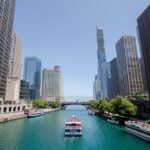
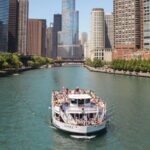
You then shift to Chicago’s main artery with a walk focused around the Chicago River. This is where the tour earns major points for pacing: you get enough time to enjoy skyline views without turning it into a slow photo marathon.
The guided part matters here because you’re not just looking at buildings. You’re learning how the riverfront acts as a stage for Chicago’s identity—especially when you’re seeing it in the same direction people see it while they work.
If you’ve got limited time in town, riverfront stops tend to be the highest return. They pack in big visuals fast, and a good guide can connect those visuals back to the city’s history and planning choices.
The Chicago Riverwalk: when the city slows down
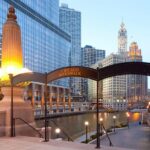
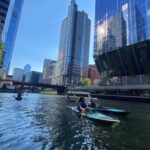
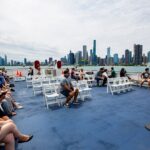
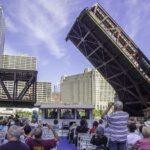
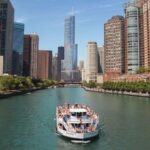
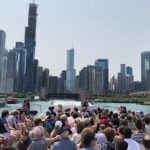
Weather permitting, you’ll stroll the Chicago Riverwalk, which is one of the city’s most award-worthy public spaces. The best part is that it feels like a living walkway, not a frozen “attraction.” You’ll get views of major landmarks like the Marina Towers, Wrigley Building, and Tribune Tower.
This stop is built for the kind of travel that makes you say, I get it now. The Riverwalk gives you time to look across the water, then look at the buildings up close while you’re still moving. That balance is hard to find in a short walking tour.
One consideration: if you’re traveling on a day with heavy weather, Riverwalk time can be shorter or the route may shift. Still, the overall experience is designed around major Loop landmarks, so you’re not left empty-handed.
Wrigley Building, Tribune Tower, and the Magnificent Mile storyline
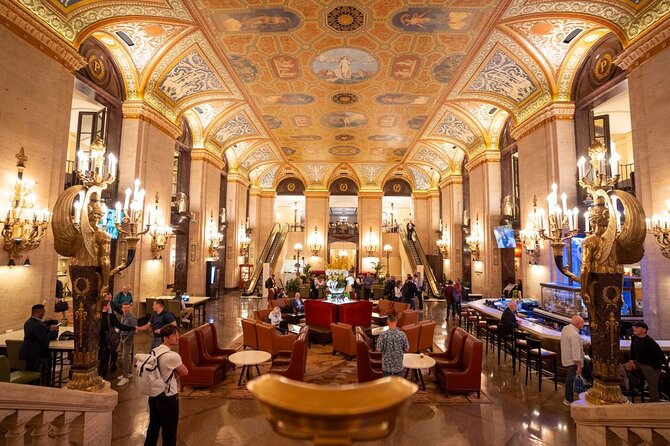
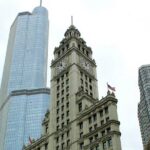
As you work through the downtown corridor, the tour places you right where Chicago’s architecture is easiest to read. You’ll pass the Wrigley Building at 400 N Michigan Ave, and you’ll also pass Tribune Tower, a 463-foot, 36-story neo-Gothic skyscraper.
Then you’ll move along the Magnificent Mile on North Michigan Avenue, a shopping and attraction district created as part of the 1909 Burnham Plan. That’s a key piece for why the architecture feels coherent rather than random. Burnham’s influence shows up in the grand scale of the city’s vision, and your guide’s storytelling helps you see the plan in real time while you’re walking it.
You also get a couple of extra architectural stops mentioned as included highlights, like the Jewelers Building and London House. Even if you’ve seen photos online, seeing buildings at street level changes everything—scale becomes real, and small design choices become obvious.
If you’re expecting a tour that stops at every single famous building and spends 10 minutes per facade, this is not that. It’s more about a strong sequence, a tight narrative, and getting you to the finish with your brain still fresh.
Chicago Cultural Center: stepping inside a Landmark
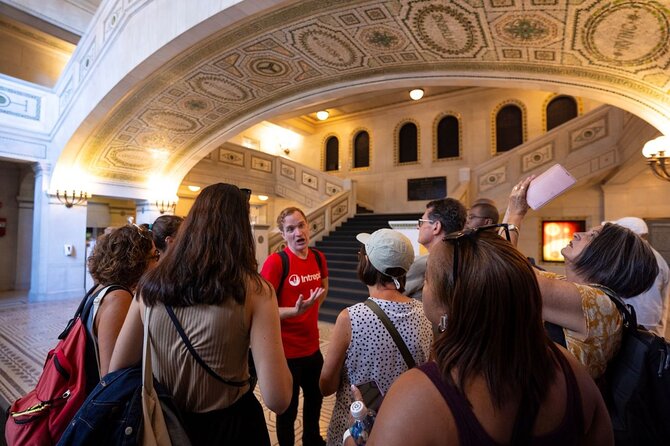
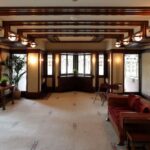
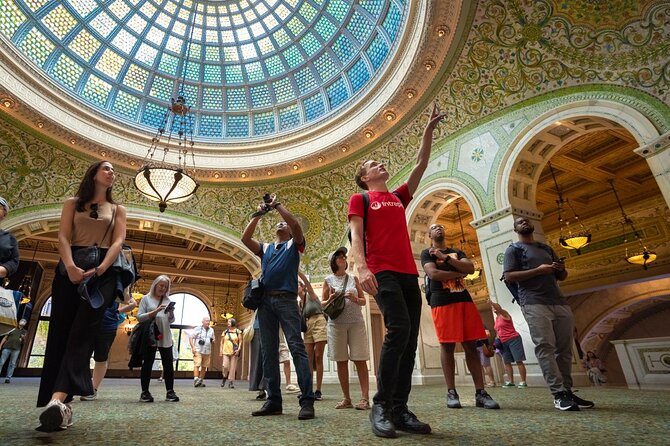
One of the most rewarding stops is the Chicago Cultural Center. This is where the tour gives you an indoor breather and a deeper look at Chicago as a city that hosts big moments. You’ll step inside a Chicago Landmark where the Mayor has welcomed presidents, royalty, and dignitaries.
That matters because it puts the theme into human context. Architecture isn’t only design—it’s also the backdrop for power, ceremony, and cultural life. After that, Millennium Park feels even better because you’re moving from civic grandeur to public pleasure.
You’ll likely spend about 15 minutes here, which is enough time to appreciate the space without turning the tour into a museum visit.
Millennium Park and Cloud Gate: ending with the best photo light
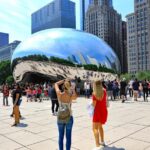
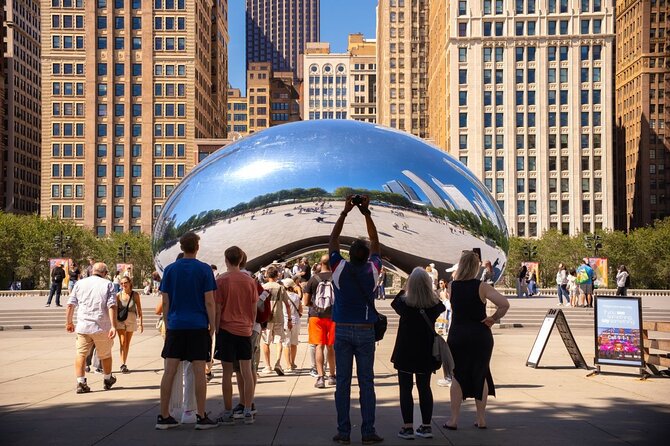
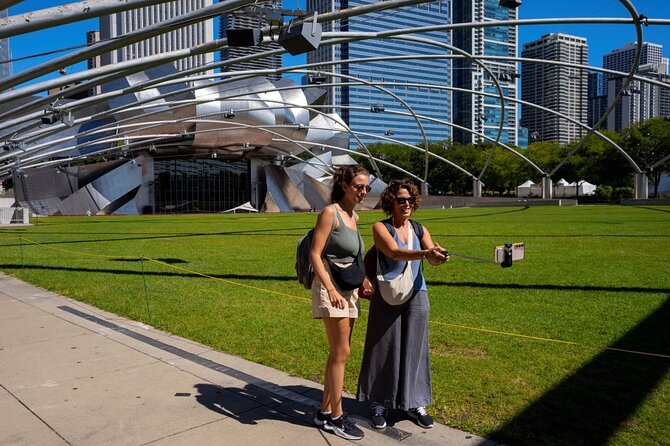
The final stretch brings you to Millennium Park, where the tour centers on the Bean, officially known as Cloud Gate. You’ll spend time here and wrap the tour in this area, with your guide offering tips on nearby sights plus suggestions for lunch or drinks.
This end spot is smart for two reasons. First, it’s visually iconic, so it’s easy to locate even if you’re tired. Second, it gives you a natural “pause” moment. A 2.5-hour walking tour is tiring. Ending at Millennium Park lets you decompress while still seeing something that feels like Chicago’s signature.
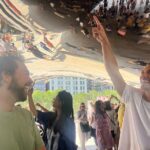
If your priority is photos, this is exactly where you want to be. The Bean’s shape and the downtown skyline reflections make it one of those places that looks great from every angle.
Snack value: popcorn and surprise local treats that break the monotony
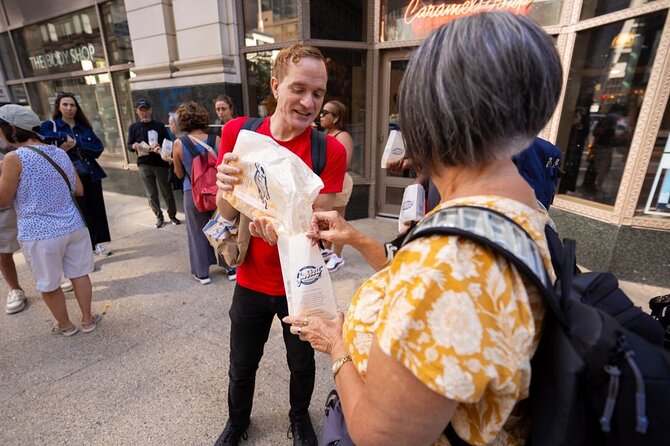
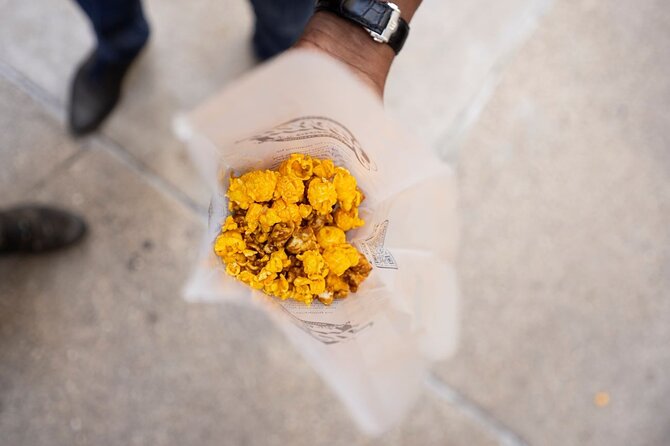
Yes, there’s Chicago-style popcorn on the tour. It’s not a random add-on. A small snack break helps you reset during a 3-mile walk, and it turns the experience from pure sightseeing into something closer to a guided day out.
The tour also includes some surprise local treats along the way (beyond the popcorn). You’ll get enough food to feel taken care of, but not so much that you’ll feel stuffed before dinner.
If you’re the type who prefers your own schedule for meals, plan to treat tastings as a supplement. Your main food plan can still be nearby after the tour ends at Millennium Park.
Price and value: what you’re paying for at about $50
At $49.96 per person, you’re paying for three things: time, local context, and a guided route that compresses a lot of Chicago into a single morning or afternoon window.
The stops are mostly outside, and many are free to enter on your own, but that’s not the real value. The value is the connective tissue—the way your guide links Prohibition culture to the streets, buildings, and public spaces you’d see anyway. Without that thread, you’d likely notice the skyline and move on.
You’re also getting a small-group experience with a max of 15 travelers, which usually means more chances to ask questions and get answers that match what you care about. If you’re only in town for a short trip, that kind of time efficiency can be worth more than paying for one big-ticket attraction.
How the walk feels: 3 miles in the Loop, plus indoor moments
The tour covers about 4.8 km (3 miles) on foot. That’s not extreme, but it’s enough walking that shoes matter. Expect city sidewalks, street crossings, and some stairs if you move between streets and indoor/outdoor stops.
Weather is part of the equation. The tour runs rain, shine, or snow, so bring layers and plan for wet or cold conditions. Stops that depend on weather—like the Pedway and Riverwalk—can shift your experience slightly, but the core Loop route stays strong.
Fitness level matters less than your comfort with steady walking. If you can handle a brisk urban route, you’ll be fine.
Who this tour is best for (and who should pick another option)
This fits best if you want a curated Loop primer that goes past postcards. If you care about how a city’s themes—like Prohibition culture and civic identity—show up in architecture and planning, you’ll get a lot from the storytelling.
It’s also a solid choice if you like a guide who keeps the tone friendly and responsive. Reviews highlight guides like Rich, Dave, Dash, and Kevin for making the walk feel personal and for providing clear communication. That matters on a walking tour because you’re always close enough to hear and follow.
If you’re chasing very specific Prohibition history, keep your expectations flexible. Some people come in wanting deeper Prohibition detail, and the itinerary is heavy on major architecture and the downtown corridor. You can still get the cultural thread, but this is not strictly a Prohibition-only deep dive.
Should you book Explore Chicago’s Hidden Past: Prohibition Culture & Architecture?
I’d book it if you’re visiting Chicago for the first time or you want to get oriented quickly in the Loop. The mix of major landmarks, skyline river views, a Cultural Center stop you can step inside, and a Millennium Park finish at the Bean makes the route feel complete in one go.
I would hesitate only if you want a slow, building-by-building architecture lecture with long stops, or if Prohibition history is your single top priority. In that case, you might want to pair this with another Chicago history-focused stop on a separate day so you can go as deep as you want.
FAQ
FAQ
How long is the tour?
The tour lasts about 2 hours 30 minutes.
Where does the tour start and end?
It starts at the Chicago Theatre, 175 N State St, Chicago, IL 60601, and ends in Millennium Park near Michigan Ave.
How much walking is involved?
The route covers about 4.8 km (3 miles) on foot.
Is anything included for food or snacks?
Yes. You’ll enjoy Chicago-style popcorn during the tour and also taste surprise local treats along the way.
Does the tour run in bad weather?
Yes. The experience runs rain, shine, or snow. The Pedway and Riverwalk parts are described as weather permitting.
How many people are in the group?
The maximum group size is about 15 travelers (and it may be offered as a small-group tour or private option).