REVIEW · BARCELONA
Barcelona Private Walking Tour through the City of Gaudi
Book on Viator →Operated by Private tours Julia Travel · Bookable on Viator
Gaudí views in three hours on foot. This private stroll strings together Old Town icons, modernist façades, and a finish at La Pedrera, with a guide using a private walking tour format and a radio guide system so you can actually hear the story while you move.
I really like the mix of Gothic landmarks and Gaudí-era architecture in one straight-through route, not just one neighborhood. I also like the practical extras: public transport tickets and a included drink and tapa keep the pacing sane.
One thing to plan for: many of the big names on the route are explained from the outside, and if you want indoor visits for Casa Batlló or La Pedrera, you’ll do those with optional tickets on your own time.
In This Review
- Key things to know before you go
- A tight 3-hour route that covers Barcelona’s two big styles
- La Rambla and Mirador de Colom: the Columbus moment that sets the tone
- Palau Güell from the outside: a shortcut to Gaudí’s genius
- Plaza Reial and the Gothic core atmosphere
- Gran Teatre del Liceu: opera-house architecture without the long lines
- Mercat de la Boqueria: the most famous market stop, done right
- Santa Maria del Pi: Gothic church energy, explained simply
- Font de Canaletes and Barça trophy celebrations
- Plaça Catalunya: the center point for where your legs will go next
- Passeig de Gràcia for real: 1.5 hours of modernist eye candy
- Casa Amatller inside a bit, then Casa Batlló and La Pedrera to finish
- Price and value: what $145.38 buys you on a private walking tour
- The guides: you’re relying on a human for the best part
- Who this tour suits best
- Should you book this Barcelona City of Gaudí walking tour?
- FAQ
- How long is the Barcelona Private Walking Tour through the City of Gaudi?
- What time does the tour start?
- Is this a private tour or a group tour?
- Is hotel pickup available?
- What’s included in the tour price?
- Are Casa Batlló and La Pedrera included with admission?
- Do we pay admission for stops like La Boqueria and Santa Maria del Pi?
- What attractions are viewed from outside during the walk?
- What language is the tour offered in?
- Is there free cancellation?
Key things to know before you go
- Private guide, one group at a time: you set the rhythm and can ask questions.
- Radio system: easier listening at busy corners and long boulevards.
- Eco-friendly transport: public transport tickets are included instead of constant taxis.
- A route that links La Rambla to Passeig de Gràcia: you get variety without backtracking.
- Many stops have no extra admission: you can spend your time looking instead of paying.
- A drink and a tapa are included: helpful on a 3-hour walk.
A tight 3-hour route that covers Barcelona’s two big styles
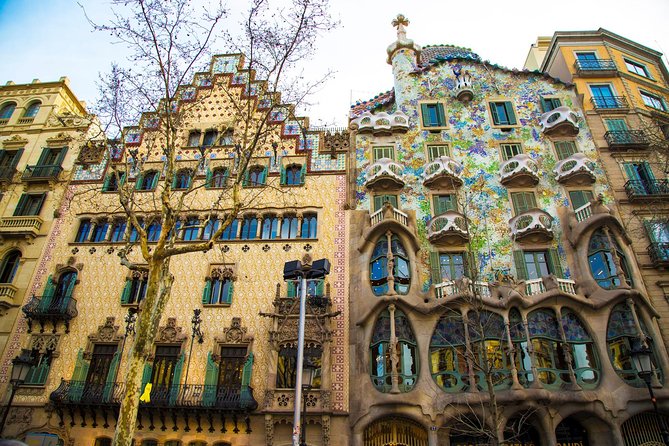
Barcelona has two faces that show up fast: the medieval maze around Barri Gòtic, and the modernist showpieces radiating from the Eixample. This tour is built to give you both without wasting the day hopping between far-off areas. You start at 10:00 am and spend roughly 3 hours moving on foot, with one longer stretch on Passeig de Gràcia.
What I like about this timing is that it fits real travel days. If you’ve already done Sagrada Família, this tour helps you get context for how the city looked before and after Gaudí’s era. If you haven’t seen Sagrada yet, it can still work as a fast primer so the city makes more sense when you do.
You’ll also get a private setup: only your group rides along with your guide. One more practical win is that you’re given public transport tickets, and the tour is described as eco-friendly. That means you’re less likely to feel like you’re doing a full-day walking marathon just to move between neighborhoods.
You can also read our reviews of more tours and experiences in Barcelona.


La Rambla and Mirador de Colom: the Columbus moment that sets the tone
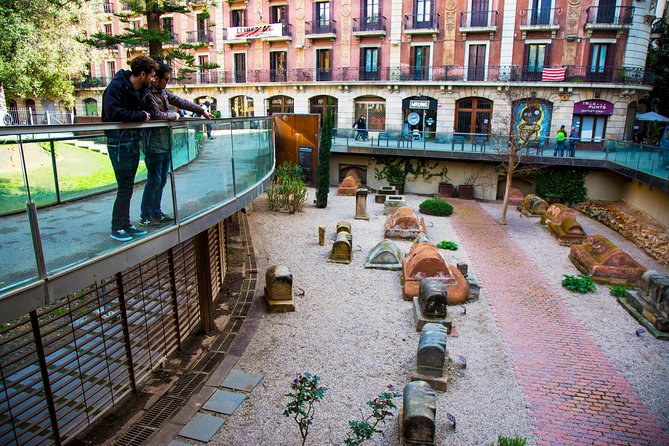
The tour kicks off along La Rambla and heads to Mirador de Colom, the Columbus monument area. The main “wow” here is the feel of the waterfront district and the sheer centrality of the spot. It’s a good opening because it’s easy to orient yourself: you’re in the thick of the city, and you’re about to move into tighter historic streets.
Expect a short stop. In a walking tour this size, you’re not doing museum time at every location. Instead, you get a quick framework for what you’re about to see—how Barcelona’s story shifts from seafaring power to medieval core to modernist ambition.
Tip for you: if you’re sensitive to crowds, come with patience. This is one of the city’s most walked-through areas. A private guide helps, because you’re not stuck in a large pack.
Palau Güell from the outside: a shortcut to Gaudí’s genius
From there, the tour moves to Palau Güell, Gaudí’s famous building. You’ll see it from outside with a detailed explanation. That’s a very smart way to do it if you’re trying to stay inside a 3-hour window. You get the ideas behind the design without needing extra entry tickets.
What this stop helps with is learning how Gaudí thinks. You can start noticing patterns—how the building shapes light and movement, and how the architecture feels both theatrical and practical. Even if you never go inside Palau Güell, you’ll likely recognize its style once you’re later looking at other modernist façades.
Trade-off: you don’t get the full interior experience here. If you want inside rooms, you’d need additional tickets beyond what’s included.
Plaza Reial and the Gothic core atmosphere
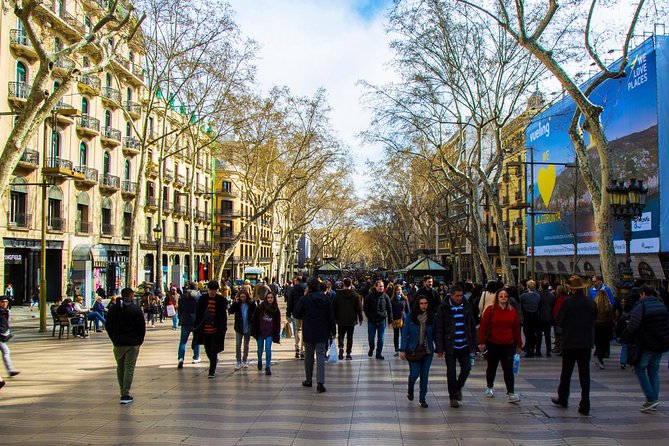
Next up is Plaça Reial, the impressive square tucked into the Old Town. This is the kind of stop that’s easy to underestimate if you rush. Squares in Barcelona often act like living rooms: cafes, chatter, and that slightly theatrical street setting.
This tour passes through, so you’re not lingering for a long break. Still, the payoff is that you get a “this is what the city feels like” moment before you shift to more architectural stops. It’s also a natural pause before larger viewpoints and louder intersections.
Gran Teatre del Liceu: opera-house architecture without the long lines
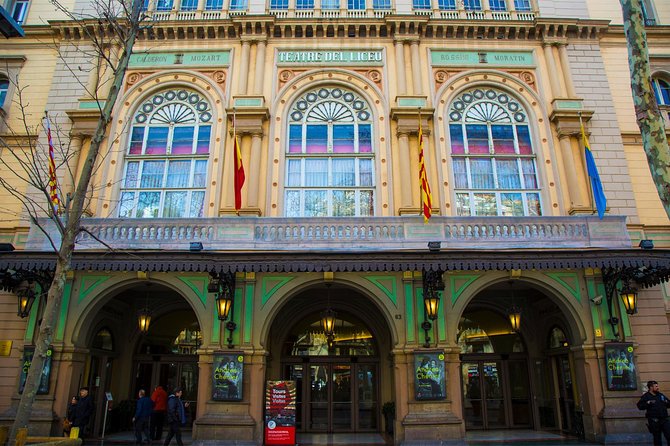
You’ll see the Gran Teatre del Liceu (Barcelona’s opera house) from the outside. Admission isn’t included for this stop, which is common for walking-tour routes that stay within a short time span.
Why it works anyway: the exterior is a big visual anchor on the walk. It also gives your guide a chance to talk about what cultural institutions meant in different eras of Barcelona—plus it helps you connect the city’s wealth and taste to its architecture.
Again, you’re not going inside. If you want a full performance or guided theater visit, you’d plan that separately.



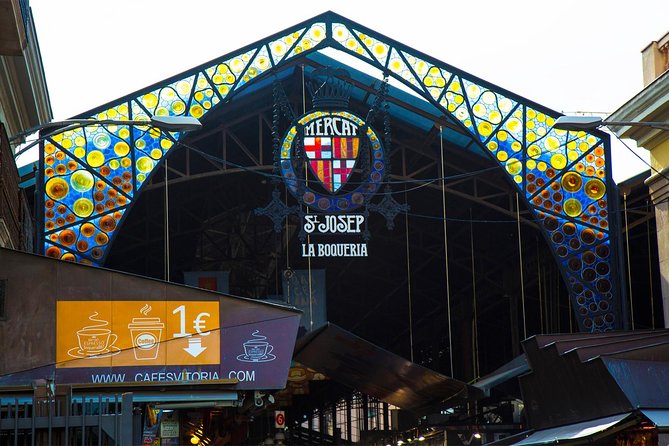
Mercat de la Boqueria: the most famous market stop, done right
Then you get to Mercat de la Boqueria. Admission here is listed as free, so you can spend time browsing without paying an entry fee just to look around.
This is a strong mid-tour stop because markets wake up your senses. Even if you don’t buy anything, you’ll notice how the city organizes daily food life—stalls, chatter, and the way Barcelona keeps its food culture visible.
Practical advice: if you are thinking of buying snacks, set aside a little extra time and keep your wallet handy. Boqueria is famous, which also means prices can be higher than you might expect.
Santa Maria del Pi: Gothic church energy, explained simply
The tour heads to Basilica de Santa Maria del Pi, another stop with free admission. You’ll see it from outside, and you’ll get a detailed explanation.
This is one of those places where the value comes from understanding what you’re seeing. Gothic churches can look similar at first glance, but your guide can point out details that help you read the building. It’s also a good mental reset during a route that otherwise focuses on modernism and squares.
If you love architecture, you’ll probably find it easier to appreciate later Gaudí façades after you see how the older Gothic style built its message.
Font de Canaletes and Barça trophy celebrations
At Font de Canaletes, you’ll pause at a fountain tied to FC Barcelona celebrations. The stop is short, and admission is free.
Why include it? Because it connects Barcelona’s built environment to everyday identity. Sports culture, civic pride, and city rituals show up in a way that feels less like sightseeing and more like understanding how people live here.
It’s also a good “picture-and-move” break—five minutes can be enough to catch the symbolism without derailing the schedule.
Plaça Catalunya: the center point for where your legs will go next
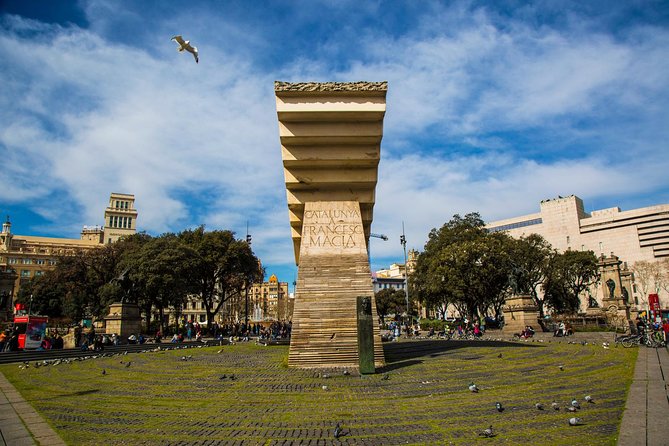
Then comes Plaza de Catalunya (Plaça Catalunya), listed as free and with a longer pass-through. This is the city’s main hub, and it’s worth slowing down just a bit so you can mentally map what direction you’re heading.
A centered square like this is also where you can feel how Barcelona is stitched together. You’ll likely notice how streets radiate outward, and how that helps your guide time the next stretch toward Passeig de Gràcia.
Passeig de Gràcia for real: 1.5 hours of modernist eye candy
The big block of time on the tour is Passeig de Gracia, about 1 hour 30 minutes. This is where the route earns its Gaudí title.
You’ll pass major modernist landmarks and your guide points out architectural details you might miss alone. For me, the value of a guide here is simple: the street looks gorgeous, but without context it’s easy to just “admire the buildings.” With context, you start to see the design logic.
You’ll also get several key exterior stops in this zone:
- Club Coliseum, seen from outside with explanation
- La Mansana de la Discordia, where several famous buildings sit side by side
- Casa Amatller, including a look at the first floor and courtyard (with no admission ticket listed)
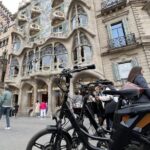
- Casa Batlló, explained from outside
This combination is a great “modernism sampler platter.” You see different design philosophies close together, which makes it easier to compare styles.
Casa Amatller inside a bit, then Casa Batlló and La Pedrera to finish
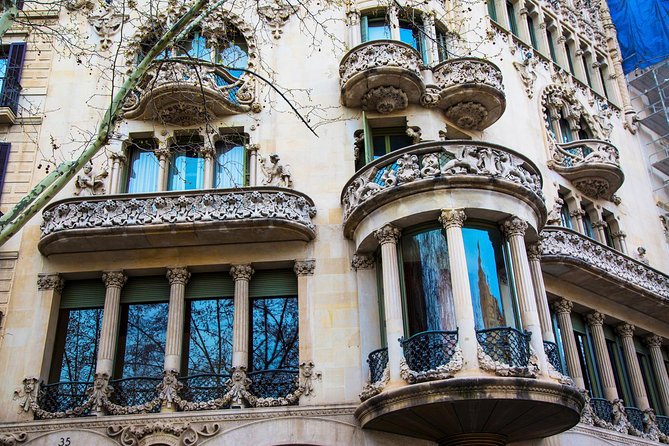
One of the more interesting details on this route is that Casa Amatller includes a look inside the first floor and courtyard. That’s a nice middle ground between “all exterior” and “full museum time,” and it helps you feel how modernist design worked not just as a street façade but as a lived-in environment.
Casa Batlló is next, explained from outside with a stop of about ten minutes. Admission isn’t included, and you’d need an optional ticket if you want the full indoor experience.
Finally, the tour ends at Casa Milà (La Pedrera). You’ll see it with explanation from outside, and you can add an optional ticket to visit on your own. This makes the ending flexible. If you want a deeper look, you can stretch your time. If you’d rather keep the rest of the day open, you can stop with the exterior and still feel you got the key Gaudí thread.
Price and value: what $145.38 buys you on a private walking tour
At $145.38 per person for about 3 hours, this is not a budget-style tour. It’s priced for a few things that matter when you’re moving through Barcelona’s busiest zones:
- Private guide time (one group only)
- Radio guide system, which is especially useful on major streets like La Rambla and Passeig de Gràcia
- Public transport tickets, so you’re not constantly paying for transit separately
- A drink and a tapa included, which takes one planning task off your plate
- Optional add-ons for Casa Batlló and La Pedrera if you want interior depth
Here’s the honest trade-off: because several sights are outside-only, you are paying for interpretation and route efficiency, not for a stack of paid admissions. If your dream day is mostly interiors, you’ll likely add Casa Batlló and La Pedrera. If you’re happy with façades, squares, and guided street-level architecture, this route can feel like a strong deal.
Also, the tour is booked about 61 days in advance on average, which hints it’s popular. If you’re visiting in a busy season, earlier booking can help lock in the time you want.
The guides: you’re relying on a human for the best part
The biggest praise in the feedback centers on the guide quality. Names that come up include Jugo, Johnathon, Gabi Contreras Araneda, Julia, Gabriela, Jorge, Jordi, and Marc. Across these mentions, the themes are consistent: strong explanations, good pacing, and a guide who makes architecture and local legends easier to follow.
One of the best pieces of advice I can give you is to be clear about what you want. If you love architecture details, say so at the start. If you want more legends and city stories, ask for that too. A private guide can adjust faster than group tours.
And yes, there’s a cautionary note. A bad experience in the feedback involved a pickup address mix-up, then lateness, and the guide leaving after the group arrived late. So the best move is boring: confirm your pickup spot and give yourself buffer time.
Who this tour suits best
This is a great choice if:
- You want a fast, coherent overview of Barcelona’s Gothic-to-Gaudí arc
- You care about architecture details and want someone to point out what to notice
- You like a private experience where you can stop for photos and ask questions
- You’re trying to make smart use of limited time
It may be less ideal if:
- You want mostly indoor visits and long ticketed entries
- You don’t like walking in central areas with crowds
- Your day is so packed you can’t protect the tour’s start time (this route is time-sensitive)
Should you book this Barcelona City of Gaudí walking tour?
I’d book it if you want a guided, efficient walk that turns Barcelona’s buildings into a story you can remember. The combination of Gothic stops, major modernist façades on Passeig de Gràcia, and a clear ending at La Pedrera is a solid structure for first-timers and for return visits when you want a fresh angle.
I would hesitate only if you know you need interior access at multiple sites. In that case, you’ll still enjoy the walk, but you should plan on adding optional tickets for Casa Batlló and La Pedrera if those are your must-sees.
If you do book, do one thing that really matters: double-check the exact pickup location with your company before your day starts, and plan to arrive early. That small effort helps ensure you get the full tour instead of playing catch-up in cabs.
FAQ
How long is the Barcelona Private Walking Tour through the City of Gaudi?
It’s listed as approximately 3 hours.
What time does the tour start?
The start time is 10:00 am.
Is this a private tour or a group tour?
It’s a private tour/activity, so only your group participates.
Is hotel pickup available?
Pickup is offered. You need to inform the provider in advance which hotel or apartment you’ll be staying in. Pickup is only available in the Barcelona city area.
What’s included in the tour price?
Included features are a private tour guide, public transport tickets, the 3-hour private tour, a drink and a tapa, and a radio guide system. Optional tickets to La Pedrera and Casa Batlló are also offered for self-visit.
Are Casa Batlló and La Pedrera included with admission?
No automatic admission is included. La Pedrera and Casa Batlló are offered with optional tickets so you can visit on your own.
Do we pay admission for stops like La Boqueria and Santa Maria del Pi?
For some stops, admission is listed as free, including Mercat de la Boqueria and Basilica de Santa Maria del Pi.
What attractions are viewed from outside during the walk?
Several key sights are viewed from outside, including Palau Guell, Gran Teatre del Liceu, Club Coliseum, La Mansana de la Discordia, Casa Batlló, and Casa Milà (La Pedrera).
What language is the tour offered in?
The tour is offered in English.
Is there free cancellation?
Yes. Free cancellation is available up to 24 hours in advance for a full refund.