REVIEW · VENICE
Private Tour: Venice Art and Architecture Walking Tour
Book on Viator →Operated by Venice Events srl · Bookable on Viator
Venice can feel like one long sightseeing line. This private art-and-architecture walk takes you into quieter lanes, then points out details you’d normally miss. You’ll move at a comfortable pace for about two hours, with a guide who can tailor the conversation on the spot.
I especially like the stops that feel meaningful, not just scenic: San Giovanni e Paolo’s Gothic interior and its Venice-famous stained glass, plus the smaller churches tucked off the main routes. I also like that you can ask questions as you go, and many guides really work hard to make the architecture make sense—like Lucia’s clear English explanations in one standout experience I read about.
One thing to consider: the tour spends a lot of time inside key churches, so if you’re hoping for lots of quick outdoor photo moments, you may find the pacing heavier on the interior side than you expected.
In This Review
- Key points before you book
- Why This Venice Art-and-Architecture Walk Feels Different
- Starting at Campo S. Bortolomio and Walking the “Quiet Venice” Route
- Campo San Bartolomeo and the Goldoni Statue: A Smart Warm-Up
- Casa di Marco Polo: A Quick Hit of Big Venetian History
- Basilica dei Santi Giovanni e Paolo: Gothic Style and the Stained-Glass Moment
- Church of Santa Maria dei Miracoli and Santa Maria Nova: Renaissance Details in a Narrow Space
- Why the Guide’s Style Makes or Breaks the Tour
- Price and Value: Is $343.17 a Person Fair?
- Logistics That Actually Matter (Pickup, Tickets, and the €5 Access Fee)
- Pacing, Weather, and What to Do If You Want More Art (Not Just More Time)
- Who This Tour Suits Best
- Should You Book This Private Venice Art-and-Architecture Walk?
- FAQ
- How long is the Venice Art and Architecture Walking Tour?
- Is this tour private?
- Where does the tour start and end?
- Is hotel pickup available?
- What languages are tours offered in?
- Are church and museum entrance fees included?
- Are food and drinks included?
- Is the €5 access fee something I need to plan for?
- Is there a mobile ticket?
- Is cancellation free?
Key points before you book
- Private, 2-hour format means your questions and interests can actually steer the walk.
- Quiet Venice streets help you get art-and-architecture context away from the St Mark’s crush.
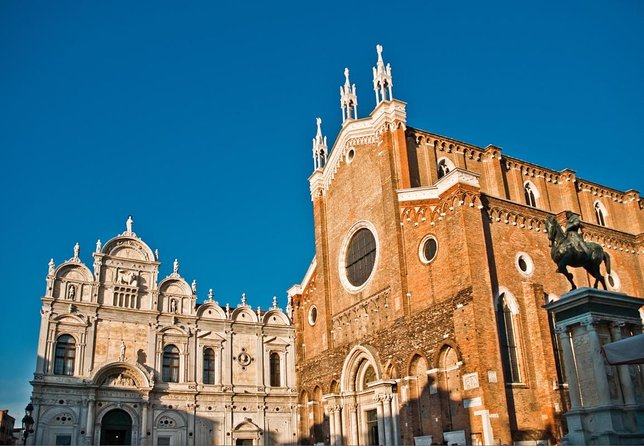
- San Giovanni e Paolo is a major highlight, including the largest stained-glass window in Venice.
- Miracoli church adds an early Renaissance façade that’s easy to overlook on your own.
- Casa di Marco Polo is on the route, but admission isn’t included.
- Meeting point can be tricky, so arrive a little early and use the map pin.
Why This Venice Art-and-Architecture Walk Feels Different
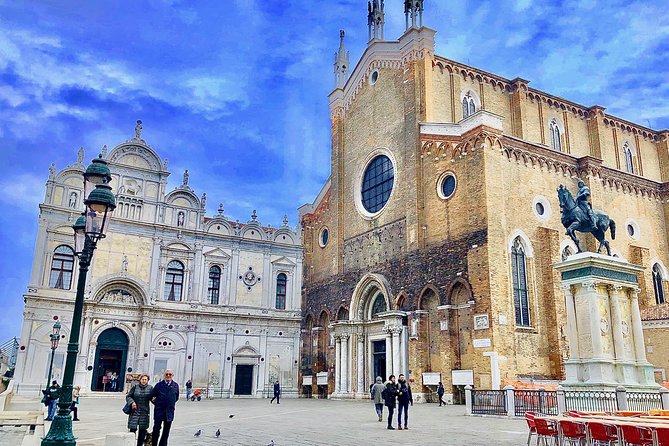
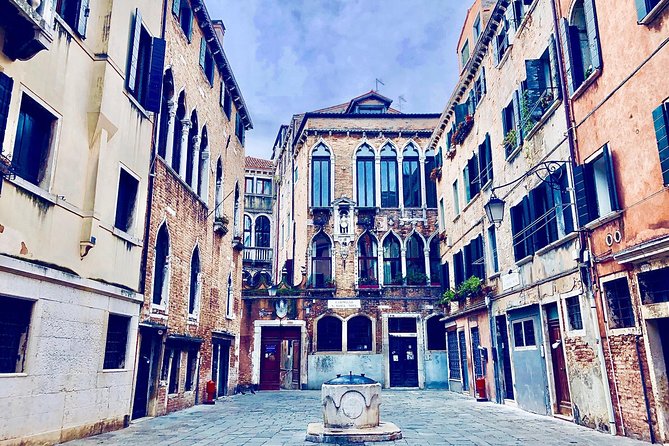
Venice has two faces: the postcard highlights and the real, working city between them. This tour is built for the second face. After meeting near Campo S. Bortolomio, you head into narrow passageways and across small footbridges—so you get architecture in motion, not just architecture on a list.
What makes the experience work is the balance of famous landmarks and offbeat stops. You’re not spending the entire time in the most obvious place. Instead, you’re guided through churches and city spaces that explain why Venice’s art style developed the way it did.
Also, it’s private. That sounds like marketing, but it changes everything: the guide can answer follow-ups, slow down when something catches your eye, and shift emphasis if you want more building details or more cultural context.
You can also read our reviews of more tours and experiences in Venice.
Starting at Campo S. Bortolomio and Walking the “Quiet Venice” Route
Your tour starts at Campo S. Bortolomio (30124 Venezia VE) and ends at Campo dei Santi Giovanni e Paolo (30122 Venezia VE). The ending matters because it drops you near a much busier area where you can keep the day going—many people like that natural handoff.
The route is designed to feel like a local walk. You’ll spend time in lesser-visited side streets rather than circling the same crowds. You’ll also do some canal crossings on footbridges, which is a small thing that helps Venice feel like Venice instead of a museum hallway.
One practical note: a few people have said the meeting spot is not the easiest to spot. Do yourself a favor and arrive a few minutes early, confirm the exact pin location on Google Maps, and keep an eye out for the guide.
Campo San Bartolomeo and the Goldoni Statue: A Smart Warm-Up
The first stop is Campo San Bartolomeo, anchored by the statue connected to Goldoni. This is a good opening moment because it sets the tone: Venice isn’t just churches and palaces. It’s also public spaces tied to people, performance, and civic identity.
At this stage of the walk, the guide typically helps you get oriented fast. You’ll learn what you’re looking at and why it sits here in the city fabric. That matters because it makes later stops easier to “read” once you know the local logic.
The downside? This stop is short—about 30 minutes—and it’s more context than deep architecture. Think of it as your introduction and setup, not the main event.
Casa di Marco Polo: A Quick Hit of Big Venetian History
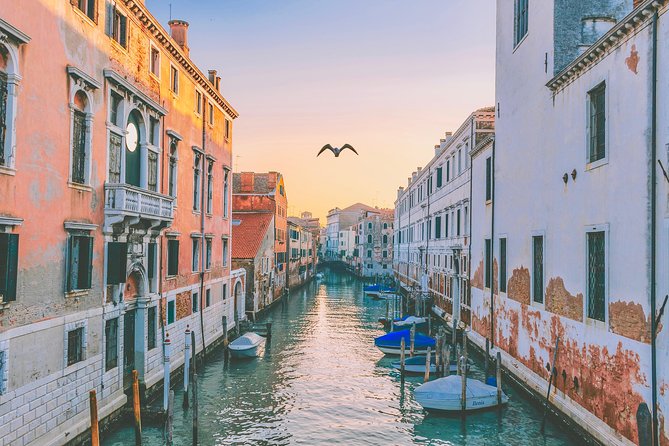
Next comes Casa di Marco Polo. The official time on the stop is about 30 minutes, and the big catch is simple: admission isn’t included. So you’ll likely spend your time looking at the place and listening to the story rather than touring inside for a long time.
This stop can be great if you’re the type who likes connections—how merchants, politics, and travel fed into Venice’s reputation and taste in art. One reason this works on a walking tour is that you don’t get stuck in one room. You keep moving, and the guide can link what you see in the neighborhood to what shaped Venetian culture.
If you want a deeper Marco Polo experience, plan for the fact that you may need a separate ticket later. Still, as a “name + place + meaning” stop, it’s well timed in the route.
Basilica dei Santi Giovanni e Paolo: Gothic Style and the Stained-Glass Moment
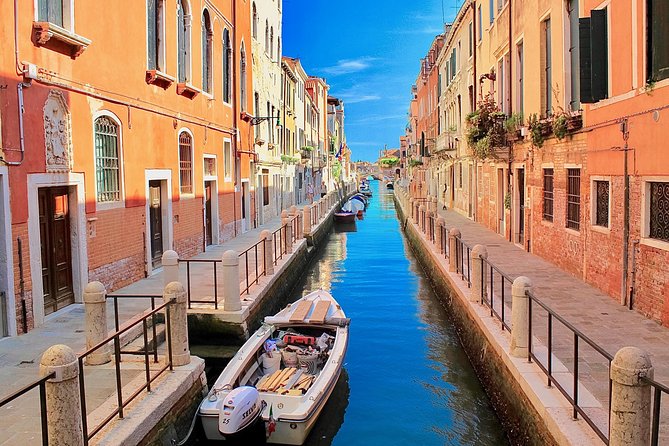
This is the centerpiece. You’ll visit Basilica dei Santi Giovanni e Paolo for about 30 minutes. The reason it’s a major draw is explicit: it’s known for Gothic architecture and for the largest stained-glass window in Venice.
And here’s where the private format really shows. People who enjoy religious art often want more than dates. They want to know how the building is put together, what details to notice, and what the design communicates. In multiple accounts, guides were praised for turning “look at this wall” into “here’s what this style is doing.”
Still, there are two considerations you should keep in mind:
- Expect interior time. Some experiences focused heavily here, with plenty of attention on walls and details.
- It may feel lecture-heavy if you’re hoping for faster-fire exterior views and quick photo stops.
If you care about how architecture supports the religious experience, this stop is likely the one you’ll remember most.
Church of Santa Maria dei Miracoli and Santa Maria Nova: Renaissance Details in a Narrow Space
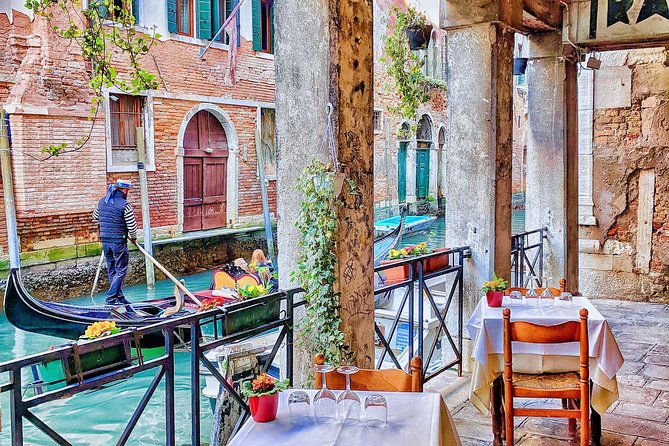
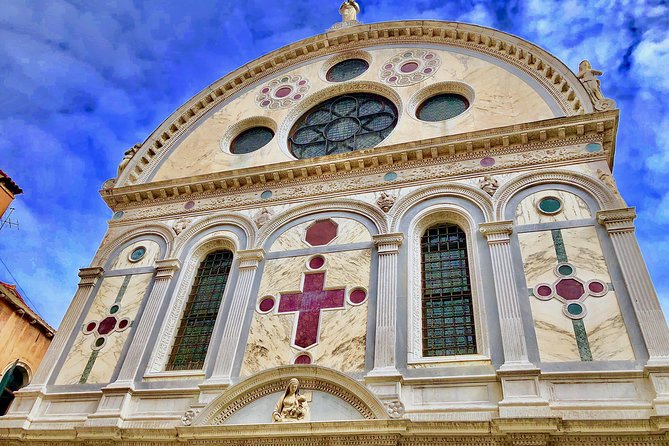
After the big basilica, the walk shifts to the smaller Church of Santa Mary of Miracles (Santa Maria dei miracoli), connected with the campo of Santa Maria Nova. This stop also takes about 30 minutes.
What you’re coming for is the façade. The description is specific: a beautifully restored, early Renaissance façade. In other words, even if you’re not a hardcore church person, this is the type of building detail you can actually “see” once someone points it out.
This is also a good moment to ask your guide what you’re looking at. A few guides in past experiences were able to explain different styles—Byzantine, Renaissance, Baroque, and Rococo—by pointing out contrasts in what’s near and what’s changed. You don’t need to be an art student for it to land. You just need guidance that connects the visual cues to plain meaning.
Why the Guide’s Style Makes or Breaks the Tour
A lot of tours sound similar on paper. The difference here tends to be the human factor: how the guide communicates and whether they can make the architecture feel relevant.
In the experiences I read, many guides stood out for:
- Strong English (examples included Lucia and guides like Marie Therese and Marie)
- Architecture-first explanations, with some guides having professional training or illustrated teaching aids
- Flexibility, including tailoring content and skipping or rebalancing parts so the pace fits the group
That’s especially important because the tour is private. You can (and should) tell your guide what you want within the theme. If your interest is more about design elements, say so early. If you prefer a story-driven approach—Venice’s culture and politics—say that too.
One more practical note: if someone in your group has hearing challenges, you may want to ask whether extra listening help is available. One group found audio support wasn’t used, which made it harder for a hearing-impaired member.
Price and Value: Is $343.17 a Person Fair?
At $343.17 per person, this isn’t a “cheap and cheerful” Venice add-on. You’re paying for a private, English-speaking professional guide and a focused theme you probably can’t replicate with a general walking tour.
So the value comes down to fit:
- If you’re the type who wants to understand what you’re seeing, and you hate feeling rushed, this price can feel fair fast.
- If you’re mainly there for exterior photos and quick highlights, you might feel the money is better spent on a different style of tour.
Duration also matters. Two hours is enough time to see meaningful buildings, but not enough time to check every major site in Venice. That’s why the art-and-architecture focus is the right trade-off: you get depth in a small area rather than surface coverage everywhere.
Also watch for entrance fees. Some key stops are not included, including Casa di Marco Polo and the churches on the route. That means your total day cost may be a bit higher than the advertised tour price once you decide which interiors you want.
Logistics That Actually Matter (Pickup, Tickets, and the €5 Access Fee)
This experience offers an optional hotel pickup if your hotel is in the Rialto area. If you’re staying elsewhere, you’ll be meeting the guide at the start point in central Venice.
You’ll also get a mobile ticket, which is convenient in a city where paper tickets can disappear into your pocket with everything else.
Then there’s the €5 access fee issue. On certain dates, day visitors staying outside Venice may need to pay an access fee, with exemptions on some dates. The tour data points to the city’s official access-fee site for details, so it’s worth checking before you commit your day plan.
None of this is glamorous, but it prevents the kind of last-minute stress that can turn a great tour into a crabby one.
Pacing, Weather, and What to Do If You Want More Art (Not Just More Time)
Venice weather can change fast, and one experience noted that a gray, rainy day made the mood feel flatter. That can happen anywhere, but you can protect your tour vibe with a simple strategy: bring your questions and your preferences.
If you’d like the walk to lean more toward architecture than atmosphere (or vice versa), say so early. Because it’s private, the guide can often shift emphasis. Some accounts describe guides who adjust for mobility needs in the group, and that adaptability is part of the value you’re paying for.
If you’re worried about spending too much time in one church, talk about it in the first 10 minutes. A good guide will know whether to speed up on detailed walls or how to break down the big moments in a way that stays engaging.
And if you’re hoping for a Grand Canal architectural focus: one account specifically noted that the Grand Canal side wasn’t included. So set expectations accordingly and keep your big Grand Canal views for another plan.
Who This Tour Suits Best
This is a strong match if you:
- Want private attention and real Q&A, not just a headset narration
- Care about how Venetian art and architecture got shaped by the city’s politics and culture
- Enjoy church interiors when someone points out details you wouldn’t notice alone
- Like discovering quiet neighborhoods you’d probably skip on a rushed first day
It may be less ideal if you:
- Want mostly outdoor sights and quick stops
- Plan on using the tour as your only “Venice highlights” experience
- Expect major museum time or included church entry fees
For families, it can work well too. One experience included children who enjoyed the guide’s explanations, and another noted the tour stayed flexible for older guests.
Should You Book This Private Venice Art-and-Architecture Walk?
I’d book it if your ideal Venice day includes learning what you’re looking at. The payoff here is the combination of a focused theme and genuine one-on-one communication. When the guide is firing on all cylinders, the architecture stops becoming background noise.
I’d skip—or at least consider another option—if you’re chasing maximum outdoor variety in two hours. This walk leans into key churches and their details, especially San Giovanni e Paolo. You’ll get context, but you won’t get a “cover every famous exterior” sprint.
If you do book, I suggest two smart moves: arrive a few minutes early at Campo S. Bortolomio, and tell your guide what you want most—stained glass, façade details, or the wider Venice story. That’s how you get the kind of tour that feels worth the money.
FAQ
How long is the Venice Art and Architecture Walking Tour?
It lasts about 2 hours.
Is this tour private?
Yes. It’s a private tour/activity, and only your group participates.
Where does the tour start and end?
The start is Campo S. Bortolomio, 30124 Venezia VE. The end is Campo dei Santi Giovanni e Paolo, 30122 Venezia VE.
Is hotel pickup available?
Optional pickup is available if your hotel is in the Rialto area.
What languages are tours offered in?
The guide is listed as professional and offered in English, French, German, Italian, or Spanish.
Are church and museum entrance fees included?
No. Entrance fees to churches or museums are not included.
Are food and drinks included?
No. Food and drinks are not included.
Is the €5 access fee something I need to plan for?
On certain dates, visitors staying outside Venice who are visiting for the day may need to pay a €5 access fee, with exemptions on some dates. Check the official site linked in the tour details for the applicable days.
Is there a mobile ticket?
Yes. The tour includes a mobile ticket.
Is cancellation free?
Yes. Free cancellation is offered up to 24 hours in advance for a full refund, based on the experience’s local time.