REVIEW · BERLIN
Berlin: Hansaviertel Modernist Architecture Tour
Book on GetYourGuide →Operated by Beyond and Beneath Tours · Bookable on GetYourGuide
Berlin has famous sights. Hansaviertel has a different kind of punch. This modernist architecture walk follows how West Berlin used design to rewrite a postwar future. I love that the route starts in the late-19th-century world of villas and then pivots into the Cold War ideas of Interbau 1957. You also get a rare moment of reflection with a memorial connected to Jewish life lost to Nazi persecution.
Second, I really like how the tour connects buildings to people. You’re not just seeing façades—you’re hearing what the architects hoped modern design would change in daily life, and whether it still feels current. That mix of social history and street-level architecture makes the two hours feel full without dragging.
One possible drawback: this is a walking tour with a history-heavy, idea-heavy storyline, so it may feel like a lot if you’re hoping for a relaxed, casual stroll or something aimed at younger kids.
In This Review
- Hansaviertel Highlights You’ll Actually Notice on the Sidewalk
- A Sidewalk Tour Where Berlin’s Timeline Turns a Corner
- Where the Tour Starts by Tiergarten S-Bahn (and Why That Helps)
- From Late-19th-Century Elegance to a New Kind of City Living
- A Quiet Stop for Jewish Life That Nazis Tried to Erase
- Interbau 1957: How Rubble Became a Cold War Showcase
- The Architects and the Ideas You’ll Want to Notice
- What the Tour Feels Like in Real Time (Pace, Group, and Setup)
- Price and Value: Why $29 Can Feel Like a Bargain Here
- Practical Tips Before You Set Out
- Who This Tour Fits Best (and Who Might Want Something Else)
- Should You Book This Hansaviertel Modernist Architecture Tour?
- FAQ
- What is the duration of the Hansaviertel Modernist Architecture Tour?
- Where do I meet the guide?
- What languages is the tour offered in?
- Is the tour wheelchair accessible?
- Do I need to pay for museums or monument entry?
- What should I bring, and how much walking is involved?
Hansaviertel Highlights You’ll Actually Notice on the Sidewalk
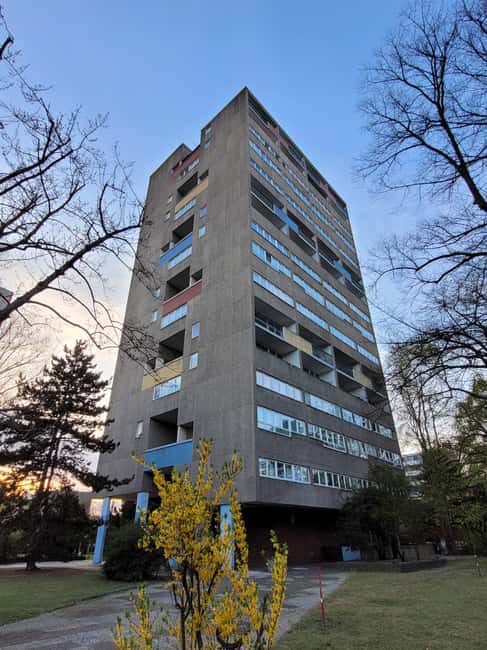
- Tiergarten and Spree setting: leafy, central, and calmer than Berlin’s headline landmarks
- A 19th-century neighborhood origin story before the modernist rebuild begins
- A memorial linked to lost Jewish community life—quiet, but powerful
- Interbau 1957 explained on foot, including the Cold War competition behind it
- Big-name modernists on the route: Gropius, Niemeyer, Aalto, and more
- A guided pace that stays digestible, with well-structured explanations
A Sidewalk Tour Where Berlin’s Timeline Turns a Corner
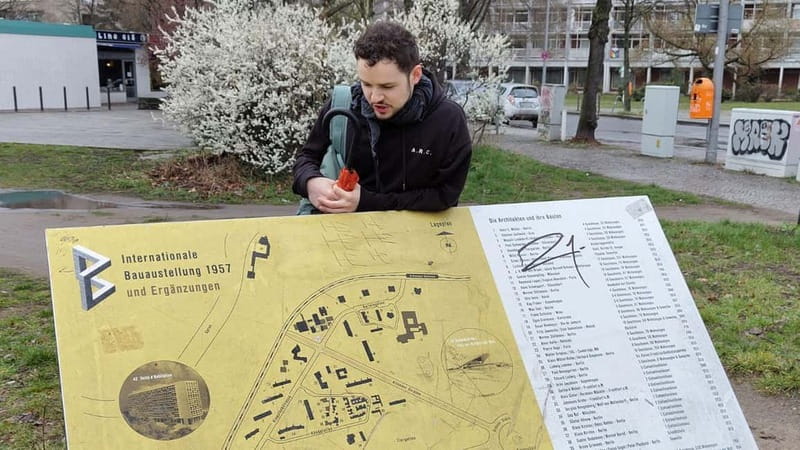
Hansaviertel sits between the Tiergarten and the Spree—central Berlin, but not the usual crowd magnet. Instead of rushing from famous monument to famous monument, you walk into a neighborhood built to show a theory of what city life could become.
What makes it interesting is the contrast. You start with the late-19th-century vibe of an upscale district—villas, neat gardens, elegant street presence. Then history slams into the story: war, destruction, and the ideological tug-of-war of the postwar world. By the time you reach the modernist centerpiece, the neighborhood starts to make sense as a living argument about design and identity.
And yes, it’s architecture. But it’s also a chance to practice looking differently: modernism isn’t just a style here; it’s a message meant to be read by residents and visitors.
You can also read our reviews of more tours and experiences in Berlin.



Where the Tour Starts by Tiergarten S-Bahn (and Why That Helps)
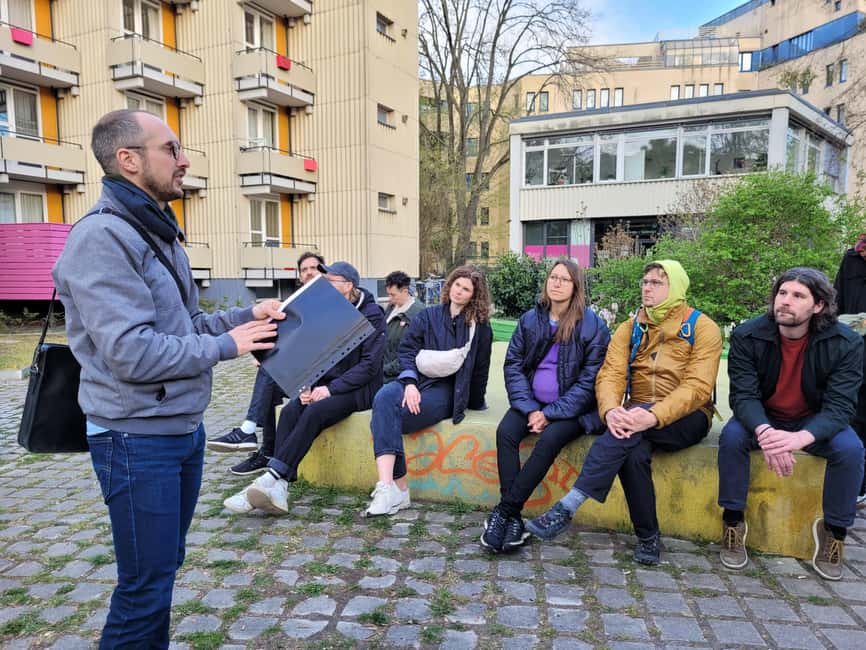
You begin at the Biergarten der Tiergartenquelle area, right by the Berlin-Tiergarten S-Bahn station (Exit Siegmunds Hof / Bachstraße). The key practical tip is simple: look for the guide with the orange umbrella.
Starting near transit matters because you can arrive without stress, especially in Berlin where walking between points is easy but timing can still get weird. This also sets the tone: you’re not starting in a museum. You’re starting in the real neighborhood space, where you’ll keep learning from what you see around you.
The tour runs about 2 hours, with roughly 1.5 hours guided through Hansaviertel itself. You’ll be standing and walking for that time, so comfortable shoes and a bit of patience for cobbles or uneven sidewalks will help.
From Late-19th-Century Elegance to a New Kind of City Living
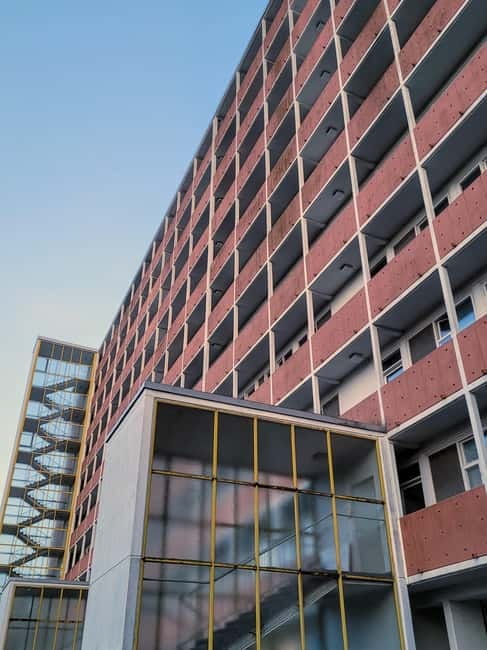
The first part of the walk goes back to when Berlin was growing fast and the Hansaviertel area became a middle- and upper-class enclave. This isn’t just a trivia stop. It’s the foundation for understanding why Interbau 1957 mattered.
When you hear about villas, manicured gardens, and elegant façades, it changes how you read what comes later. You start noticing how the neighborhood’s earlier identity was about refinement and visibility—how the “who” and “how” of living was written into the streetscape. Then, once the modernist phase arrives, you can feel the contrast: not just a rebuild, but a rewrite of what “good living” could mean.
This segment also brings in notable residents tied to Berlin’s larger cultural story, including Rosa Luxemburg, Nelly Sachs, and Käthe Kollwitz. Even if you only know one or two names, the point is clear: Hansaviertel wasn’t some sterile architectural stage. People lived, worked, resisted, and created here.
A Quiet Stop for Jewish Life That Nazis Tried to Erase
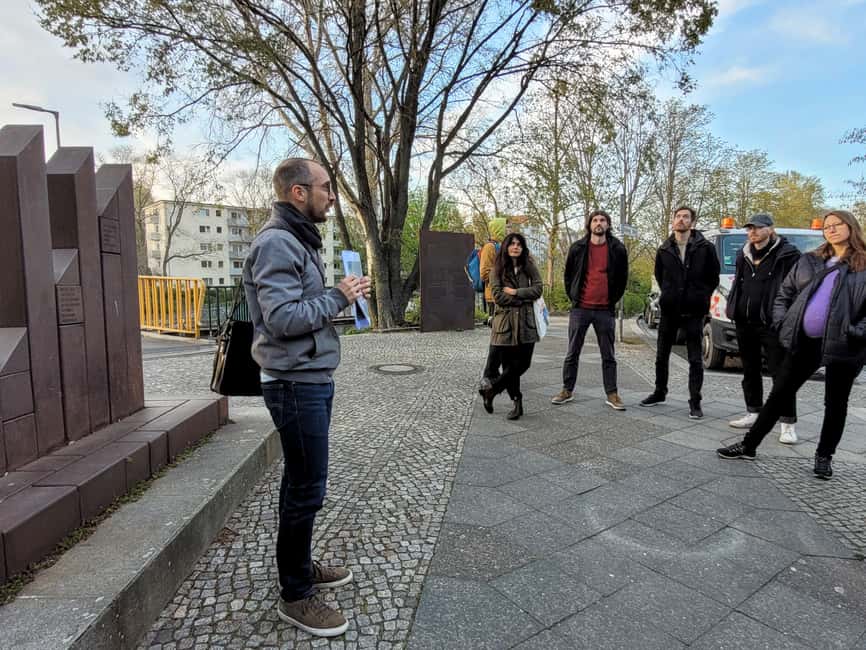
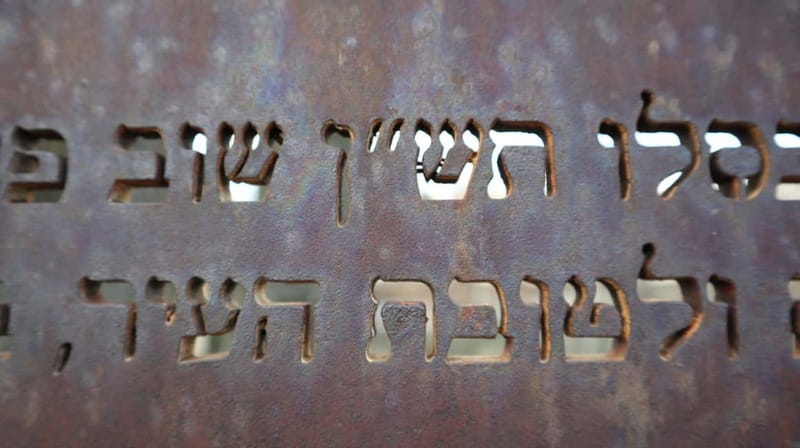
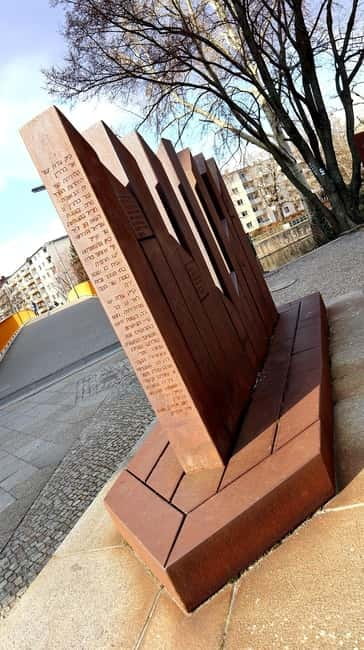
The tour takes a careful turn to a memorial site connected to one of Berlin’s significant Jewish communities—one that was destroyed both socially and physically. The story also includes the damage from Allied bombing raids that followed.
This stop is important in a way that’s hard to reduce to architecture. You’re learning how policy, persecution, and war don’t just “change history”—they break communities. In the context of a tour about rebuilding and designing, the memorial forces a needed question: what does it mean to rebuild when so much has been taken?
If you prefer your history light and quick, this portion may hit you harder than the rest. If you’re open to that, it’s also what makes the Hansaviertel story feel human rather than purely aesthetic.
Interbau 1957: How Rubble Became a Cold War Showcase
After the memorial, the neighborhood’s story becomes dramatic—in the best way. In 1957, West Berlin hosted Interbau, an international architecture exhibition aimed at redefining what a postwar city could look and how it could function.
You learn that Hansaviertel’s redesign wasn’t random. It was tied to Cold War rivalry: competing visions of modern identity, progress, and the future. So when you see bold modernist forms and experimental layouts, you’re not just looking at clever design. You’re reading a political and cultural statement built into the street plan.
This is where the tour’s structure really pays off. By the time you reach this phase, you’ve already seen the earlier elegance. So the shift to modernist building language lands with meaning: a planned break from the past, presented as a forward-looking answer.



The Architects and the Ideas You’ll Want to Notice
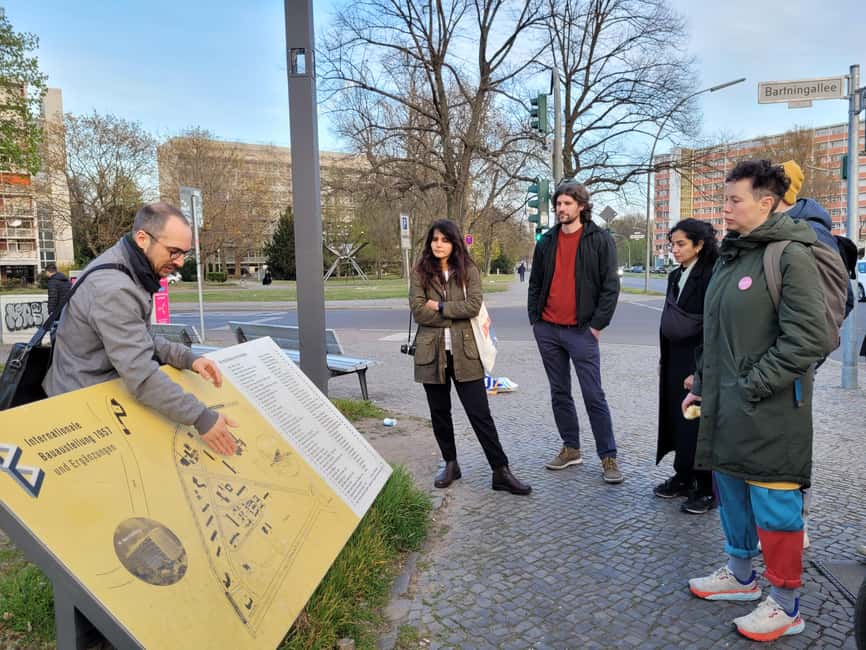
One reason this tour gets high marks is that it doesn’t treat Interbau 1957 like a slideshow. It connects the buildings to the philosophy behind them—and it keeps asking the same set of questions as you walk.
What kind of life did these architects hope to shape? Does it still feel modern—or does it feel like something frozen in time? Those questions guide your eye.
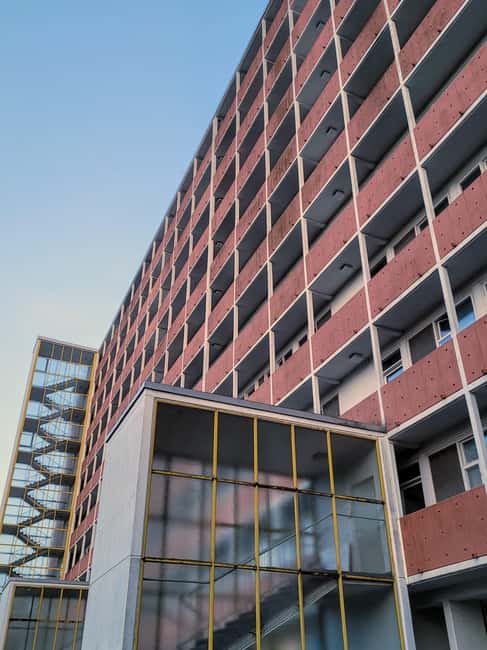
You’ll see references to major modernist icons such as Walter Gropius, Oscar Niemeyer, Alvar Aalto, and other architects involved in the project. Even without memorizing every name, you can start sorting what you’re looking at by attitude: some designs feel rational and structured, others more playful or provocative. The tour helps you understand that modernism wasn’t one single look—it was a range of ideas about function, form, and the future.
In practice, I’d suggest you take a moment at each stop to look at the building’s relationship to the street: how it sits, how it frames open space, and how it directs movement. Modernist planning often works as much through spacing and layout as through shape.
What the Tour Feels Like in Real Time (Pace, Group, and Setup)
This is a walking format designed for 2 hours total. That means you should treat it like a focused city walk, not a casual hangout. The route is within central Berlin and easy to join, but you’ll still want water and steady shoes.
One reviewer pointed out that the guide had a lot more material prepared than the group had time for, and that the information level stayed controlled rather than overwhelming. That matches the best kind of architecture tour: you get enough context to understand what matters, without drowning in dates.
Another detail worth noting from the experiences shared: you may get an eclectic mix of people, including Berlin residents and visitors. That can actually improve the vibe because the discussion tends to move beyond photography and into what the buildings are trying to do.
Also, one high-score note mentioned the guide was prepared and even had excellent German. If you’re English-speaking, you’ll be in good hands either way since the tour runs in both German and English.
Price and Value: Why $29 Can Feel Like a Bargain Here
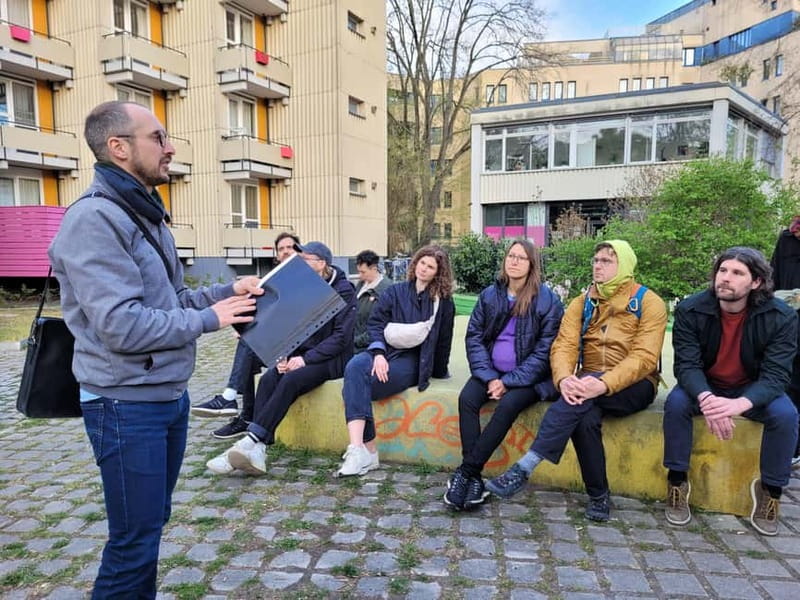
At $29 per person for a 2-hour guided tour, this is priced like a street-smart architecture outing—not a museum day. The value comes from what you get: a structured narrative running from the late-1800s to postwar modernism, plus a memorial stop and the meaning behind Interbau 1957.
For you, that matters because Berlin can be expensive when you rely only on ticketed sights. Here, you’re paying mainly for interpretation—someone helping you read a neighborhood you might otherwise walk past without realizing how much thinking went into it.
If you already enjoy architecture, the list of major modernists alone can make it worth it. But even if you don’t, the tour works because it keeps tying design to real-world questions: rebuilding after destruction, creating identity in a divided city, and shaping daily life through space.
Practical Tips Before You Set Out
- Bring water and wear comfortable shoes. You’ll be on your feet for about two hours.
- Dress for real walking conditions. Berlin weather can shift, and you’ll want to stay comfortable.
- If you’re the type who likes to take photos, plan to pause briefly. Modernist buildings reward slow looking, not just quick snapshots.
- Expect strong themes. This isn’t only architecture talk; it includes Jewish history and the impact of persecution and bombing.
Who This Tour Fits Best (and Who Might Want Something Else)
This works especially well for:
- architecture fans who want context, not just aesthetics
- history-minded travelers who like stories tied to place
- teens 14+ and adults comfortable with walking and standing for a couple hours
It’s not suitable for children under 14. Also, if you want architecture explained through hands-on interiors or lots of museum time, this tour’s format may feel limited. One reviewer even suggested arranging access to an apartment at some point—so if stepping inside specific spaces is a big goal for you, you may want to pair this tour with other options that offer interior viewing.
Should You Book This Hansaviertel Modernist Architecture Tour?
Book it if you want Berlin off the most over-photographed path, but still in the center. This tour gives you a guided way to understand why Hansaviertel looks the way it does—imperial elegance, wartime break, then Cold War modernism through Interbau 1957. You’ll leave with a stronger sense of how architecture can be a political voice and a social promise at the same time.
Skip it if you’re mainly chasing quick, casual sightseeing with minimal history. Here, you’ll walk, think, and absorb ideas—because that’s the point of Hansaviertel.
If you like well-organized guides and a pace that doesn’t drown you in details, this is one of the better-value architecture walks in Berlin.
FAQ
What is the duration of the Hansaviertel Modernist Architecture Tour?
The tour lasts about 2 hours total, with about 1.5 hours of guided touring within Hansaviertel.
Where do I meet the guide?
Meet at Biergarten der Tiergartenquelle by the Berlin-Tiergarten S-Bahn station (Exit Siegmunds Hof / Bachstraße). Look for the guide with the orange umbrella.
What languages is the tour offered in?
The live guide offers German and English.
Is the tour wheelchair accessible?
Yes, the tour is listed as wheelchair accessible.
Do I need to pay for museums or monument entry?
No museum or monument entry is included unless it’s specified during the itinerary. Entry fees are not listed as included.
What should I bring, and how much walking is involved?
Wear comfortable shoes and bring water. You should be comfortable walking and standing for about 2 hours. The tour is recommended for ages 14 and up.