REVIEW · BUDAPEST
Budapest Art Nouveau Walking Tour
Book on GetYourGuide →Operated by insightcities.com · Bookable on GetYourGuide
Budapest can look like it dressed up for a party. This Art Nouveau walking tour focuses on the Hungarian Secession take on turn-of-the-century design, with stops where you can actually see the details up close. I love the combination of major buildings plus smaller design surprises, and I especially like that the guide connects the look to the ideas behind it. One thing to consider: opening hours vary by day, so interior access at a couple sites can depend on when you go.
Two of my favorite moments are getting a close look at Ödön Lechner’s flamboyant Postal Bank and spending time on the Gresham Palace interior details, not just the street-facing facade. And the way the guide makes porcelain and pattern symbolism feel relevant (not like trivia) is a big part of the value. If you’re expecting a full museum-style experience, you’ll want to treat this as a smart architecture hit—then follow up on your own for anything you want to spend longer on.
In This Review
- Key things I’d watch for on this tour
- Budapest’s Art Nouveau, but Hungarian Secession style
- Your 3-hour game plan: what the timing really buys you
- Bedö House and the Hungarian State Treasury: start strong, then learn the pattern
- Postal Bank at Lechner’s level: why it earned the Gaudi nickname
- Gresham Palace: facades you notice, interior details you remember
- Between the big hits: Rózsavölgyi utca and Paris Passage
- Zsolnay porcelain in Pécs and the story behind Asian motifs
- Kazinczy Street Orthodox Synagogue: the finale with real interior impact
- Price and value: is $123 for 3 hours money well spent?
- Who should book this Budapest Art Nouveau walk
- Should you book this tour?
- FAQ
- How long is the Budapest Art Nouveau Walking Tour?
- What is included in the price?
- Is public transport included?
- Where can the group meet if I choose pickup?
- Are there extra entry fees for stops?
- Are there access limitations on certain days?
Key things I’d watch for on this tour
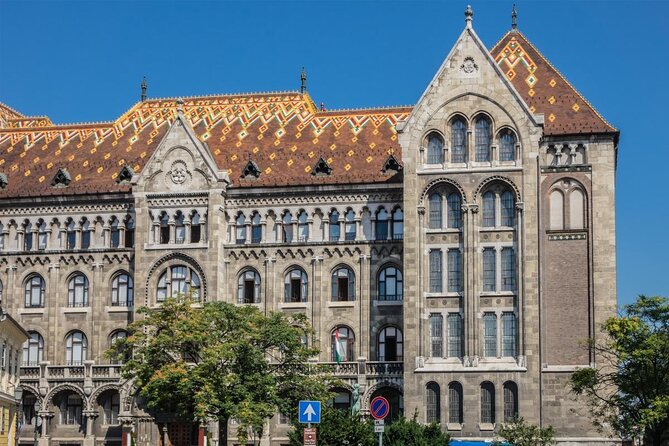
- Ödön Lechner’s Postal Bank: Hungary’s Gaudi reputation makes more sense once you see the details in person
- Gresham Palace entrance hall access: you get a peek inside, not just an exterior photo stop
- Zsolnay porcelain tiles in facades: a signature of Hungarian Secession
- Asian motifs and European Orientalism: you’ll learn why these design cues show up so often
- A sequence of varied Art Nouveau interiors: flower shop, department store, and a small museum stop
- Kazinczy Street Orthodox Synagogue: the finale has a strong visual payoff when it’s open
Budapest’s Art Nouveau, but Hungarian Secession style
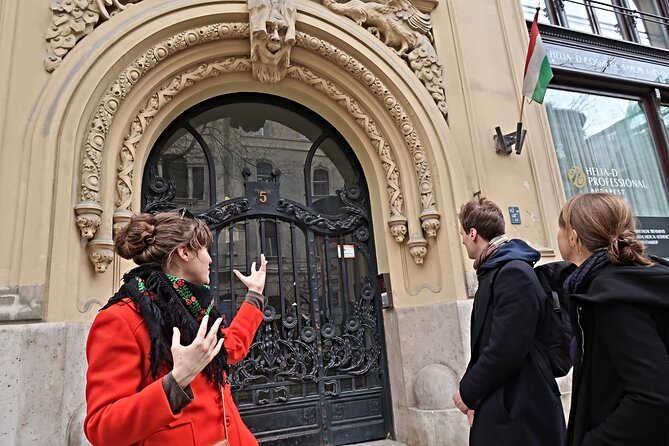
Budapest Art Nouveau isn’t just copied from elsewhere in Europe. The movement that took shape here is often called Hungarian Secession, and it has its own personality. You’ll hear how the broader Art Nouveau wave swept across architecture and the decorative arts around the turn of the 1900s, but Hungary filtered it through local ambition, wealth, and identity.
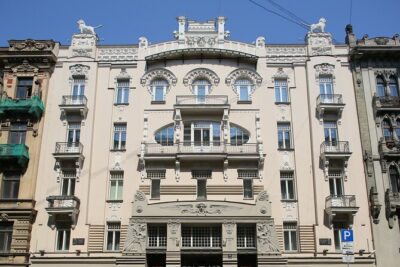
This is where Ödön Lechner comes in. He’s treated as the founding father of the Hungarian Secession look, and the tour frames him as the person who gave it a recognizable voice. In practical terms, that means you’ll spend time learning what to look for: the way ornament wraps around structure, the role of decorative materials, and how a facade can look like it’s speaking through symbols.
You’ll also get a surprisingly useful cultural lens. Hungarian Secession design frequently uses porcelain and often includes Asian motifs and elements. The tour connects that to two ideas you should keep in mind: the supposed eastern origins of the Hungarian nation, and also the wider European fashion for Orientalism that influenced Art Nouveau across the continent. That combination helps you read the buildings instead of just admiring them.
You can also read our reviews of more tours and experiences in Budapest.

Your 3-hour game plan: what the timing really buys you
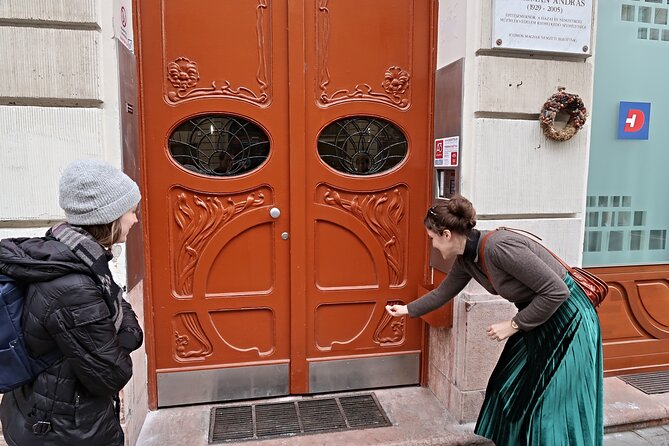
Three hours sounds short until you see how focused the route is. You’re covering key examples of the style in a way that’s built for seeing both street detail and (when possible) entry-hall interiors. A big part of the value is that the guide is an art/architecture historian, so you’re not just walking between landmarks—you’re learning the design logic as you go.
You’ll hit the two major buildings highlighted as must-sees: the Palace of the Royal Post and Gresham Palace. The good news is that both allow visitors into the entrance hall areas. That matters because Art Nouveau can be about more than fronts and corners. Interiors often show how designers wanted light, shape, and ornament to work together.
You don’t need to plan public transport for this. Tram and metro tickets aren’t included, but the walk is structured so the guide keeps you moving efficiently between stops. If you choose the pickup option, you’ll meet the group at Madal Café at Alkotmány u. 4, which is a handy central reference point.
Bring comfortable shoes. Expect you’ll be stopping often for close-looking, and you’ll get more out of the tour if you can stand and angle your phone/camera without rushing.
Bedö House and the Hungarian State Treasury: start strong, then learn the pattern
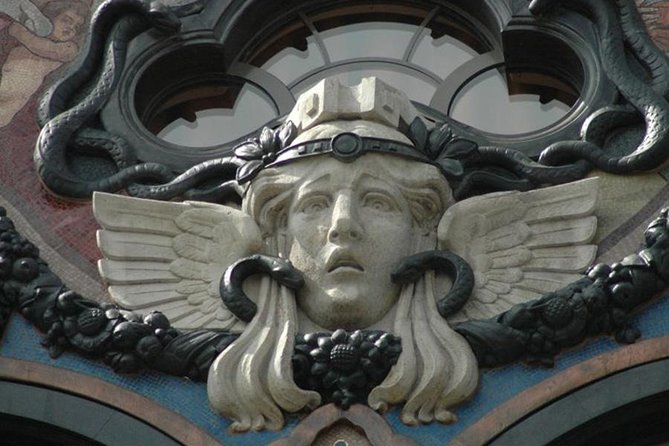
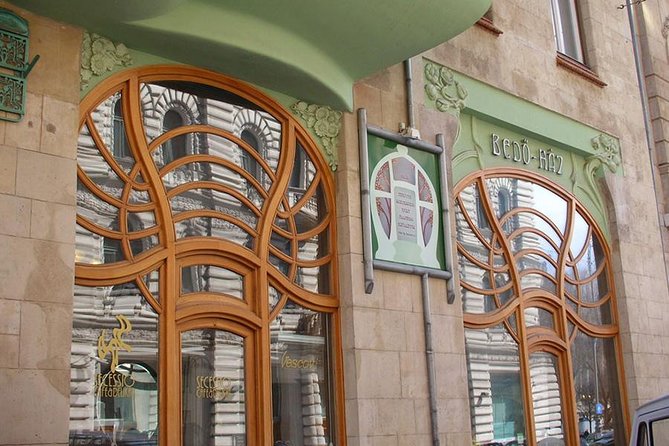
The tour begins with Bedö House and then moves to the Hungarian State Treasury. Even without turning these into huge time sinks, these stops are important because they set the visual vocabulary. You start to recognize how Hungarian Secession handles ornament, and how it can mix elegance with boldness.
This is also where a good guide earns their fee. The history is useful only if you understand what it’s explaining. At these earlier points, you’ll learn how the style expresses affluence and cosmopolitan energy—basically, how Budapest wanted to look like a modern European city while still projecting its own identity.
What to do as you arrive: take 30 seconds to look at the whole facade first, then pick one theme the guide mentions—porcelain, motifs, or material textures—and come back to it. This tour works best when you let the guide steer your eyes. Otherwise, Art Nouveau can blur into “pretty patterns,” and you’ll miss the specific design choices that make the style feel radical for its time.
Postal Bank at Lechner’s level: why it earned the Gaudi nickname
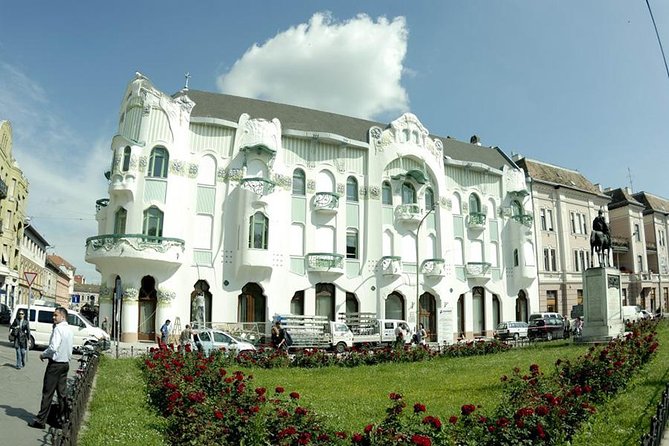
One of the biggest highlights is the Postal Bank by Ödön Lechner, often referred to as Hungary’s Gaudi. You’ll see why once you look past the overall impressiveness and focus on how the building uses decoration like architecture, not like frosting.
This stop is a classic for learning because it has that “designed by someone who wanted impact” energy. The guide helps connect the flamboyance to the Hungarian Secession ambition: the idea that a city’s public-facing buildings could feel theatrical, modern, and internationally fluent.
Even better, you can do more than photograph the exterior. You get access into the entrance hall area, so you can compare outside-to-inside. That inside peek helps you understand that the building wasn’t only made to impress from the street. It’s meant to shape the experience of people who enter.
Practical tip: if you’re the type who wants the best photos, take one wide shot outside first, then switch to detail shots once you’re in. The building’s personality changes once you stop viewing it from across the sidewalk.
Gresham Palace: facades you notice, interior details you remember
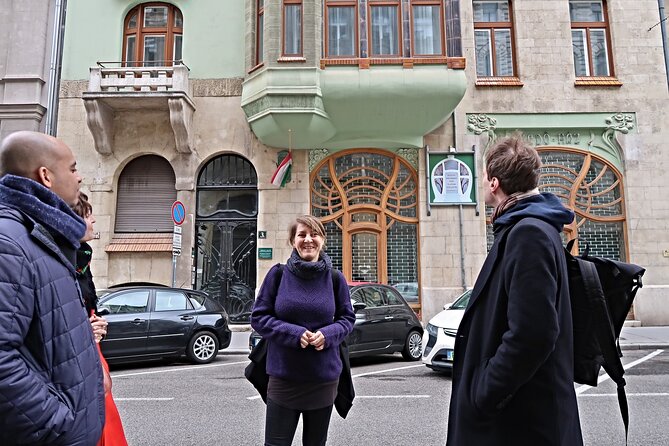
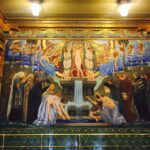
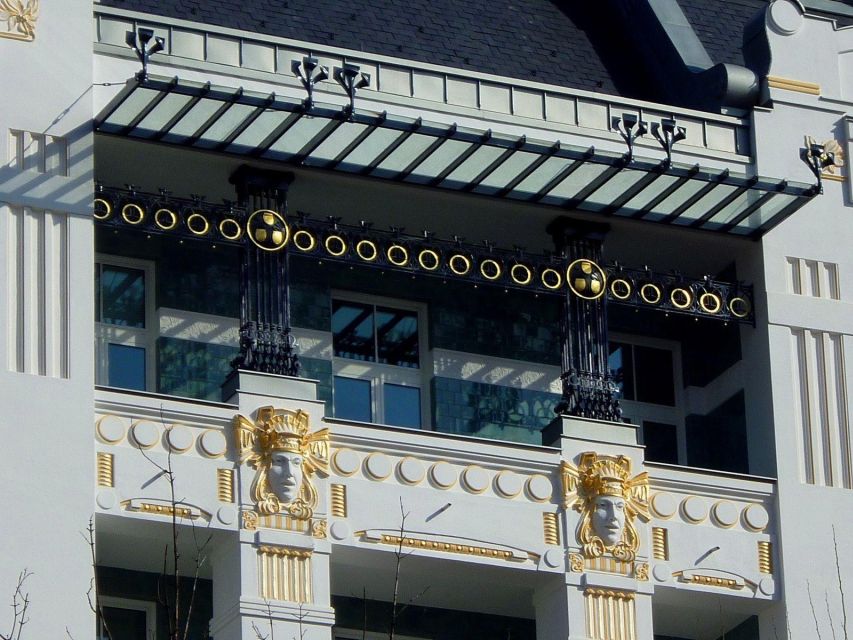
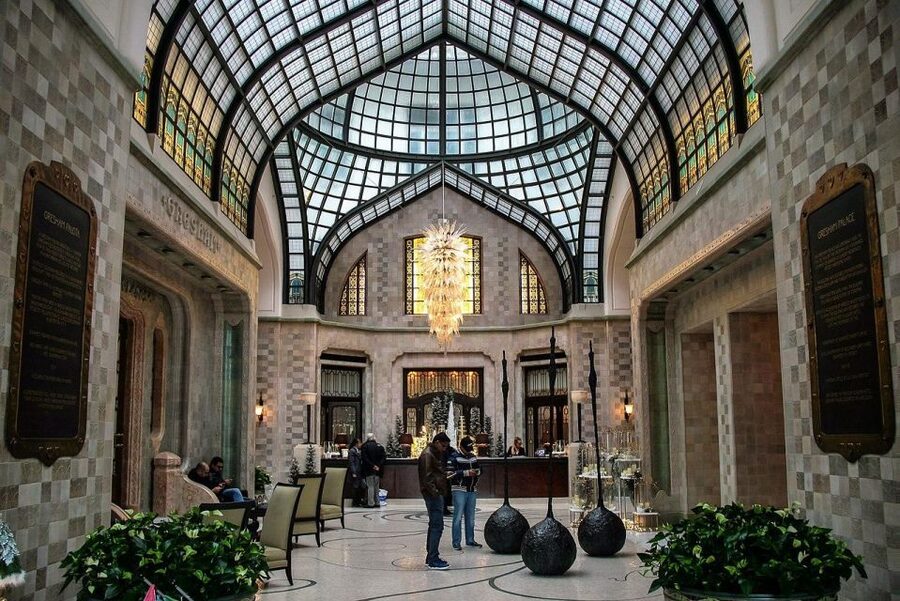
The tour also gives you time at Gresham Palace, and it’s one of the reasons this walk feels worth the ticket. Like the Postal Bank, you can enter the entrance hall. That means you’ll see decorative choices up close and get an honest sense of scale.
Gresham Palace is treated as one of the city’s “glorious” examples on this route, and the tour approach makes that make sense. You’re not just staring at ornament—you’re learning what kinds of design elements show up in Art Nouveau, and how the style balances movement and structure.
What I like about this part of the tour is the way the guide frames ornament as storytelling. Art Nouveau often uses lines and forms that look dynamic, almost like they’re in motion. In Gresham Palace, you’ll see how that can feel elegant rather than chaotic.
Possible drawback: if you’re expecting to roam freely for long periods, the interior time is a peek, not an all-day visit. It’s still hugely valuable, but you should treat it as “see the best parts with an expert explanation,” then decide if you want to go back later on your own.
Between the big hits: Rózsavölgyi utca and Paris Passage
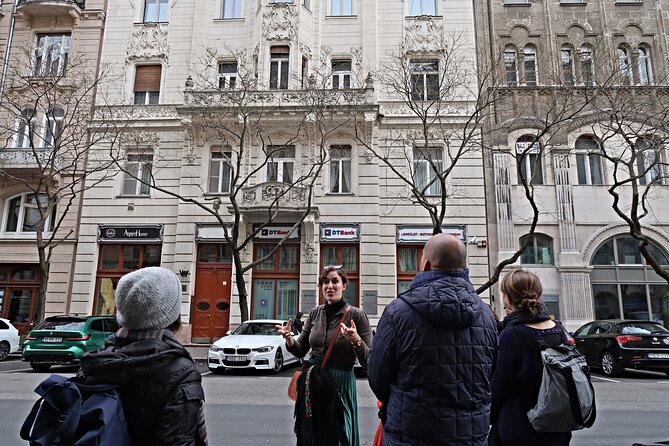
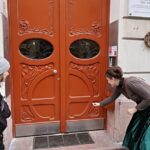
After you’ve anchored your understanding with the headline buildings, the tour keeps you sharp with stops along Rózsavölgyi utca and Paris passage. These are the kinds of places where Budapest’s Art Nouveau doesn’t just scream from a grand facade. It shows up in more everyday-feeling settings.
That’s important because it changes how you understand the style. If you only see famous landmarks, Art Nouveau can feel like an elite hobby for architecture lovers. With these mid-route stops, you start seeing how design seeped into commercial spaces and the rhythms of city life.
Also, you’ll run into the tour’s theme of variety: a flower shop with its original interior, a department store, multiple bank offices, plus a small but exquisite Art Nouveau museum and coffee house stop. Even without naming every single detail ahead of time, the pattern is clear: you’re seeing the style in different functions—finance, retail, and social spaces—so it feels like a living design language.
Zsolnay porcelain in Pécs and the story behind Asian motifs
This is where the tour turns from “look at pretty buildings” into “understand a design system.” You’ll examine ceramics linked to Zsolnay porcelain from the renowned Zsolnay factory in Pécs. Then the guide connects that material to what you’ll see on facades and architectural surfaces.
Zsolnay porcelain tiles are called out as a characteristic feature of Hungarian Art Nouveau, and you’ll hear about their role in creating depth—how the buildings catch light differently and how pattern becomes a kind of identity.
One specific example highlighted is Thonet House, where Zsolnay porcelain tiles appear in the facade. If you go in expecting porcelain to be decorative only, this stop helps you appreciate it as part of the building’s structure and personality.
Then comes the motif conversation. You’ll examine and discuss the various Asian motifs and elements used by designers. The tour frames it in a way that’s helpful, not confusing: you’ll learn about Hungary’s supposed eastern origins narrative, but you’ll also learn about the European-wide Orientalism that influenced Art Nouveau more broadly.
My advice for this section: don’t worry about memorizing every symbol. Instead, watch how often certain visual ideas repeat. Once you see the repetition, you can start recognizing the style’s “language,” and you’ll feel much more confident spotting it on your own across Budapest after the tour.
Kazinczy Street Orthodox Synagogue: the finale with real interior impact
The walking tour ends at the fascinating art nouveau Orthodox Kazinczy Street Synagogue. This is a great way to finish because synagogues, like some theaters and grand halls, can show design choices that go beyond exterior style. You’ll be led to appreciate how the interior design supports atmosphere—so the tour lands with emotion, not just facts.
There is one important schedule consideration. The tour notes that the Orthodox Synagogue on Kazinczy Street is closed on Saturdays. If you’re going on a Saturday, plan for the guide to adapt the walk to your interests and potentially extend to other Art Nouveau jewels.
The adaptation examples you might hear include additions such as the Gellért Bath Hotel, the Museum of Applied Arts, and the Geology Museum. That’s a useful backup plan because it means you’re not stuck with a half-finished experience if one key interior is unavailable.
Price and value: is $123 for 3 hours money well spent?
At $123 per person for a 3-hour walking tour, you’re paying for three things that matter in Budapest: (1) an art/architecture historian guide, (2) a route built around specific Art Nouveau examples, and (3) entrance-hall access at key sites like the Postal Bank and Gresham Palace.
You’re not paying for transport on top of that—tram and metro tickets aren’t included—but the tour is designed to function as a walk, which keeps costs predictable once you’ve bought the ticket.
I also think small-group or private options can make this better value if you prefer more questions or a calmer pace. With a historian guide, you’ll get more out of the time if you can ask follow-ups when something clicks.
Two schedule notes that affect value: on weekends, some interior access can be limited, including the Hungarian National Bank (which has fine Zsolnay porcelain examples) not being accessible on weekends. If your trip includes a weekend, don’t assume every interior stop will be available; the tour can adapt, but your best bet is to choose a day that fits the opening situation.
Who should book this Budapest Art Nouveau walk
Book this if you like design that has a point. This tour suits you if you care about how architecture and the decorative arts connect—porcelain, motifs, and interior decisions—not just where famous buildings are.
It’s also a strong fit if you’re new to Budapest. The route acts like a fast orientation to the Belle Époque vibe—glamour, ambition, and radical design sensibilities—without requiring you to read a stack of books first.
If you already know a lot about Art Nouveau, you’ll still get value from the guide’s specific Hungarian focus: Lechner, Hungarian Secession, Zsolnay porcelain, and the motif story. If you want hands-on time in museums, you might still need extra days on your own. This is a walk with smart stops, not a full museum marathon.
Should you book this tour?
I’d book it if you want a guided, story-driven way to see Budapest’s Art Nouveau in a limited time window. The strongest reason is the combination of entrance-hall access at major sites and the historian guidance that helps you interpret what you’re seeing—porcelain work, Asian motif influence, and the Hungarian Secession identity.
I’d skip or at least adjust expectations if your schedule is tight on a day with interior closures, since a couple of the most dramatic interior experiences can be impacted by openings. Still, the tour includes adaptation options, which is a relief.
If Art Nouveau is your thing, you’ll leave with a different kind of appreciation for Budapest’s elegance and energy—one that you can actually spot on your own the next day as you walk.
FAQ
How long is the Budapest Art Nouveau Walking Tour?
It lasts 3 hours.
What is included in the price?
The tour includes a 3-hour walking tour and an English live historian guide.
Is public transport included?
No. Tram and metro tickets are not included.
Where can the group meet if I choose pickup?
If you choose the optional pickup method, the meeting point is Madal Café, Budapest, Alkotmány u. 4.
Are there extra entry fees for stops?
Yes. House of Hungarian Art Nouveau costs 1000 HUF per person (about $3.50). The Orthodox Synagogue on Kazinczy street costs 2000 HUF per person (about $7.00). Fees apply if these sites are open/included on your day.
Are there access limitations on certain days?
Yes. On weekends, the Hungarian National Bank cannot be entered, and on Saturdays the Orthodox Synagogue on Kazinczy street is closed. The tour can be adapted with alternate Art Nouveau sights when that happens.