REVIEW · MUNICH
Art Nouveau Meets Street Art in Munich (Max. 12 guests)
Book on Viator →Operated by Philipp's Munich Tours · Bookable on Viator
Art Nouveau turns into street art in Munich. This small-group tour mixes a focused Jugendstil walking route in Schwabing with hands-on spray-painting using stencils, guided by Philipp in English and German.
I especially like two parts: the close-up façade viewing (floral motifs, elegant details, and design ideas tied to German Art Nouveau) and the fact that the creative finale is practical, not just talk. You actually make four postcard designs from stencils based on what you saw earlier.
One drawback to plan for: public transport costs extra. The subway ride is not included, so you’ll need about €4.10 per person on top of the $43.53 price.
In This Review
- Key things that make this tour worth your time
- Munich’s Schwabing façades: the Art Nouveau starting line
- From façade spotting to stencil thinking
- The English Garden art stop: street creativity after Art Nouveau
- Inside the heated container: how the spray-painting works
- Timing and logistics that keep the day from feeling like work
- Price and value: $43.53 plus a small transit add-on
- What to expect at each step (and what to watch for)
- Who should book this Munich tour
- Practical tips so you enjoy every minute
- Should you book Philipp’s Jugendstil-to-street-art tour?
- FAQ
- FAQ
- What is the duration of the tour?
- How many people are in the group?
- Where does the tour start and end?
- What time does the tour begin?
- Is the tour offered in English only?
- What is included in the price?
- What is not included?
- Do I need to buy a paper ticket?
- Is there a spray-painting workshop?
- What is the cancellation policy?
Key things that make this tour worth your time
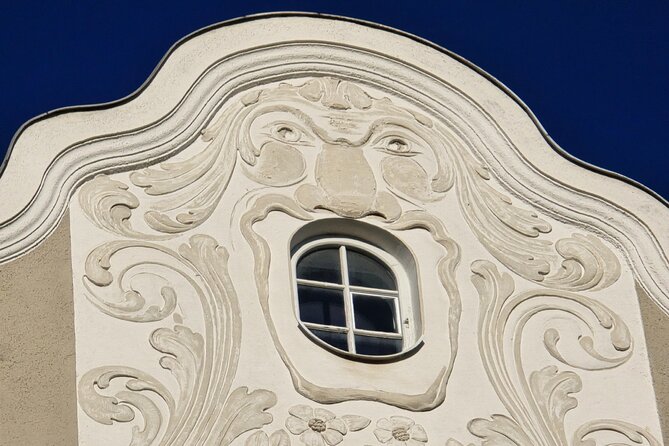
- Four selected Jugendstil façades get your attention where it matters: the details
- Bilingual guidance in English and German with Philipp leading the stories
- A heated container keeps the spray-painting session comfortable
- Make-and-take postcards: you create four postcard images you can mail or keep
- Small group size (max 12) makes it easy to ask questions and get help
Munich’s Schwabing façades: the Art Nouveau starting line
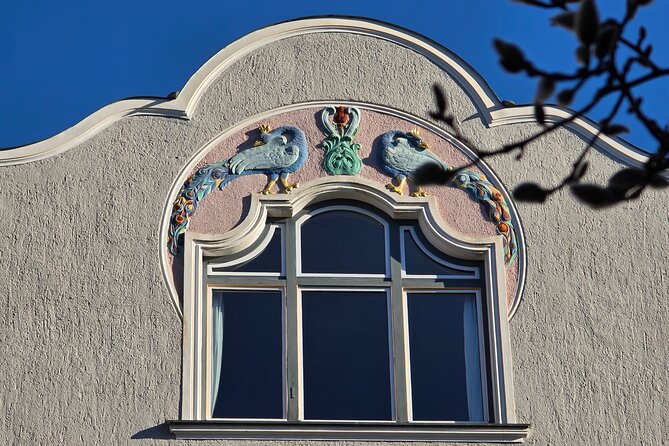
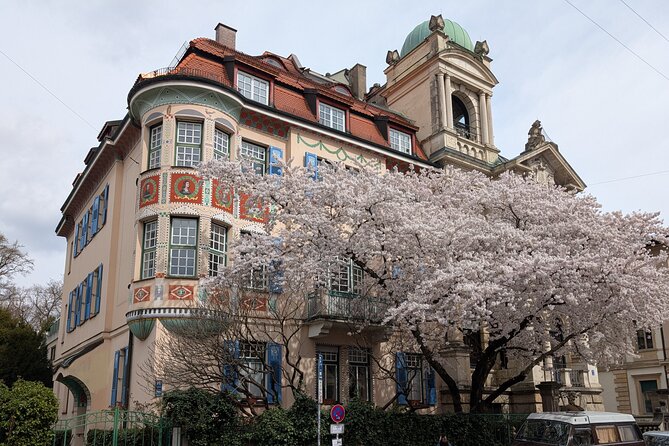
Munich has a way of making art look like it was built into everyday life. This tour starts in Schwabing, a historic bohemian quarter and, per the tour focus, the birthplace of German Art Nouveau. That matters because you are not just looking at famous buildings from far away. You are getting guided attention on what makes Jugendstil feel different from other styles: the flowing lines, the ornament logic, and the decorative motifs that look almost botanical—often floral, often rhythmic, like the building has a heartbeat.
Schwabing is also a smart choice for this kind of tour. It is walkable, varied, and full of façades where small changes in pattern and texture can feel like a whole design argument. The format helps: you are meant to observe and frame four standout façades. That gives you a clear mission as you walk, instead of drifting along with a vague sense of art history.
And yes, you do get context. Philipp connects the design ideas to iconic creative names tied to the broader art world, including Wassily Kandinsky and Paul Klee. Even if you know them mostly from paintings, it helps to hear how design thinking travels across mediums. Jugendstil isn’t only about buildings; it is about how form, symbol, and ornament can shape a whole visual language.
You can also read our reviews of more tours and experiences in Munich.

From façade spotting to stencil thinking
The tour is built around a simple but effective loop: see detail, then convert it into your own design. During about the first hour, you get to closely observe four Jugendstil façades. You are not trying to memorize every sculpted figure. Instead, you focus on what you can translate into shapes for stencils—floral curves, repeating lines, and standout elements that become bold when simplified.
This is where the tour becomes more valuable than the average architecture walk. Many façade tours show you nice pictures and big ideas. This one turns your looking into a practical outcome. By the time you reach the spray-painting part, your brain has already learned what to select: shapes that will read clearly on a postcard-sized design.
A small but useful detail from the experience vibe: there’s usually time for coffee and a toilet stop before the activity portion. That sounds basic, but it changes how you enjoy the second half. You can stay focused on the art instead of suddenly feeling rushed or uncomfortable.
Also, you may hear comparisons to other design eras while walking—one review noted stops where Jugendstil context mixed with talk about other styles, including Art Deco and baroque influence in the broader street scene. That kind of framing helps you see Jugendstil as part of a timeline, not an isolated bubble.
The English Garden art stop: street creativity after Art Nouveau
After Schwabing, you travel by subway to a contemporary artistic district on a former castle-yard site. The setting is intentionally different: you move from ornate building exteriors to a place where modern street art techniques take over. That contrast is the point of the tour theme—Art Nouveau meets street art—and it works best when you can feel the shift in mood.
In this artistic district, the spray-painting session happens inside a heated shipping container. That detail matters more than you might think. It turns the session from a “stand outside and hope” experience into something you can enjoy even when the weather is cool. You get protection and comfort while you learn how to use stencils and spray tools.
If you are wondering where the spray-painting happens in relation to the day: the experience is associated with the English Garden area as your second stop, and the hands-on work happens there. The route design keeps it connected, not scattered across the city.
Inside the heated container: how the spray-painting works
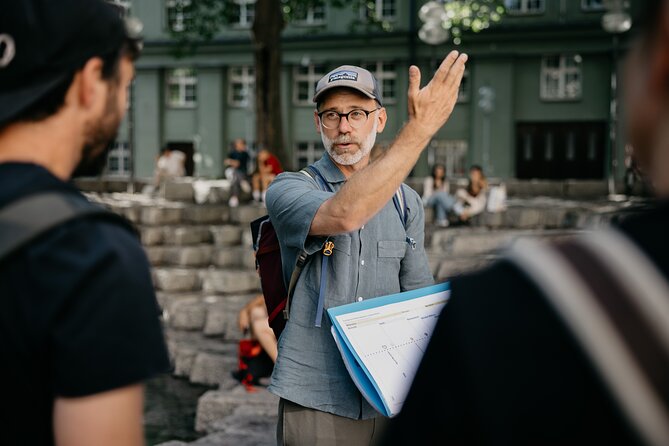
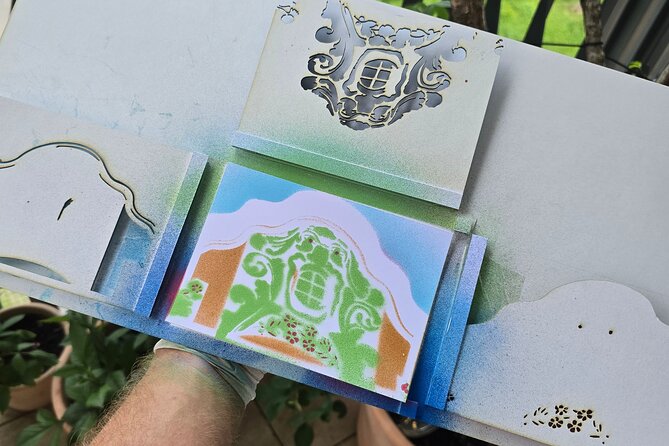
This is the hands-on moment that turns architecture tourists into makers. You get safety gear and materials, and you work with stencils tied to what you saw earlier. The provided kit includes spray paint, stencils, envelopes, and postcards. You also get safety glasses, protective gloves, masks, and clothing covers.
That is not just a safety checklist. It also reduces decision fatigue. You do not have to figure out what to wear or how to keep your clothes safe. The gear means you can focus on the technique: positioning the stencil, spraying evenly, and cleaning up as directed.
The “beginner-friendly” tone is backed up by how the activity is set up. You are not asked to freehand artwork. Instead, you use stencils. That takes away a lot of intimidation and makes the process feel more like guided craft than street-art performance.
You create four postcard designs. The stencils are based on the Art Nouveau treasures you observed earlier, so the payoff feels connected. It’s not random street art. It is your Schwabing observations turned into portable art you can take home.
And based on one of the five-star notes, nerves are normal. The guide’s job here is to make the technique easy and help you get results quickly—so you can relax and enjoy the process.
Timing and logistics that keep the day from feeling like work
The tour runs about 2 hours 30 minutes and starts at 10:45 am. For a morning schedule, that is a sweet spot: long enough to walk and think, short enough that you still have your afternoon free.
Group size is max 12, which affects your experience in a real way. In small groups, you can stop for close-up looks without everyone straggling, and you can ask questions when you are confused about a façade detail or a design reference like Kandinsky and Klee. It also means you can do the spray session without feeling shoved into a production line.
Meeting point is straightforward: lh medical management, Georgenstraße 7, 80799 München. The activity ends back at the meeting point, so you don’t get dropped somewhere inconvenient.
One more practical point: you’ll receive a confirmation at booking time and you get a mobile ticket. That keeps things simple—especially if you are already moving around Munich with maps and transit apps.

Price and value: $43.53 plus a small transit add-on

At $43.53 per person, the price is mostly paying for three things: expert-led observation of four Jugendstil façades, the guided creative process, and the supplied materials and safety kit for spray painting.
The only extra cost you should plan for is public transport. The subway ride is listed as not included, and it’s €4.10 per person. In value terms, I see this as fair because the second half is not just a quick photo stop; it includes a full materials package: spray paint, stencils, postcards, envelopes, and protective gear.
Also remember: the “make-and-take” output is included. You are not paying extra to get your postcards. You leave with four finished designs, which makes the price feel less like a lecture fee and more like a creative workshop that happens to be guided by architecture.
What to expect at each step (and what to watch for)
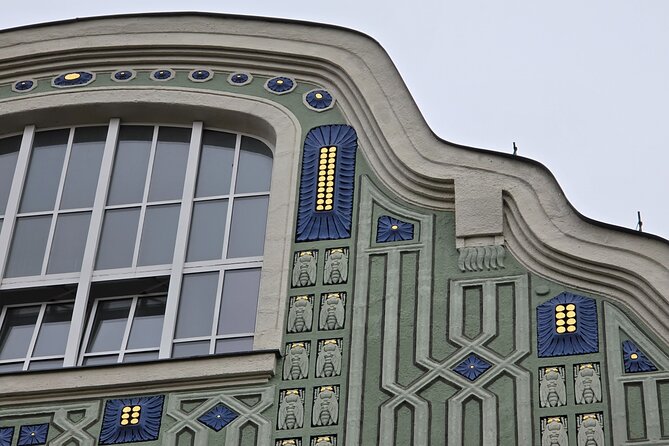
Here’s how to mentally budget your attention across the day.
Schwabing façade walking: You’ll start with an architectural tour vibe—close looking, guided framing, and stories. This is where you want to keep your phone charged, but also keep it pocketed for a few minutes at a time so you can really see the ornament patterns.
The subway transition: You switch from historic bohemian streets to a contemporary art setting. This is also why that €4.10 transit cost matters. If you treat the tour like a single neighborhood stroll, you might be surprised by the extra step. It is still easy, just not completely on foot.
The heated container workshop: You gear up, use stencils, and create your postcard set. Expect rules around protective equipment and technique. If you’re new to spray paint, don’t worry—stencils do most of the heavy lifting.
English Garden area finish: The second stop ties the creative work to a green-city context. The spray session is the main event here, and the format makes it feel like an activity break instead of another walking segment.
Who should book this Munich tour
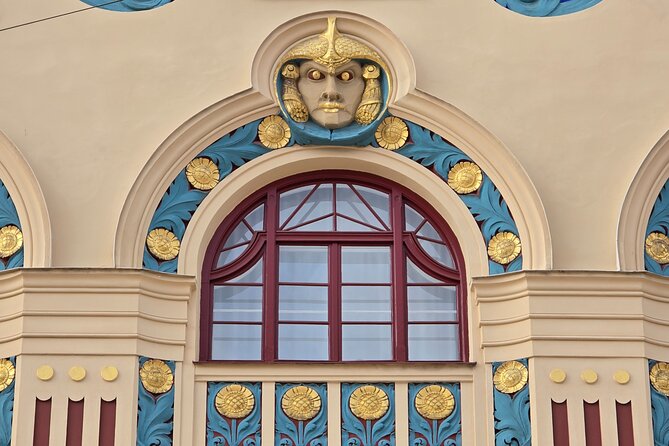
This is a strong fit if you like any of these:
- You want Art Nouveau and modern street art in one trip, without choosing one side
- You care about seeing buildings closely, not just snapping quick pictures
- You want a hands-on souvenir that connects to what you learned on the walk
- You travel with kids or teens who need a creative action, not only museum time
It may be less ideal if you hate crowds or noise. The spray-painting part is active and uses equipment. Also, if you dislike any level of walking, you might find the Schwabing portion tiring, since the day includes a neighborhood walk before the creative session.
On participation: the information says most travelers can take part, but it does not list detailed accessibility notes. If you have specific mobility needs, it’s smart to ask the provider directly before booking.
Practical tips so you enjoy every minute
A few things help you get the most out of this style of day.
- Wear clothes you don’t mind getting covered. You’ll get clothing covers, but it’s still paint-adjacent work.
- Bring a charged phone for photos, but keep expectations realistic. The workshop time is about making, not documenting.
- If you want to take your own pace with the façade viewing, choose the middle of the group so you’re not stuck trying to follow at the edges.
- If you’re planning a full day in Munich, leave buffer time afterward. A 2.5-hour tour ends back at the meeting point, so you can continue exploring without a complicated transfer.
Should you book Philipp’s Jugendstil-to-street-art tour?
If you like architecture with a creative outcome, I’d book it. The combination is the real selling point: you spend real effort looking at Jugendstil façades in Schwabing, and then you translate that looking into four postcard designs in a heated container.
The price is reasonable for a workshop-style experience with materials and safety gear included, and the small extra transit cost is easy to plan for. The bilingual format with Philipp makes it approachable, and the small group size keeps the day friendly and manageable.
If you want only a classic, quiet architecture walk with zero hands-on components, you might prefer a pure façade tour. But if you’re the type who likes to make something with your own hands, this is a fun Munich route that gives you both the art story and a take-home result.
FAQ
FAQ
What is the duration of the tour?
The tour lasts about 2 hours 30 minutes.
How many people are in the group?
The tour has a maximum of 12 travelers.
Where does the tour start and end?
It starts at lh medical management, Georgenstraße 7, 80799 München, Germany, and ends back at the same meeting point.
What time does the tour begin?
The start time is 10:45 am.
Is the tour offered in English only?
It is described as a bilingual experience in English and German, and it’s offered in English.
What is included in the price?
Included materials are spray paint, stencils, envelopes, and postcards, plus safety glasses, protective gloves, masks, and clothing covers.
What is not included?
Public transportation is not included, and it’s listed as €4.10 per person.
Do I need to buy a paper ticket?
You’ll use a mobile ticket.
Is there a spray-painting workshop?
Yes. The tour includes a hands-on spray painting activity inside a heated shipping container, where you create four postcards using stencils.
What is the cancellation policy?
Free cancellation is available up to 24 hours before the experience start time for a full refund. Cancellation within 24 hours is not refunded.