REVIEW · PARIS
Neoclassical Paris Architecture 2-Hour Private Walking Tour
Book on Viator →Operated by Paris in person · Bookable on Viator
Neoclassical Paris makes the city feel more logical. This 2-hour private walking tour turns major façades and squares into understandable ideas, with an art historian guiding you through what neoclassicism was trying to say. I like that it focuses on a specific design language and gives you a route through it instead of doing the usual greatest-hits shuffle.
What I liked most is the private format for up to 6 people, which makes it easier to ask questions and get targeted explanations. I also really enjoyed how the tour links architecture to culture and values, not just pretty details—especially with stops like Palais Brongniart and the classical squares near it.
One drawback to consider: you’re walking for the full 2 hours at a moderate pace, and the stops are spread out along central streets, so it’s not ideal if you need frequent breaks or step-to-step flexibility.
In This Review
- Key highlights worth your time
- Why neoclassical Paris feels easier when you walk it
- Palais Brongniart: where the tour’s neoclassical logic starts
- Place des Victoires: a royal square with a classical brain
- Galerie Vivienne: the arcade that helped invent the mall vibe
- Jardin des Tuileries: seeing a royal garden through neoclassical eyes
- Palais-Royal complex: neoclassicism meets commerce
- The guide experience: art historian-led, question-friendly
- Price and value: $360 per group, what you really get
- Who this tour fits best
- What to do before and after your walk
- Should you book this Neoclassical Paris walking tour?
- FAQ
- How long is the Neoclassical Paris private walking tour?
- What is the group size and price?
- Is the tour private?
- What language is the tour offered in?
- Where does the tour start and end?
- What’s included in the price?
- Is food or drinks included?
- Is admission required at the stops?
- What should I know about cancellation?
Key highlights worth your time
- Palais Brongniart as a style-and-values starting point: you get the neoclassical story from the moment you arrive
- Classical squares that shaped French taste: Place des Victoires is more than a pretty plaza
- Galerie Vivienne’s arcade heritage: a short stop that explains how shopping arcades evolved
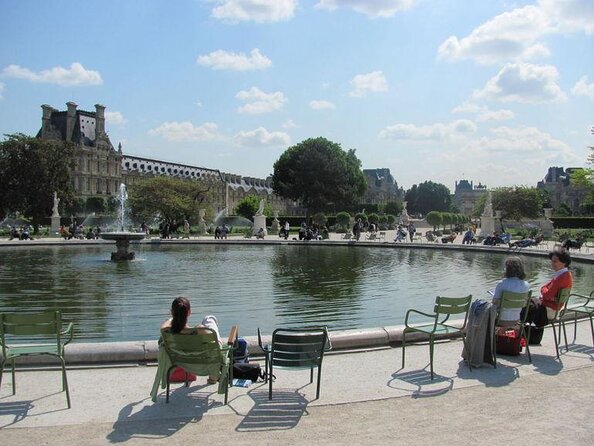
- Two layers of the Tuileries area: you view the former royal garden through neoclassical thinking
- Palais-Royal from a commercial, neoclassical angle: you’ll see how the space changed without losing the design logic
Why neoclassical Paris feels easier when you walk it
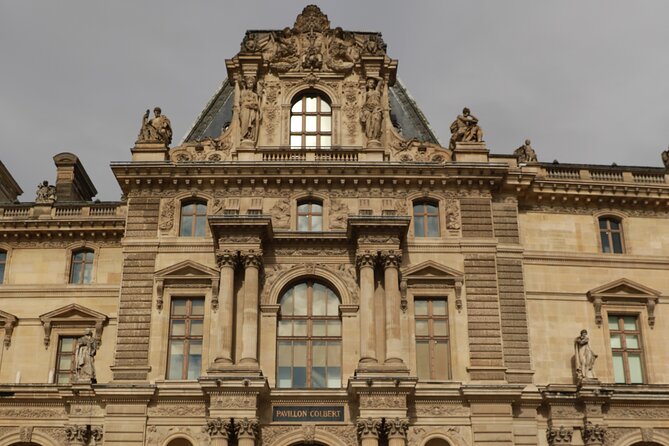
Neoclassical architecture in Paris can look “official” at first glance—clean lines, controlled proportions, statues in the right places. But on your own, it’s easy to get stuck at the postcard level: pretty buildings, lots of stone, next stop please. This tour is different because it teaches you how to read the buildings. You start noticing symmetry, references to classical antiquity, and the way design choices connect to the era’s ideals.
I like that the tour doesn’t treat neoclassicism as an abstract art lesson. You’ll see it as something designed to influence public life—where people meet, what institutions represent, and how elegance gets used to communicate power and stability. Even if you’re not an architecture nerd, the explanations have a practical rhythm: idea first, then example in front of you.
The tour is private (up to 6), and that matters in a city where group tours can move like a herd. With a smaller group, you can pause longer at the details you care about—facades, courtyards, or the way a square frames the view. And because it’s led by an art historian, you’re not just getting “what it is,” but also “why it looks like this.”
You can also read our reviews of more tours and experiences in Paris.

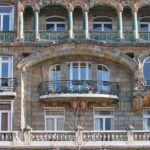
Palais Brongniart: where the tour’s neoclassical logic starts

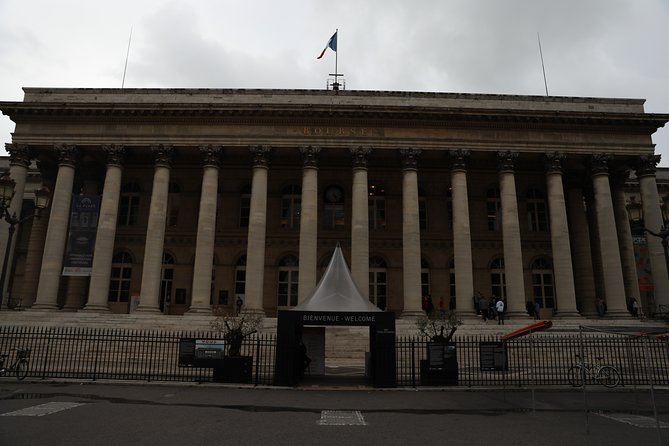
The walk begins at the former stock exchange building at Palais Brongniart, a landmark that’s central to the neoclassical look and its era’s values. This is a strong opener because it’s not a random “nice façade.” It’s a building tied to finance and institutions, so the architecture has purpose—public confidence, order, and legitimacy.
You’ll spend about 30 minutes here, and that time is well used. Neoclassical buildings reward slow looking. You’ll get time to connect what you see (proportions, references to classical forms) with what the building needed to communicate (seriousness, permanence, and authority). This stop sets your eye for the rest of the route. By the time you step away, you’re more likely to spot the same design thinking repeating around Paris.
If you’re wondering whether this kind of architecture tour gets boring, this first stop helps prevent that. It’s concrete: the building is tied to how the city functioned, not just how it looked. Also, the tour listing indicates admission is free at this stop, which is helpful when you’re planning a day of mostly outdoor viewing.
Place des Victoires: a royal square with a classical brain
Next you head to Place des Victoires, one of the four so-called royal squares of Paris. What makes it interesting is that it’s not just a location—it’s a “model” in the neoclassical chain of influence, tied to the classical predecessor that helped shape French thought and style.
You’ll get around 15 minutes here, which is short on purpose. A square can swallow time if you let it, and this stop keeps you moving with a clear goal: see how urban planning supports neoclassical ideas. Think of it like learning a new reading skill. First you learn the letters (the building language), then you practice with a paragraph (a square designed to guide sightlines and public space).
The setting also helps you understand how Paris uses open space as a stage. Neoclassicism isn’t only on buildings; it’s how the city organizes space for gatherings and ceremonies. This stop gives you that big-picture view without getting abstract.
Galerie Vivienne: the arcade that helped invent the mall vibe
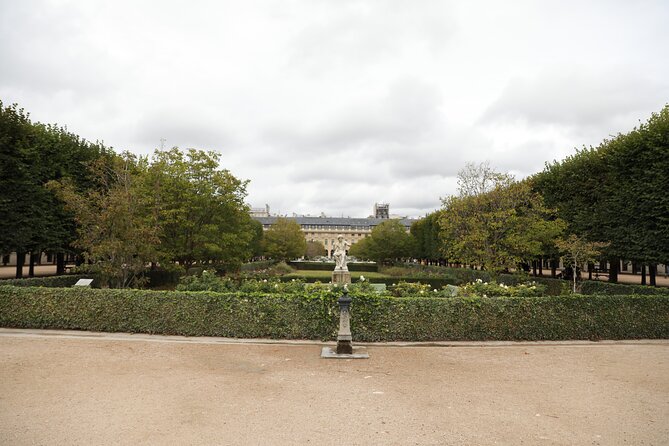
Then comes Galerie Vivienne, about 20 minutes. If you like small details, this is one of the more fun stops because it connects architecture to everyday life. The arcade is described as an ancestor to the shopping mall, and the value here is seeing how the indoor promenade idea took shape in the early 19th century.
Even if you only skim the exterior, you’ll likely feel the difference once you’re inside. Arcades create a controlled atmosphere—light filtering, shopfront rhythm, and that “city within the city” feeling. The tour frame is helpful: instead of treating it like a shopping detour, you get the design lineage. You can start recognizing how later commercial spaces borrow from these earlier covered passages.
This is also a nice midpoint of the tour. You’re still in an architecture-and-culture mode, but it’s less formal than the institutional feeling around Palais Brongniart. Admission is listed as free, and that keeps the stop practical.
Jardin des Tuileries: seeing a royal garden through neoclassical eyes
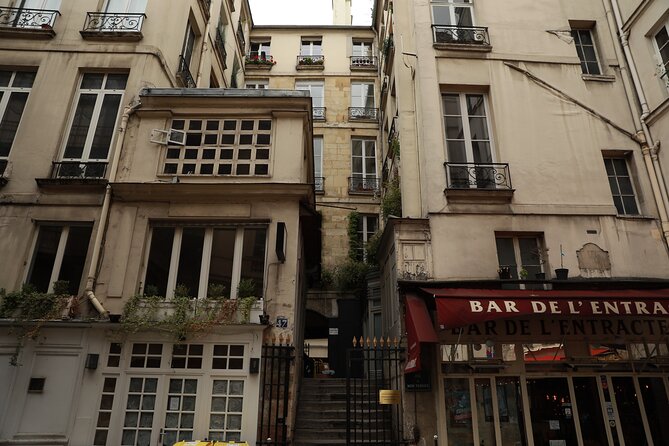
The tour continues to the Jardin des Tuileries, with about 20 minutes spent there. The emphasis is on the former royal garden, viewed through the lens of neoclassical style and thought. That matters, because gardens in this period weren’t just for leisure—they were part of how a ruler’s image gets staged in public space.
Neoclassical gardens tend to prioritize geometry and control. On a normal sightseeing walk, you might focus on the big views or the famous works of art nearby. This stop encourages you to look at the garden as a designed system. You’ll pay more attention to how pathways, alignment, and perspective create order and calm.
One practical note: garden stops can feel slower or faster depending on weather and crowd levels. This tour keeps it to a defined time slice, which helps you stay oriented and not get stuck wandering without direction. Admission is listed as free, so it’s a low-friction stop in the overall plan.


Palais-Royal complex: neoclassicism meets commerce
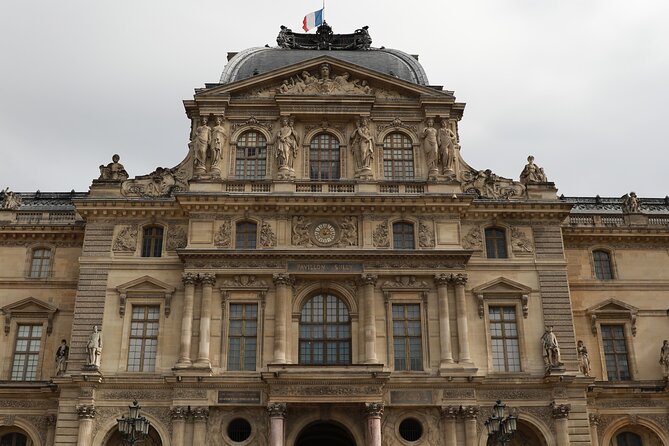
Your final leg focuses on the Domaine National du Palais-Royal, the famous Palais Royal complex in its commercial role. You’ll spend about 20 minutes here. The key idea is seeing the complex from the neoclassical perspective, even after its transformation into a commercial center.
This stop is especially valuable if you enjoy how cities evolve. Paris often preserves form while changing function. Palais-Royal is a perfect example: spaces connected to classic design later become places for daily commerce. That’s a real-life lesson in architecture’s durability. A building doesn’t just become old; it becomes repurposed, and the design helps it survive.
You also end at Arc de Triomphe du Carrousel, near Pl. du Carrousel in the 1st arrondissement, so you finish with a strong landmark view. Ending there works because it gives you a sense of arrival—a point where your brain can stop categorizing details and start thinking about the whole walk as a design story.
The guide experience: art historian-led, question-friendly
A big reason this tour earns top marks is the quality of the art historian guidance. Names that have shown up in recent experiences include art historian Mila, Melissa, and Milica (these names appear in feedback), plus guide Dunya. I can see why this matters: architecture tours go best when the guide can explain design in a way that’s easy to follow, then adjust when you ask questions.
The feedback also points to a consistent teaching style: connecting architecture to broader history and culture, and keeping the pace engaging. In a private group, that skill becomes even more useful, because you can ask a follow-up without the guide cutting you off to catch the next group.
Language is also a plus. It’s offered in English, and the tour may be operated by a multi-lingual guide. If you’re traveling with family or friends who want accurate explanations, that reduces friction—especially for architecture topics that are easy to misunderstand when the guide is rushing.
Price and value: $360 per group, what you really get
The price is $360.48 per group for up to 6 people, for about 2 hours. That’s not cheap if you’re solo. But value changes fast when you split it.
At the maximum group size, you’re roughly looking at about $60 per person (before any currency conversion effects). For an art historian-led private tour in central Paris, that’s often competitive—especially because it’s not just “look at buildings.” You’re paying for interpretation: how neoclassical style connects to the era’s institutions, public space planning, and design choices.
If you’re comparing this to a large group architecture walk, you should focus on what you gain: the ability to spend time where your eyes go, and the chance to ask about things like why a square is designed a certain way or how an arcade fits into commercial history. Private tours cost more, but they save time in a different way: they prevent the “stand there, take a photo, and move on” problem.
Who this tour fits best
This tour is a strong match if you like any of these:
- architecture that has meaning beyond aesthetics
- city planning and public space
- a guide who can explain why neoclassical design was popular
- a calmer, smaller-group approach
It’s also a good option for a family set-up as long as everyone can handle moderate physical fitness walking for about 2 hours. And because service animals are allowed and it’s near public transportation, you can usually build it into a flexible day.
If you only want the most famous landmarks of Paris, this might feel more niche. Neoclassical Paris is very real, but it’s not the loudest category. If you like the underexplored angles—and if a well-led conversation matters to you—this is more your speed.
What to do before and after your walk
To get more out of the tour, wear shoes you trust. The stops are short, but you’re still moving through central Paris. Also, keep your schedule open at either end by an hour or so. When architecture clicks, you may want to linger or return to check details.
After the tour, I’d suggest you pick one thing you want to revisit: maybe Palais-Royal’s relationship between old form and new function, or the way squares create perspective and crowd movement. With this tour’s framing, those later walks feel more intentional.
And if you’re building a multi-day plan, this one pairs nicely with art and museum time. Even though the tour is focused on streets and exteriors, it makes museum-looking easier because you’ve already learned how design communicates values.
Should you book this Neoclassical Paris walking tour?
Book it if you want a 2-hour private architecture experience led by an art historian, with stops that connect neoclassical design to institutions, squares, gardens, and commercial spaces. The value gets especially good if you have 3–6 people to share the cost.
Skip or swap it if you want a high-energy, photo-every-30-seconds tour, or if walking for two hours at a moderate pace is hard for you. Also, if neoclassical architecture doesn’t interest you at all, you may find the topic too focused.
If you like understanding the city’s design logic, this is the kind of tour you’ll remember when you see neoclassical buildings later. It gives you a sharper eye, and it makes Paris feel less like random landmarks and more like a carefully planned idea.
FAQ
How long is the Neoclassical Paris private walking tour?
It lasts about 2 hours.
What is the group size and price?
It’s priced at $360.48 per group for up to 6 people.
Is the tour private?
Yes. It’s a private tour/activity, so only your group participates.
What language is the tour offered in?
The tour is offered in English. A multi-lingual guide may operate the tour.
Where does the tour start and end?
It starts at Bourse75002 Paris, France and ends at Arc de Triomphe du Carrousel, Pl. du Carrousel, 75001 Paris, France.
What’s included in the price?
A professional art historian guide is included, along with the private tour.
Is food or drinks included?
No. Food and drinks are not included.
Is admission required at the stops?
Admission is listed as free at the stops described.
What should I know about cancellation?
Free cancellation is available up to 24 hours in advance for a full refund.