REVIEW · PARIS
Private Art Nouveau and Art Deco tour near Opera
Book on Viator →Operated by A Journey in Paris · Bookable on Viator
Paris can be all poetry and pain. This walk turns the city into a design lesson. You’ll connect Art Nouveau flourishes you’ve walked past a thousand times with the places you actually notice, from Gare Saint-Lazare to the big glass-and-stone statements around Boulevard Haussmann.
Two things I really like: you get a proper inside-out view of architecture (not just looking at the outside), and you end up in places most people ignore, like the stained-glass and ironwork moments in big department-store spaces. One consideration: it’s only about two hours, so the guide has to focus on what’s right around you, not a full-style lecture on every Art Nouveau and Art Deco twist.
In This Review
- Why This Art Nouveau and Art Deco Route Works Near Opéra
- Quick Snapshot: What You’re Paying For
- Key Stops That Make the Tour Worth It
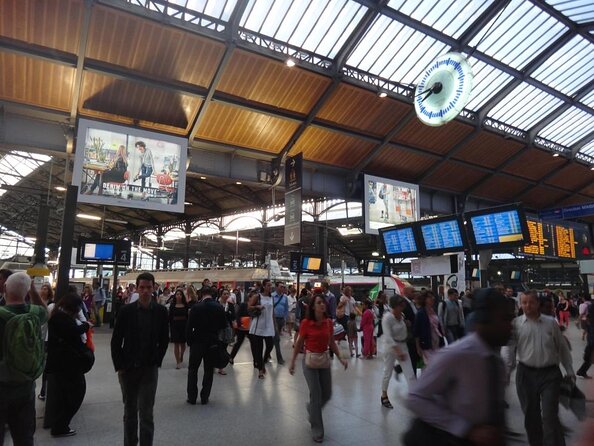
- Saint-Lazare: Start by Looking Up at Paris’ Transportation Monument
- The Brasserie Break: Art Nouveau in a Place You Can Relax
- Boulevard Haussmann and Galeries Lafayette: The Dome Moment
- Printemps: More Art Nouveau Details Without the Big-Crowd Focus
- Palais Garnier Exterior: Finish by Framing the Opera Like a Landmark
- Art Nouveau to Art Deco: How the Guide Helps You See the Shift
- Price and Value: Is $180.23 Worth It?
- What to Expect During the Walk (And How to Prepare)
- Who This Tour Is Best For
- Should You Book This Private Art Nouveau and Art Deco Tour Near Opéra?
Why This Art Nouveau and Art Deco Route Works Near Opéra
This part of Paris is where styles overlap and compete. Around the Opéra area, you can watch the city shift from the late-1800s decorative energy of Art Nouveau into the early-1900s move toward more geometric, structured design that leads toward Art Deco.
The smart value here is the concentration. In one afternoon you’ll see transport architecture (a major train hub) plus commercial architecture (department stores) plus a ceremonial landmark (Palais Garnier). That mix helps you understand why Paris feels modern: it keeps reinventing its public spaces.
And yes, it’s a private tour, so you’re not stuck with a slow-moving group or listening to explanations you can’t hear. You’ll also be walking at a pace that fits a moderate fitness level.
Quick Snapshot: What You’re Paying For
- Duration: about 2 hours
- Meeting point: Saint-Lazare, 13 Rue d’Amsterdam, 75008 Paris
- End point: near Opéra, by Opéra Garnier, Pl. de l’Opéra (exterior area)
- Start time: 3:00 pm
- Language: English
- Ticket: mobile ticket
- Included: a professional guide + one drink at a brasserie
- Price: $180.23 per person
For the money, the biggest win is not the ticket lines. It’s the guidance—being pointed upward, inside, and toward details that make the architecture click. If you’ve ever looked at Paris and thought, I know I’m missing stuff, this style of tour is made for that.
You can also read our reviews of more tours and experiences in Paris.

Key Stops That Make the Tour Worth It
- Saint-Lazare as architecture, not just a station
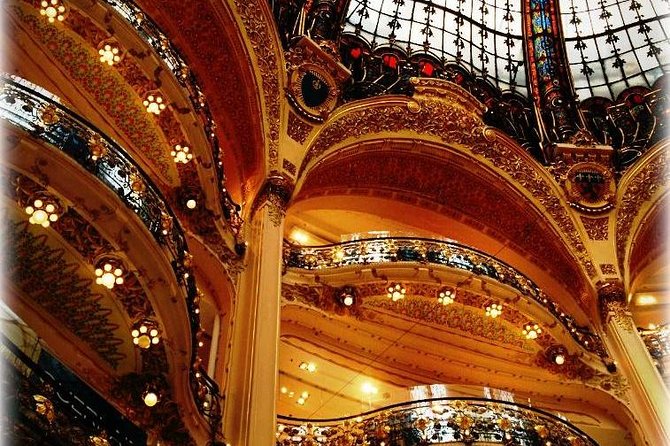
- Galeries Lafayette’s stained-glass dome and gilded balcony look-ins
- A brasserie stop with classic Art Nouveau character (often Mollard)
- Printemps Art Nouveau details you might miss at street level
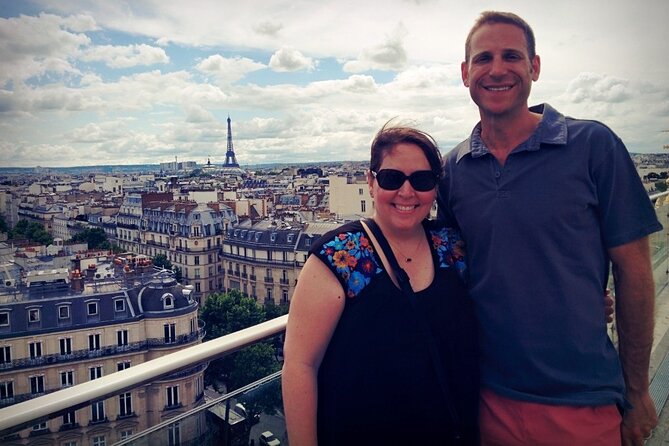
- Rooftop or observation-level views tied to the department-store structures
- Palais Garnier exterior views so you see it like a design object
Saint-Lazare: Start by Looking Up at Paris’ Transportation Monument
You begin outside Saint-Lazare train station, and that’s a great move. Stations are where cities show their ambition. Here, you’re not just arriving in Paris—you’re learning how a major transport hub helped shape the surrounding architecture and rhythm of the area.
The station stop is timed at about 30 minutes, with the guide pointing out features and how the station’s development influenced what grew around it. Practically, this sets you up for the rest of the walk: once you spot the logic of materials and structure in a station, the iron-and-glass style language in nearby buildings makes more sense.
Also, don’t treat this like a quick photo break. The most fun part is scanning for details: how the station frames light, how surfaces meet, and how ornate elements work alongside function.
The Brasserie Break: Art Nouveau in a Place You Can Relax
Next, you head to an old Art Nouveau brasserie near the station for about 30 minutes, with one drink included. This is where the tour earns its “private and personal” feel. You’re sitting down, but the guide keeps teaching—pointing out design elements you’d normally miss because you’re busy ordering or people-watching.
Some guides on this route often favor spots like Mollard, where the architecture and interior details can feel almost like a small museum. The appeal isn’t just decoration. It’s how Art Nouveau turns everyday pauses—coffee, hot chocolate, conversation—into part of the aesthetic.
Practical tip: take a minute before your drink arrives to look across the room. Art Nouveau interiors reward slow glances. If you spend the whole time scrolling your photos, you’ll lose the patterns.
Boulevard Haussmann and Galeries Lafayette: The Dome Moment
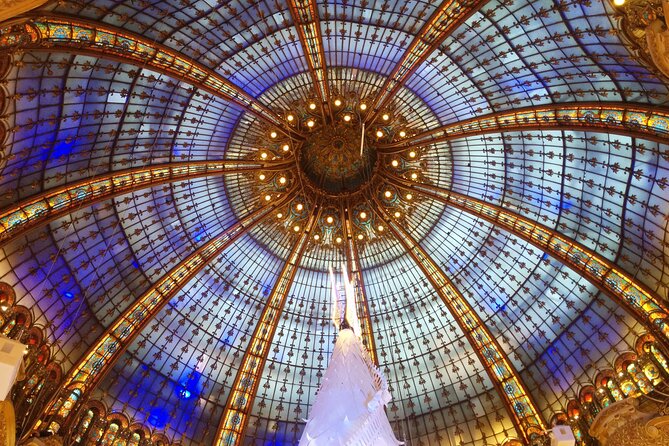
Then you move to Boulevard Haussmann and the massive facade of Galeries Lafayette Paris Haussmann. From street level, it’s impressive. From inside, it’s a full-on lesson in how glass, iron, and decorative elements can work as one system.
The stop is about 30 minutes, and this is where you’re likely to experience the wow factor: a towering stained-glass dome ceiling and gilded balcony details that feel designed for the act of looking upward. You’ll also get “hidden” views—small angles and interior sightlines that are hard to find if you only stroll in and out.
Why this is valuable: department stores were more than shopping boxes. They were new civic interiors—places that said modern life could be grand, bright, and a little theatrical. Once you connect that to the station start, it all clicks: Paris wasn’t waiting for monuments. It was building style into daily movement.
If you want photos, bring your phone camera game. The best shots often come from where the guide directs you—standing still long enough for the dome to fill your frame.


Printemps: More Art Nouveau Details Without the Big-Crowd Focus
After Galeries Lafayette, you head to Printemps for another about 30 minutes. This stop helps balance the tour. Galeries Lafayette can feel like the headline. Printemps adds texture: other Art Nouveau choices in a similar “commercial temple” setting.
The guide’s focus here is on architectural features that don’t get much attention from passersby. You’ll likely spot design elements tied to the building’s structure and light—things that look like decoration until you realize they also guide how the space feels.
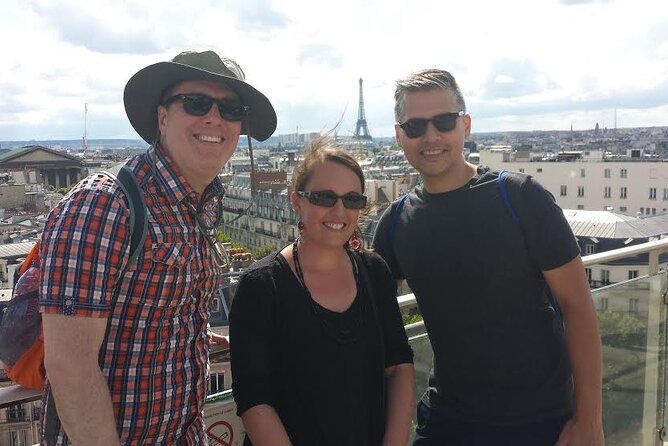
Some parts of this route also connect to higher-level viewing spaces, including rooftop or observation-level viewpoints within these big department-store structures. That matters because Paris architecture isn’t only read from the street. You see patterns, rooflines, and the geometry of the city when you gain height.
Practical tip: wear shoes you trust. Even if the walking time is short, the floor can be busy and you might move between spots inside large buildings.
Palais Garnier Exterior: Finish by Framing the Opera Like a Landmark
The tour concludes near Palais Garnier with exterior-only viewing. You’re not going inside here, but that can actually be a win. When you see the opera house’s stonework and structure after you’ve studied the station and department-store architecture, Palais Garnier feels less like a random famous building and more like another expression of Paris’ design ambition.
This is your last “big visual anchor.” The late-19th-century design has that unmistakable opera-house confidence—mass, ornament, and theatrical presence. Even from the outside, it’s the kind of place that changes how you look at the whole neighborhood.
If you’re the type who plans your route based on landmarks, this exterior finish is smart. It drops you right where you can keep exploring on your own—especially if you want to walk further around Opéra afterward.
Art Nouveau to Art Deco: How the Guide Helps You See the Shift
The title includes both Art Nouveau and Art Deco, and even if your stops lean heavily Art Nouveau, the guide ties the styles to how Paris evolved. What you’re really learning is the design mindset: Art Nouveau tends to favor flowing ornament and nature-inspired curves, while later Art Deco moves toward cleaner lines and stronger geometric structure.
In this neighborhood, that transition feels natural because the city built in layers. The guide’s job is to help you notice what stays consistent—like the love of grandeur in public interiors—and what changes in form.
So you leave with more than pretty domes. You leave with pattern recognition. Next time you’re in Paris, you’ll spot which buildings are speaking in which style language, even when you’re just walking past on your way to dinner.
Price and Value: Is $180.23 Worth It?
At $180.23 per person for about two hours, this isn’t the cheapest way to see architecture. But it’s not trying to be. The value is in four places:
First, it’s a private format, so the guide can steer your attention at the exact moments that matter—like the dome view timing or where to stand to see interior details.
Second, you get one drink included, which offsets cost while also making the brasserie stop feel real, not staged. You’re building a memory you can repeat: the interior you saw while taking a break.
Third, you’re covering high-impact sites in a compact walk. Stations, major department stores, and the Opéra area in one go is efficient, especially if you only have a short afternoon.
Fourth, the guide experience is the difference between seeing buildings and understanding why they were designed that way. In this kind of tour, a good guide turns 50 photos into 50 useful observations.
If you’re traveling solo or with a small group and you care about architecture even a little, this price can feel reasonable because it’s built around attention and access to observation points, not just duration.
What to Expect During the Walk (And How to Prepare)
This is a walking tour, but it’s not a grueling hike. You’ll need moderate physical fitness, mostly because you’ll move between central landmarks and spend time inside large spaces where you’ll likely climb a bit or reposition for views.
You’ll also want to time your day. A 3:00 pm start is often great because light changes what you’ll see in glass and stained ceilings. If your schedule allows it, plan to have some flexible time afterward around Opéra, since the tour ends right there.
One small strategy that helps: don’t try to “collect every fact.” Instead, listen for the guide’s main themes—how stations and commercial interiors shaped Paris, how decorative design signals modern life, and how to read a building as structure first and ornament second.
Who This Tour Is Best For
I’d book this if you:
- Love architecture and want it explained in plain language, tied to what you can see
- Want a focused afternoon around Gare Saint-Lazare, Boulevard Haussmann, and the Galeries Lafayette / Printemps area
- Prefer a private experience where the guide can adapt if you ask questions
- Want a break that still fits the theme, thanks to the included brasserie drink
You might skip it if you only want a quick postcard tour or you’re not interested in interiors and design details at all. This route works because you care about what’s above eye level and inside the public spaces.
Should You Book This Private Art Nouveau and Art Deco Tour Near Opéra?
Yes, if you want a short, high-impact architecture afternoon that teaches you how to look. This tour’s strength is the combination: a major station start, a classic brasserie pause, then the dramatic interior/design spaces of department stores, finishing near Palais Garnier.
The reason it gets strong scores is simple: you come away feeling like you noticed Paris instead of just passing through it. If you’re in town for a first visit or you only have one afternoon to spend on design-focused sightseeing, this is a smart pick.
If you’re on the fence, do this rule: if you’d rather stare at domes and tilework than chase a long checklist of landmarks, you’ll enjoy this. If you just want the biggest monuments with minimal interpretation, you may feel the two hours move a bit fast.