REVIEW · PARIS
Art nouveau Paris tour
Book on GetYourGuide →Operated by Paris in person private tours · Bookable on GetYourGuide
Art Nouveau in Paris is not just pretty doorways—it is a whole way of thinking. This private 2-hour Art Nouveau Paris tour turns that style into something you can spot fast, from the earliest roots of the movement to the more mature Belle Époque phase. I especially like that the route mixes famous-looking architecture with less-obvious places like a major theosophic building and the design instincts behind metro-area details.
What I love most is the way the guide connects symbolism + social history, not just shapes and dates. I also like the stop at the Ceramic Hotel, because it gives you that hit of color and texture that Art Nouveau does better than almost any other style. One consideration: this tour is more about careful looking and ideas than it is about ticking off a list of the top grand landmarks.
The walk pace is steady and not strenuous, but you will still want comfortable shoes and the willingness to stand and study façades for a few minutes at a time.
In This Review
- Key things that make this Art Nouveau tour worth your time
- Arriving at the meeting point and getting oriented fast
- The big idea: Art Nouveau’s roots, then its mature Belle Époque style
- Stop 1: Ceramic Hotel and the joy of looking closely
- Stop 2: Avenue Rapp with Jules Lavirotte
- Stop 3: Theosophic Society of Paris and the Art Nouveau mindset
- Stop 4: Paris metro-area design cues and everyday Art Nouveau
- Stop 5: Eiffel Tower links and the style’s modern edge
- Stop 6: Picasso’s favorite drinking dens and Belle Époque culture
- How the guide approach boosts the experience (and what to look for)
- Price and value: is $171 per person fair for 2 hours?
- Who should book this Art Nouveau Paris tour
- Should you book it? My practical take
- FAQ
- What’s the duration of the Art Nouveau Paris tour?
- Is this tour private?
- Where does the tour start and how do I find the guide?
- What’s included in the price?
- What languages is the tour offered in?
- Is there a cancellation policy?
Key things that make this Art Nouveau tour worth your time
- You learn the “why” behind Art Nouveau: symbolism, not only ornament.
- Ceramic Hotel façade time: one of Paris’s most striking Art Nouveau showpieces.
- Avenue Rapp with Jules Lavirotte: walk a small stretch and get big architectural payoff.
- Theosophic Society of Paris building: see how ideas tied to occult/spiritual circles show up in design.
- Eiffel Tower connections: a surprising link between Art Nouveau-era thinking and iron-and-glass modernity.
- Picasso-era drinking dens talk: Belle Époque culture through the eyes of artists.
Arriving at the meeting point and getting oriented fast
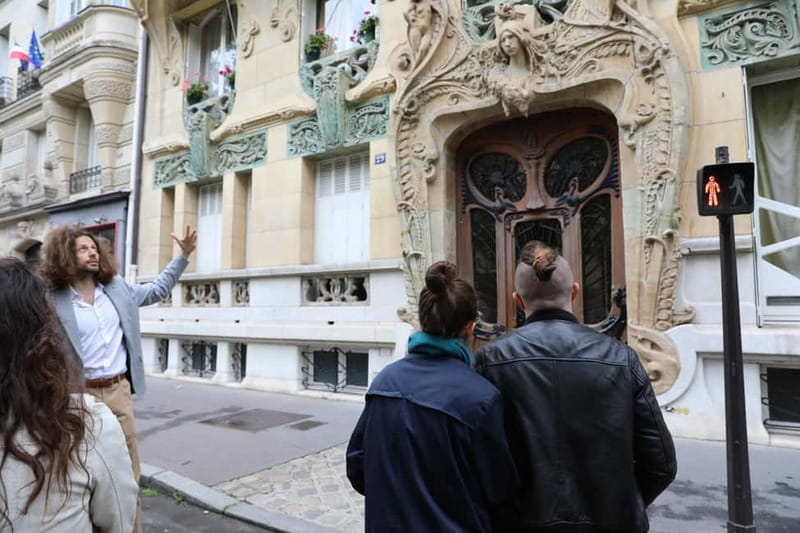
You start at street level, which is exactly where Art Nouveau makes sense. Meet your guide in front of the Franprix at the corner of rue de l’Université and avenue de la Bourdonnais. You’ll know your person by the red canvas tote bag.
Why this helps you: Art Nouveau is scattered. If you try to “self-tour” you end up wandering, checking maps, and missing the details that make the style. This start point also puts you in the Paris rhythm right away—no fancy lobby, no lecture hall energy. Just you, your guide, and façades.
This is a private group, so you are not stuck listening to people who only want photos. Your guide can adjust the pace if you want more time staring at flourishes or fewer stops.
You can also read our reviews of more tours and experiences in Paris.
The big idea: Art Nouveau’s roots, then its mature Belle Époque style
This walk is built like a story. You begin at the roots of Art Nouveau, then you move toward a more mature phase—so the buildings feel like chapters instead of random samples.
Here’s what your guide is doing for you (and why it matters): Art Nouveau gets described as elegant and innovative, but that label is too generic. The real magic is in what the style signals—confidence in the modern era, belief in design as something that belongs in everyday life, and symbolism that sometimes hints at spiritual or philosophical worlds.
If your brain likes patterns, you will notice how motifs and shapes start to read like a language. Curves, flowing lines, and nature-like forms aren’t just decoration. They act like visual metaphors—softening the straight lines of industrial modern life with something more human.
Stop 1: Ceramic Hotel and the joy of looking closely
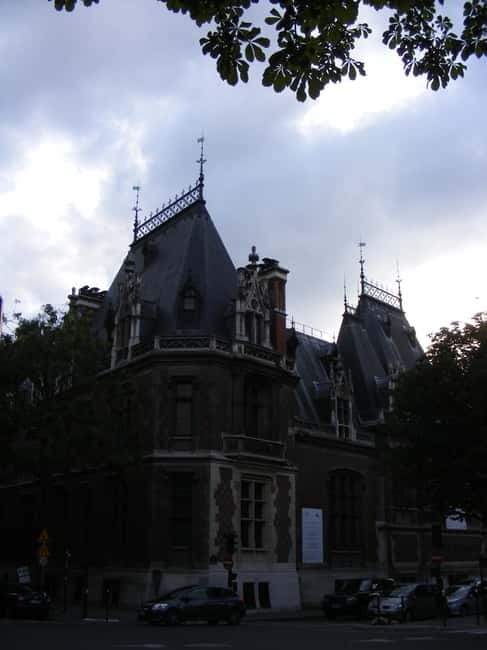
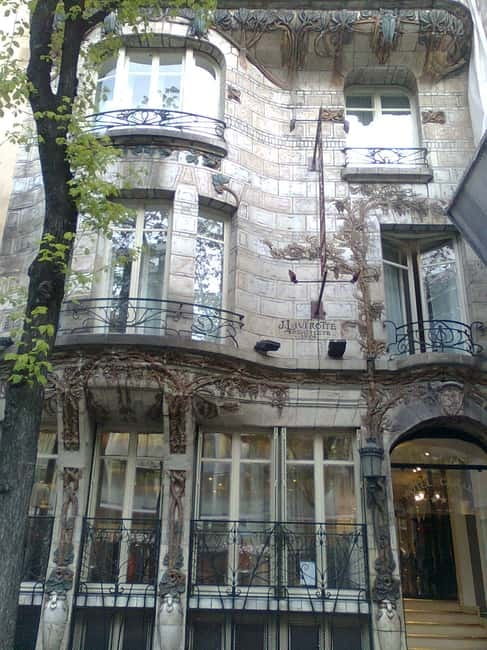
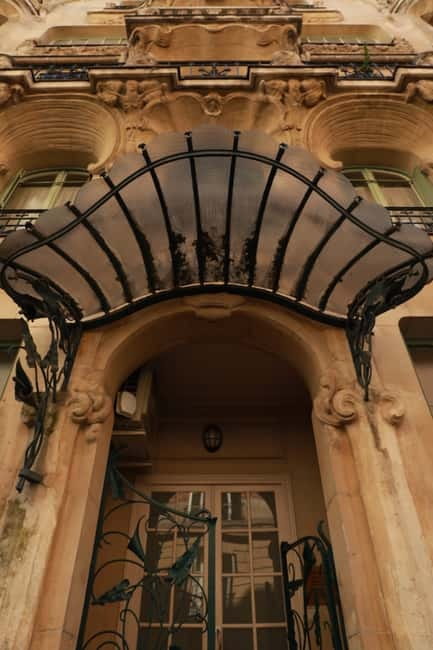
One of the highlights is the Ceramic Hotel (the guide specifically aims for its façade). This is the kind of place where you can’t just glance and move on. The entire front turns into a lesson in texture, color, and how Art Nouveau treats surfaces like art.
What you should do during this stop: slow down. Look at how the façade uses ceramic detail to catch the light and how the design wraps around the building rather than sitting flat. Art Nouveau often feels like it’s in motion, and this is where that feeling becomes obvious.
Why I like this stop for your money: it’s a concentrated example of the style’s best trick—making ornament look intentional and integrated. If you only see one “wow” building on the walk, this is the one your eyes will remember.
Possible drawback here: because the building is such a strong visual, it’s easy to treat it like a single photo moment. If you want the full value, spend a few minutes longer than your camera habit.
Stop 2: Avenue Rapp with Jules Lavirotte
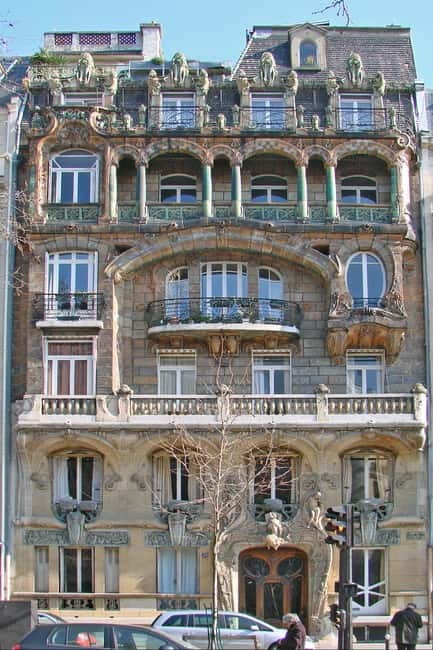
After the Ceramic Hotel, you walk down Avenue Rapp to see houses by Jules Lavirotte. This is where the tour starts to feel like a neighborhood-level architecture lesson.
Lavirotte’s work is the right choice for this tour because it’s both flamboyant and readable. Your guide can point out how the façade design relates to the idea of beauty as something crafted, not something accidental.
What to notice on Avenue Rapp:
- how the building’s vertical rhythm guides your eye
- how ornament supports the structure instead of fighting it
- how the vibe shifts building to building, even on the same street
Practical tip: keep your pace slow enough to stop when your guide gestures. Art Nouveau rewards attention, and Avenue Rapp is the kind of place where you’ll miss the best bits if you treat it like a passing street.
Stop 3: Theosophic Society of Paris and the Art Nouveau mindset
Next up is the imposing Theosophic society building in Paris. This stop is important because it pushes you beyond “pretty style” into “why artists and patrons loved this look.”
Art Nouveau often connects to spiritual and philosophical interests—sometimes explicitly, sometimes through the mood the buildings create. Theosophy is one of those threads your guide helps you see. Even if you don’t know anything about theosophical ideas, the architecture can still make sense as a visual statement: it’s confident, symbolic, and not afraid of mystery.
How this helps you: it gives a context for the more unusual symbols you might notice on façades around the city. Instead of wondering whether something is random, you can interpret it as part of a larger worldview—design as meaning.
One consideration: if you want only mainstream, famous sights, the symbolism-heavy stops can feel a bit more “thinky” than “touristy.” The good news is that the tour keeps it readable and practical.

Stop 4: Paris metro-area design cues and everyday Art Nouveau
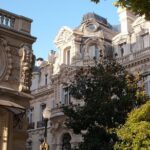
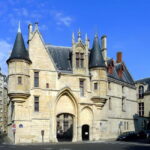
The tour overview also includes metro stations. Even when you’re not inside a station, you can often spot how Paris integrates design into public life. That is a core Art Nouveau principle: make the city feel like an artwork, not just a place to pass through.
This matters because it changes how you see Paris after the tour. You’ll start noticing design choices that most people ignore—how signage, entrances, and decorative elements shape the first impression of a place.
Don’t overthink it while you’re there. Just look for patterns: curves versus hard geometry, nature-inspired forms, and the way the city’s “infrastructure” borrows artistic language.
Stop 5: Eiffel Tower links and the style’s modern edge
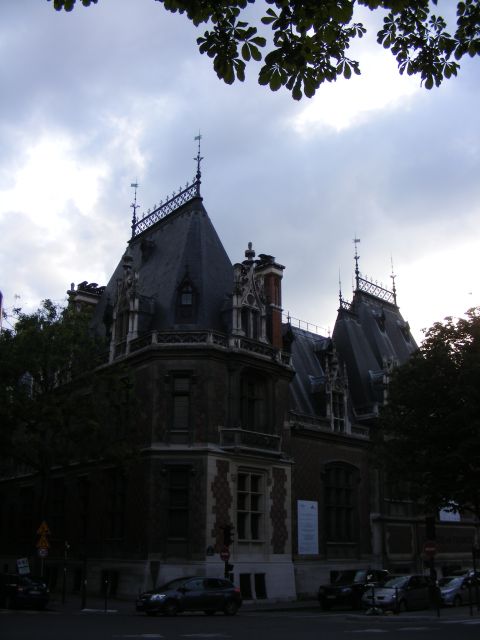
The tour includes links between Art Nouveau and the Eiffel Tower. This is a smart pairing because it lets your guide explain how the modern era wasn’t only about engineering—it was about aesthetics too.
Even if the Eiffel Tower is iconic in a way Art Nouveau buildings aren’t, the connection helps you see the period as one cultural moment. The late 1800s and early 1900s were obsessed with progress, and Art Nouveau is one way that progress got dressed up with elegance and symbolism.
During this stop, I’d expect the guide to frame the story as a tension:
- the tower as a symbol of industrial modernity
- Art Nouveau as a response that makes modern life feel more expressive and human
If you’ve ever wondered how these seemingly different parts of Paris connect, this is the moment that clears it up.
Stop 6: Picasso’s favorite drinking dens and Belle Époque culture
Another standout element is learning about Picasso’s favorite drinking dens, along with more Belle Époque culture threads. This is not the same as museum-time Picasso, and that’s the point. You’re seeing how artists lived around design, nightlife, and social energy.
Why it belongs in an Art Nouveau tour: Art Nouveau is tied to wealthy clients and refined tastes, but it also sits inside a broader creative atmosphere. If you understand the social setting—who met, where, and what they talked about—you get a better sense of why the style spread when it did.
What to take from this part: treat it like street-level context. It’s the difference between knowing dates and actually understanding why a certain look catches on.
How the guide approach boosts the experience (and what to look for)
The tone of the guiding seems to be a big reason people rate this highly. One name that appears in feedback is Boris, and the consistent theme is a guide who can connect Art Nouveau to a wider cultural and philosophical context. People also appreciated that the walking was not strenuous, and the stops were chosen to represent key ideas without turning into a race.
Here’s how you can get the most out of your own guide, regardless of who leads:
- Ask one question about symbolism when you see an unfamiliar motif
- Spend one extra minute on whatever building the guide reacts to most
- If you love details, request a bit more time at the Ceramic Hotel or the Lavirotte façades
Your guide’s job is to make Art Nouveau feel less like a school topic and more like something you can read in the street.
Price and value: is $171 per person fair for 2 hours?
At $171 per person for a 2-hour private walk, the value depends on what you want from Paris.
If you’re the type who likes architecture more than generic sightseeing, you’ll probably feel this price lands in the right zone. You’re paying for:
- a focused route (Ceramic Hotel, Avenue Rapp, Theosophic society building)
- interpretation (history + symbolism, not just photos)
- a private format where you can control the pacing
If your idea of a “tour” is mostly to get from one huge landmark to the next with minimal thinking, you might not get enough payoff. This one earns its keep by making Art Nouveau legible. That takes time, and the tour dedicates that time to the stops that do the best job teaching the style.
Who should book this Art Nouveau Paris tour
This tour fits best if you:
- love architecture and want to learn how to read it
- enjoy symbolism and cultural context, not only style labels
- want a small, efficient walk with high visual payoff
- like private guiding and a slower pace for façade watching
It may be less ideal if you:
- only want major, world-famous monuments
- dislike guided interpretation and prefer self-paced wandering
Should you book it? My practical take
I think this is a strong choice for anyone who wants Art Nouveau to click. The pairing of Ceramic Hotel + Avenue Rapp (Jules Lavirotte) + Theosophic building, plus the extra cultural links to the Eiffel Tower and Picasso’s drinking dens, makes the tour feel more like a well-built narrative than a photo walk.
If you’re curious about why the style looked the way it did—and what people were trying to say with it—book this. If you’re mostly hunting for checklist landmarks, you might feel under-stimulated.
FAQ
What’s the duration of the Art Nouveau Paris tour?
The tour lasts 2 hours.
Is this tour private?
Yes. It’s a private group tour with a live guide.
Where does the tour start and how do I find the guide?
Meet your guide in front of the Franprix store at the corner of rue de l’Université and avenue de la Bourdonnais. Look for the guide with the red canvas tote bag.
What’s included in the price?
The only listed inclusion is the guide.
What languages is the tour offered in?
The tour guide is available in English and French.
Is there a cancellation policy?
Yes. You can cancel up to 24 hours in advance for a full refund. The activity also offers a reserve now & pay later option.