REVIEW · PARIS
Architectural Bourgeois Paris 19th Century
Book on Viator →Operated by Paris Promenade · Bookable on Viator
Nineteenth-century Paris still feels alive. This small-group walk turns the city’s bourgeois Belle Époque look-and-feel into something you can actually see, from landscaped parks to department-store glass.
I especially liked the way François, a 19th-century Paris historian, explains what you’re standing in front of, and how comfortable he is speaking French and English. I also liked the pacing: with a maximum of 10 travelers, it stays relaxed enough to take photos without feeling rushed.
The main consideration is simple: it is still a 2-hour walking tour, and the site-to-site movement expects moderate physical fitness, so wear good shoes.
In This Review
- Key Points to Know Before You Go
- A Historian Guides You Through Bourgeois Paris
- Price and Value: What $68.65 Gets You
- Parc Monceau: Colonnades, Bridges, Pyramids, and People-Watching
- Haussmann’s Statue and the Logic of Wide Boulevards
- Saint-Augustin Church: Step Inside the 1860s
- Backside Views at Gare Saint-Lazare: Industry Meets Money
- Printemps and Galerie Lafayette: The Grand Magasins Finale
- Timing, Pace, and Practical Tips That Actually Help
- Who This Tour Suits Best
- Should You Book This Bourgeois Paris 19th-Century Tour?
- FAQ
- How long is the tour?
- What time does the tour start, and where does it end?
- Is there a mobile ticket?
- What’s included during the tour?
- How big is the group?
- Can I cancel for a refund?
Key Points to Know Before You Go
- A historian guide who actually connects the dots between buildings, politics, and everyday life in 19th-century Paris
- Small group size (max 10) that keeps the experience comfortable and conversation-friendly
- Photo-ready stops from Parc Monceau’s park designs to the grand interior of Galerie Lafayette
- Haussmannian Paris, explained on the street, not as a vague textbook idea
- Railroad-era Paris at Gare Saint-Lazare, including the industrial-money vibe of the neighborhood
- You end inside Galerie Lafayette during opening hours, a strong payoff for the walk
A Historian Guides You Through Bourgeois Paris
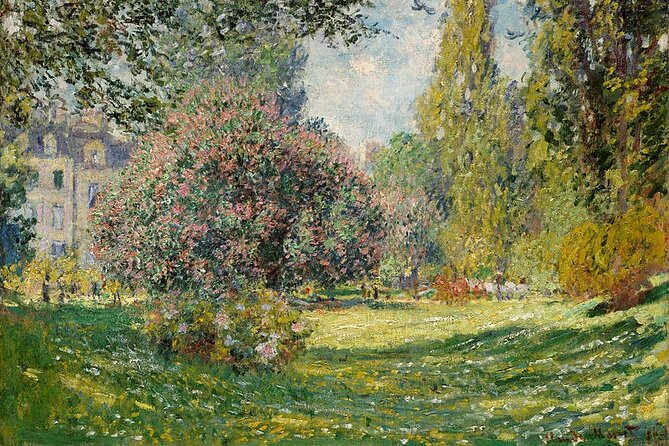
This tour isn’t about sprinting from landmark to landmark. It’s about learning how 19th-century Paris got its look—through architecture, art, and nature—and how the bourgeois world lived alongside all that beauty. The result is a stroll that feels visual and logical at the same time.
François is the kind of guide who makes history feel practical. He’s specialized in the 19th century in Paris, and you can tell he’s passionate about the 8th district’s atmosphere and design choices. That matters, because you’re not just hearing dates—you’re learning why these streets and buildings were made the way they were.
He also keeps the language accessible. In the best way, the tour supports both French and English, so you’re not left guessing while he points out details.
You can also read our reviews of more tours and experiences in Paris.



Price and Value: What $68.65 Gets You
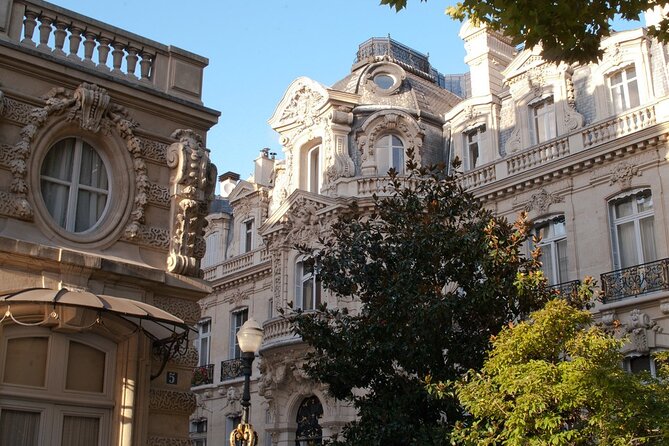
At $68.65 per person for about 2 hours, you’re paying for a focused, guided route with time at multiple high-interest stops. The value is less about a bargain price and more about the quality of interpretation: you’re hiring a historian to help you read the city.
The group size helps justify it. With a maximum of 10 travelers, you get more of the back-and-forth that turns “I saw a building” into “I understood what I saw.” That’s what good guided tours do when they’re short: they give you clarity fast.
You’ll also appreciate the mobile ticket setup. It’s one less thing to manage while you’re outside in the middle of the route.
Parc Monceau: Colonnades, Bridges, Pyramids, and People-Watching
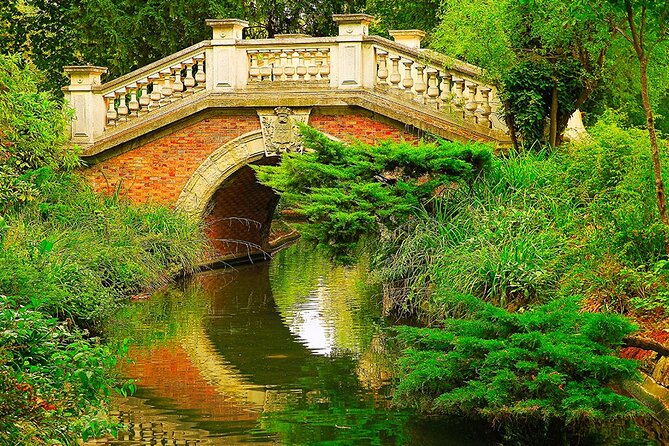
Your first stop is Parc Monceau, and it’s a great opener because it shows a different side of 19th-century life. This park isn’t just trees. You get designed features—an ancient-style colonnade, a bridge, and even a pyramid—plus plenty of “how did they think of that” architectural whimsy.
What makes Parc Monceau work on a walking tour is the mix. You can stand somewhere attractive, get a photo, and then keep moving as the park reveals new shapes and sightlines. It’s the kind of stop where the guide’s talk helps you notice what you’d otherwise miss.
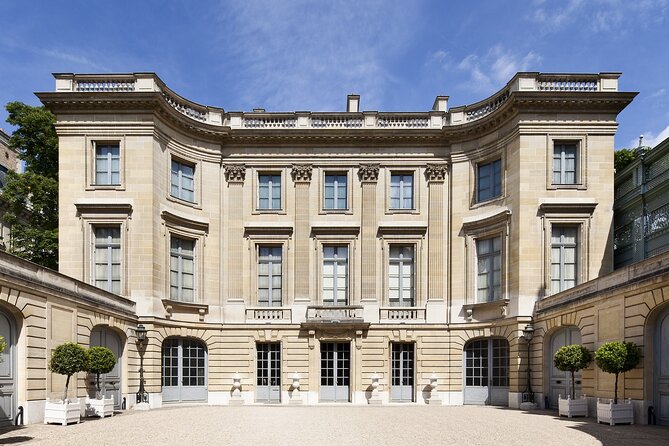
You’ll also pass landmarks that add texture to the bourgeois story, including Hotel Menier and the Pagoda of Mr. Loo. There’s also the hôtel particulier of Camondo along the way. Those names matter here because they connect wealth, design taste, and how private grandeur shows up in public space.
One practical note: parks are great for photos, but they can also tempt you to slow down. Keep an eye on the time so you still get the full arc of the route.
Haussmann’s Statue and the Logic of Wide Boulevards
Next you pause at the Statue d’Haussmann. This is your street-level reminder that Paris didn’t just grow—it was redesigned. Baron Haussmann is the figure tied to the transformation, and standing at his statue makes the changes feel more grounded than abstract history.
From there, the walk goes through the heart of Haussmannian Paris, where you’ll see the typical apartment blocks and the wide boulevards. Even if you’ve seen Haussmann’s style on postcards, the difference is that the tour helps you read the pattern: the buildings, the spacing, and the way the city breathes at street level.
This part is especially useful if you’ve ever felt lost in central Paris. Haussmann’s planning gives you a kind of visual grid, and the guide’s commentary helps you recognize it while you’re walking.
Saint-Augustin Church: Step Inside the 1860s
Saint-Augustin Church is one of the most rewarding stops because you get a chance to enter. The church was built in the era of the tour, with construction tied to 1860, so you’re not just sightseeing—you’re stepping into the look and atmosphere of that period.
As you go in, focus on how the building expresses the time’s values through its form and presence. This is the kind of stop where your guide can point you to details you might otherwise overlook in a quick exterior-only visit.
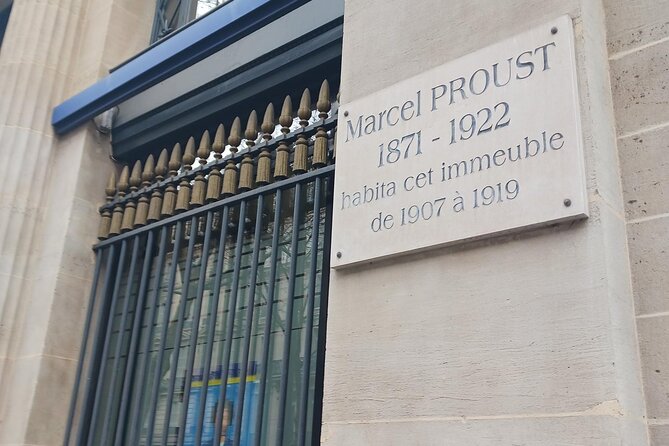
There’s also a potential detour by request linked to literature. If you ask, you can pass the location where writer Marcel Proust lived and wrote A La Recherche de Temps Perdu. Even if you’re not a die-hard reader, it adds a human layer: this part of Paris wasn’t only for architecture and money; it fed ideas too.


Backside Views at Gare Saint-Lazare: Industry Meets Money
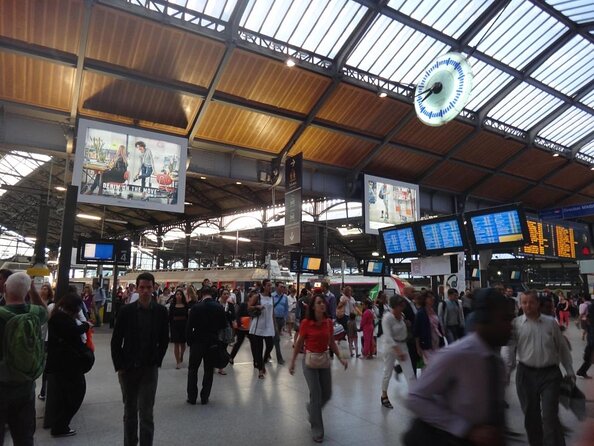
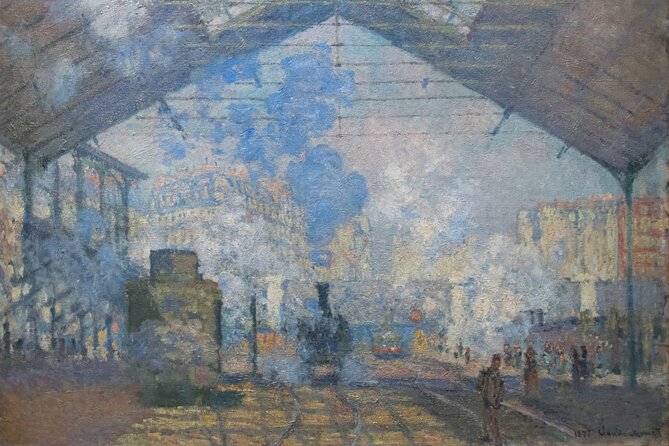
Gare Saint-Lazare is your shift from refined elegance to the engine room of 19th-century modernity. You’ll pass the back side of Gare Saint-Lazare, and that choice is smart. Seeing the rear side and rail infrastructure is more revealing than just snapping a front-facing photo.
The guide connects the railroad story to the people who benefited from it. Industrialization made many entrepreneurs rich, and the tour focuses on how they lived in the surrounding neighborhoods. That’s a key theme of 19th-century Paris: money wasn’t floating in the abstract. It was built into transportation, commerce, and where people chose to reside.
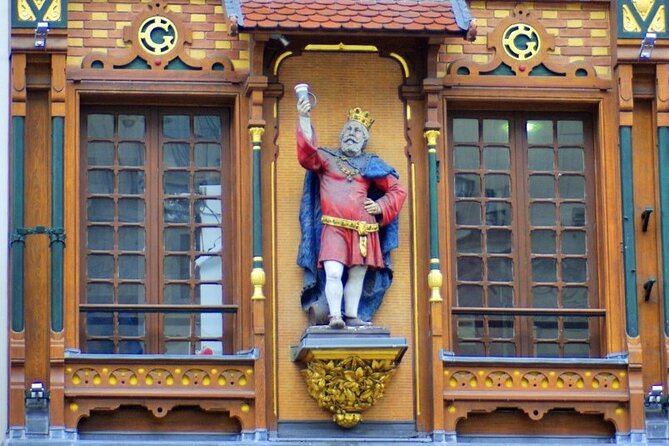
There’s also a fun, visual moment near the station area. You’ll spot the remarkable house of Le Roi de la Bière, and yes, there’s also a restaurant of McDonald there. It’s a reminder that cities evolve, and sometimes the old and new share the same frame.
If you like architecture, city planning, or the rise of modern transport, this stop will land well. It turns a station into a historical document.
Printemps and Galerie Lafayette: The Grand Magasins Finale
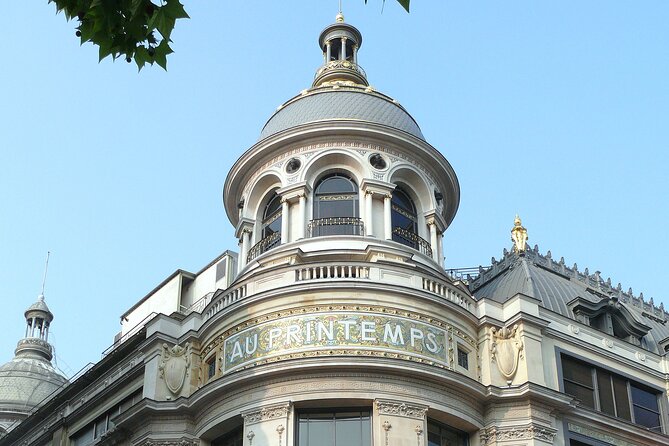
The tour ends with a classic 19th-century Paris phenomenon: the grands magasins, the great department stores. These weren’t just shopping. They were social spaces and symbols of modern lifestyle—places where luxury, design, and consumer culture could all be experienced under one roof.
You pass Printemps, then the guide brings you into Galerie Lafayette during opening hours. This is a strong ending because it’s the payoff for the walk’s theme. You start in planned nature, move through Haussmann’s urban design, cross into church-era grandeur, then finish in a building made to impress.
When you step inside, let the space work on you. Think of it as 19th-century Paris putting its best foot forward with light, structure, and spectacle. Even if you don’t plan to buy anything, you’re there for atmosphere and scale—and the tour makes sure you don’t treat it like a quick stop.
Timing, Pace, and Practical Tips That Actually Help
This is an about-2-hour experience, and it’s laid out with several timed moments. That means you’ll move with purpose, but the pace should feel manageable. The small group size and François’s approach make it easier to ask questions without feeling like you’re holding everyone back.
You should plan for standing and walking more than museum-style sitting. If your legs tire easily, consider doing a longer warm-up walk beforehand in the morning so you’re not starting cold.
Photo tip: bring your phone or camera charger habitually for later in the day if you like pictures. The route is packed with visual variety—park geometry, boulevard perspectives, church interior moments, and the department-store environment.
Also, don’t rely on snacks being handled for you. Coffee and/or tea aren’t included, so if you want a drink break, be ready to buy it on your own schedule.
Finally, the route is near public transportation, which makes it easier to connect before or after. The tour itself is set up with a start time of 10:30 am, so try to arrive early enough to settle your head and shoes.
Who This Tour Suits Best
This is ideal for you if you like Paris as an architectural story. You’ll get a lot out of it if you enjoy urban design, 19th-century building styles, and how public space and wealth mixed together.
It also suits couples and small groups who want something more guided than wandering. Because it’s capped at 10 travelers, it’s easier to stay engaged and ask follow-up questions.
If you want a fast checklist tour, this might feel slower than you expect. The value is in understanding, not in collecting ten stops without context.
Should You Book This Bourgeois Paris 19th-Century Tour?
I’d book it if you want a short but meaningful route through how 19th-century Paris was shaped—parks, Haussmann planning, a church from the 1860 era, a railroad neighborhood, then the grand magasins finish. François’s mix of friendly delivery and expert 19th-century knowledge makes the city feel less like random sightseeing and more like a connected story.
I’d think twice if you’re trying to squeeze in a super-light day. It’s still a walking experience, and moderate fitness helps you enjoy it without stress. If that’s your situation, wear comfortable shoes and plan a slower recovery after.
If you’re curious about the Belle Époque vibe but you’d like it explained with street-level detail, this tour gives you exactly that.
FAQ
How long is the tour?
It lasts about 2 hours.
What time does the tour start, and where does it end?
It starts at 10:30 am. It ends at 40 Bd Haussmann, Paris (Galerie Lafayette).
Is there a mobile ticket?
Yes. The tour uses a mobile ticket.
What’s included during the tour?
Galerie Lafayette is included during opening hours.
How big is the group?
The maximum group size is 10 travelers.
Can I cancel for a refund?
Yes. Free cancellation is available up to 24 hours before the experience’s start time for a full refund.