REVIEW · ROME
Art Nouveau Rome: Villa Torlonia & Coppedé Private Tour
Book on GetYourGuide →Operated by Eyes of Rome Private Tours · Bookable on GetYourGuide
Owls, stained glass, and Rome’s quieter Art Nouveau. I love how this tour pairs Villa Torlonia’s eclectic architecture with the Coppedè Quarter’s storybook streets, so your walk feels like one continuous theme instead of two random stops. You also get a guide who can connect what you see to the bigger picture, from design details to wider cultural context. One thing to consider: it involves a fair amount of walking, and the pace is built around the average guest unless you request changes.
At Villa Torlonia, I like the specific moments you’re guided to—like Mussolini’s 1930s presence and the tucked-away architecture designed to impress without being showy. Then at Casina delle Civette, you’re pointed toward the stained glass and inlaid wood that make the “House of the Owls” feel almost theatrical. The potential drawback is simple: if you’re expecting a long, slow sit-down tour, this one is more about moving through rooms, viewpoints, and details at an efficient pace.
Because it’s private, you’re not stuck with a loud herd. You can ask questions, slow down for what catches your eye, and the route stays focused on the Art Nouveau side of Rome that most visitors miss.
In This Review
- Key things I’d plan for
- Villa Torlonia and Coppedè: why this combo works in 3 hours
- Getting there fast: Via Nomentana 70 and the taxi-friendly start
- Villa Torlonia: the Casino Nobile, the Villino Nobile, and Mussolini’s layered presence
- Casina delle Civette (House of the Owls): stained glass, inlaid wood, and a discreet refuge
- Quartiere Coppedè and Piazza Mincio: Gino Coppedè’s Art Nouveau fantasy in a real neighborhood
- Price and value: $362.51 for a private, design-focused half-day
- The guide makes the difference: Marco and the art-to-literature style
- Who should book Art Nouveau Rome: Villa Torlonia & Coppedè
- Should you book this private Art Nouveau tour?
- FAQ
- FAQ
- How long is the Art Nouveau Rome tour?
- Where does the tour start?
- Which places are included?
- Are entrance fees included?
- Is this a private tour?
- What languages are available?
- Is there much walking?
- Is the tour wheelchair accessible?
- How many guides are you likely to have?
Key things I’d plan for
- Blue Badge private guide + skip-the-line access so you spend time looking, not waiting
- Casino Nobile and Villino Nobile context, including the Torlonia family story and Mussolini’s use in the 1930s
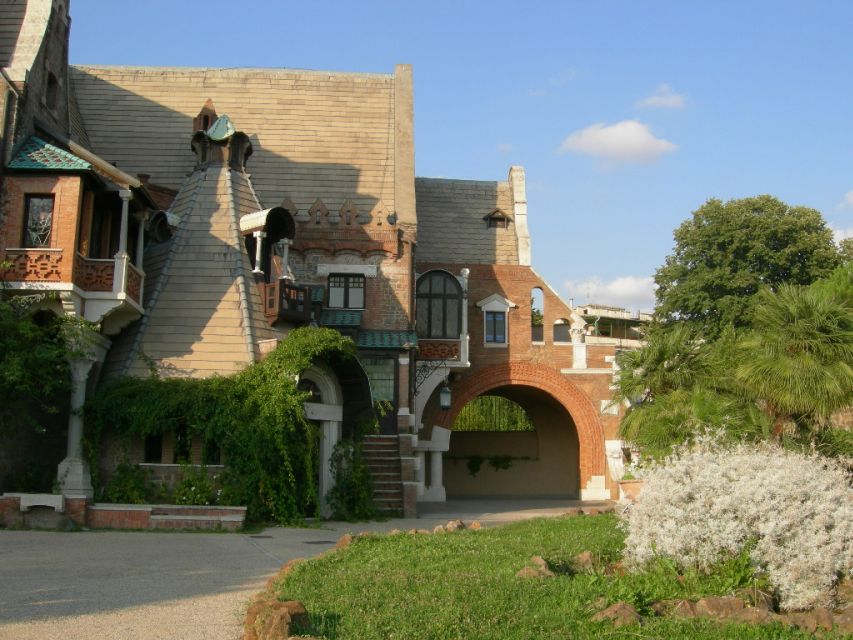
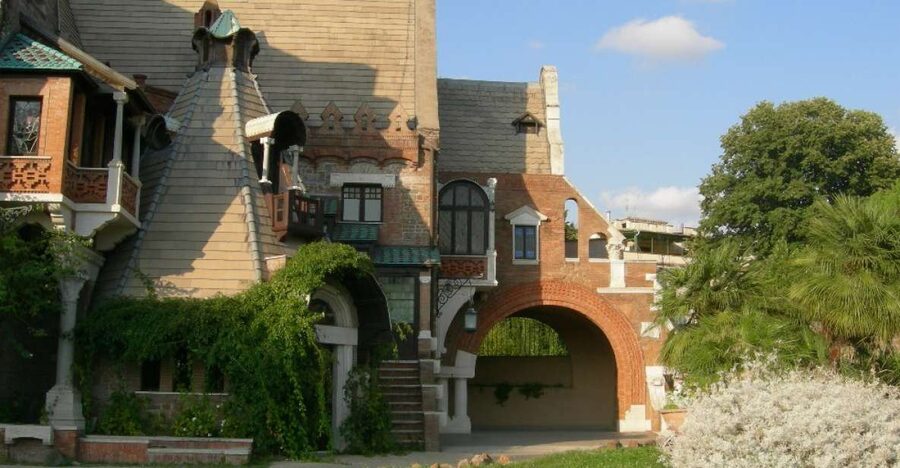
- Casina delle Civette (House of the Owls) for stained glass, inlaid wood, and multi-level interior decoration
- Piazza Mincio in Quartiere Coppedè, where Art Nouveau turns into a walking stage set
- A smaller, residential feeling Coppedè walk, away from the most standard tourist routes
- Wheelchair accessible, with itinerary adjustments possible if mobility is an issue
Villa Torlonia and Coppedè: why this combo works in 3 hours
This is one of those Rome tours where the theme is strong. Instead of trying to cover the whole city, you focus on two closely linked ideas: wealthy power made visible through architecture, and Art Nouveau imagination pushed into the everyday. Villa Torlonia gives you the first part of the story—grand buildings, carefully designed interiors, and the Torlonia family’s identity taking physical form. Then Coppedè shifts the mood into a more whimsical, decorative world.
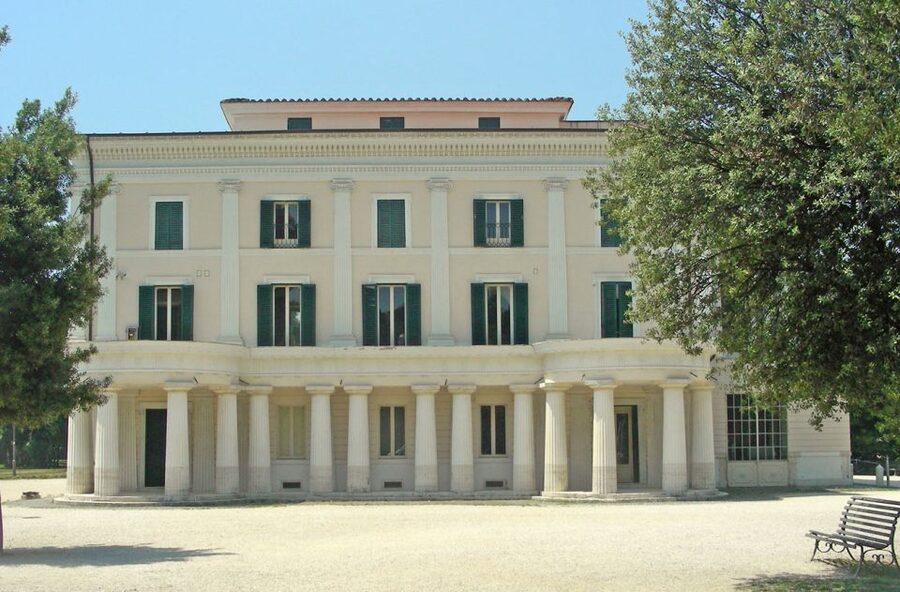
What I like most is that you don’t just get “pretty buildings.” You get why they look the way they do. You’ll hear about the Villa Torlonia setting as an early 19th-century home built for a rich banking family ennobled by the pope a century earlier. That background matters because it explains the mix of formality and escape: some spaces are meant to host and impress; others are meant to withdraw from public life.
You’ll also learn how the Villa’s role changed over time. In the 1930s, Mussolini made it his home. That means you’re not only seeing Art Nouveau flourishes later in the day—you’re also seeing how Fascist-era power moved into existing elite spaces. The contrast gives your photos more meaning.
Finally, the Coppedè Quarter section works because you’re guided through it as a walkable neighborhood, not a checklist of landmarks. You’re pushed to notice design choices along the way, and you end up in the magic of Piazza Mincio, which feels like a theatrical square dropped into an otherwise residential area.
You can also read our reviews of more tours and experiences in Rome.

Getting there fast: Via Nomentana 70 and the taxi-friendly start
You start at Via Nomentana 70, at Villa Torlonia’s entrance near the ticket office. Practically speaking, this is a convenient starting point because the Villa Torlonia area is about 10 minutes by taxi from central Rome. If you’re staying near most of the historic-core hotels, that short transfer usually helps you keep the day feeling relaxed instead of rushed.
Because it’s a private tour, your guide can manage your timing around the building entry flow and your energy level. The tour is listed as about 3 hours, with guided time inside Villa Torlonia (1.5 hours) and dedicated time at the House of the Owls (45 minutes) and Quartiere Coppedè (45 minutes).
One detail that matters for comfort: the sites are reached on foot once you’re in the area, and the tour involves a fair amount of walking. If you’re traveling with mobility needs, you should flag it ahead of time because the itinerary may be adjusted. If you prefer a slower pace, you can see fewer sites—private guides can simplify without losing the value of the explanations.
Tip: wear shoes you trust. Even when a tour is “only” 3 hours, the time adds up when you’re standing in rooms and moving between buildings and viewpoints.
Villa Torlonia: the Casino Nobile, the Villino Nobile, and Mussolini’s layered presence
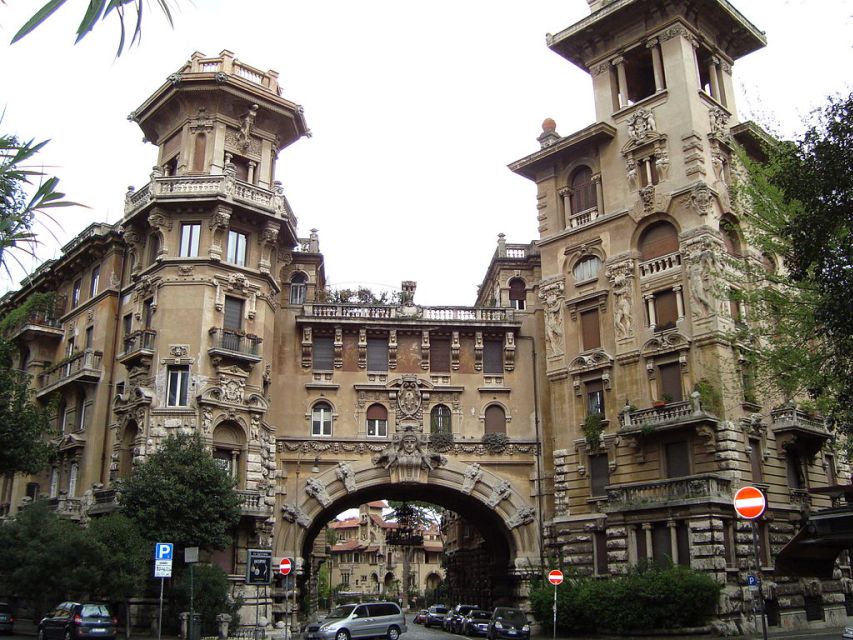
Villa Torlonia is a lesson in how power and wealth build their own stage. Your first stop centers on Villa Torlonia, including the Casino Nobile built for a Torlonia prince. This matters because you’re not just roaming; you’re learning how the family’s status translated into architectural statements—formality where it counts, and clever privacy where it doesn’t.
You’ll get the timeline too. The villa’s origins connect to early 19th-century wealth: an affluent banking family ennobled by the pope a century earlier. That’s the kind of detail that changes how you read the buildings. You start to look at rooms and details like they were designed with a specific social identity in mind.
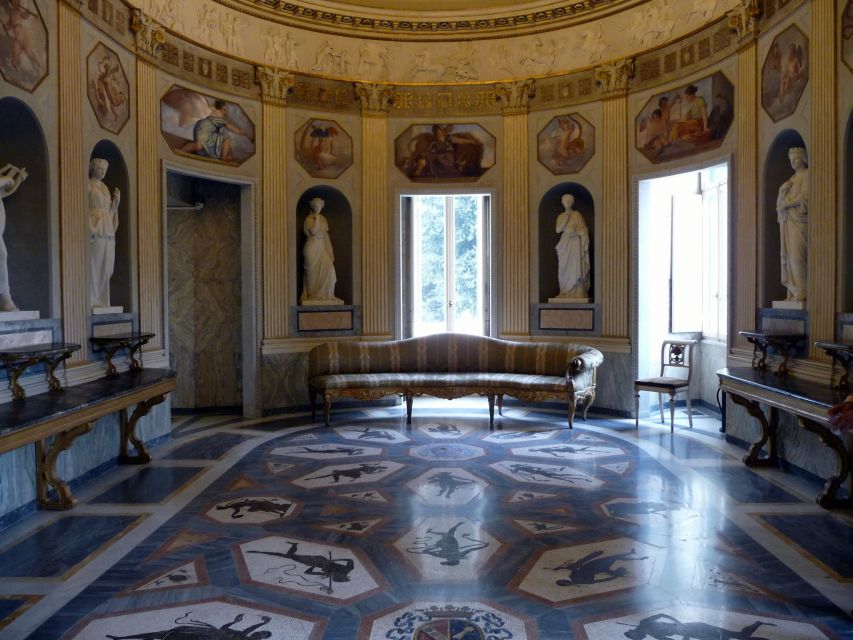
Then comes the 1930s shift. You’ll learn that Mussolini lived here in the 1930s. The tour specifically notes that the separate bedrooms he and his wife Rachele used were on the upper floor of the Villino Nobile. The original furniture is no longer there, so the rooms won’t feel like a preserved museum set. Instead, they become a snapshot of how the space was used, and how political life temporarily occupied elite domestic architecture.
One of the most striking parts for many people is what’s underground. The basement provided access to two bunkers Mussolini built: one intended as a bomb shelter and the other as a gas shelter. You don’t need a military background to grasp the significance. It reframes the villa. This wasn’t only pleasure and display—it was also contingency planning for an era of intense fear and control.
If you’re the type who loves details, this stop rewards you. Look out for how the tour guides you through the villa’s design choices and how those choices relate to the people who lived there. The best tours make architecture feel like it has a personality, and Villa Torlonia does.
Casina delle Civette (House of the Owls): stained glass, inlaid wood, and a discreet refuge
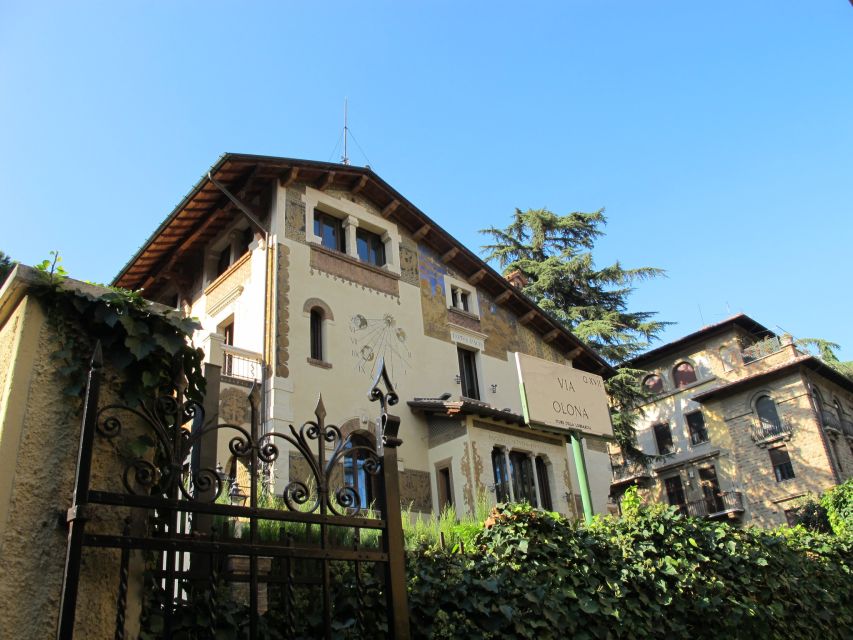
Next is Casina delle Civette, the House of the Owls. This is the stop where the whimsy hits. The building was the former residence of Prince Giovanni Torlonia the Younger until his death in 1938. The key idea here is location and intention: the house sits at the edge of the park in a discrete spot. It was designed as a refuge from the formality of the main residence.
That word refuge is important. When you walk into a space like this, you can expect the design to feel more personal—less about hosting society and more about private comfort with artistic flair. And the tour points out something that many people miss when they just take photos: the architecture is the product of transformations and additions planned by different architects, using a mix of artisanal and industrial materials. So it didn’t all come from one single, tidy master plan. You’re seeing the evolution of taste.
Now to the interior elements that make this building famous. You’ll explore two internal levels, decorated with artistic sculptures and furniture with pictorial effects. You’re also directed toward some of the best examples of local stained glass and inlaid wood, sourced from Rome’s local workshops.
This is where I think the tour delivers real value, especially if you’re not an Art Nouveau expert. The guide isn’t just naming features. You learn how the stained glass and inlaid wood function as part of the overall design language. It’s not decoration slapped on top; it’s part of how the building creates atmosphere.
Practical note: because this is an interior-focused stop, it’s a great time to slow down and really look at surfaces. If your group is prone to speeding through, politely ask your guide to spend a few extra minutes on the window details. Casina delle Civette can be photogenic, but the real payoff is in noticing the craftsmanship.
Quartiere Coppedè and Piazza Mincio: Gino Coppedè’s Art Nouveau fantasy in a real neighborhood
After the villa and the House of the Owls, the mood changes—still Art Nouveau, but more public-facing. You move into Quartiere Coppedè, where your guide highlights the architecture designed by Gino Coppedè and points out elements as you walk.
What makes this section special is the setting. Coppedè isn’t presented as a theme park. It’s described as one of Rome’s finest residential neighborhoods, and you experience it at street level. That shift changes how you see Art Nouveau. It’s not only for grand villas and museums. Here, it shapes the look of everyday blocks.
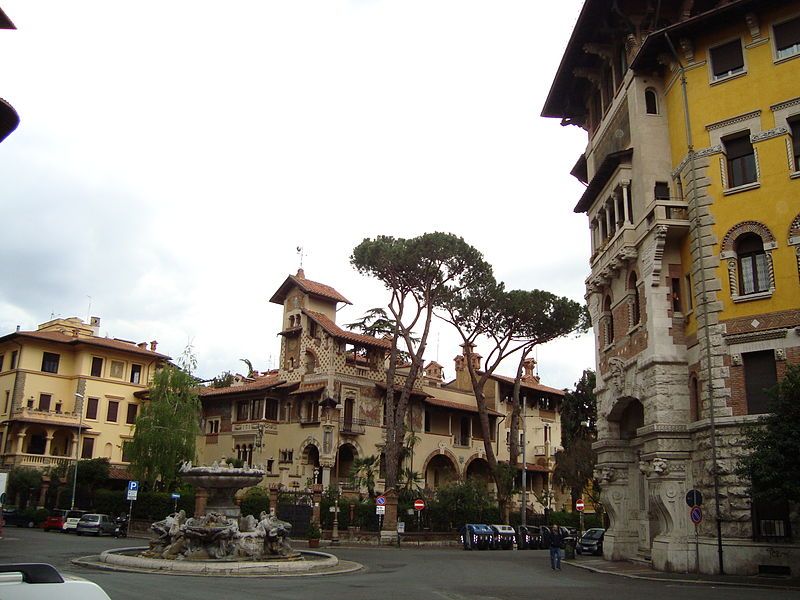
A key highlight is Piazza Mincio—described like a magical kingdom. That’s a useful mental model. Piazza Mincio feels like the kind of square where you expect something unexpected to happen, because the architecture works like a visual script. Towers, facades, and decorative details create a playful tension between fantasy and livable design.
You’ll also learn that this walk takes you through a district that sits away from the most typical tourist routes. That matters if you’ve already done the big-ticket sights. You get to feel like you’re seeing a different Rome—one where design is still visible in the built fabric of the city.
For many people, this is the “wow” ending to the tour. The final 45 minutes can go fast, so it helps to prioritize what you love most: facades, window details, or street-level perspective for photos. Your guide can steer you to the right angles without turning it into a rushed photo stop.
Price and value: $362.51 for a private, design-focused half-day
This tour runs at $362.51 per person for about 3 hours. That sounds like a lot until you break down what you’re actually buying.
You’re getting:
- a private tour (not a shared group with fixed pacing),
- a Blue Badge guide,
- museum entrance fees included,
- a skip-the-line entrance approach through a separate entrance,
- and a guided walking tour that combines interiors plus a neighborhood walk.
So the price isn’t only “time with a guide.” It’s access and interpretation wrapped together. At Villa Torlonia, entrances and guided time are part of the value; without a knowledgeable guide, it’s easy to walk around and miss what makes the architecture meaningful. The guide’s explanations are clearly a major part of why people rate this experience so highly, including detailed connections between art and literature.
You also get the advantage of private pacing. If you’re tired from a busy morning, you can ask to see fewer sites at a slower rhythm. That flexibility is rare on tours that are strictly timed for large groups.
Bottom line: if you want Art Nouveau you can actually understand—plus political-era context at Villa Torlonia—this price starts to feel like paying for interpretation and access, not just sightseeing.
The guide makes the difference: Marco and the art-to-literature style
One of the most consistent strengths tied to this tour is the guide. Marco is described as a history and archaeology professor at Sapienza, and that shows in the way he teaches: detailed, structured explanations that move from what you’re looking at to broader context.
People also highlight his punctuality and the fact that he’s kind and well prepared. That matters more than it sounds. A tour like this can easily turn into either a rushed slideshow or a dry lecture. The best version is a mix: clear facts paired with an eye for what to notice. The feedback on Marco suggests he’s strong at doing exactly that—covering art and literature connections while still keeping the experience relaxing.
If you care about more than just captions on your phone, that kind of teaching is the difference between seeing stained glass and actually understanding why it’s there.
Who should book Art Nouveau Rome: Villa Torlonia & Coppedè
I’d put this tour near the top of your list if you:
- want Art Nouveau in Rome that goes beyond the standard “big sights” rhythm,
- like architecture with a story, including dramatic historical layers,
- enjoy walking through neighborhoods rather than only inside monuments,
- want a private guide who can slow down for questions.
I’d also suggest it for people who have already seen central Rome sights and are looking for a different side of the city. Villa Torlonia gives you elite domestic architecture plus Mussolini-era context. Coppedè then gives you the playful, decorative side of Art Nouveau in a place that still feels like a real neighborhood.
If you hate walking or have limited mobility, you can still consider it, especially since it’s listed as wheelchair accessible, but you should flag mobility needs early so the route can be adjusted.
Should you book this private Art Nouveau tour?
Yes—if your goal is to see Rome’s Art Nouveau world with context, not just pretty facades. This tour earns its reputation through the combination of: important interiors, high-impact design (especially the House of the Owls), and a Coppedè walk that feels like you’re discovering a residential Rome many people skip.
I’d say book it if you can handle a moderate amount of walking and want a guide-led experience that connects architecture to history and culture. If you want maximum monument count, you might feel like 3 hours is short. But if you want quality, specific highlights, and a thoughtful pace, this is a strong use of your time.
FAQ
FAQ
How long is the Art Nouveau Rome tour?
It lasts about 3 hours.
Where does the tour start?
The meeting point is at Via Nomentana 70, near the ticket office entrance of Villa Torlonia.
Which places are included?
You’ll visit Villa Torlonia, Casina delle Civette, and the Quartiere Coppedè area.
Are entrance fees included?
Yes. Museum entrance fees are included.
Is this a private tour?
Yes. It’s a private group tour.
What languages are available?
The live guide is offered in English, Italian, French, and Spanish.
Is there much walking?
Yes, the tour involves a fair amount of walking, and the pace is based on the average client. If you prefer slower, you can see fewer sites.
Is the tour wheelchair accessible?
It’s listed as wheelchair accessible, and if anyone has mobility issues, the itinerary may be modified.
How many guides are you likely to have?
The tour is led by a live tour guide (Blue Badge guide). The group is private, so you’re not sharing with strangers.