REVIEW · MADRID
Madrid: Gran Vía Rooftops and Architecture Tour
Book on GetYourGuide →Operated by architoursmad . · Bookable on GetYourGuide
Gran Vía has a way of surprising you. This tour turns Madrid’s best-known street into a guided lesson in architecture and city planning, with rooftop views that make the skyline feel personal. You get an architect guide’s eye for what changed, what stayed, and why it matters.
Two things I really like: the focus on rooftop vantage points and the way the route mixes big-name landmarks with smaller details you’d normally miss at street level. In recent groups led by Emilio (an architect, teacher, and serious history fan), the explanation style is engaging and fast-moving without feeling rushed.
One consideration: it’s not suitable for wheelchair users, so be ready for a walking-focused route on uneven sidewalks and stair-and-railing style viewpoints.
In This Review
- Key highlights at a glance
- Gran Vía from the rooftops: what this tour teaches you
- Círculo de Bellas Artes: the rooftop start that gives you bearings fast
- Metropolis to Gran Vía: glamorous facades, street-level details, real context
- Telefónica Building: Madrid’s first skyscraper and why it changed the vibe
- Carrion Building and the rest of the Gran Vía architecture puzzle
- Plaza de España: rooftop panoramas with Casa de Campo and the Royal Palace
- Dear Hotel Madrid and RIU Plaza España: the sunset moment you’ll remember
- Price and what you actually get for $387
- Who should book this Gran Vía rooftops architecture tour
- Should you book it?
- FAQ
- How long is the Madrid Gran Vía rooftops architecture tour?
- Where do I meet the guide?
- What is included in the price?
- Are rooftop or building entrance fees included?
- What languages is the tour offered in?
- Is the tour suitable for wheelchair users?
Key highlights at a glance
- Círculo de Bellas Artes rooftop start for instant orientation over central Madrid
- Metropolis Building photo stop to anchor the walk in early 20th-century glamour
- Telefónica Building visit to see Madrid’s first skyscraper and its impact
- Multiple rooftop moments including Plaza de España and the RIU Plaza España area
- Gran Vía luxury storefront stroll while your guide ties design to money and power
Gran Vía from the rooftops: what this tour teaches you
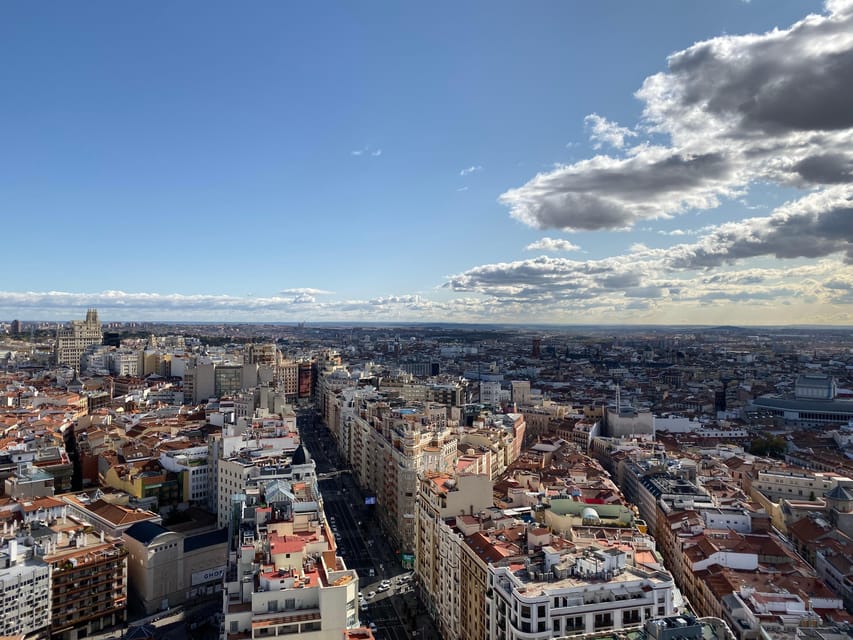
Gran Vía can look like one long shopping street. The trick on this tour is that you keep switching “levels”: street views to rooftop views, then back down again. That back-and-forth is where the story lives, because height shows you structure and street level shows you mood.
You’re not just chasing pretty angles. With an architect guide, the walk focuses on how buildings reflect Madrid’s 20th-century changes—culture, commerce, and politics written into stone, glass, and signage. In the best moments, you’ll feel the connection between what people wanted, what money allowed, and what architects delivered.
I also like the pace. It’s long enough to feel like a real architecture walk—3.5 hours—but short enough that you’re not stuck watching the clock. You’ll take photo stops, learn key facts, and still have time to enjoy the skyline instead of sprinting through it.
One more practical point: you’ll bring the right gear. Comfortable shoes matter on this route, and weather-appropriate clothing helps because rooftops can get breezy.
You can also read our reviews of more tours and experiences in Madrid.



Círculo de Bellas Artes: the rooftop start that gives you bearings fast
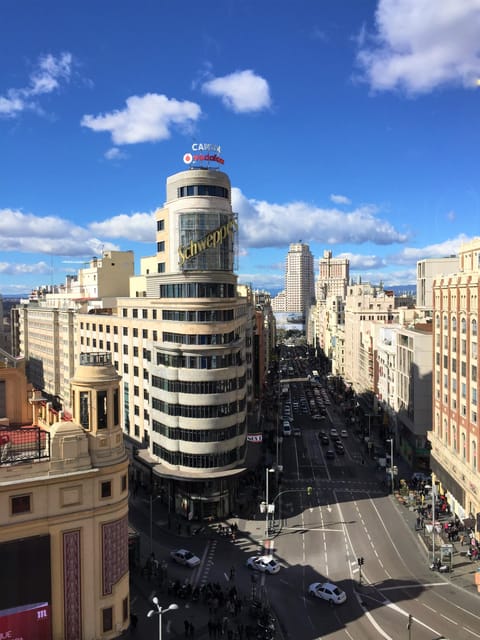
The tour begins at the entrance to the Círculo de Bellas Artes (C. del Marqués de Casa Riera, 20). The best part of a rooftop-first plan is that you stop guessing where you are. From above, Gran Vía stops being an abstract idea and becomes a real axis through the city.
From the Círculo rooftop, you’ll get some of the best city views in the center—an easy way to connect what you see later on the street. Your guide uses that skyline moment to set context for the architecture you’ll encounter: buildings you’ll later “read” more clearly once you know their placement.
There’s also a simple reason this start works well. Rooftops make it obvious how Madrid’s center is layered—streets, plazas, and “landmarks-as-orientation points.” Without that first viewpoint, you tend to see facades only. After the rooftop, you start noticing alignments and sightlines.
Cost note: entrance to Círculo de Bellas Artes is not included (you’ll want to budget +5.50€ if you plan to go up as part of the experience). So check whether the rooftop access you want matches what’s included in your booking.
Metropolis to Gran Vía: glamorous facades, street-level details, real context
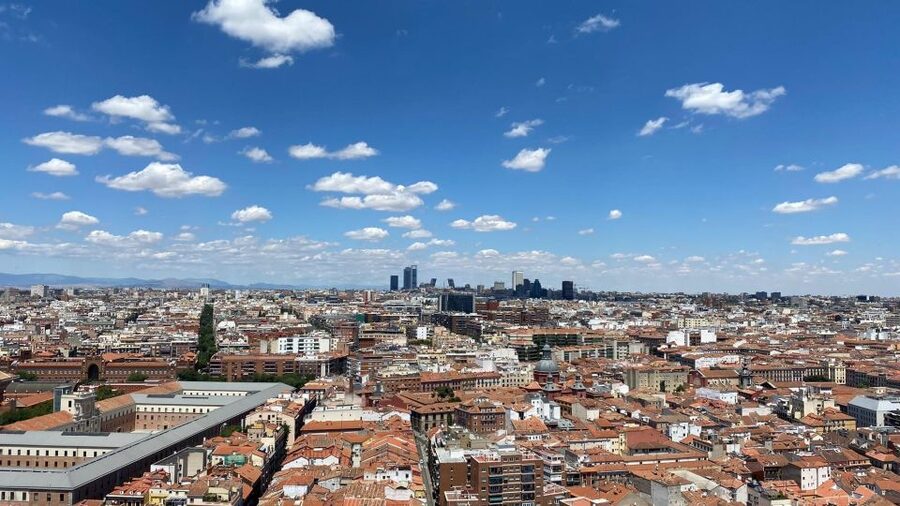
After the rooftop start, the route drops back to street level. A quick photo stop at the Metropolis Building helps you lock in the visual mood of early 1900s Madrid—this is the kind of structure that says, in big letters, that architecture was also advertising and identity.
Then you move along the “first stretch” of Gran Vía, and this is where your guide does something useful. Instead of treating the street like background, you’ll learn to watch for patterns: how major buildings frame the avenue, how styles show the city’s ambitions, and why some eras feel more formal while others feel more modern and commercial.
You’ll also stop near places like the Museo Chicote, which adds a fun twist: the architecture isn’t only about what’s built, it’s about culture and what the buildings became for everyday life. Even if you’re not an architecture nerd, those details help the street feel lived-in, not just photographed.
One more thing I appreciate is how the explanations keep tying back to cause and effect. The “why” matters: what a building signals to the public, how it competes for attention, and how it changes the street’s rhythm. You start to see Gran Vía as a system, not a strip.
Telefónica Building: Madrid’s first skyscraper and why it changed the vibe
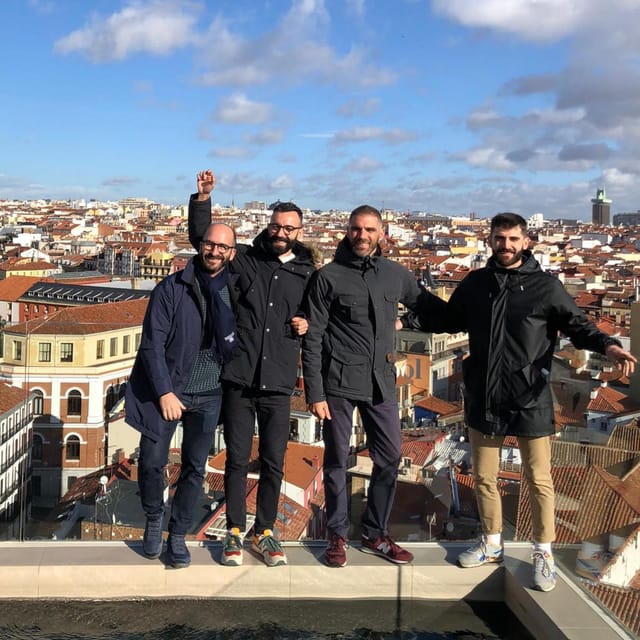
The tour’s standout technical stop is the Telefónica Building, which your guide frames as the first skyscraper built in Madrid. That single fact is more than trivia. It’s a turning point in how the city imagined itself—taller, faster, more corporate, more future-facing.
When you’re at a building like this, you can feel the contrast even without knowing architectural terminology. The Telefónica Building signals modernization while still belonging to its time. Your architect guide helps you notice the elements that create that presence: how it reads at street level, how it connects to the broader Gran Vía corridor, and how it communicates power without needing a billboard.
This is also one of those stops where a qualified guide makes a real difference. You won’t just hear what to look at—you’ll understand what those choices meant in Madrid’s 20th-century story. And that helps on the rest of the walk, because suddenly other buildings make more sense: the styles feel less random and more like decisions in a longer conversation.
Timing-wise, expect a focused visit here. It’s long enough to ask questions and actually absorb the building, not just pose for a quick photo and move on.
Carrion Building and the rest of the Gran Vía architecture puzzle
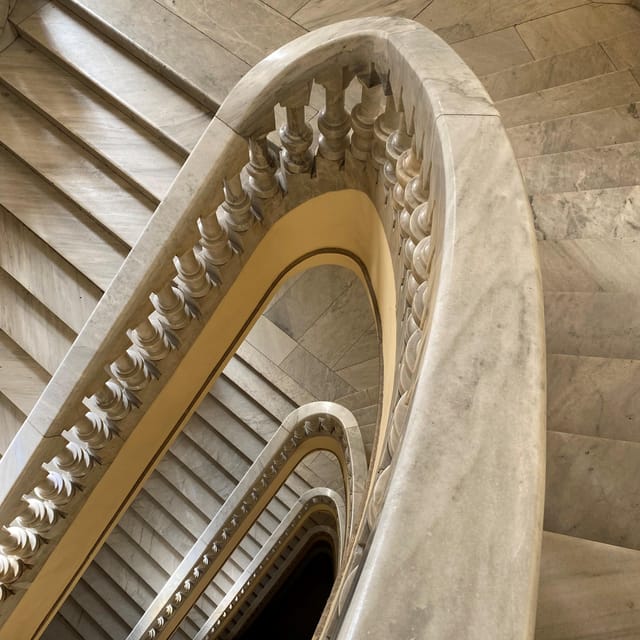
As you continue down Gran Vía, the tour keeps balancing “big moments” with “small revelations.” There’s a Carrion Building photo stop that helps you build the mental map your guide is creating—linking different eras, different designers, and different uses.
You’ll also spend time walking the avenue while your guide points out the kinds of places that make Gran Vía famous: upscale, luxury-focused stores and boutiques. On paper, that’s just shopping street stuff. On this tour, it turns into something else: a lesson in how commercial architecture and street-level culture work together.
In the best architecture walks, you come away with better eyes. Here, you start noticing how buildings behave when they share space. Some facades demand attention from far away. Others reward you when you slow down—corners, entrances, transitions between materials, and how the building “hands” you to the next block.
Your guide also mentions nearby or related architecture highlights you’ll recognize in wider Madrid views—like the City Hall’s new headquarters and the Cervantes Institute, plus references such as Torres Blancas and the Colón Towers. You don’t need to visit them on this walk to benefit. These references help you understand how Madrid’s center grew beyond Gran Vía’s original plan.
Plaza de España: rooftop panoramas with Casa de Campo and the Royal Palace
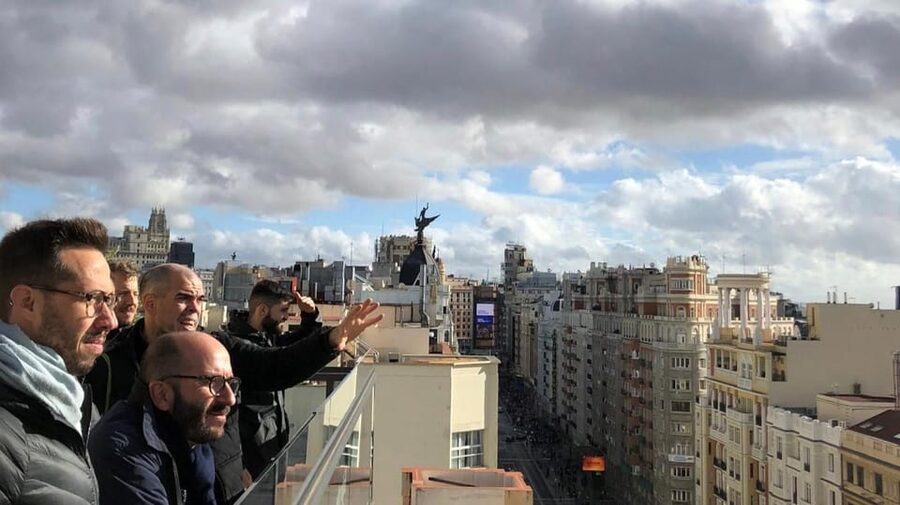
Eventually, the tour reaches Plaza de España, and the mood shifts. A plaza is where crowds form, and it also gives you the best chance to see how buildings align.
Here, you’ll visit a rooftop with standout background views including Casa de Campo, the Sabatini Gardens, and the Royal Palace. That last one is especially helpful: it gives you a sense of Madrid’s layers, from royal-era power to modern city life.
This is also where the “up, down, up” strategy pays off again. You’ve seen Gran Vía from street level, you’ve seen it from above at the start, and now you see the area again from a higher point near Plaza de España. The result is that the city starts to feel navigable instead of overwhelming.
Expect a rhythm change too. You’ll have guided time, photo moments, and a pause-like segment that lets you actually look instead of only listen.
Dear Hotel Madrid and RIU Plaza España: the sunset moment you’ll remember
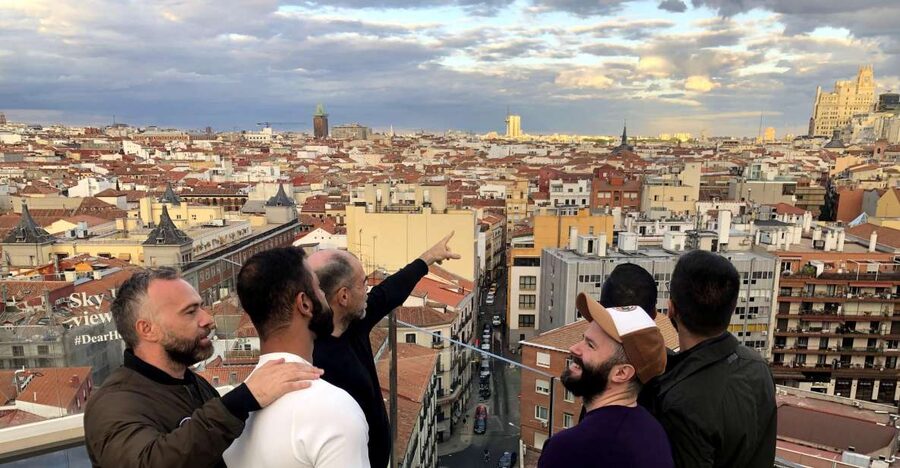
One of the most fun parts of the experience is how it uses hotels as viewpoint tools. You’ll have a photo stop and visit at Dear Hotel Madrid, then a break period around Hotel RIU Plaza España, including a focus on scenery and sunset views.
This portion works well for two reasons. First, it’s the practical payoff: you finally see Madrid’s skyline in a “finished” light. Second, your guide’s earlier explanations help you identify what you’re looking at. Rooftops aren’t only about photos. They become your reference points.
Important note: the Riu Plaza Hotel rooftop entry fee isn’t included, so plan for that extra cost if you want the viewpoint as part of the experience. It’s the kind of fee that’s easy to forget until you’re standing in front of the access point, so it’s worth remembering ahead of time.
If weather cooperates, this is where you’ll feel like your time was well spent. You can stop thinking in “blocks” and start thinking in “routes”—how the city connects, where the energy funnels, and how Gran Vía acts like a backbone.
Price and what you actually get for $387
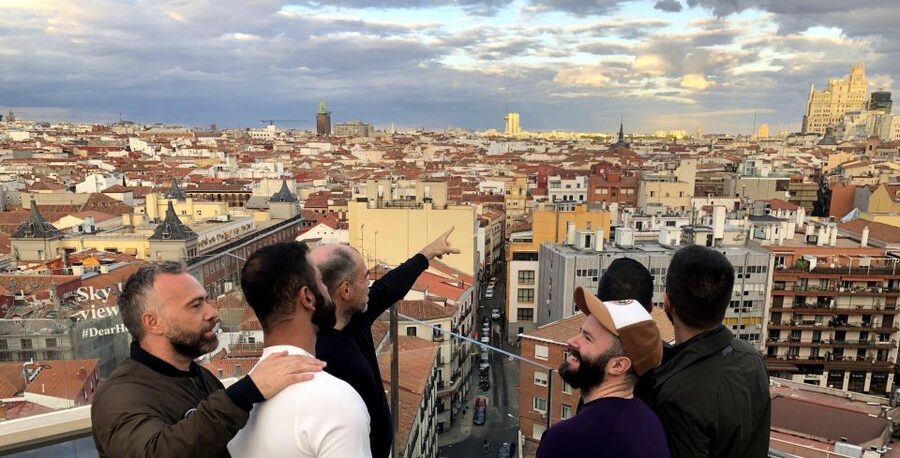
The listed price is $387 per group up to 1 for a 3.5-hour private group experience. For many travelers, that sounds steep until you compare it to what’s included: a guided tour with an architect guide and multiple rooftop vantage moments paired with landmark visits.
For me, the value question is simple: does the tour teach you to see more than you would on your own? With an architect leading, you’re paying for interpretation, not just location. You’re paying for the ability to understand why the buildings look the way they do and what they were trying to accomplish—something you won’t get from wandering with a phone map.
That said, you should budget for extras:
- Círculo de Bellas Artes entrance is not included (+5.50€)
- Riu Plaza rooftop entry fee is not included
- Drinks are not included
If you like architecture and want a guided framework—especially one that mixes street-level and rooftop viewpoints—this price can feel fair. If you mainly want sightseeing without the “why,” a self-guided Gran Vía walk could be cheaper.
Who should book this Gran Vía rooftops architecture tour
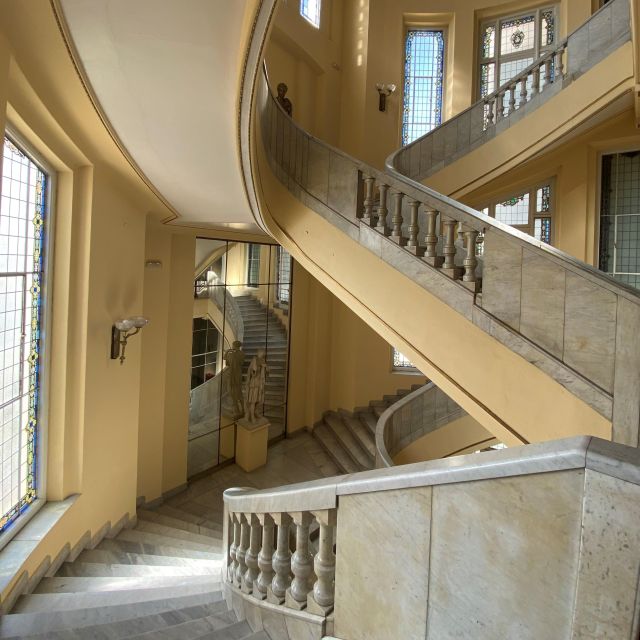
Book it if you want to learn architecture without feeling trapped in a classroom. This is a good fit if you:
- love the idea of a skyline view plus expert explanations
- enjoy walking tours where buildings become stories
- want a route that mixes street-level glamour with technical “what changed and why” details
- prefer a private group format for questions and pacing
Skip it if you’re looking for a fully seated experience, because the route is walking-focused. And if mobility is a concern, it’s not suitable for wheelchair users based on the tour’s limitations.
English and Spanish are available, so language shouldn’t be a barrier if you want an accurate explanation.
Should you book it?
If you’re the kind of person who takes photos but then asks what you’re actually looking at, I’d say yes. The tour’s core strength is the combination of rooftop viewpoints and an architect guide who explains how Madrid’s 20th-century ambition shows up in real buildings.
Just go in with one mindset: rooftops aren’t just for views here. They’re part of the way the guide teaches you to read the city. Add the small expected extras (Círculo entrance and the Riu rooftop fee), wear comfortable shoes, and you’ll get a satisfying, memorable way to see Gran Vía beyond the obvious.
FAQ
How long is the Madrid Gran Vía rooftops architecture tour?
The tour lasts 3.5 hours.
Where do I meet the guide?
Meet your guide in front of the entrance to the Círculo de Bellas Artes (C. del Marqués de Casa Riera, 20).
What is included in the price?
You get a guided tour with an architect guide.
Are rooftop or building entrance fees included?
No. Círculo de Bellas Artes entrance is not included (+5.50€), and the Riu Plaza Hotel rooftop entry fee is also not included. Drinks are not included either.
What languages is the tour offered in?
The tour is offered in English and Spanish.
Is the tour suitable for wheelchair users?
No. It is not suitable for wheelchair users.