REVIEW · JAIPUR
Jaipur City Heritage and Architecture Tour
Book on Viator →Operated by Royal Jaipur Tours · Bookable on Viator
Jaipur can feel like sensory overload at first, but this private day tour makes it manageable. I love the hotel/airport pickup and the fact you’re in a car with an English-speaking driver, not stuck figuring out routes on your own. I also like how the day mixes famous landmarks with quieter stops like Panna Meena ka Kund and Royal Gaitor. One consideration: the base price is low, but entry fees for major monuments (plus an optional Blue Room ticket) can add a chunk to your total.
What you end up with is a clean, structured heritage loop through the Pink City—built around architecture, sacred geometry, and city planning. If you get a calm, organized driver, the day feels smooth even with Jaipur’s busy streets. Still, it’s a full 8 hours, and meals aren’t included, so plan ahead so you don’t get hungry at the wrong moment.
In This Review
- Quick takeaways
- Private Car + English Driver: Why This Works in Jaipur
- Price and Value: The $11.24 Base Rate vs Real Entry Fees
- Amer (11 km from Jaipur): Fort-Edge Views and Local Life
- Panna Meena ka Kund Stepwell: A Quick Stop With Real Architectural Wow
- Jal Mahal on Man Sagar Lake: The Palace From the Waterline
- Royal Gaitor Tumbas Below Nahargarh Fort: A Cooler Pace and Kingly Silence
- Hawa Mahal and Jantar Mantar: Two Icons, Two Different Reasons to Care
- City Palace Courtyards: The Old City’s Center of Gravity
- Pink City Walk Near Hawa Mahal: When Architecture Turns Into Street Life
- What Your Driver Actually Adds: Tips, Timing, and Helpful Shopping Leads
- Timing Tips for an 8-Hour Heritage Day
- Should You Book This Jaipur City Heritage and Architecture Tour?
- FAQ
- Is this tour private?
- How long is the Jaipur city heritage and architecture tour?
- Is pickup offered from my hotel or the airport?
- What’s included in the tour price?
- Are monument entrance fees included?
- Are meals included?
- Do I get a mobile ticket?
- What is the cancellation policy?
Quick takeaways
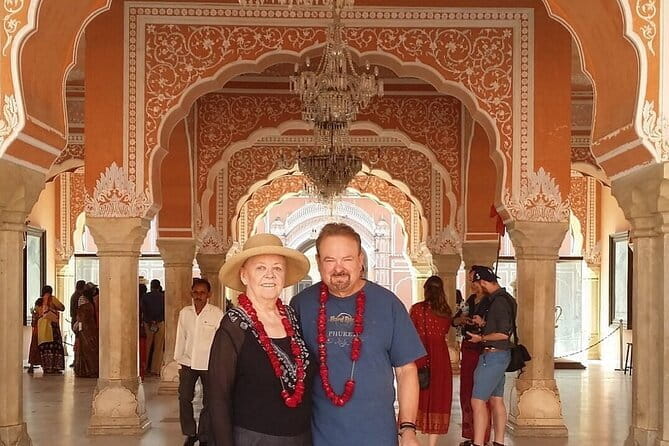
- Private car + English-speaking driver: pickup and drop-off make it easy from the start.
- A tight, smart route: Amer, Panna Meena ka Kund, Jal Mahal, Royal Gaitor, Hawa Mahal, Jantar Mantar, City Palace, then a Pink City walk.
- Some stops are listed as free: Amer, Panna Meena ka Kund, Jal Mahal, and Pink City stroll time.
- Main monument entry fees cost extra: plan for $35 per person for several key sights.
- Optional Royal Splendour Blue Room ticket: listed at $46 per person if you want that interior stop.
- Drivers like Imran, Asif, and Rahul are known for clarity and helpful tips: from practical guidance to shopping ideas for textiles and carpets.
Private Car + English Driver: Why This Works in Jaipur
Jaipur is a city where “trying to do it yourself” can turn into a lot of waiting, backtracking, and bargaining. This tour cuts that stress by putting you in a private car with an English-speaking driver and handling pickup and drop-off. That matters because the day spans multiple areas: Amer (about 11 km away), then back toward the Old City for the big name monuments.
The best part is how much smoother the rhythm becomes. Instead of chasing bus schedules or trying to coordinate multiple rides, you get a single plan for the whole day. The car also makes it easier to shift your pace at each stop—spend a little longer where you’re curious, and shorten what feels less relevant.
Also, the road conditions can be challenging anywhere in India, and the drivers are specifically described as calm and safety-minded. That’s not a small detail. It can turn the whole day into a “we’ll enjoy this” experience instead of “we’re surviving traffic.”
Price and Value: The $11.24 Base Rate vs Real Entry Fees

The headline price is surprisingly low at $11.24 per person, which is great for the structure and transportation alone. But in Jaipur, the day’s real cost often comes from monument access, not the vehicle.
Here’s what’s explicitly not included:
- Entrance Fee for City Palace, Hawa Mahal, Jaipur Fort, Jantar Mantar, Royal Gaitor: $35 per person
- Royal Splendour (Blue Room) entrance: $46 per person
Meals are also not included.
So how do you judge value? You do the math based on what you want to see inside. If you’re happy doing exterior views and spending time in public spaces, the cost stays close to the base price. If you want interiors at the major sights, the $35 fee becomes the more realistic “day budget.” And if the Blue Room appeals to you, add the $46 on top.
In short: the tour is a strong deal for getting you everywhere efficiently. Just don’t assume the $11.24 number is the full day total.
Amer (11 km from Jaipur): Fort-Edge Views and Local Life
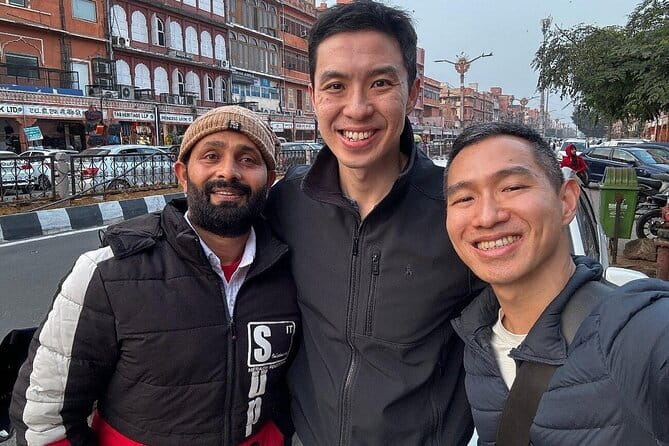
Amer is the first big pillar of Jaipur, and starting here makes sense. It’s listed at 2 hours, with the schedule noting it as free admission on that stop. Even if you’re not focused on museum-style history, Amer is a great place to get your bearings: the hill-town feel, the scale of the fort area, and the sense of Jaipur’s old power centers.
What I like about Amer as a starting point is that it sets the tone. You’re not yet buried in the more crowded Old City icons. You can take photos, get perspective on the terrain, and gradually transition into the architecture-heavy core of Jaipur.
A small practical note: you’ll want comfortable shoes. That part is not about “fitness challenges”—it’s about walking room for the crowds and the stone surfaces you’ll encounter as you move around.
Panna Meena ka Kund Stepwell: A Quick Stop With Real Architectural Wow
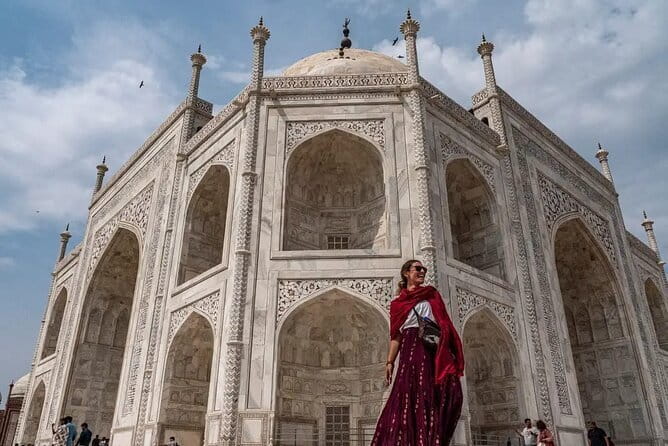
Next is Panna Meena ka Kund, a historic stepwell listed at 30 minutes with admission free. This is the kind of Jaipur sight that surprises people because it doesn’t require grand gates or a big courtyard to be impressive.
The stepwell’s draw is its structure: symmetrical stairways and niches built in a way that makes geometry part of the experience. You can think of it as architecture you can walk around—except you’re viewing it as an outdoor “diagram” of how the builders engineered space, light, and access to water.
Since time here is shorter, I suggest treating it like a focused stop:
- Look for the pattern lines as you walk the edge.
- Take your photos from a couple of angles quickly.
- Move on before the rest of the day drags your attention.
In a day packed with major monuments, Panna Meena ka Kund is your breathing break.
Jal Mahal on Man Sagar Lake: The Palace From the Waterline
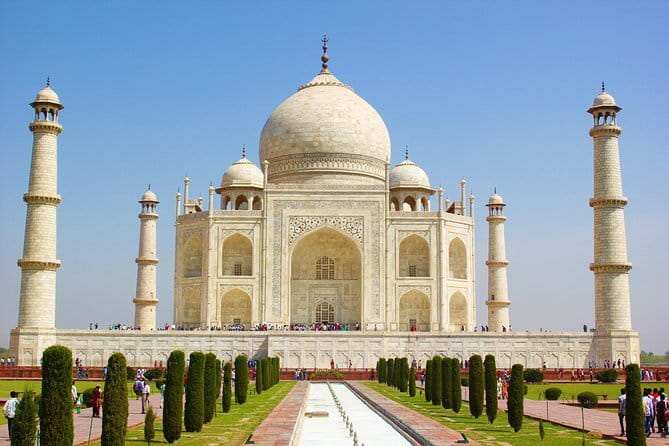
Jal Mahal gets a brief 15 minutes on the schedule, and it’s another stop where the payoff is quick. The palace sits in the middle of Man Sagar Lake, built in 1699, and it’s one of those Jaipur scenes where you immediately understand why people remember the image.
Because the time is short, you won’t be doing a deep exploration. Instead, this is about getting the view and letting the setting do the storytelling. If the lake view is clear when you arrive, you’ll get a dramatic photo and an easy mental “pause” in the day’s walking.
Keep expectations realistic: you’re not spending the afternoon here. It’s a visual hit, then back to the architecture circuit.
Royal Gaitor Tumbas Below Nahargarh Fort: A Cooler Pace and Kingly Silence
After Jal Mahal, you go to Royal Gaitor (Gaitor Ki Chhatriyan) listed at 45 minutes. Admission is not included for this stop.
This is one of those places that changes the tempo. Instead of pushing through the biggest monuments, you’re in a calmer setting below Nahargarh Fort, with the resting places of Kachchwaha kings and princes. The design and chhatri (cenotaph) forms create a quiet kind of spectacle—less crowded, more contemplative.
Why it’s worth your time: this site adds variety to the day. You’ve seen palaces and city icons; now you see how power and remembrance were expressed in stone and form.
If you like atmosphere as much as architecture, this stop can end up being one of the highlights of your day.
Hawa Mahal and Jantar Mantar: Two Icons, Two Different Reasons to Care
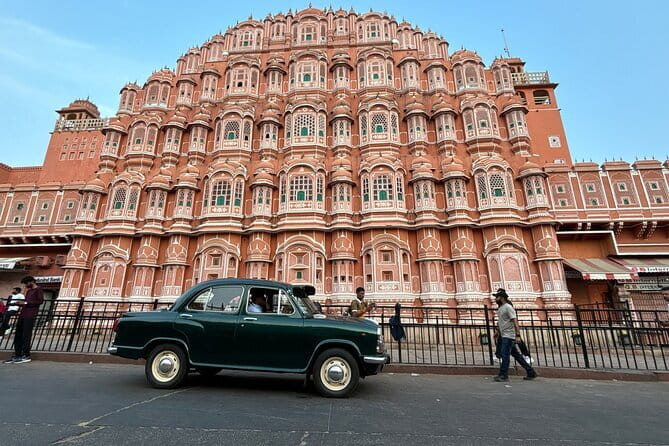
Hawa Mahal is next, with 45 minutes scheduled and admission not included. It’s the famous Palace of Breeze, built from red and pink sandstone. It sits right by the City Palace area and connects to the women’s quarters known as the Zenana. Even if you don’t go deep into interior details, the exterior impact is immediate: the façade is an architectural statement meant for light, view, and air.
Then comes Jantar Mantar with 45 minutes scheduled and admission not included. This is a different kind of awe. It’s a set of 19 astronomical instruments built under Rajput king Sawai Jai Singh and completed in 1734. It’s “science made visible” in stone forms, so it works even for people who aren’t into astronomy.
What makes this pairing smart is the contrast:
- Hawa Mahal is about space, façade, and royal life-by-design.
- Jantar Mantar is about measurement, prediction, and how knowledge was built into architecture.
If you try to do both without context, they can blur. So take a breath at the start of each stop and ask yourself what you’re looking at—life and structure in one, instruments and observation in the other.
City Palace Courtyards: The Old City’s Center of Gravity

You’ll spend 2 hours at the City Palace, with admission not included. It’s a complex of courtyards, gardens, and buildings located in the heart of the Old City, built by Maharaja Sawai Jai Singh II.
What I appreciate about City Palace as a “middle of the day” anchor is that it feels like Jaipur thinking on a human scale. It’s not just one monument; it’s a whole layout, so you can roam courtyards and settle into the pace. If Hawa Mahal is the façade, City Palace is the lived-in system behind it.
This stop is where your driver’s context can really help. Even a quick explanation of how different buildings relate to each other makes the time feel richer—and less like you’re just moving from photo spot to photo spot.
Pink City Walk Near Hawa Mahal: When Architecture Turns Into Street Life
The final stop is time to stroll the Pink City, 1 hour and listed as free. This is where the day becomes more human: old pink buildings, close-by viewpoints around Hawa Mahal, and the market-energy that defines this part of Jaipur.
The trick is to keep your eyes up and your pace easy. You’ll see architecture as you walk, but you’ll also notice the small stuff—doorways, transitions between buildings, and street-level textures. It’s a nice finish because it blends the big monuments with the everyday city.
If you want souvenirs, this is the moment. If you’re not shopping, still do the walk slowly. It’s one of the best ways to let the day “stick” in your memory.
What Your Driver Actually Adds: Tips, Timing, and Helpful Shopping Leads
A private day tour lives or dies by the driver’s attitude. In the experiences shared, names like Imran and Asif stand out for being professional, warm, and practical. The theme is consistent: clear guidance, helpful suggestions, and a calm approach to Jaipur’s roads.
You may also get useful shopping directions. For example, Asif is described as taking people to a great place for carpets and textiles, with English that made it easy to understand what you were seeing. If you care about buying quality rather than just browsing, this kind of lead can save time and reduce guesswork.
Even if you don’t shop, a good driver helps you manage timing—knowing where to go when crowds rise, and how to keep the day from dragging.
Timing Tips for an 8-Hour Heritage Day
You’ve got about 8 hours total, so the day can feel full even with “free” stops. Here’s how I’d keep it enjoyable:
- Bring a plan for food. Meals aren’t included, so either you eat on your own schedule or budget time for a snack break.
- Use the driver wisely. Ask quick questions like what order makes sense for your interests, especially at Hawa Mahal and City Palace.
- Wear comfortable shoes. You’ll be on your feet across multiple monuments and street-level areas.
- Expect short but varied stops. The schedule mixes longer moments (Amer, City Palace) with quick hits (Jal Mahal, Panna Meena ka Kund).
- Take photos early when possible. Popular façades like Hawa Mahal can get crowded, so don’t wait until the last minute.
It’s a lot of culture packed into one day, but the structure keeps it focused. You’re not wandering aimlessly—you’re checking off major visual experiences, one by one.
Should You Book This Jaipur City Heritage and Architecture Tour?
Book it if you want an efficient, private day that covers the big Jaipur icons—Amer, Panna Meena ka Kund, Jal Mahal, Royal Gaitor, Hawa Mahal, Jantar Mantar, City Palace, and a Pink City walk—without spending your energy on transport planning.
Skip it or reconsider if:
- you hate paying extra for monument entry (since $35 per person is listed for several key sites),
- you want a meal included in the package,
- or you prefer a slower pace with fewer stops.
For most people, though, this is a practical way to see Jaipur’s architecture highlights in one go, with a car and English guidance doing the heavy lifting.
FAQ
Is this tour private?
Yes. It’s a private tour/activity, and only your group will participate.
How long is the Jaipur city heritage and architecture tour?
It runs for approximately 8 hours.
Is pickup offered from my hotel or the airport?
Yes. Hotel, airport, and railway station pickup and drop-off are included.
What’s included in the tour price?
Included items are a private car with an English-speaking driver, pickup and drop-off, bottled water, and coverage for fuel, parking, driver allowance, and taxes.
Are monument entrance fees included?
No. Entrance fees are not included, including $35 per person for sites such as City Palace, Hawa Mahal, Jaipur Fort, Jantar Mantar, and Royal Gaitor. The Royal Splendour Blue Room is $46 per person and is also not included.
Are meals included?
No. Meals are not included.
Do I get a mobile ticket?
Yes, the tour provides a mobile ticket.
What is the cancellation policy?
Free cancellation is available. You can cancel up to 24 hours in advance for a full refund. If you cancel less than 24 hours before the start time, the amount paid is not refunded.