REVIEW · BARCELONA
Life of Gaudi and Architectural | Walking Tour | 2h
Book on Viator →Operated by Tour Me Out Barcelona · Bookable on Viator
Gaudí’s buildings are easier to understand on foot. This 2.5-hour walking tour is a fast, story-driven way to connect several of Antoni Gaudí’s most important works without losing time to Barcelona traffic. You’ll move from Plaça Reial to Sagrada Família, with a guide narrating how Gaudí’s ideas evolved as the city grew around him.
I especially like two things. First, the pacing is built for time-savers: you get a lot of major sights in one morning, walking between them instead of waiting in lines or traffic. Second, the guiding is the heart of the tour—guides like Connie, Rosie, and Laszlo are praised for their energy, clear explanations, and answering questions as you go.
One thing to consider: you’re outside a lot, and it can get noisy. In a larger group, it may be harder to hear every detail, and there’s no mention of headphones being provided—so bring your best hearing tools (and your patience when streets get loud).
In This Review
- Key points to know before you go
- Why this Gaudí walking tour works: 2.5 hours, not a full-day slog
- Starting at Plaça Reial: where Gaudí’s story begins
- Palau Güell on Nou de la Rambla: modernism with a patron behind it
- Casa Batlló and Casa Milà: the naturalist period lesson you can actually use
- Sagrada Família as the finishing chapter: what under construction means
- Walking logistics, heat, and hearing your guide
- Guide style: Connie, Rosie, and Laszlo set the tone
- Price and value for $20.85: what you get, and what you pay for elsewhere
- Who should book this Gaudí tour (and who might not)
- Should you book Life of Gaudí and Architectural in Barcelona?
- FAQ
- What time does the tour start?
- How long is the Life of Gaudí walking tour?
- How much does it cost?
- Is the tour offered in English?
- Where do I meet, and where does it end?
- Are admission tickets included for the sights?
- Do I need a metro ticket?
- How many people are in the group?
- What happens if weather is bad or I need to cancel?
Key points to know before you go
- A tight route with big names: you start at Plaça Reial and finish at Sagrada Família, checking off several essentials.
- Palau Güell explained with context: you learn how Eusebio Güell commissioned Gaudí’s work and why that mattered.
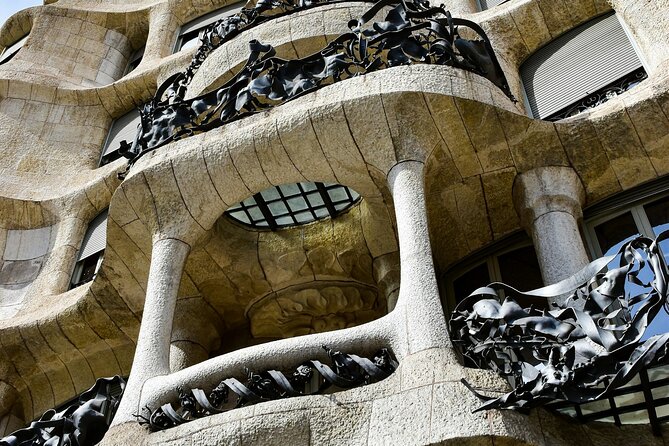
- Casa Batlló and Casa Milà, connected: both are framed through Gaudí’s naturalist period and structural ideas tied to ruled geometry.
- Sagrada Família ends the story: begun in 1882 and still under construction, it’s presented as Gaudí’s crowning achievement.
- Small group limits distractions: the tour maxes at 20 people, which helps keep questions and pacing manageable.
- Plan for walking and street noise: comfortable shoes are a must, and you may want to bring something to help you hear.
Why this Gaudí walking tour works: 2.5 hours, not a full-day slog
If you only have part of a morning and you want real Gaudí understanding (not just photos), this kind of route makes sense. You’re not trying to brute-force five famous buildings in random order. Instead, you’re moving along a guided thread that links Gaudí’s early life, his major commissions, and the architectural ideas that keep showing up in different forms.
The format is simple: about 30 minutes per stop, plus the walk-and-talk time between them. With a schedule like that, you’re not stuck at one sight long enough to cook in the sun—or get bored halfway through. It’s built for people who want structure without feeling locked into a museum pace.
And yes, the walking matters. Barcelona can be slow in traffic, so exploring on foot helps you keep momentum. You’ll also get a better feel for how the modernist “story” sits in the actual streetscape rather than as isolated postcards.
You can also read our reviews of more tours and experiences in Barcelona.


Starting at Plaça Reial: where Gaudí’s story begins
Your morning opens at Plaça Reial, a great starting point because it’s central, easy to find, and full of city energy. The guide uses the location as a springboard for Gaudí’s early life and some of his first works. That’s a smart move. If you start with the late masterpieces, you can miss the reasoning behind them.
This first leg also helps you warm up to the guide’s style. You’re listening for connections: what Gaudí was working on early, how his thinking shaped later designs, and why the later buildings feel like a progression rather than random genius moments.
Plaça Reial is also a useful reality check. It reminds you this isn’t an empty, curated zone—this is Barcelona. You’re seeing modernism threaded into normal life, street by street, even before you reach the big names.
Palau Güell on Nou de la Rambla: modernism with a patron behind it
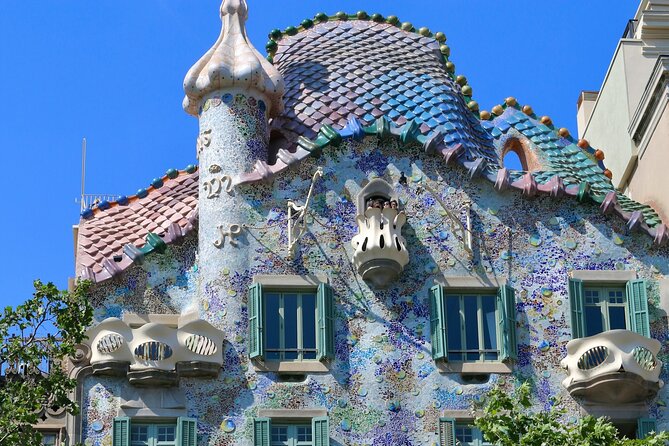
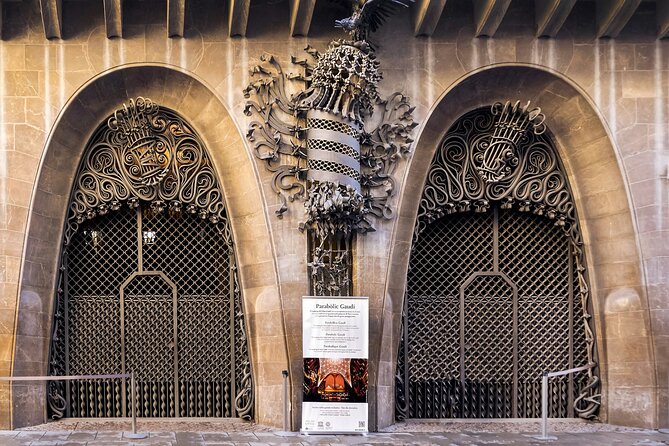
Next up is Palau Güell, a Gaudí building tied directly to the Catalan modernism wave. The guide focuses on the fact that it wasn’t just an artist’s solo project—it was commissioned. That matters, because Gaudí didn’t invent everything in a vacuum. He worked with patrons who believed in his vision.
You’ll learn that the palace was financed and commissioned by Eusebio Güell, who admired Gaudí and supported several of his famous works. Getting that relationship straight makes the architecture easier to read. You start noticing how ambition, resources, and creative risk come together in one place.
The location is also part of the conversation. Palau Güell sits on Nou de la Rambla, near the port and the promenade. Even if you don’t go far into that direction during the tour, the guide’s framing helps you understand why this kind of building belongs in a city with maritime trade and growing wealth—Barcelona wasn’t just dreaming; it was spending.
The practical takeaway: this stop is short but concept-heavy. You come away with a clearer sense of how Gaudí’s career moved from commissions and networks into signature design language.
Casa Batlló and Casa Milà: the naturalist period lesson you can actually use
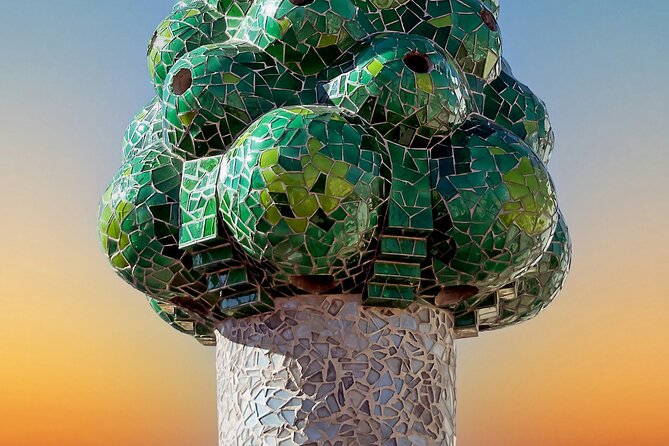
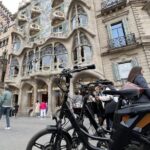
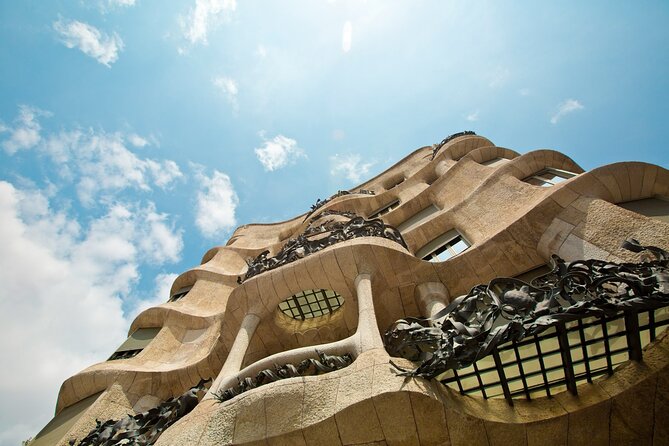
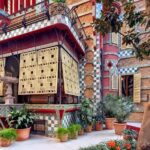
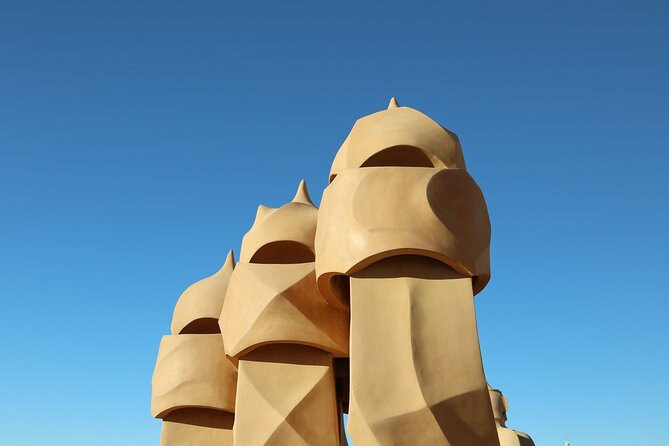
Then the tour hits two of Gaudí’s most recognizable residential masterpieces: Casa Batlló and Casa Milà (La Pedrera). The tour places both in Gaudí’s naturalist period—early in the 20th century—when his style becomes more unmistakably his.
Here’s what’s useful for your brain, not just your camera: the guide explains that Gaudí was inspired by organic forms found in nature, and he applied those ideas using new structural solutions. The tour specifically points to structural thinking based on ruled geometry—a detail that can sound technical, but it gives you a handle for why the buildings look the way they do.
- At Casa Batlló, you’re meant to see it as an expression of that artistic peak, where form and structure feel tightly linked rather than decorative.
- At Casa Milà, you’re meant to recognize the same naturalist ambitions—also tied to ruled-geometry solutions—so the two buildings start to feel related, not like random stops.
Both stops are about 30 minutes. That’s enough time to understand the big ideas and look for visual clues, without getting stuck staring at one facade until you forget what you were there to learn.
If you’re the type who likes pattern-spotting, this is where you’ll feel the tour pay off. You’ll likely catch similarities and differences faster than you would wandering solo.
Sagrada Família as the finishing chapter: what under construction means
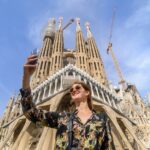
The tour ends at the Basilica de la Sagrada Família, framed as the neighborhood’s main monument and as Gaudí’s crowning work. This matters because the tour doesn’t treat Sagrada Família like a final photo stop. It treats it like the culmination of a life’s work.
You’ll learn that construction began in 1882 and that the basilica is still under construction. That point changes how you experience it. Instead of seeing it as a finished monument, you’re seeing a long project—one that has survived generations. The guide’s storytelling helps you understand why the site feels both monumental and unfinished.
Sagrada Família is also presented as a masterpiece and the maximum exponent of Catalan modernist architecture, and it’s described as the most visited monument in Spain. Even if you’ve seen the exterior already in photos, being there with context makes the scale and meaning feel more immediate.
The tour also positions the ending as the final chapter of Gaudí’s life story. Whether you love his flamboyant forms or you mainly admire how ideas evolve, the structure of the ending helps you close the loop.



Walking logistics, heat, and hearing your guide
This is a walking tour, so plan like it. You’ll want comfortable shoes and a bit of stamina. The tour is also rated for moderate physical fitness, and the duration is listed at about 2 hours 30 minutes.
One review experience noted lots of walking and that the tour involves taking metro/train as part of getting between stops. Even though the tour is mostly walking, you should expect some transit. And because a metro ticket is not included, you’ll want to sort out your local transit payment ahead of time.
Heat can also matter. Barcelona can get intense in the daytime, and the tour length is long enough for weather to affect comfort. If it’s hot, don’t underestimate the value of taking water seriously, even if it’s not part of the tour.
Sound is the other real-life issue. You’ll be outdoors, often near traffic or crowds. One person mentioned hard-to-hear commentary in a noisy group setting. If you want to catch every detail, consider bringing something small to help you focus—earplugs for noise reduction or a device that helps you listen better if you’re sensitive to street sound.
Guide style: Connie, Rosie, and Laszlo set the tone
A big part of why this tour earns a high rating is the guide. Different people, same theme: energy, clear explanations, and adapting to the group.
- Connie is described as knowledgeable, personable, and accommodating, with a knack for explaining Gaudí’s impact on Barcelona. If you want both facts and human warmth, this is the kind of guide experience you’re hoping for.
- Rosie is praised for passion and energy, plus answering questions between sights. The one downside mentioned was sound—so her delivery sounds great, but you’ll benefit if you can hear clearly in noisy spots.
- Laszlo gets credit for being friendly, taking time with questions, and being accommodating when the group needed a break (like coffee time).
That’s important: this isn’t just a script. The best tours here are the ones where your questions don’t derail everything. A guide who can keep the story moving while still responding helps you understand Gaudí instead of just collecting landmarks.
Price and value for $20.85: what you get, and what you pay for elsewhere
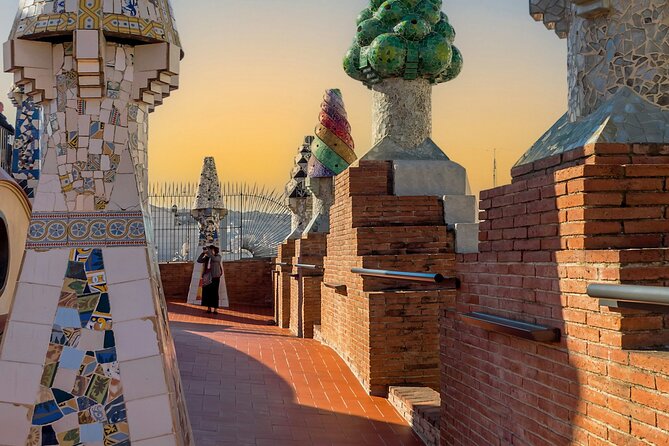
At $20.85 per person, this is priced like a solid walking-tour deal—especially because it includes a professional guide and cultural tips. The duration is long enough to justify the cost. Two and a half hours of guided interpretation across multiple major Gaudí sites is usually where you start to feel value.
Also look at what you’re not paying for. The stops are listed with admission ticket free for each segment. That doesn’t mean you’ll necessarily go inside everything during the tour (details aren’t guaranteed in the data), but it does suggest you won’t be forced into a paid-entry schedule just to participate.
What you should budget or bring:
- Metro ticket (not included)
- Bottled water (not included)
- Snacks (not included)
My practical advice: pack a small water plan and keep your energy steady. With a guided route like this, you’ll enjoy the story much more if you’re not negotiating hunger and thirst every 45 minutes.
One more value signal: the group size is capped at 20 travelers. Smaller groups generally mean you get more actual conversation and less “just follow the leader” walking.
Who should book this Gaudí tour (and who might not)
This tour is a great fit if you:
- Want a time-saving Gaudí route that covers major works without jumping between locations on your own
- Like learning as you walk, with commentary tied to what you’re seeing
- Appreciate understanding why Gaudí made certain design choices (not just spotting shapes)
It may be less ideal if you:
- Struggle with sustained outdoor walking for about 2.5 hours
- Need quiet, personal audio to catch details (street noise can be a factor)
- Want a fully flexible, choose-your-own-speed day focused on long interior visits at each building
If you fall somewhere in the middle, you can still make it work. Wear good shoes, bring water, and be ready to listen with the street noise dial turned on.
Should you book Life of Gaudí and Architectural in Barcelona?
If you’re deciding between wandering solo and doing something guided, I’d lean toward booking. This is a compact route with a clear learning arc—from Gaudí’s early story at Plaça Reial, through Palau Güell and the naturalist-period houses, and finishing with Sagrada Família as the life-and-legacy capstone.
Book it if you want the smartest use of a morning and you value explanations that help the buildings connect. Don’t book it if your priority is long indoor time at each site or if you hate walking and noise.
If you do book, go in with comfy shoes and a little patience for the city sounds. The payoff is in how quickly Gaudí starts to feel like a coherent story, not a list of famous facades.
FAQ
What time does the tour start?
The tour starts at 10:40 am.
How long is the Life of Gaudí walking tour?
It runs for about 2 hours 30 minutes.
How much does it cost?
The price is $20.85 per person.
Is the tour offered in English?
Yes, it’s offered in English.
Where do I meet, and where does it end?
You meet at Plaça Reial (Pl. Reial, Ciutat Vella, 08002 Barcelona) and the tour ends at Sagrada Família (Eixample, Barcelona).
Are admission tickets included for the sights?
The tour information lists admission ticket free for the stops.
Do I need a metro ticket?
A metro ticket is not included.
How many people are in the group?
The tour has a maximum of 20 travelers.
What happens if weather is bad or I need to cancel?
The experience requires good weather. If it’s canceled due to poor weather, you’ll be offered a different date or a full refund. There is free cancellation up to 24 hours in advance; after that window, the amount you paid is not refunded.