REVIEW · BARCELONA
Barcelona & Gaudi. Regular Tour
Book on Viator →Operated by Barcelona Architecture Walks · Bookable on Viator
Barcelona is full of Gaudí. This walk gives the thinking behind it. You’ll trace the Modernist ideas that shaped the city, not just the famous facades. The best part is that the tour is led by practicing architects, so the explanations feel grounded and practical as you move through the Eixample grid.
I particularly like how the tour connects Gaudí’s evolution to the bigger European currents around him. You’ll hear the story arc from social concerns to spiritual obsession, with stops that relate to that shift in a way you won’t get from a standard photo tour. I also love the mix of major icons and smart side sights, including the Antoni Tàpies Foundation and the “Manzana de la Discordia” area—still without going inside any building.
One consideration: you’re walking for about 3 hours and you won’t be entering the interiors. If you’re hoping for inside access or long time in museums, you may feel slightly rushed or limited.
In This Review
- Key Highlights Worth Showing Up For
- Why This Gaudí Architecture Walk Feels Different
- The 10:30 Start, Gran Via Meeting Point, and Walking Reality
- Modernism Through a Personal Lens: What the Guide Traces
- Stop 1: Casa Milà (La Pedrera) and the Feel of a Living Facade
- Stop 2: Casa Batlló and the Architecture That Acts Like Symbol
- Stop 3: Casa Calvet and the Architecture of the Everyday Street
- Stop 4: La Mansana de la Discordia, Plus the Eixample Courtyard Side Sights
- Stop 5: Fundació Antoni Tàpies and a Modern Anchor After Gaudí
- Value and Price: Is $54.44 Worth It?
- What Makes the Small Group Size Matter (Max 20)
- Weather, Comfort, and What to Bring for a 3-Hour Walk
- Who This Tour Is Best For
- Should You Book Barcelona & Gaudí: Regular Tour?
- FAQ
- How long is the Barcelona & Gaudí Regular Tour?
- Are we allowed to enter the buildings during the tour?
- What is the maximum group size?
- When and where does the tour start?
- Is the tour available in English?
- What happens if the weather is poor?
- Can I cancel for a full refund?
Key Highlights Worth Showing Up For
- Architect-led Modernism storytelling that ties form to ideas, politics, and faith.
- High-impact Eixample route: Casa Milà, Casa Batlló, Casa Calvet, and more nearby.
- Smaller group (max 20) means you can ask questions and stay engaged.
- No interior visits keeps the pace moving and the focus on architecture you see on the street.
- Antoni Tàpies Foundation stop adds a contemporary anchor to Gaudí’s era.
Why This Gaudí Architecture Walk Feels Different
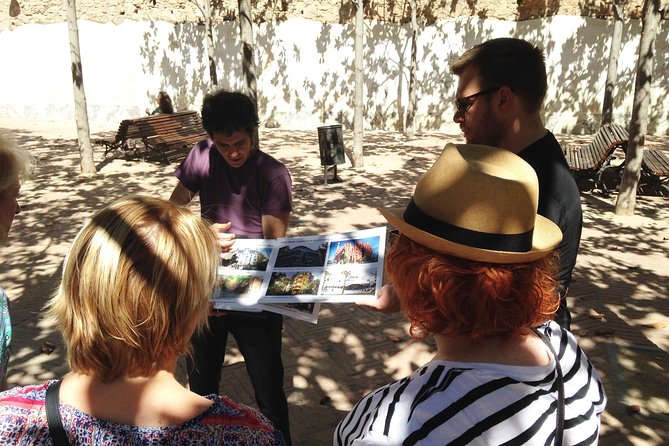
Gaudí is easy to spot in Barcelona. What’s harder is understanding why his buildings look the way they do, and why the city loved and argued over Modernism in the first place.
This experience focuses on the Modernism Route—basically, how a personal philosophy can turn into stone, light, and structure. Instead of treating Gaudí as an art superhero, you get a trail of influences: eclecticism and the end of modernism, utopian socialism, positivist materialism, and the intellectual bourgeoisie. The guide also brings in the Spanish Civil War, anarchism, beatification, and even the poetic idea of deliquescent surfaces (think: surfaces that feel like they might melt or dissolve instead of staying flat and solid).
And it’s not all about Gaudí alone. You’ll encounter other Modernist architects and counterpoints while keeping your attention on the Eixample buildings that made the “new city” real.
If you like your travel with context—short, clear, and tied to what you’re standing in front of—this tour delivers.
You can also read our reviews of more tours and experiences in Barcelona.


The 10:30 Start, Gran Via Meeting Point, and Walking Reality
The tour begins at 10:30 am at Monument al Llibre, Gran Via de les Corts Catalanes, 634 (L’Eixample, 08007 Barcelona). It ends back at the same place, which makes your day easier to plan after the walk.
It’s designed to be easy to join logistically: it’s near public transportation, and you’ll use a mobile ticket. Offered in English, it’s a good fit if you want the architecture explained clearly without needing to translate shapes and jargon in your head.
The big “real world” factor is simple: you’re outside for the whole experience and you’ll be on city sidewalks for about 3 hours. That’s not a marathon, but you should wear shoes you can stand in comfortably. Also, good weather matters—rain or intense wind can change plans.
Modernism Through a Personal Lens: What the Guide Traces
Here’s what makes the tour’s story feel smart instead of academic: it follows a timeline of ideas that you can recognize in the buildings.
The route starts from Gaudí’s early concern with society, then pushes forward toward his final, total absorption with the divine—until he’s described as the last great cathedral builder. Along the way, you’ll hear how Modernism didn’t appear in a vacuum. It grew alongside social debates, beliefs about progress, and political upheaval.
The guide’s focus on theory might sound heavy on paper, but it stays practical by constantly tying back to architecture choices—how designers think, how they use materials, and how they shape public space.
This matters because most architecture tours in Barcelona stop at style labels: Modernisme here, art nouveau there. This walk adds the “why,” so you start to see patterns on your own—before the guide even points them out.
Stop 1: Casa Milà (La Pedrera) and the Feel of a Living Facade
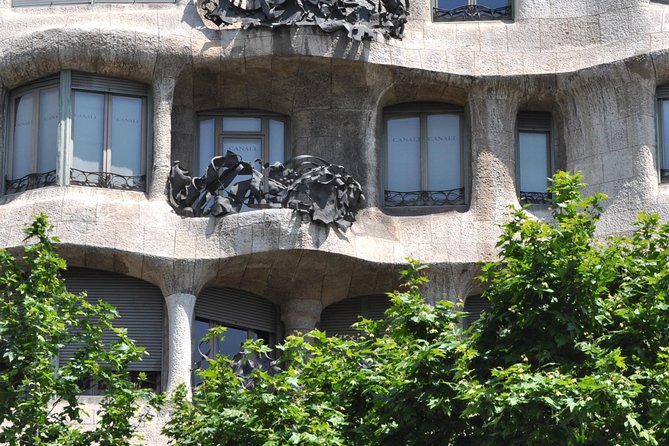
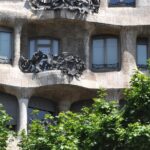
You’ll begin with Casa Milà (La Pedrera)—a building that almost refuses to sit still. Even from the street, the forms seem restless: stonework that looks like it’s being sculpted by waves rather than by straight lines.
Since you won’t enter the building, the payoff is in close visual reading:
- how the facade breaks away from conventional symmetry,
- how ornament doesn’t behave like decorative frosting,
- and how the architecture feels like it’s in conversation with the street.
This is a great first stop because it sets the tone. If you walk in expecting buildings to be mostly about clean structure, Casa Milà can re-train your eyes toward material imagination. It’s also a good warm-up because it gets you thinking like the guide: not just what you see, but what the choices might mean.
Stop 2: Casa Batlló and the Architecture That Acts Like Symbol

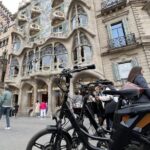
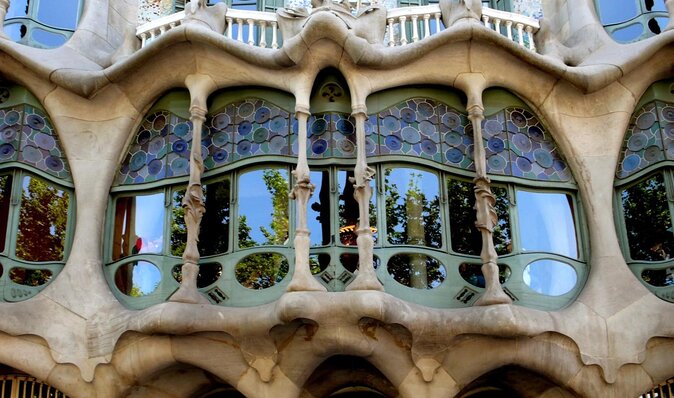
Next up is Casa Batlló, one of Barcelona’s most recognizable Modernist icons. If Casa Milà feels like motion, Casa Batlló feels like performance—every angle seems ready for a different interpretation.
Again, you’re outside only. That’s not a deal-breaker here; it actually makes sense. The facade itself is the message. You can watch how details “read” as you move your body from one street view to the next.
This is where the tour’s idea-heavy approach becomes especially fun. You’re not just comparing it to other famous Gaudí buildings. You’re learning how the broader intellectual atmosphere of the period shaped what designers were willing to try—and how they blended eclectic influences before Modernism hardened into something more defined.
If you enjoy spotting symbolism in everyday life—signs, patterns, metaphors—Casa Batlló is a strong reason to book this walk.


Stop 3: Casa Calvet and the Architecture of the Everyday Street
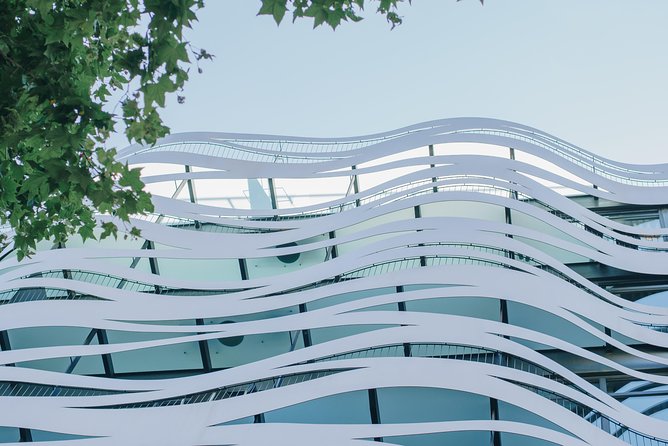
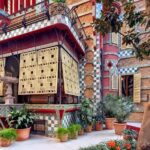
Casa Calvet adds a different kind of satisfaction. It’s still Modernist and still tied to the Eixample’s bold building spirit, but it doesn’t dominate in the same dramatic way as the two Gaudí giants.
That contrast is useful. It prevents the tour from turning into a single-note story. You start noticing how Modernism could be loud, and also how it could be disciplined and refined.
This stop helps you understand that Gaudí’s fame is only part of the picture. Barcelona’s architectural boom included multiple designers—each with a different approach to modernity. Even if Casa Calvet isn’t as famous in photos, it can help you see the range of ideas that were competing across the same neighborhoods.
If you’re worried about feeling “Gaudí fatigue,” this stop is a practical reset.
Stop 4: La Mansana de la Discordia, Plus the Eixample Courtyard Side Sights
Then you hit La Mansana de la Discordia—the famous block where several Modernist buildings sit close enough that you can compare design philosophies in minutes.
This is where the walk becomes more than a list of buildings. You get the thrill of architectural contrast: different architects, different approaches, and different ways of using space to shape identity. The guide also mentions “hidden” Eixample courtyards along the way, which can be a nice reminder that Barcelona’s architecture isn’t only about facades. A courtyard can change the way a building breathes.
And the tour doesn’t stop with just your main stop buildings. You’ll also see references tied to major Modernist names in the area, including work by Domènech i Montaner (Casa Lleó Morera) and Puig i Cadafalch (Casa Amatller). That broader lens matters because it prevents you from treating Modernism like a solo artist story.
Drawback to consider: because this area is packed with attention-grabbing buildings, you’ll want to look at details instead of just taking quick photos. If you’re rushing, you’ll miss the guide’s comparisons.
Stop 5: Fundació Antoni Tàpies and a Modern Anchor After Gaudí
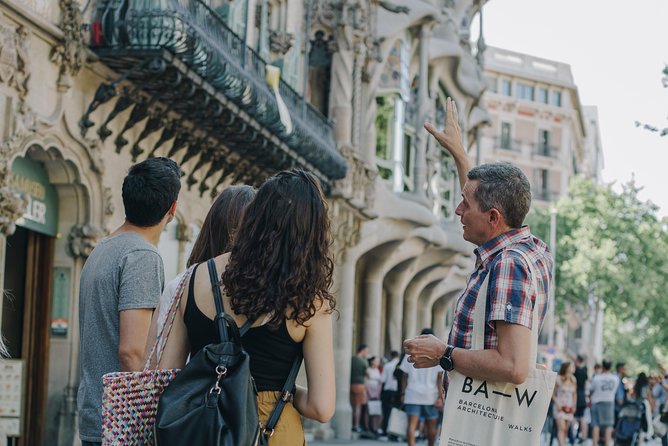
The walk ends with the Fundació Antoni Tàpies, and this is a smart final stop for a couple reasons.
First, it gives you a bridge from Modernism’s early 1900s energy into later cultural thinking. Second, it broadens the idea of “architecture as belief.” Art and design don’t just share aesthetics; they often share philosophical roots—ideas about society, material, and human meaning.
Even if you’re mainly traveling for Gaudí, I like that the tour doesn’t treat him like the final chapter. Instead, it nudges you to see how Barcelona keeps reinventing itself, long after Modernism’s first wave.
As a final thought: because the tour never goes inside the buildings you’re famous for, ending with a cultural foundation helps the experience feel rounded. You still leave with something to think about, not just a memory of stonework.
Value and Price: Is $54.44 Worth It?
At $54.44 per person for about 3 hours, the value comes from the combination, not any one feature.
You’re paying for:
- multiple major stops in the Eixample on a tight route,
- architect-led context that frames the buildings with social and intellectual ideas,
- and a small group (max 20), which helps the guide keep explanations moving at a human pace.
You’re not paying for interior tickets or long museum time. That can be a plus if you want to see a lot while staying outdoors, but it’s also why the guide’s storytelling becomes essential. If you’re the type who likes to read a plaque and move on, you might feel like outside viewing only. If you enjoy learning how to look, you’ll likely find the tour very satisfying.
The strong rating also matters here: a 5-star track record and 99% recommended signal that most people get what they want from this exact format—small group, idea-rich architecture, and a route that hits major works.
What Makes the Small Group Size Matter (Max 20)
A maximum of 20 travelers sounds like just a number. On the street, it changes how the whole walk feels.
Smaller groups tend to mean:
- fewer people blocking sightlines,
- easier questions for the guide,
- and more chances to notice fine-grain details like how surfaces curve or how the street-level composition shifts.
This is also why architecture tours can feel either exciting or exhausting. Crowds make you stand still. Here, the pace is built for motion and observation, not for bottlenecks.
If you dislike big bus-tour groups, this is one of the deciding factors.
Weather, Comfort, and What to Bring for a 3-Hour Walk
The experience requires good weather. So plan like a local in Barcelona: if forecasts look shaky, you’ll want a light rain layer just in case.
Bring:
- comfortable shoes for city walking,
- water,
- and a way to keep track of the route on your phone.
Because the tour uses a mobile ticket, keep your phone charged and ready at check-in.
One more practical note: since the buildings aren’t entered, your best “inside-out” trick is to look like a designer. Slow down at key facades. Walk a few steps, then look back. That simple habit turns each stop into an actual learning moment instead of a quick glance.
Who This Tour Is Best For
This walk is especially worth it if you:
- want Gaudí explained through ideas, not just facts,
- enjoy architecture that connects to politics, philosophy, and society,
- and like a route that includes both iconic buildings and smart additions like the Antoni Tàpies Foundation.
It also suits you if you’re doing multiple Barcelona stops and want a focused architectural morning rather than an all-day pass.
If you’re only interested in inside visits, skip this approach. The outside-only format is deliberate, and the “value” is in learning to see what you’re already looking at.
Should You Book Barcelona & Gaudí: Regular Tour?
I’d book this if you like architecture for what it teaches you, not just what it looks like in photos. The architect-led style and the Modernism storyline make the walk feel guided and coherent, not like disconnected sightseeing.
You should think twice if your priority is interior access or if you hate guided discussion and prefer silent wandering. This tour gives explanations. If that’s a match, you’ll enjoy it.
If you’re on the fence, consider this: at $54.44 you’re buying a structured route, a small group experience, and a chance to learn how Barcelona’s Modernism fits into Gaudí’s personal and historical journey. That’s a rare combo for a short, walkable time window.
FAQ
How long is the Barcelona & Gaudí Regular Tour?
It lasts about 3 hours.
Are we allowed to enter the buildings during the tour?
No. The tour does not go inside the buildings.
What is the maximum group size?
The tour has a maximum of 20 travelers.
When and where does the tour start?
It starts at 10:30 am at Monument al Llibre, Gran Via de les Corts Catalanes, 634, L’Eixample, 08007 Barcelona. It ends back at the meeting point.
Is the tour available in English?
Yes, the tour is offered in English.
What happens if the weather is poor?
This experience requires good weather. If it’s canceled due to poor weather, you’ll be offered a different date or a full refund.
Can I cancel for a full refund?
Yes. Free cancellation is available if you cancel at least 24 hours before the experience’s start time. If you cancel less than 24 hours before, the amount you paid is not refunded.