REVIEW · BARCELONA
Ramblas, Old Town, Gothic and Gaudi Architecture Walking Tour
Book on Viator →Operated by Nostos Tours · Bookable on Viator
Barcelona’s old streets meet Gaudí’s imagination fast. This walking tour links the Gothic Quarter’s alleys to the Modernisme showpieces along Passeig de Gràcia. You also get quick hits at Las Ramblas and a couple of calm, tucked-away squares.
Two things I really like: the route gives you a clear, walkable map of central Barcelona, and the guided storytelling is the kind that turns stone and symbols into something you can picture later. You’ll also appreciate the small group size (up to 15), which makes it easier to ask questions and stay together.
One possible drawback: it’s a lot of walking for a little over two hours, and key sights may require extra payments if you want to go inside (monuments tickets aren’t included). Also, the headset that helps you hear the guide clearly costs extra.
In This Review
- Key reasons this walk works
- Why this Gothic Quarter plus Gaudí architecture walk is such a smart first step
- The route at a glance: how the tour moves through Barcelona
- Gothic Quarter: Roman ruins, medieval lanes, and the Cathedral zone
- Las Ramblas and the Cathedral streets: a quick taste, not a full day
- Plaça Sant Felip Neri: the square you didn’t know you needed
- Plaça Reial: arcade energy, palms, and a lively night vibe
- Casa Batlló and La Pedrera from the street: Gaudí’s showpieces, without entry pressure
- Passeig de Gràcia: the 45-minute Modernisme runway
- Casa Amatller: the Puig i Cadafalch neighbor you’ll appreciate more after Batlló
- Price and value: what $35.37 buys you (and what it doesn’t)
- Logistics that affect your day: walking time, group size, and hearing the guide
- Should you book this tour?
- FAQ
- What is the duration of the Ramblas, Old Town, Gothic and Gaudí Architecture Walking Tour?
- How much does the tour cost?
- Is the tour guided, and is it offered in English?
- How big is the group?
- Are tickets to monuments included?
- Is the radio headset included in the price?
- Does the tour include any metro or public transport?
- Is the tour affected by weather?
- Is it okay to travel with a service animal?
Key reasons this walk works
- Gothic Quarter orientation with time for the Cathedral area, Roman-era echoes, and medieval lanes
- Gaudí and Modernisme focus without rushing inside since you’ll see major buildings from the street
- A surprisingly useful route length for getting your bearings on a first or second day
- Tucked-away squares like Plaça Sant Felip Neri and Plaça Reial, not just big-name streets
- Guides with great energy (many named in past groups, including Filipa, Anna, Yannis, Christian, Henrietta, and Cristian)
- Up to 15 people keeps the pacing more personal than on giant buses
Why this Gothic Quarter plus Gaudí architecture walk is such a smart first step
Barcelona can feel like three cities at once. You’ve got the gritty, layered Old Town. You’ve got the theater-kid energy of Gaudí’s buildings. And you’ve got the boulevard glam of Modernisme. This tour does a good job tying those worlds together in one 2 hours 15 minutes loop.
I also like that it isn’t only a list of landmarks. The guide is actively explaining what you’re seeing while you’re still close enough to notice details like architectural styles, street layout, and the small urban “surprises” inside neighborhoods. In the groups I’ve seen referenced, guides like Yannis, Anna, Christian, and Henrietta often get highlighted for pacing and for making history easy to follow.
The value is also practical. For $35.37 per person, you’re paying for a live guide plus a structured walk through the parts of town you’ll keep circling back to. What you’re not paying for: entrances (monument tickets) and a couple logistics items (headset rental and a short metro ride).
You can also read our reviews of more tours and experiences in Barcelona.


The route at a glance: how the tour moves through Barcelona
The tour starts near Pl. de Catalunya and Foot Locker, then works through the Old Town before heading toward the Modernisme corridor. It ends near Carrer del Consell de Cent, in the area of Casa Batlló and Casa Mila—useful, because you’ll likely want to keep exploring right after.
You’ll cover nine main stops, but not every stop is equal. Some are brief photo or look-around moments (like Casa Batlló from the outside), while others are longer and meant for orientation (like the walk along Passeig de Gràcia).
Also note the tour is offered in English and runs with a maximum of 15 travelers. If you’re traveling as a family, there’s a bonus: one past group specifically mentioned good handling of kids and strollers, plus elevators available during a brief transit segment.
Gothic Quarter: Roman ruins, medieval lanes, and the Cathedral zone

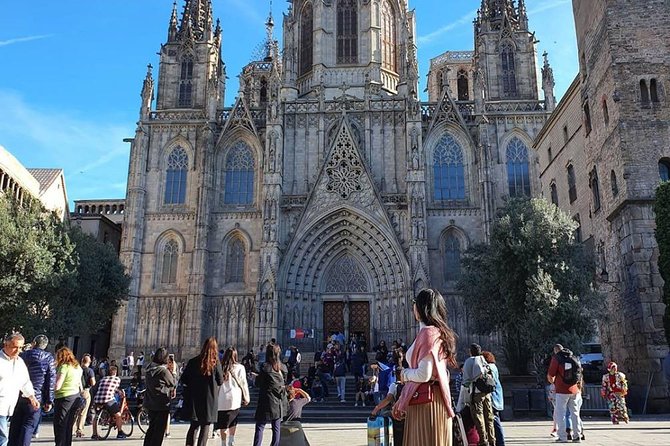
Your day begins in the Gothic Quarter, and it’s where Barcelona shows its oldest “bones.” Expect a guided stroll that mixes Roman-era remains, medieval churches, and the kind of narrow streets where you instantly slow down. The time here is the longest dedicated segment—about 30 minutes—so it’s not just a quick stop.
You’ll spend time in the Cathedral area too, with the Barcelona Cathedral mentioned as part of the Gothic Quarter segment. Later there’s a short, separate stop for Catedral de Barcelona (about 3 minutes). In practice, that means you get a better chance to understand the setting first, then come back for a more focused look.
Important practical note: admission tickets aren’t included for monuments here. So if you want to go inside the Cathedral or any other ticketed sites, you’ll need to plan for extra cost and time on your own.
The upside is that the guide helps you read the city as you walk. You don’t have to guess why one street turns abruptly or why a square feels tucked away. The drawback is obvious: this part involves uneven, historic-street walking. Wear shoes you trust for stone and short distances.
Las Ramblas and the Cathedral streets: a quick taste, not a full day
After the Gothic Quarter, the tour touches Las Ramblas. The stop is short—around 2 minutes—so think of it as a snapshot of the famous strip rather than a deep explore. You’ll pass the vibe you expect: markets, bars, and restaurants.
Then the route shifts right back to the Cathedral area with the quick Catedral de Barcelona stop. Together, these segments give you contrast. You’ll see how Old Town sacred architecture sits next to a major pedestrian artery that funnels day-to-day energy through the center.
If you hate being rushed, you can use this segment to your advantage. You’ll know exactly where you want to return later, once you’ve got context. If you love structure, you’ll appreciate that the tour doesn’t try to do everything at once.
Plaça Sant Felip Neri: the square you didn’t know you needed
Next comes a small but memorable stop: Plaça Sant Felip Neri. You’ll get about 5 minutes here, and the whole point is its quieter, “hidden” feeling inside the Old Town.
This is the kind of place where you can actually pause and notice. The square’s scale and placement make it feel like a pocket escape from the surrounding lanes. Since admission isn’t involved here, it’s also a no-risk stop: just show up, take a breath, and let the guide explain what makes it special in the urban layout.
If you’re the type who likes photos, this stop is good for that. If you’re the type who gets overwhelmed by crowds, it’s a mental reset too.





Plaça Reial: arcade energy, palms, and a lively night vibe
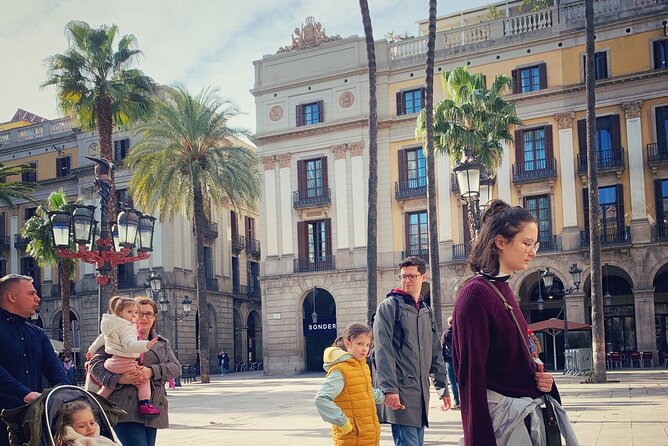
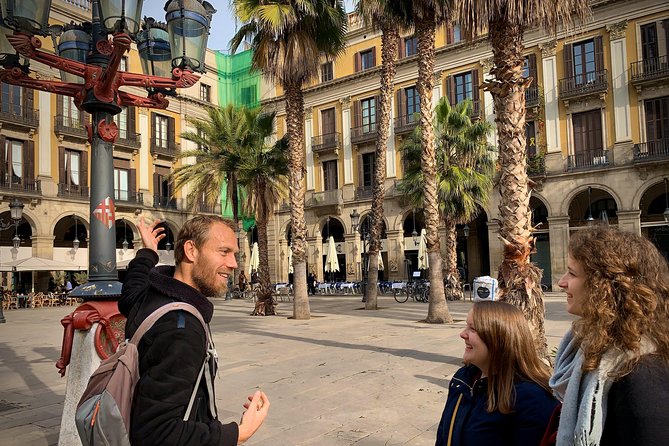
Then you move to Plaça Reial, another 5-minute stop. This one’s recognizable fast because it’s lined by an arcade, with restaurants and palm trees pulling your eye forward. It’s also described as connected to night life, which makes sense—this square feels designed for lingering.
Here’s why I think this stop matters: it shows a different side of the Old Town than the Cathedral lanes. Instead of pure “old world solemn,” you get a social square that still works as a gathering point.
Admission is free here, so you’re not waiting on anything. You can just step in, look around, and use it as a break in the walking rhythm.
Casa Batlló and La Pedrera from the street: Gaudí’s showpieces, without entry pressure
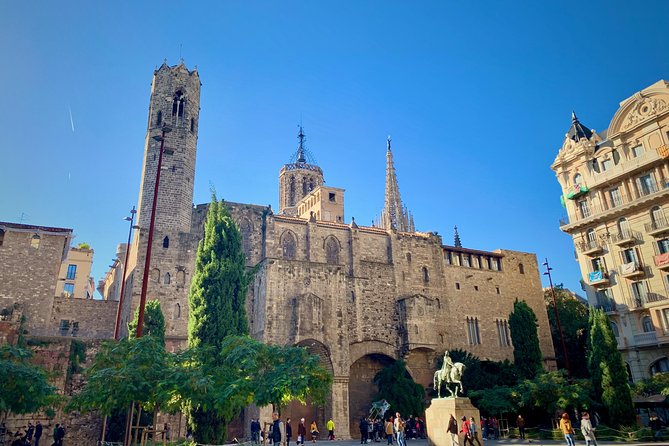
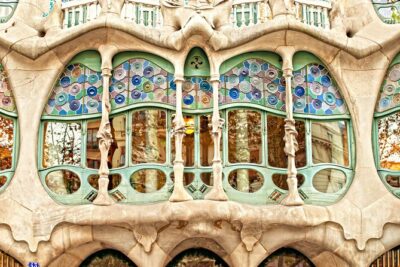
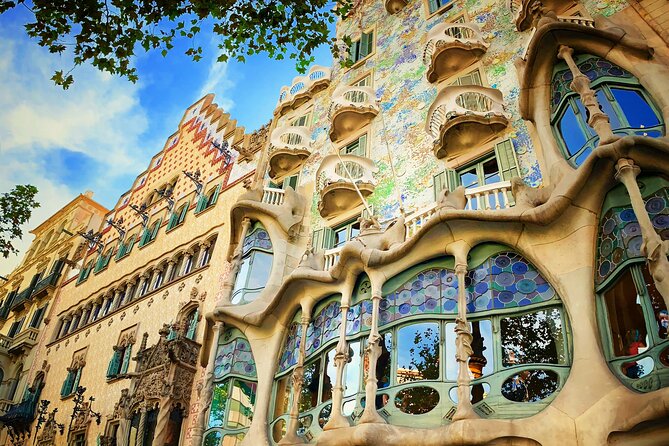
The tour then pivots from Gothic-era stone to Gaudí’s theatrical Modernisme. First up is Casa Batlló, with about 10 minutes allocated. It’s described with nicknames like House of Bones or House of Dragons, and the guide likely connects the nickname imagery to the building’s curves and facade details.
Important detail: you don’t go inside. The tour explicitly focuses on exterior viewing for Gaudí buildings. That approach is great if you’re short on time or if you prefer to spend your money only when you’re ready for a ticketed interior visit later.
Next is La Pedrera (Casa Milà) for about 5 minutes. It’s framed as Gaudí’s biggest private home for the Mila family, often called the mountain house. Again, it’s an exterior walkthrough, so you can appreciate the silhouette without getting stuck in timed-entry planning.
The trade-off is also clear: if you specifically want interior rooms, ceiling views, or a museum-style experience, this tour won’t cover that. You’ll need a separate ticket day if interiors are your priority.
Passeig de Gràcia: the 45-minute Modernisme runway
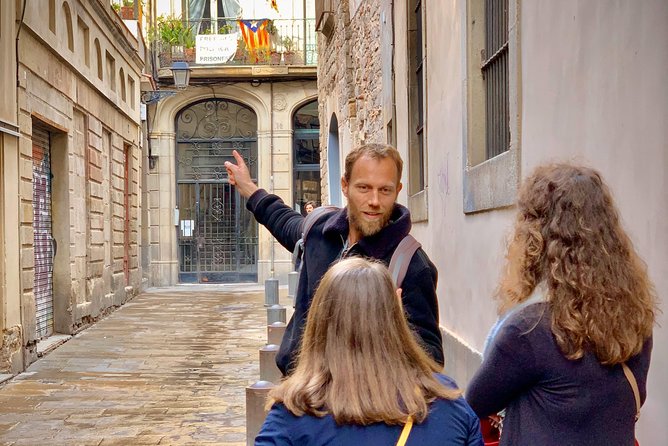
The biggest block of time after the Gothic Quarter is Passeig de Gràcia, about 45 minutes. This is Barcelona’s “main stage” boulevard for Modernisme—houses, tiles, even street details like lamppost design.
This is where the walk becomes especially useful, because you’re not just seeing one building. You’re getting a feel for a whole street style. The guide can tie together how Modernisme architecture repeats themes while still varying in material, shape, and ornament.
Also, this segment is largely free to view. That means you can focus on the experience, not the cost, as long as you’re okay with exterior-only sightseeing.
If you want to maximize the value here, slow down for a few minutes on your own. Look up. Then look at ground-level details. Modernisme rewards you when you notice both.
Casa Amatller: the Puig i Cadafalch neighbor you’ll appreciate more after Batlló
At the end of the architectural stretch, you’ll stop for Casa Amatller, about 5 minutes. It’s described as a spectacular Modernist house by Puig i Cadafalch, right next to Gaudí’s Casa Batlló.
Even in a short stop, it helps you understand the neighborhood’s architectural conversation. Two famous houses standing near each other won’t look the same if you pay attention to materials and facade style. If you’ve already seen Batlló, Amatller gives your eye a fresh comparison point.
No ticket is included here either. So it’s another quick look, a few good angles, and then you’re on your way—ending near the broader Casa Batlló / Casa Mila area.
Price and value: what $35.37 buys you (and what it doesn’t)
At $35.37 per person, this tour is priced for real guided value rather than pure self-guided sightseeing. You’re getting a professional guide and a structured walking route across central neighborhoods, plus guided viewing of the main Gaudí buildings from the outside.
What isn’t included matters:
- Monuments tickets are not included, so if you want interiors, you’ll pay separately.
- A radio headset is not included. Rental is 1€ per person, paid at the start to an external provider. This is worth budgeting for, especially if your group needs clearer audio.
- A short metro ride is part of the plan, but the public transport ticket isn’t included. Bring your own ticket or get it from your guide.
So is it worth it? For most people, yes—especially if it’s early in your trip. You’ll learn how the neighborhoods connect and which sights deserve your paid time later. If you’re the type who hates extra costs and prefers only free viewing, then this tour may feel slightly nickel-and-dime, since you’ll likely add the headset.
Logistics that affect your day: walking time, group size, and hearing the guide
The tour runs about 2 hours 15 minutes, and that includes multiple stops. Expect enough walking to feel like a real experience, not a slow city stroll.
The group limit is 15 travelers, which helps with pacing. Smaller groups can move around corners with less chaos and can keep the guide’s explanations audible and on track.
Hearing can be the make-or-break detail in busy central streets. If you want the clearest audio, plan on the headset rental (1€). If you don’t, you may have to work harder to hear the guide in louder areas like Las Ramblas.
One more logistics tip from past group feedback: if you’re with a stroller, the route was described as reasonably stroller friendly, with a metro segment where elevators were available. Still, historic streets can be uneven, so bring a way to manage wheels comfortably.
Should you book this tour?
Book it if you want an efficient “connect-the-dots” day: Old Town to Modernisme, Gothic Quarter to Passeig de Gràcia, plus exterior Gaudí highlights. This is also a strong choice when it’s your first day, because you’ll leave with a mental map that makes the rest of your time easier.
Skip it or plan differently if you only care about interiors. Since you don’t go inside Casa Batlló or La Pedrera, you’ll be paying for an exterior-focused experience. And if you hate walking, you might find the time adds up faster than you expect.
FAQ
What is the duration of the Ramblas, Old Town, Gothic and Gaudí Architecture Walking Tour?
It lasts about 2 hours 15 minutes.
How much does the tour cost?
The price is $35.37 per person.
Is the tour guided, and is it offered in English?
Yes. It includes a professional guide, and it’s offered in English.
How big is the group?
The tour has a maximum of 15 travelers.
Are tickets to monuments included?
No. Monument tickets are not included.
Is the radio headset included in the price?
No. A radio headset rental costs 1€ per person and is paid at the start of the tour to an external provider.
Does the tour include any metro or public transport?
Yes, there’s a short metro ride during the tour. Public transport tickets are not included; bring your own or get them from your guide.
Is the tour affected by weather?
Yes. It requires good weather, and if it’s canceled due to poor weather, you’ll be offered a different date or a full refund.
Is it okay to travel with a service animal?
Service animals are allowed.