Munich looks different when you walk south. This 150-minute architecture-and-culture tour, guided by architect and official city guide Philipp, starts at Piazza Zenetti and keeps the group to max 16 people. That small size matters: you get real back-and-forth, not a rushed lecture.
I love two parts of this itinerary. First is the street art stop at Bahnwärter Thiel, where the city’s creativity shows up in actual walls and textures. Second is the beer garden visit connected to Alte Utting on a steamboat, which turns the Isar river into part of the story instead of just scenery. One consideration: you’re on your feet the whole time, with uneven sidewalks and long stretches of walking.
You’ll also receive a digital map with Philipp’s favorite places, plus a water-history angle along the Isar. One caution up front: the tour isn’t set up for wheelchair users.
In This Review
- Key Highlights You’ll Feel During the Walk
- Munich South, Not the Usual Loop
- Philipp’s Architect Brain: What You Gain Beyond Photos
- Piazza Zenetti Start: Easy to Find, Built for Meeting
- What to bring
- Münchner Volkstheater: A Big Building Lesson in How Cities Shape Culture
- Bahnwärter Thiel and the Beginner’s Wall: Street Art as Architecture
- A drawback to consider here
- On the Isar: MS Utting and the Alte Utting Steamboat Stop
- What you should expect in this section
- Dreimühlenstraße and Wittelsbacherbrücke: The City’s Lines and Crossings
- Claude-Lorrain-Straße Toward Little Venice
- Finishing at Gans Woanders: The Whimsical Beer Garden Finale
- Price and Value: What $30 Buys in Real Terms
- Who Should Book This Architecture-and-Walk Tour
- Practical Tips for a Smooth 150 Minutes
- Should You Book This Munich South Tour?
- FAQ
- How long is the tour?
- Where do we meet, and what’s the easiest way to get there by subway?
- What languages is the tour offered in?
- Is food and drinks included?
- Is the tour wheelchair accessible, and are there any rules about smoking?
- Is there free cancellation or reserve-and-pay-later?
Key Highlights You’ll Feel During the Walk
- Philipp the architect + official guide keeps the explanations tied to real building details and city planning choices
- Bahnwärter Thiel brings street art into the same conversation as architecture, not as a separate topic
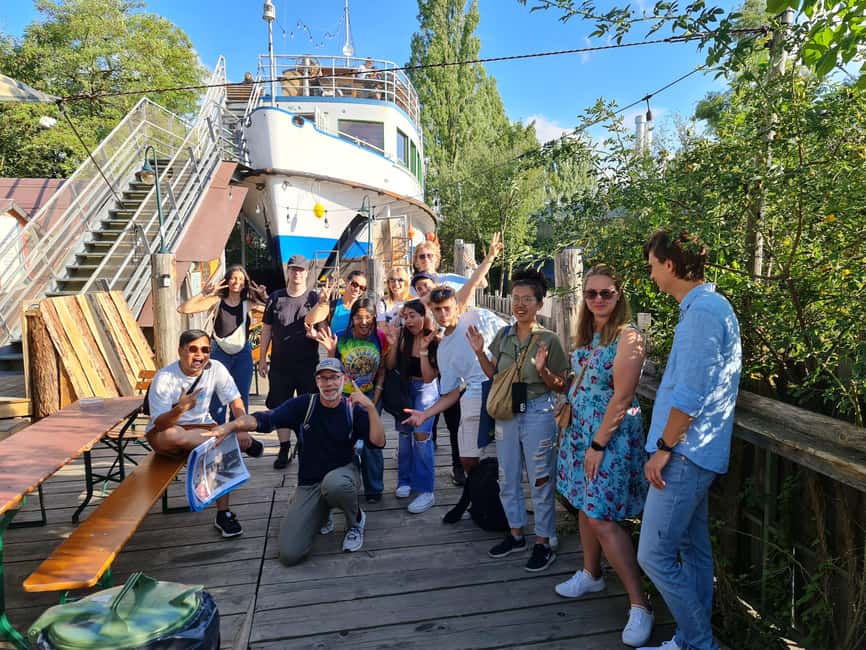
- Alte Utting steamboat beer garden connects Munich’s river life to what you see on land
- Isar river route and water-history context give you a cleaner understanding of why this area looks the way it does
- Gans Woanders finishes the tour at a whimsical beer garden with artistic flair
Munich South, Not the Usual Loop
This tour is built for people who want Munich to feel personal. Instead of starting and ending in the biggest, most obvious places, you begin at Piazza Zenetti and head into the city’s south. It’s the kind of route that makes you look up more often—at façades, street alignments, small details, and how buildings relate to the street.
The 150 minutes also hit a sweet spot. You get enough time to cover several distinct neighborhoods without it turning into an all-day hike. And with a maximum of 16 guests, the pace stays conversational. You can ask why something was built, what changed over time, and how to spot the clues yourself when you’re out on your own.
You can also read our reviews of more tours and experiences in Munich.

Philipp’s Architect Brain: What You Gain Beyond Photos
The biggest advantage here is Philipp’s double background: he’s both an architect and a certified official city guide. That combination shows in the way explanations land. You don’t just get facts; you learn what to notice next time you’re walking Munich.
From the strong feedback this tour consistently earns, one thing comes up again and again: Philipp is engaging and answers questions in a way that feels practical. It’s not just big-picture talking. He points you toward details you can actually see on the street, then gives you a short framework for reading what you’re looking at.
You also come away with recommendations. Even though food and drinks aren’t included, the tour doesn’t feel like it ends when you do. The included digital map and favorite stops help you build your next hours in Munich without guessing.
Piazza Zenetti Start: Easy to Find, Built for Meeting
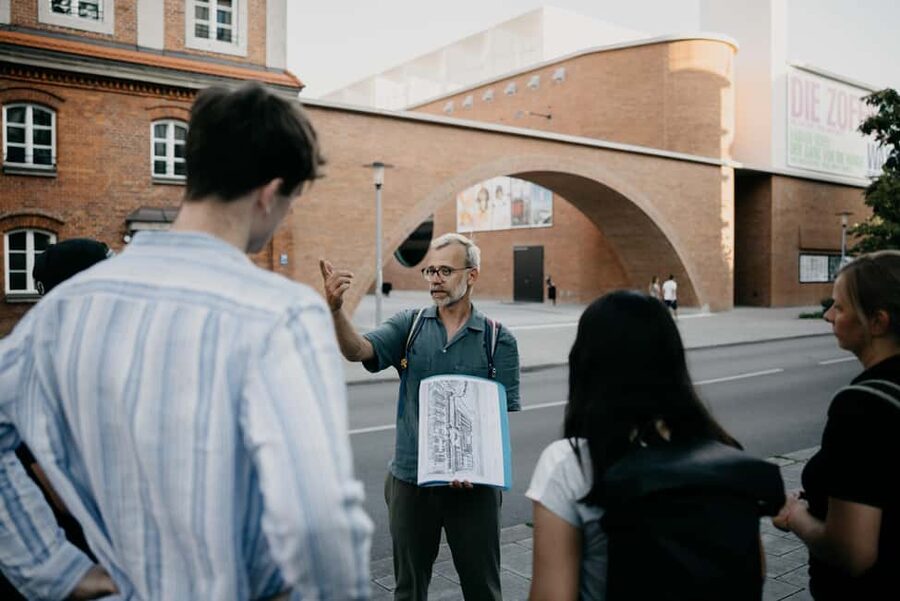
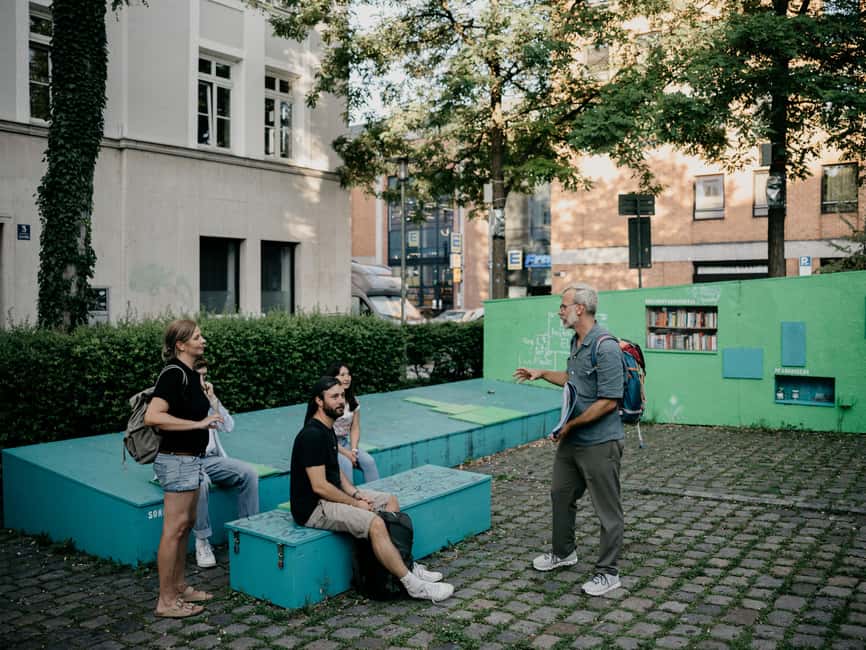
The meeting point is Piazza Zenetti, identifiable by the distinctive grey and turquoise street furniture. Look for Philipp with a tablet slung over his shoulder.
Getting there is straightforward. If you want subway access, take U3 or U6 and exit at Poccistrasse, then enjoy a roughly 10-minute walk to the square. This matters because Munich tours can be a little chaotic at the start. Here, the meeting spot is clear, and the approach route gives you time to settle in before you start walking.
What to bring
- Comfortable shoes (this is a walking tour)
- Warm clothing (layers help, even when the sky looks cooperative)
And a simple rule that keeps things smooth: no smoking during the experience.
Münchner Volkstheater: A Big Building Lesson in How Cities Shape Culture
Your first main stop is Münchner Volkstheater. This is a smart opening because it sets the tone: you’re not just sightseeing objects, you’re learning how Munich organizes culture through built form.
Expect Philipp to connect architecture to public life. You’ll likely get prompts like what to pay attention to from different angles, how the street edge influences the building, and what the surrounding area tells you about city priorities. It’s the kind of start that helps you stop walking on autopilot.
A small practical note: if you like to take photos, arrive ready to spend a few minutes positioning yourself. Buildings like theaters can look different depending on where you stand, and Philipp’s way of working encourages you to re-check your viewpoint.


Bahnwärter Thiel and the Beginner’s Wall: Street Art as Architecture
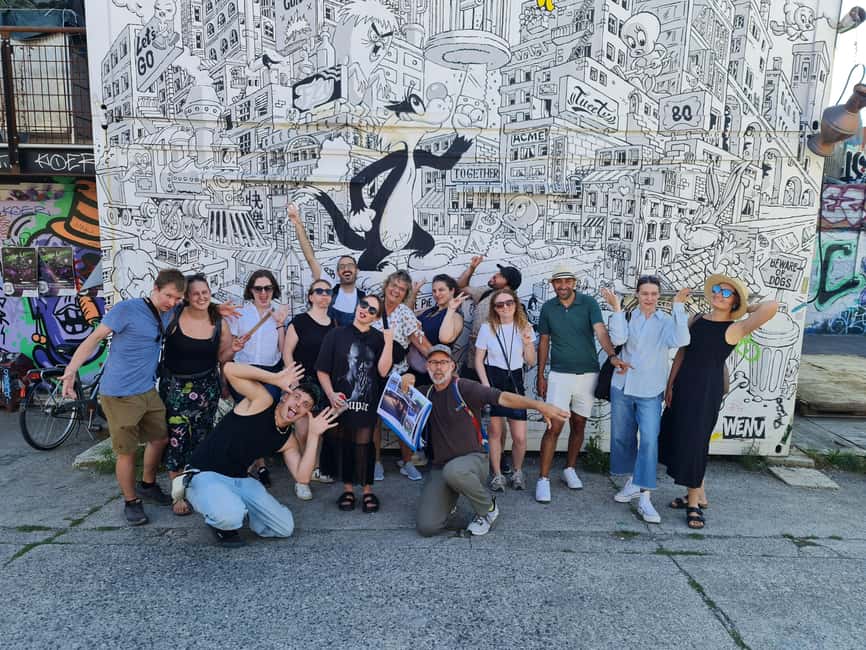
From the theater, you shift into creative territory—the street art scene, including Bahnwärter Thiel and the Beginner’s Wall area.
This is where the tour becomes more than buildings. Street art changes the way you read a neighborhood. Instead of seeing only official façades and tidy historic styles, you start noticing layered messages: surfaces, textures, layers of color, and how art interacts with passing foot traffic.
The way this stop is handled is part of why people rate the tour so highly. Philipp’s explanations make the art feel legible. He doesn’t treat it as random decoration. He treats it like an urban design language—one that shows how communities claim space.
A drawback to consider here
Street art segments usually mean you’ll be looking at walls and small details for longer than you expect. If you strongly dislike up-close visual studying, you might feel impatient. If you enjoy noticing how art and architecture talk to each other, this will feel like the tour’s heart.
On the Isar: MS Utting and the Alte Utting Steamboat Stop

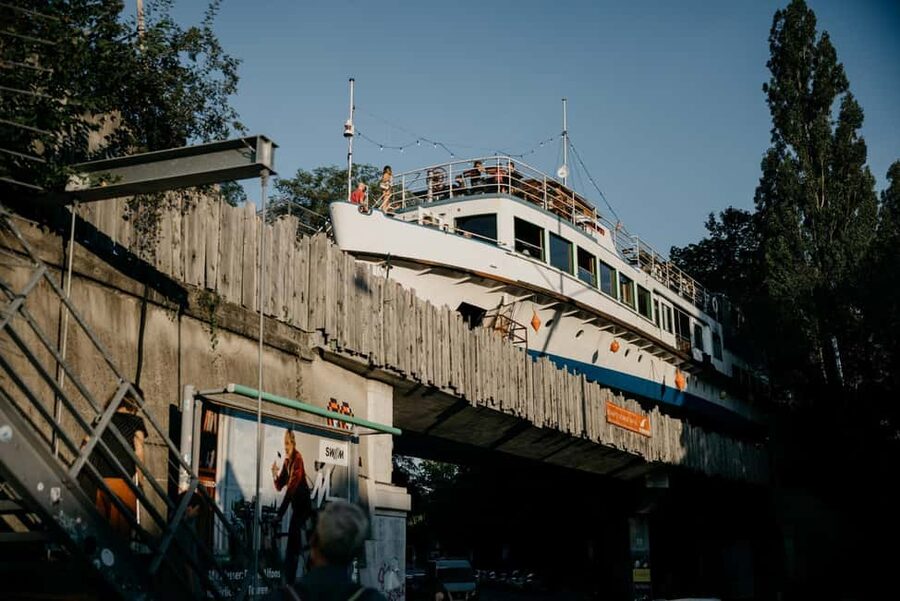
Next comes the water. You’ll reach the river segment where MS Utting is referenced from the bridge area on Lagerhausstrasse. This is one of the tour’s most memorable transitions: you go from neighborhood surfaces to a wide, open element that changes how the city breathes.
The tour also focuses on Munich’s water history. You don’t just hear about it abstractly. You connect it to what you can see—how the Isar corridor shaped life here, how the river supports a different kind of gathering, and why the steamboat beer garden experience makes sense in this setting.
Then there’s the practical fun: the idea of Alte Utting as a beer garden on a steamboat gives you a different Munich mood. It’s not a museum moment. It’s a lived-in city moment, where the architecture of the river experience becomes part of the social culture.
What you should expect in this section
Expect a slower visual pace. Bridges and river angles reward standing still for a few minutes. If you get motion-sick easily, the walk itself shouldn’t be a problem, but you might want to plan for lots of looking in different directions.
Dreimühlenstraße and Wittelsbacherbrücke: The City’s Lines and Crossings

After the river-side segment, the walk continues through Dreimühlenstraße, then across Wittelsbacherbrücke. These are strong stops for people who like how cities are mapped by movement.
Dreimühlenstraße gives you a corridor view—how buildings line up along a street and how pedestrian flow feels in real time. Wittelsbacherbrücke brings perspective. From a bridge you can read the city in layers: river geometry, building placement, and the way neighborhoods “turn corners” stylistically.
In plain terms, this is where architecture becomes legible. You start recognizing relationships: street widths, sightlines, the way facades face the public realm, and why crossing points matter in an urban layout.
Claude-Lorrain-Straße Toward Little Venice
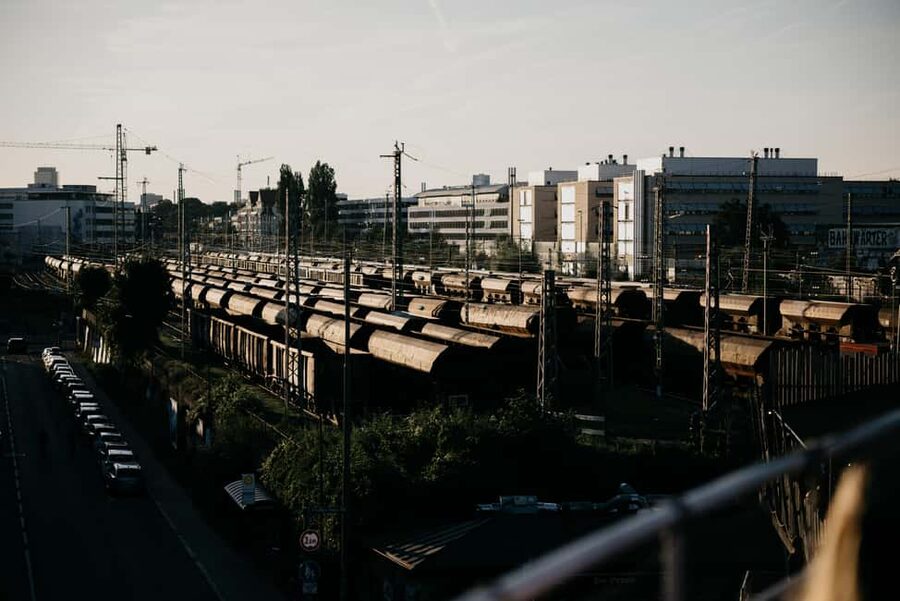
You then reach Claude-Lorrain-Straße, and from there the tour heads toward Little Venice. Munich has a way of surprising people who think they already understand the city. Little Venice is one of those places where the river feel turns into something playful, and it’s a great contrast after the more structured architecture points.
Philipp’s approach helps you notice how the area functions. Instead of treating it as a single photo spot, you learn how it fits into the broader south-side neighborhood rhythm. You’ll also hear about the surrounding charm of areas like Untergiesing and the Scherbenviertel character along the route, which makes the walk feel like a coherent story rather than isolated stops.
If you love wandering because you want atmosphere, this is the part that delivers. If you only care about grand landmark buildings, you might need to adjust your expectations. This section rewards curiosity.
Finishing at Gans Woanders: The Whimsical Beer Garden Finale
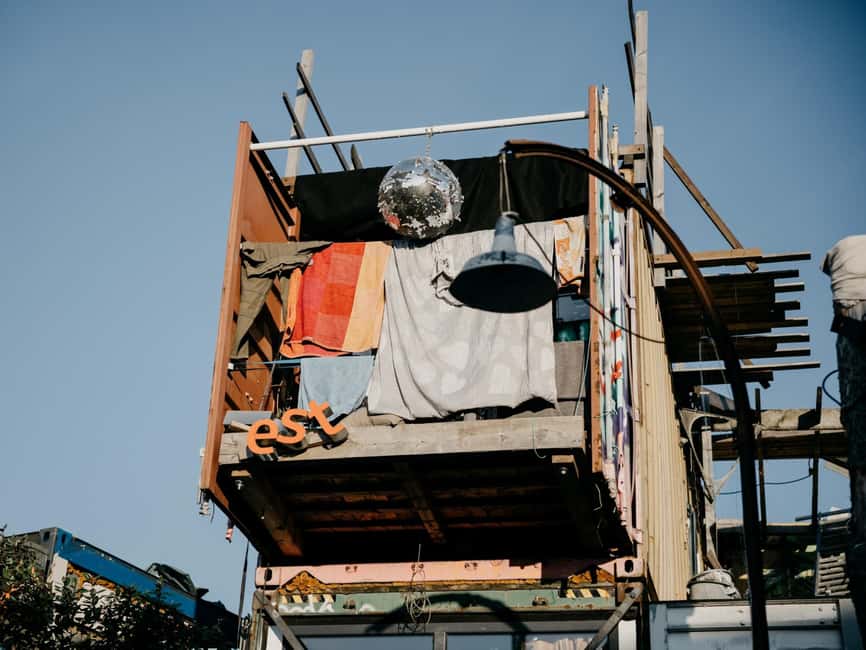
Your tour ends at Gans Woanders, a beer garden known for artistic flair and a whimsical vibe. It’s an intentional finish. After architecture and street art, you land in a place where creativity is social and you can relax without feeling like you rushed through the last stop.
Because the tour doesn’t include food or drinks, treat the finish as a transition. You can grab something on your own time, linger with the same people you walked with, and compare notes while it’s still fresh. And because you’ll have Philipp’s digital map with favorite picks, you’re more likely to continue your day wisely rather than guessing blindly.
Price and Value: What $30 Buys in Real Terms
At $30 per person for about 150 minutes, this tour is priced like a solid local-guided experience, not a generic sightseeing bundle. The value isn’t only the duration. It’s what you’re paying for:
- A certified official Munich guide with an architect’s lens
- A route that includes street art, architecture, and the Isar water-history theme
- A small-group format (max 16) that supports questions and back-and-forth
- A digital map with favorite places for after the walk
Also, the tour is not trying to sell you a meal. Since food and drinks aren’t included, you can control your budget. It’s a good fit if you want flexibility—either a light snack during your day or a proper sit-down meal later.
So yes, it costs money, but it’s not expensive for what you get: expert guidance plus a route that teaches you how to see Munich, not just where to stand for pictures.
Who Should Book This Architecture-and-Walk Tour
This experience fits best if you:
- Like street art as part of urban identity, not as a side attraction
- Enjoy learning through walking—seeing how neighborhoods connect
- Want a guide who can explain with specifics, then help you notice details on your own
- Prefer small-group tours over big-bus formats
It’s also family-friendly, which can matter if you’re traveling with teens who like discovering how cities work, not only where they have to go.
And it’s not for everyone. It’s not suitable for wheelchair users, and the walking nature means you’ll want comfortable footwear and a reasonable mobility level.
Practical Tips for a Smooth 150 Minutes
Here’s how to set yourself up so the tour stays fun and not stressful:
- Wear comfortable shoes. You’re covering multiple stops and looking around a lot.
- Bring warm layers, even in milder weather.
- If you’re getting there by subway, U3 or U6 to Poccistrasse keeps the logistics clean.
- Don’t plan on a lunch break during the tour. Food and drinks aren’t included, so decide your schedule around that.
One more detail that makes a difference: the meeting point is Piazza Zenetti. Being early helps. You’ll spot the grey and turquoise street furniture quickly, and Philipp will be easy to find with the tablet.
Should You Book This Munich South Tour?
If you want a Munich day that feels like it has a point—architecture, street art, and the Isar stitched into one walk—this is an easy yes. The strong ratings and the repeated praise for Philipp’s engaging guiding style are exactly what you want when you’re paying for time, not just transportation.
You should consider skipping it if you:
- Have trouble with longer walks or uneven sidewalks
- Prefer only landmark buildings with minimal “looking closely” time
- Want food or drinks included in the price
Otherwise, book it and treat it like a guided lesson in reading the city. You’ll leave with better instincts for where to look next—and with a short list of places to keep exploring long after you’ve finished the route.
FAQ
How long is the tour?
It lasts 150 minutes.
Where do we meet, and what’s the easiest way to get there by subway?
You meet at Piazza Zenetti. Take subway lines U3 or U6, exit at Poccistrasse, then walk about 10 minutes to the meeting point.
What languages is the tour offered in?
The live guide speaks English, German, and Spanish.
Is food and drinks included?
No. Food and drinks are not included.
Is the tour wheelchair accessible, and are there any rules about smoking?
The tour is not suitable for wheelchair users. Smoking is not allowed.
Is there free cancellation or reserve-and-pay-later?
Yes. You can cancel up to 24 hours in advance for a full refund, and you can reserve now and pay later.