
REVIEW · NEW ORLEANS
Garden District Architecture Walking Tour in New Orleans
Book on Viator →Operated by Universal Tour Group USA · Bookable on Viator
Mansion views, but with real history in the details. This Garden District architecture walking tour is a smart, low-cost way to spot planter-era homes while a local guide connects the houses to Louisiana’s big historic families, the plantation-city rhythm of life, and the darker truths behind it. I especially like the way it brings pop culture into the streets without losing the serious context, from Scarlett O’Hara-style summer plantation life to nearby author Anne Rice’s Interview with the Vampire legacy at the Brevard House (1239 1st Street). I also like the second stop at Lafayette Cemetery No. 1, where you’ll learn about above-ground burial rites and the cemetery’s role in TV and film. One possible drawback: if you’re picky about details, remember that the experience depends a lot on the guide’s pacing and accuracy.
This is a small, focused walk—about 2 hours total—with a live guide and a route that keeps moving. You’ll start at 2727 Prytania St at 10:00 am, and the tour wraps back at the same meeting point, so it’s easy to plug into your day.
With a maximum of 30 people, it’s the kind of activity where you can actually ask a question and hear the answer. If you like architecture plus story, this one fits. If you’re looking for a long, slow sit-down museum day, you may find the pace a bit fast.
In This Review
- Key Highlights You’ll Actually Feel During This Walk
- Why This 2-Hour Garden District + Cemetery Combo Works
- Start at 2727 Prytania St: Timing and How to Get the Most
- Stop 1: Garden District Architecture and Planter-Family Stories
- Scarlett O’Hara and Anne Rice: How Fiction Gets Placed on Real Streets
- A note on pace (the main potential drawback)
- Stop 2: Lafayette Cemetery No. 1 and Above-Ground Burial Rites
- The 30-minute timing: good for highlights, not for deep study
- Pop Culture and Historical Reality: Using References Without Losing the Plot
- Price and Logistics: What You’re Paying For (and What You Aren’t)
- Who This Tour Is Best For
- FAQ
- What is the duration of the Garden District Architecture Walking Tour?
- Where does the tour start?
- What are the main stops on the itinerary?
- How much does the tour cost?
- Is food or transportation included?
- Are there any admission fees for the stops?
- Is it okay to bring a service animal?
- Should You Book This Tour?
Key Highlights You’ll Actually Feel During This Walk

- Garden District architecture tied to Louisiana planter families, not just pretty houses
- A clearly split route: about 1.5 hours in the Garden District, then about 30 minutes in the cemetery
- Lafayette Cemetery No. 1 as an outdoor museum, including above-ground burial rites
- Film and literature connections like Interview with the Vampire and The Vampire Diaries
- Small group size (up to 30) that helps you stay oriented and engaged
- $20 per person for a guided, two-stop New Orleans history walk with mobile tickets
Why This 2-Hour Garden District + Cemetery Combo Works
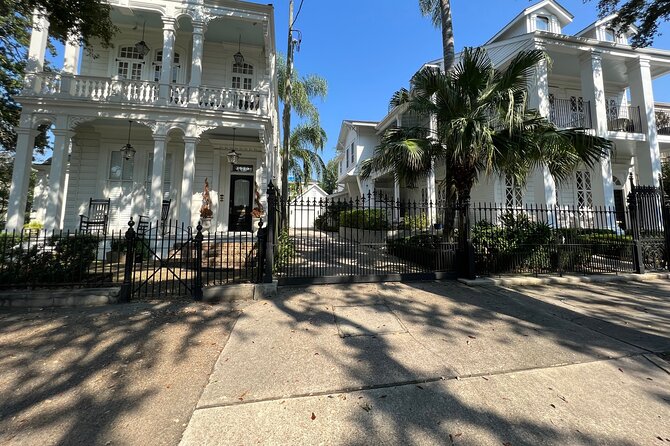
New Orleans has a way of making you think you already know the place—until someone points at the details and the story clicks. This tour is built for that moment. You’re not just passing mansions and taking photos. You’re walking with a guide who explains why these neighborhoods look the way they do and what that layout meant for the people who lived here.
At $20 per person, the value is in the live interpretation. The Garden District alone can be hours if you try to self-guide and constantly hunt down context. Here, you get a packaged route with a timed flow: roughly 1 hour 30 minutes for the Garden District and about 30 minutes at Lafayette Cemetery No. 1. For many people, that’s the sweet spot—long enough to learn something real, short enough to keep the rest of your day flexible.
There’s also a practical win: admission is listed as free for the stops, and the tour is set up with a mobile ticket. That keeps the experience from turning into a series of ticket counters and extra fees.
Still, it’s worth saying out loud: this is not an all-day deep research project. You’re on foot, you’re moving, and the guide has to cover a lot.
You can also read our reviews of more tours and experiences in New Orleans.



Start at 2727 Prytania St: Timing and How to Get the Most
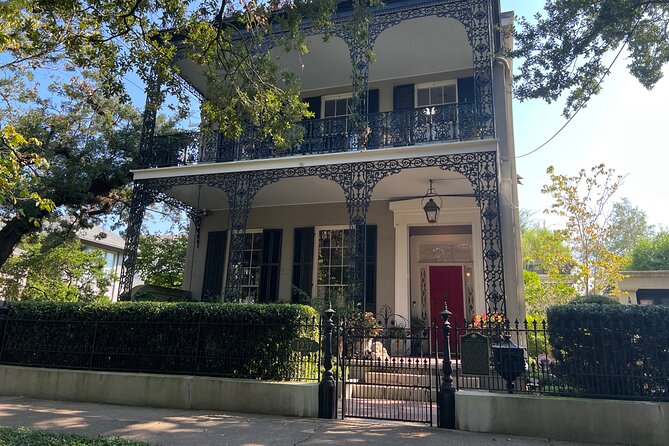
You’ll meet at 2727 Prytania St at 10:00 am, and the tour ends back at the same spot. That round-trip setup matters in New Orleans, where you can waste time if you start and end across town.
The tour runs about 2 hours total. With that length, your best strategy is simple: wear comfortable walking shoes and come ready to look up at homes as much as you look ahead at the sidewalk. The architecture details that guides love to point out—massing, facades, gates, and the way streets frame the houses—are easiest to catch when you’re not rushing.
The group limit is 30, which helps. You’ll generally be able to keep track of where you are, and you’re not stuck in a crowd where questions die on the way to the front.
One more small thing: you’re not paying for food or transportation here. That’s good for people who like to choose their own snacks. Just don’t assume the tour provides drinks or meals.
Stop 1: Garden District Architecture and Planter-Family Stories
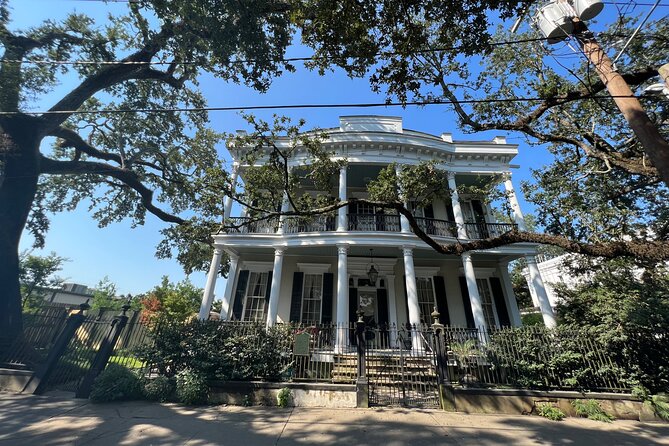
The Garden District is famous for its preserved streetscapes, and this tour leans into that. You’ll walk through one of the most desired neighborhoods and one of the nation’s best-preserved city districts. But what makes the walk worthwhile isn’t the scenery alone—it’s the way the guide turns the neighborhood into a timeline.
You’ll see the lavish homes and learn how they connect to Louisiana’s planter families—the wealth, the social systems, and the uncomfortable reality that wealth was built on human suffering. The tour frames the era of masters and slaves, the Civil War, segregation, and the abolition of slavery, then holds those facts up against the romantic impulses people often associate with historic Southern life. It’s not just history-as-postcard.
Here’s the part I find most useful: the guide helps you read the neighborhood. The houses aren’t presented as isolated “pretty buildings.” They’re lined up next to each other in a way that tells you something about status, power, and community—plus how fortunes rose, shifted, and sometimes collapsed.
The route description also promises more than architecture talk. You can expect stories that range from legends and tragedy to epidemics and lost causes, with pop-culture and local-fame threads mixed in. That variety is great when you want New Orleans flavor but still want the walk to feel coherent.
Scarlett O’Hara and Anne Rice: How Fiction Gets Placed on Real Streets
This is one of the fun parts of the tour if you like literature and film, because it uses real locations rather than vague references.
Scarlett O’Hara is mentioned as a symbol of the plantation-city rhythm—summer life on plantations and winter life in the city. Even though the character is fiction, the concept connects to a historic reality: seasonal movement and social theater were part of elite life.
You’ll also hear about Anne Rice and Interview with the Vampire. The tour specifically calls out the Brevard House at 1239 1st Street. That detail matters. It’s one thing to enjoy the story. It’s another to see the kind of setting that makes the story feel plausible.
A note on pace (the main potential drawback)
One concern that can come up on any guided walking tour is whether the guide stays fresh and accurate. If you’re the type who reads plaques carefully and wants everything to match what you see, go in ready to ask follow-up questions. If something feels off, it’s okay to interrupt politely and request clarification. The Garden District is full of visible clues—your own eyes are part of the experience.


Stop 2: Lafayette Cemetery No. 1 and Above-Ground Burial Rites
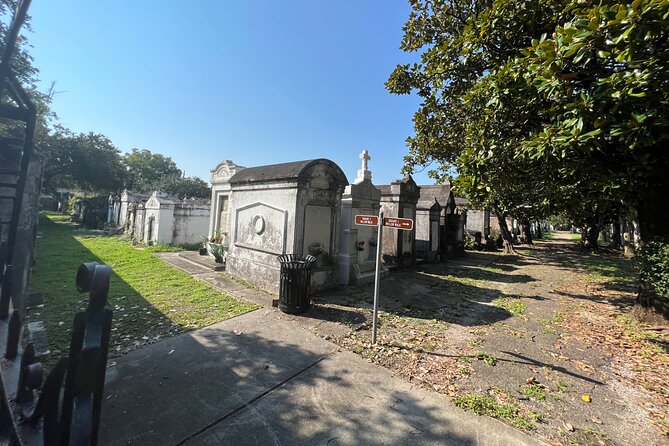
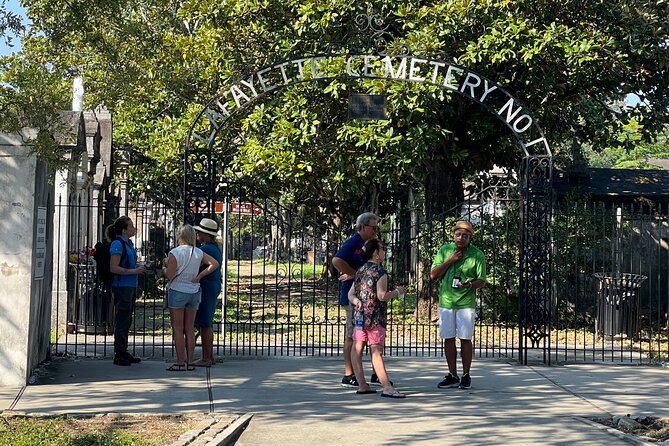
Then you shift from neighborhood streets to the cemetery atmosphere at Lafayette Cemetery No. 1. This stop is about 30 minutes, which is short—but focused.
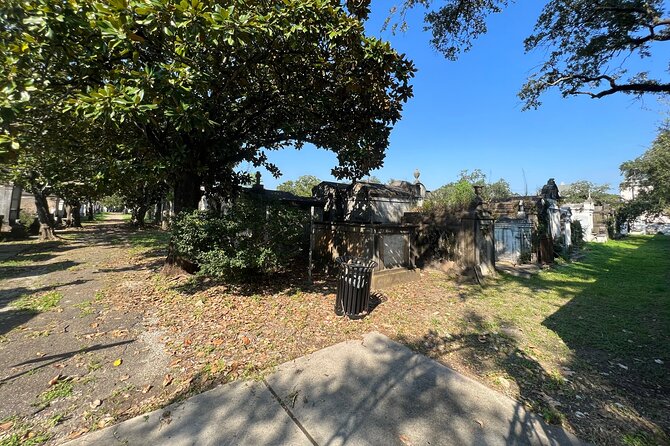
Lafayette Cemetery No. 1 is described as one of the oldest museum sites in Louisiana and also a filming location for major TV and film. It’s tied to Interview with the Vampire and The Vampire Diaries, so if you recognize the vibe from screens, you’ll get a sense of where the look actually comes from.
But the core value here is the burial culture. You’ll learn about the rites of burial above ground. That one topic can change how you see cemeteries in New Orleans. Instead of treating the graves as “just old tombs,” you start to understand the practice as a whole system—how people honored the dead, how family presence worked through space, and why the environment shaped the architecture of mourning.
This is also a good stop if you care about how history layers onto place. The cemetery isn’t separate from New Orleans life. It’s part of how the city keeps memory in view.
The 30-minute timing: good for highlights, not for deep study
Because this stop is timed to about 30 minutes, you won’t get a full cemetery-by-cemetery research experience. You’ll get the key concepts and a sense of the site’s importance, plus the film connections. If you want more time afterward, plan to return on your own with curiosity and comfortable shoes.
Pop Culture and Historical Reality: Using References Without Losing the Plot
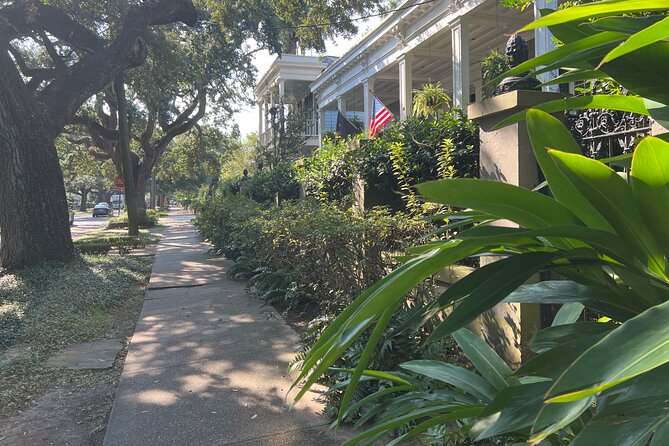
New Orleans tour culture can get silly fast—too many “spooky vibes” and not enough facts. This tour’s approach is better because it ties references to place and then circles back to real history.
You’ll hear about cinematic and literary connections, but the story doesn’t stop there. The tour discusses the hard historical background: slavery and its legacy, segregation, and the long shadow of the Civil War and abolition. The effect is that the romantic elements people associate with the South become more complicated—in a good way, if you’re trying to understand what those neighborhoods actually represent.
That balance is part of the value for me. You’re not forced to choose between “fun” and “serious.” Instead, you get both: atmosphere plus context.
If you love Interview with the Vampire and The Vampire Diaries, you’ll probably enjoy how the cemetery and certain houses get positioned in the conversation. If you don’t, you can still treat those references as helpful signposts that guide you toward the deeper meaning of what you’re seeing.
Price and Logistics: What You’re Paying For (and What You Aren’t)
The price is $20 per person and the tour runs about 2 hours with a live guide. That’s where the money goes. You’re not buying a pile of museum entry tickets or paying for a van ride—so the experience depends on the quality of the guide’s explanations and the clarity of the walk.
What’s not included is straightforward:
- Transportation
- Food and drink
So you should plan to handle your own getting-there and your own snacks. If you want to eat, choose a spot after the tour while you still have energy for strolling.
Also, admission is listed as free for the stops. That’s a nice bonus if you’re budgeting—especially for a city where some tours add fees at each location.
One more practical point: this tour is often booked ahead (about 22 days on average). If your trip has fixed dates, it’s smart to reserve early so you aren’t stuck with whatever time remains.
Who This Tour Is Best For
I’d point you to this walking tour if you fit at least one of these:
- You want Garden District architecture explained in plain language, with context
- You like history but also appreciate movie and literature connections
- You want a manageable time commitment that still covers two major sights
- You’d rather spend $20 well than pay more for a longer, more expensive day
It may not be the best match if you want:
- A very quiet walk with lots of free time to roam on your own
- A deep, hour-by-hour history lecture without pauses or movement
- A cemetery visit long enough for serious, unhurried reading
Most people can participate, and it’s a small-group setup, but it’s still a walking tour. Comfortable shoes are the safest bet.
FAQ
What is the duration of the Garden District Architecture Walking Tour?
It runs about 2 hours (approximately), with about 1 hour 30 minutes in the Garden District and about 30 minutes at Lafayette Cemetery No. 1.
Where does the tour start?
The meeting point is 2727 Prytania St, New Orleans, LA 70130.
What are the main stops on the itinerary?
You’ll visit the Garden District and Lafayette Cemetery No. 1.
How much does the tour cost?
The price is $20.00 per person.
Is food or transportation included?
No. Food and drink are not included, and transportation is not included.
Are there any admission fees for the stops?
Admission is listed as free for the stops on the itinerary.
Is it okay to bring a service animal?
Yes. Service animals are allowed.
Should You Book This Tour?
If you want a morning or early day in New Orleans that mixes architecture, real historical context, and above-ground cemetery culture—this is a strong choice. The price is reasonable for a guided route, and the two-stop format keeps you from spending the whole day just getting “a few photos” and no understanding.
Book it especially if you’re drawn to the way the Garden District connects to planter-family stories, and if you’ll enjoy seeing how Interview with the Vampire and The Vampire Diaries tie into Lafayette Cemetery No. 1. Go in with curiosity, ask questions when something catches your eye, and you’ll get a lot out of the 2-hour structure.