REVIEW · CHANDIGARH
The Hipster Chandigarh Architecture History Tour
Book on Viator →Operated by Rusty · Bookable on Viator
Chandigarh gets a second life on foot. This two-day architecture tour turns concrete icons into stories you can actually use, with an insider approach led by Rusty. You’ll see UNESCO-grade planning up close, plus rare spaces tied to Le Corbusier and Pierre Jeanneret, with humor kept friendly and practical.
What I especially like is how the tour links design to real life. I love the inside access to major landmarks like the Capitol Complex and the Open Hand Monument, and I also love the careful pacing that leaves room for photos and basic breaks without turning the day into a sprint.
One thing to consider: you’ll be walking and moving through several major sites across two full days, so you’ll want solid shoes and a good attitude for concrete stairs and museum time. Also, the schedule depends on good weather, and some visits can be affected by local conditions.
In This Review
- Key things that make this tour work
- Chandigarh’s “hipster” architecture angle: stories, symbols, and people
- Price and what you actually get for your money
- Getting around on two full days: A/C comfort and a tight route
- Day 1: Capitol Complex and Open Hand, the UNESCO core you can read
- Le Corbusier Centre and Chandigarh Architecture Museum: when buildings teach you to see
- Gandhi Bhawan and Panjab University: Chandigarh’s academic “face”
- Museum Maison Jeanneret: living inside the idea
- Geometric Hill and the Tower of Shadows: design tricks you can understand
- Day 2: Sukhna Lake and Sector 17 Market, planning beyond government buildings
- War Memorial and the architecture of memory in Sector 3
- Rare access to Pierre Jeanneret’s public socialist housing
- Government Museum and Art Gallery: modern architecture + pre-partition artifacts
- Lake Club: the private Corbusier yacht-club angle
- What I’d do to get the most from it (practical tips)
- Should you book this architecture history tour?
- FAQ
- How long is the Hipster Chandigarh Architecture History Tour?
- What is the price per person?
- What’s included in the tour price?
- Are photography fees included?
- What time does the tour start?
- What group size should I expect?
- Do I need an admission ticket on-site?
- What happens if the weather is poor?
- Can I cancel for a refund?
- Is a mobile ticket used?
- Is pickup available?
Key things that make this tour work
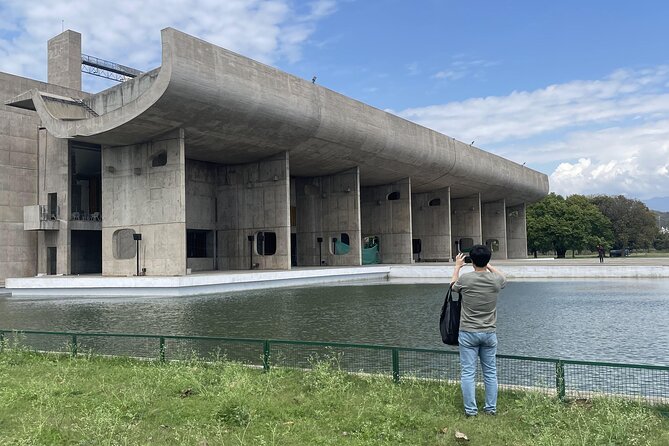
- Insider access at UNESCO sites like the Capitol Complex and the Open Hand Monument, not just a drive-by
- All entry tickets included, plus photography fees where needed
- Air-conditioned vehicle with parking, waiting, and transport costs handled
- Le Corbusier and Jeanneret explained through “how Chandigarh works”, not just name-dropping
- Rare public and private-style interiors, including Pierre Jeanneret’s public socialist housing (when access allows)
Chandigarh’s “hipster” architecture angle: stories, symbols, and people
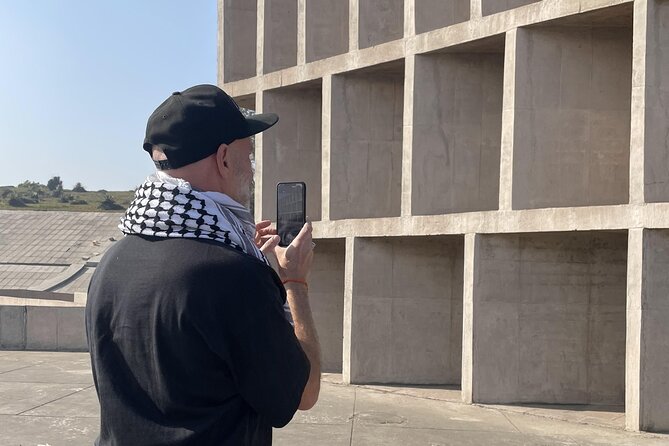
Chandigarh is famous for its buildings, but the real magic is how the city is planned. This tour helps you read that planning in human terms: where power sits, where learning happens, how public symbols communicate, and why certain shapes show up again and again.
The host, Rusty, is a third-generation Chandigarh local with deep personal context. He also brings storytelling skills that keep things light while still giving you real facts—useful if you’re new to modernist architecture, and not boring if you already know some names.
You’ll also notice the tour’s tone is designed for mixed groups. It’s not only for hardcore architecture fans, and it’s not only for people who want pretty pictures. You get a clear path through the city, plus time to slow down when the buildings are asking for it.
You can also read our reviews of more tours and experiences in Chandigarh.
Price and what you actually get for your money
At about $71.02 per person for two days, the value here is in what’s bundled. You’re not paying separately for entrances all day long, and you’re not managing transport logistics in a city where moving between sites can eat time.
The price covers a lot: an air-conditioned vehicle, pickup and drop charges, parking fees, and the driving and waiting costs. It also includes admission tickets everywhere on the route, plus photography tickets and fees where applicable. That matters because those costs can quietly pile up on architecture days.
Snacks are not included, but the tour is built around short, easy stop options that stay budget-friendly for different traveler types. If you eat light and plan a drink or two, you’ll keep the day comfortable without surprises.
Getting around on two full days: A/C comfort and a tight route
The tour starts at 9:00 am. That early start helps you beat harsh sun later in the day, and it also gives you a better chance at smoother site access before afternoon crowds and heat.
You’ll use an air-conditioned vehicle for the connections between major stops. That’s not just comfort—it’s timing. You’re on an architecture route with multiple entrances and guided moments, so efficient transfers help you actually see things instead of waiting around.
The group size max is 41 travelers. That’s big enough to have energy, but small enough that you’ll usually feel part of the same flow rather than being herded like a number.
Day 1: Capitol Complex and Open Hand, the UNESCO core you can read
Your first big target is the Capitol Complex, a UNESCO World Heritage site. This is the place to understand Chandigarh’s political and architectural “center of gravity,” with the Secretariat, the Assembly Hall, and the Open Hand Monument forming a set that’s easy to get lost in—until someone gives you the clues.
The tour’s approach is “walk and look,” not just “stand and listen.” You get insider-guided access that helps you see how the buildings relate to each other, and why brutalist concrete forms feel so intentional instead of cold.
The Open Hand Monument is the emotional follow-up. It’s not just a shape; it’s a symbol tied to Le Corbusier’s vision of peace and unity. On windy days, the experience can feel extra dramatic, because the monument’s setting is open and the air becomes part of the moment.
If you like photography, this is where you’ll want your camera ready—but the tour also includes photography tickets and fees, so you’re less likely to get hit with last-minute rules.
Le Corbusier Centre and Chandigarh Architecture Museum: when buildings teach you to see
After the Capitol Complex, you move into museum mode with the Le Corbusier Centre. This stop is described as an old architects’ building turned museum/memorial center. It’s a chance to shift from outdoor scale to the kind of visual explanation that helps you decode what you just saw.
From there, you’ll visit the Chandigarh Architecture Museum, presented as a homage to Le Corbusier’s 1965 Zurich Pavilion. The focus here is hands-on visual setup: you’re shown rare exhibits across three levels, and it’s designed to connect the city’s modernist saga to earlier ideas.
This is a good pairing for first-timers. Outdoors, Chandigarh can feel like an overwhelming set of concrete forms. Indoors, you get frameworks that make those forms start to mean something.
Gandhi Bhawan and Panjab University: Chandigarh’s academic “face”
Next up is the university side, starting with Gandhi Bhawan. You get an insider-guided private tour of the university’s heart, including the distinctive spinning lotus-shaped roof. That detail matters because it shows Chandigarh’s modernism wasn’t only about geometry—it was about climate, light, and local visual cues.
Then comes Panjab University, another insider tour stop. This is where you’ll likely start appreciating the city’s planning logic: educational spaces aren’t stuck on the edge; they’re integrated into the bigger design language.
If you’re the kind of traveler who likes context over trivia, the university stops are where this tour earns its keep. You begin to see the city as a system: buildings, education, government, and public symbols all support the same worldview.
Museum Maison Jeanneret: living inside the idea
A standout stop on Day 1 is Museum Maison Jeanneret, described as the first house constructed in Chandigarh and now a museum. It was Pierre Jeanneret’s residence for 11 years, which makes this more than a pretty interior.
This is where architecture becomes personal. Jeanneret’s working life and collaboration with Le Corbusier shaped how Chandigarh evolved, and the museum format helps you connect that collaboration to real spaces rather than abstract diagrams.
For value, this stop punches above its weight. You’ve already spent time on public monuments and university structures; Maison Jeanneret gives you a quieter contrast that makes the rest of the tour easier to remember.
Geometric Hill and the Tower of Shadows: design tricks you can understand
Back at the Capitol Complex area, you’ll get access through Geometric Hill. It’s part of the broader complex and uses grid-like earth mounds and concrete forms. The point isn’t decoration—it’s about how Chandigarh’s planners used landscape as structure.
Right after that is The Tower of Shadows, another open-air concrete structure associated with Le Corbusier. The tour describes it as a “demo” building meant to study the solar movement. That one sentence changes how you look at it.
Instead of seeing a tower, you start seeing a tool. It’s architecture that studies time—how the sun moves and how shadows behave. If you visit on a bright day, you’ll get more from the experience because the visuals match the purpose.
Day 2: Sukhna Lake and Sector 17 Market, planning beyond government buildings
Day 2 begins gently with Sukhna Lake. It’s described as manmade, designed by Corbusier to refresh groundwater and cool the northern sectors of the city. That’s a big idea you can feel: the city’s planning isn’t only aesthetic—it’s functional, even in how water helps manage heat.
After the calm, you shift into everyday life with the Sector 17 Market. This is a walk and talk through commercial designs that are often ignored, where commerce, culture, and community meet. You’ll move along shaded tree-lined walkways and do people-watching—exactly the kind of stop that keeps architecture from turning into a pure museum day.
The market segment is free admission on the tour, which is another small value win. You still get guided context, so it’s not just a “free time” detour.
War Memorial and the architecture of memory in Sector 3
Next is the Chandigarh War Memorial, set within the Bougainvillea Garden in Sector 3. This stop is less about concrete shapes and more about how space can hold emotion.
What you’ll appreciate here is the subtlety. The tour frames the memorial as architectural subtlety with profound historical resonance, which is a good reminder that Chandigarh’s modernism doesn’t only create dramatic forms. It also creates quiet places with meaning.
If your group includes kids or first-time visitors, this is a natural place for a slower pace.
Rare access to Pierre Jeanneret’s public socialist housing
One of the most exciting parts of Day 2 is the walking-guided visit to Pierre Jeanneret’s public socialist housing. It’s described as rare access through the tour, with the key detail that it’s still functional in its original stance.
Because the listing notes it’s subject to local variables, you should be mentally flexible. But if you do get this access, it’s the clearest way to understand how planning affected daily routines, not only how buildings looked from outside.
This is also where Rusty’s local perspective feels most useful. You’re not just looking at a design; you’re seeing a living example of how a new city tried to make civic life work.
Government Museum and Art Gallery: modern architecture + pre-partition artifacts
After housing, the route heads to the Government Museum and Art Gallery, designed in the 1960s by Le Corbusier. The tour includes a guided visit, and the museum holds artifacts from the pre-partition era from Pakistan.
One specific detail to anchor your visit: it has one of the world’s largest collections of Greco-Buddhist art objects (as described in the tour information). That’s not a minor sidebar. It’s a serious collection claim that makes this museum more than a quick stop.
This stop also gives you a change of pace from outdoor geometry. Museums reward time, and with guided explanation, you’ll get more than if you walked through on your own.
Lake Club: the private Corbusier yacht-club angle
To close Day 2, you visit Lake Club, described as a rarely known private yacht club for boating and socializing designed by Corbusier only a year before his death. That time detail adds weight: you’re not just seeing a building, you’re seeing a late-career statement.
Because it’s private-style and less famous than the Capitol Complex, the Lake Club stop is a nice contrast. You finish the tour with a different side of modernism—one tied to leisure and social life rather than government and education.
What I’d do to get the most from it (practical tips)
Wear shoes you trust. You’ll move through multiple sites, and even when the days are guided, you’ll want grip and comfort for stairs and outdoor walking.
Bring a hat and a water plan. Chandigarh can be sunny, and the route includes both outdoor monuments and museum time, so you’ll feel better if you’re ready for changing conditions.
If you’re a photo person, plan for breaks. The tour includes photography tickets and fees, but you’ll still need time to reposition for angles at big concrete monuments like the Open Hand and structures tied to shadow studies.
If you’re traveling as a couple or with kids, this tour’s pacing approach is built to keep things moving without making it all business. It’s also designed to be friendly across experience levels, so you can ask questions without feeling like you must already know modernism jargon.
Should you book this architecture history tour?
Book it if you want a structured two-day route through Chandigarh that goes beyond selfies. This is the kind of tour where insider access to the Capitol Complex and Open Hand Monument, plus museum time and rare residential access, is the main event.
I’d also recommend it if you’re paying as a pair or small group and want a single price that covers entrances and transport. At this cost, it’s easier to justify than doing the same stops one by one and paying multiple ticket counters and ride transfers.
Skip it only if you hate guided walking days or you’re mainly chasing general sightseeing without the architecture context. The tour is built to explain design choices—so if you want pure relaxation, you might find the schedule more intense than you’d like.
FAQ
How long is the Hipster Chandigarh Architecture History Tour?
The tour runs for 2 days (approx.).
What is the price per person?
The price is listed as $71.02 per person.
What’s included in the tour price?
The tour includes pickup and drop charges, parking fees, an air-conditioned vehicle, entrance fees (including photography tickets and fees where applicable), and all entry tickets listed on the route.
Are photography fees included?
Yes. Photography tickets and fees are included.
What time does the tour start?
The start time is 9:00 am.
What group size should I expect?
The tour has a maximum of 41 travelers.
Do I need an admission ticket on-site?
You don’t need to buy tickets separately for the included stops, because admission fees and photography tickets are included.
What happens if the weather is poor?
The experience requires good weather. If it’s canceled due to poor weather, you’ll be offered a different date or a full refund.
Can I cancel for a refund?
You can cancel up to 6 days in advance for a full refund. If you cancel 2–6 days before, you get a 50% refund. Less than 2 days before the start time is not refundable.
Is a mobile ticket used?
Yes, the tour includes mobile ticket information.
Is pickup available?
Pickup and drop-off charges are included in the package.