REVIEW · HELSINKI
Helsinki Walking Tour at Helsinki Architecture
Book on Viator →Operated by Helsinki Dreamdays Walking Tour · Bookable on Viator
Helsinki architecture is the fastest way to understand the city. This small-group walk packs the big names and some smart surprises into about three hours, with a local guide and plenty of time to look closely at what Finland builds and why. I especially like the architecture-first pacing and the chance to enter a few standout sites instead of just looking from the sidewalk. One thing to plan around: some interiors have tickets not included, and several buildings close on weekends.
You’ll start in the center at Kluuvikatu and end back there, walking through classic landmarks like Senate Square and then into modern Helsinki at places such as Oodi and the cultural hub around Finlandia Park. It’s priced at $57.61, and the value feels solid because many of the stops are free to see, with a guide to connect the buildings to Finnish culture.
In This Review
- Key things you’ll notice on this Helsinki Architecture walk
- Why this 3-hour architecture walk makes sense
- Senate Square: your quick timeline of modern Helsinki
- Helsinki Cathedral: the landmark you can enter (ticket not included)
- National Library of Finland and Jugendsali: beauty for book-lovers
- Esplanadi Park and Rautatalo: open-air Helsinki plus a design milestone
- Academic Bookstore (Akateeminen Kirjakauppa) and Fazer Café Sanomatalo
- Helsinki Central Railway Station to Oodi: from iron giants to a people’s library
- Kamppi Chapel of Silence and Amos Rex: where spirituality meets contemporary art
- Pohjola Insurance Building and the Ateneum: folklore sculptures and Finnish art
- Finlandia Hall and performance spaces: why buildings matter after you leave
- Practical notes so the day goes smoothly
- Should you book this Helsinki Architecture Walking Tour?
- FAQ
- How long is the Helsinki Architecture walking tour?
- What does the tour cost?
- Is the tour in English?
- What’s included in the price?
- Are museum or church entrances included?
- Where does the tour start and end?
Key things you’ll notice on this Helsinki Architecture walk
- A max group size of 6 makes it easier to ask questions and actually hear the details.
- A tight route through central Helsinki means you get a feel for the city without juggling multiple transit rides.
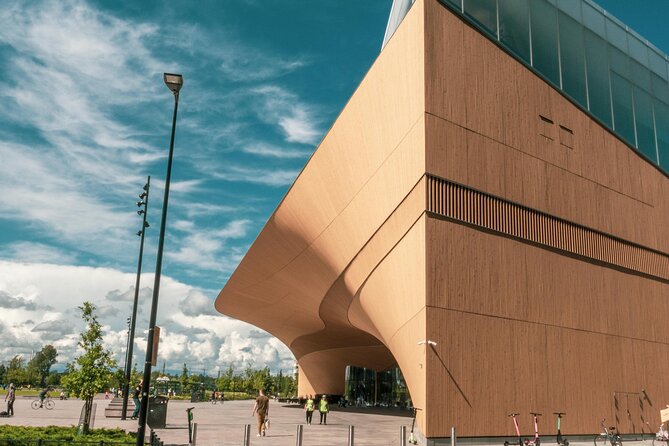
- Oodi Central Library is treated like a highlight, and it really is: you’ll spend real time there.
- Weekend hours matter: the National Library of Finland, Rautatalo, and Kamppi Chapel of Silence are closed Saturday and Sunday.
- A mix of eras: Senate Square and Helsinki Cathedral sit near newer design-forward spaces like Oodi and contemporary art venues.
- Some entry tickets aren’t included, so you’ll want to be ready for a couple add-ons if you want every interior.
Why this 3-hour architecture walk makes sense
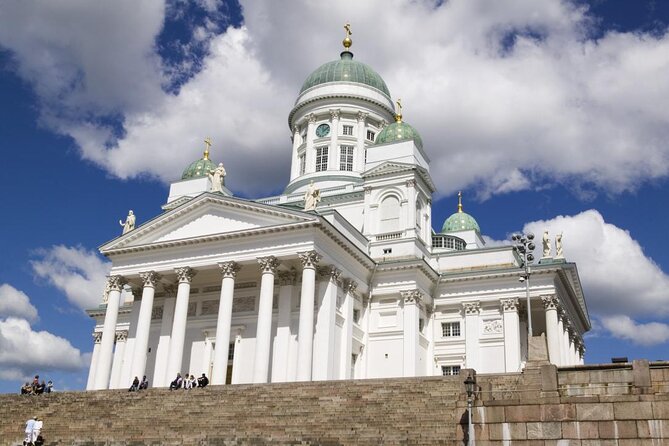
This tour is built for people who want context, not a long day of wandering. At roughly three hours, you get a concentrated slice of Helsinki—from the historic center to the modern cultural core—without feeling like you’re sprinting across town.
The group size cap at six is a big deal. Instead of hearing bits of information through a crowd, you get time to ask questions and listen to how the guide connects design choices to Finnish life and values. The tour also uses a mobile ticket, so you’re not dealing with paper or last-minute scrambling.
Price is $57.61 per person. For that, you’re getting a local guide and a route where most stops are free to visit. You’re not paying for “just photos.” Even the places with separate ticket costs still have a clear payoff because the guide helps you understand what you’re looking at before you walk inside.
You can also read our reviews of more tours and experiences in Helsinki.



Senate Square: your quick timeline of modern Helsinki
Your walk begins at Kluuvikatu, then you head straight for Senate Square, the main postcard hub of central Helsinki. This is where the city’s modern story really gets its start, and the guide uses the three main surrounding buildings to show how Helsinki learned to present itself—carefully, visibly, and with a strong sense of civic identity.
In practical terms, Senate Square is a smart opening stop because it gives you orientation fast. From here, you can start recognizing the city’s “rules”: clean lines, strong public spaces, and buildings meant to be seen. If you’ve only got a day or two in Helsinki, hitting Senate Square early helps everything else click later—especially when you move from traditional forms to more modern Finnish architecture.
Expect a short stop (about 15 minutes). That’s enough time to look up, notice proportions, and understand why this square matters before you move on.
Helsinki Cathedral: the landmark you can enter (ticket not included)
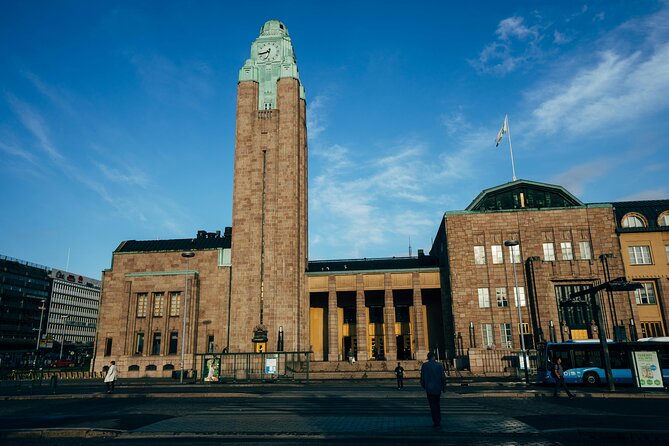
Next up is Helsinki Cathedral, the city’s best-known landmark. The tour plans a group entry so you can connect the exterior landmark to what’s going on inside, not just admire the silhouette from the street.
The key practical detail: the admission ticket is listed as not included. That doesn’t make the stop a waste—it just means you should be ready for a small extra cost if you want the interior experience. Even if you decide not to go inside, the cathedral is still worth the stop because the guide’s framing helps you understand how religion and public space show up in Finland.
This stop is short (about 5 minutes). That’s typical for a central must-see: quick landmark, then back to the walk while you’re still fresh.
National Library of Finland and Jugendsali: beauty for book-lovers
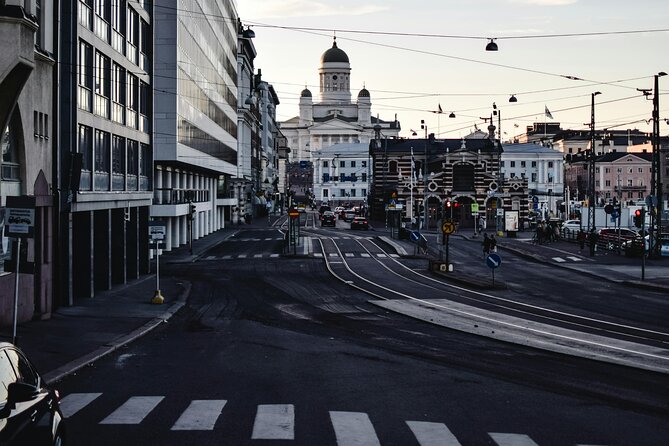
After the cathedral, you move into two places that will change how you think about “a library” and “a reading room” in Finland.
First is the National Library of Finland. The building is famous for its looks, and the tour gives it around 15 minutes. One clear scheduling note: it’s closed on Saturday and Sunday. If your trip falls on a weekend, plan your expectations accordingly.
Then comes Jugendsali, a smaller but very specific architectural stop (about 10 minutes). This one is tied to architect Valter Jung, and the focus is on decorative details—ornaments, decorative paintings, stone sculptures, and even original furniture. This is a great reminder that Helsinki’s architecture isn’t only about big streets and famous facades. Sometimes the story is in the careful interior work.
If you like architecture that rewards close looking, this block of the tour is a highlight. It also helps that the stops are close together, so you don’t lose momentum.
Esplanadi Park and Rautatalo: open-air Helsinki plus a design milestone
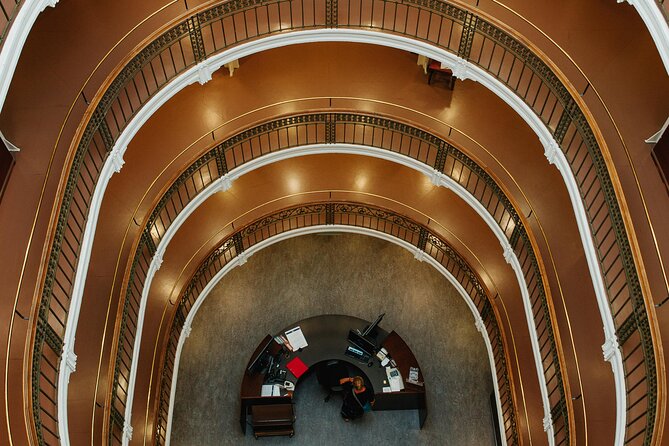
From indoor-looking buildings, you shift to Esplanadi Park, around a 10-minute stop. Esplanadi is the main boulevard—think of it as Helsinki’s year-round social artery. Even without long loitering, it’s useful because it gives you a breath of open space before more architectural density.
Then you hit Rautatalo, often considered a milestone in Finnish architecture. The stop is about 5 minutes, so you’ll want to make those minutes count: look at the exterior form, notice how it sits in the street, and think about how modern ideas were meant to show up in daily city life.
There’s another weekend note here: Rautatalo is closed on Saturday and Sunday. If you’re there on a weekend, you might spend more time on the outside, but the architectural focus still works.
Academic Bookstore (Akateeminen Kirjakauppa) and Fazer Café Sanomatalo
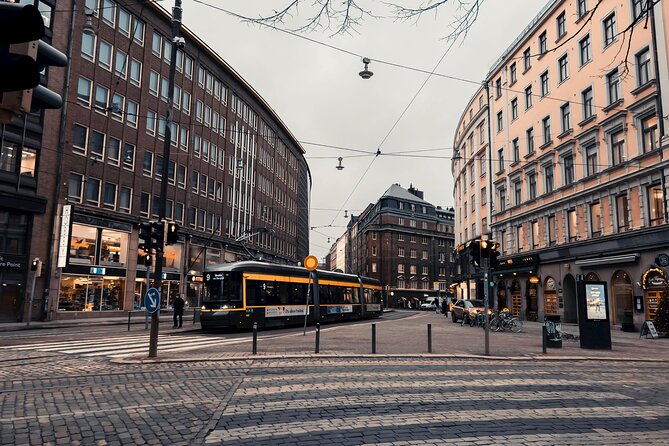
This is one of my favorite “architecture without pretending” segments: you get design culture mixed with everyday Helsinki habits.
At Akateeminen Kirjakauppa, you’ll get about 15 minutes to explore, with a special connection to Alvar Aalto through architecture and design. It’s an inspiring stop if you like books but also care about the physical space where culture happens.
Right after, you’ll pause at Fazer Café Sanomatalo for about 5 minutes. This is in the Sanoma House area with a glass facade, located in Finlandia Park—right next to major cultural spots like the Museum of Contemporary Art Kiasma, the Central Library Oodi, and the Music Centre. Even in a short visit, it gives you a feel for Helsinki’s “design meets public life” style.
No food is included in the tour price, so treat this as a visual and location stop first. If you want a break, you’ll likely need to pay at the café.
Helsinki Central Railway Station to Oodi: from iron giants to a people’s library
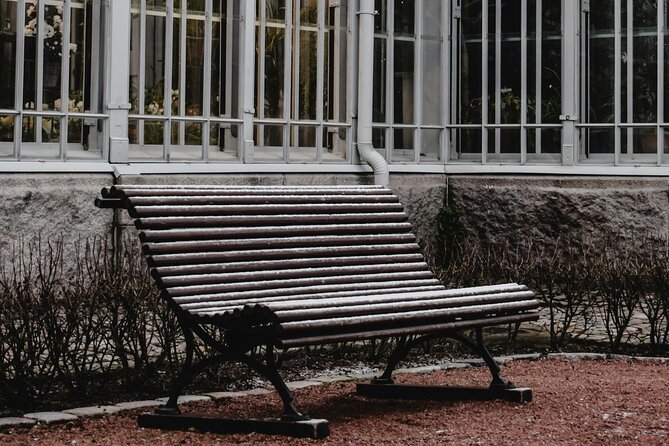
Now comes a big arc. You move from transport architecture to a public space that functions like a civic living room.
At Helsinki Central Railway Station, you’ll spend about 10 minutes. It’s a beautiful city-center landmark guarded by four massive statues, and the guide uses the station to talk about Helsinki’s scale and connections—how a city imagines arrivals and departures as part of its identity.
Then you go to Central Library Oodi, which is the highlight of the tour. You’ll have about 20 minutes here, and the tour treats Oodi less like a quiet reading room and more like a modern public hub. The result is that you’ll look at the space differently. It’s not just books—it’s the way people gather, work, learn, and use public architecture day to day.
This is also one of the easiest “payoff stops” for first-time visitors. Even if you’re not a library person, Oodi makes a strong case for why design can shape behavior and community.
Kamppi Chapel of Silence and Amos Rex: where spirituality meets contemporary art

Next, you pause at Kamppi Chapel of Silence for about 5 minutes. The chapel is described as a moment of peace regardless of religious beliefs, welcoming anyone seeking solace or spiritual connection. Another practical note: it’s closed on Saturday and Sunday.
This is short, but it matters because it breaks the architecture pattern. After lots of buildings with explanations tied to style, you get a space that’s more about how it feels to be inside—quiet, controlled light, and a slower pace.
After that, you’ll reach Amos Rex, the contemporary art museum that opened in 2018. It’s an about-10-minute stop. Ticket isn’t included for this one either, and the tour frames Amos Rex as an immersive mix of art, technology, and architecture. This is a place where modern design isn’t “background”—it’s part of the art experience.
Also in this wider cultural zone, the tour touches the Finnish National Theatre, founded in 1872 as the oldest Finnish-language professional theatre in the country. You’ll also get context around Kiasma, described as Finland’s premier modern art museum, which helps connect the walk to Helsinki’s current creative identity.
Pohjola Insurance Building and the Ateneum: folklore sculptures and Finnish art
You’ll then move into another distinctive style cue: the way Finnish folklore gets turned into architecture.
At Pohjola Insurance Building, the tour highlights gargoyles and grotesques drawn straight from Finnish folklore and legend. It’s a quick stop (about 5 minutes), but it’s memorable because it makes the building feel like it’s telling a story, not just covering space.
Then comes the Ateneum, described as Finland’s best-known art museum and home to Finnish art, with collections spanning from the 19th century into modern times. If you care about how national identity shows up in art, this stop is more than a museum name-drop. It gives you a thread to follow later if you decide to visit museums on your own time.
One practical point: the tour doesn’t promise a long museum crawl here. Instead, it gives you enough context to understand why the Ateneum is central to Finnish cultural memory.
Finlandia Hall and performance spaces: why buildings matter after you leave
Near the end, the tour circles back to one of Helsinki’s modern icons: Finlandia Hall, linked to Aalto. The tour treats it as a legendary creation and focuses on its unique architecture and design.
This is also where you’ll likely start thinking about Helsinki beyond “pretty buildings.” Finlandia Hall is not only a structure you see from outside; it’s part of how Helsinki hosts concerts, performances, and public events. Even if you’re not catching a show during your trip, the tour gives you the mental map for where and why these performance spaces matter.
In the same cultural area, you get additional references to music and theatre—from orchestras and concerts to the historic Finnish National Theatre. The effect is that Helsinki’s architecture stops feeling like separate sightseeing blocks. It becomes a system: public squares, libraries, churches, and stages all shaping how people meet, gather, and share ideas.
Practical notes so the day goes smoothly
- Wear comfy shoes. This is a walking tour with multiple short stops and you’ll be on your feet much of the time.
- Expect some extra entry costs. Helsinki Cathedral, Kamppi Chapel of Silence, and Amos Rex list admissions as not included, even though the tour aims to bring you inside together or close to the interior experience.
- Plan for weekend closures. National Library of Finland, Rautatalo, and Kamppi Chapel are closed on Saturday and Sunday.
- Good weather helps. The experience depends on good weather. If it’s canceled due to poor weather, you’ll be offered another date or a full refund.
- It’s a tight route. With 3 hours and lots of stops, it’s best if you’re the type of visitor who enjoys moving steadily and soaking in details along the way.
Should you book this Helsinki Architecture Walking Tour?
Yes—if you want a fast, design-focused introduction to Helsinki that goes beyond surface-level sightseeing. The strong value is the combination of small-group size, a route that links historic center to modern cultural spaces, and time at Oodi Central Library where you actually slow down and look.
I’d also book it if you like architecture that connects to daily life: libraries that function like hubs, cafés placed inside landmark buildings, and museums where the room itself helps tell the story.
Skip it or adjust expectations if you’re traveling mostly for interiors that require tickets you want included, or if you’re visiting on a weekend when several key stops are closed. For everyone else, it’s one of the cleaner ways to get oriented quickly and start seeing Helsinki like a designer-city, not just a list of monuments.
FAQ
How long is the Helsinki Architecture walking tour?
The tour runs for about 3 hours.
What does the tour cost?
It costs $57.61 per person.
Is the tour in English?
Yes, it’s offered in English.
What’s included in the price?
The tour includes a local guide and a mobile ticket.
Are museum or church entrances included?
Some stops list admission tickets as not included, including Helsinki Cathedral, Kamppi Chapel of Silence, and Amos Rex.
Where does the tour start and end?
It starts at Kluuvikatu, Helsinki, Finland, and ends back at the meeting point.