
REVIEW · HELSINKI
Helsinki architecture tour with a city planner
Book on Viator →Operated by Ataman Tours · Bookable on Viator
Helsinki’s buildings tell real stories. This 3-hour architecture walk with a city planner (often led by guide Emek) connects the big landmarks to the ideas and decisions behind them, from classic squares to newer cultural spaces. I also like that the stops include free entry for each listed site, so you’re spending time learning instead of hunting ticket rules.
What I really like is the hands-on way the guide explains design choices. You get questions answered on the street, and the group stays small (max 6 travelers), which makes it easier to keep the conversation going. I also appreciate the focus on culture and history, which turns “pretty buildings” into “why this city looks the way it does.”
One thing to consider: it’s a walking tour, and you’ll want a moderate fitness level. If you’re expecting lots of long sits or a mostly-stop-and-go sightseeing bus day, this won’t feel like that.
In This Review
- Key highlights you’ll care about
- Walking Helsinki’s architecture with a city planner, not just a guide
- Meet at Aleksanterinkatu 9 and settle into a 3-hour route
- Senate Square: why this start point matters
- The National Library of Finland: culture you can read
- Jugendsali: where style conversations get specific
- Pohjola Insurance Building: architecture shaped by commerce
- Esplanadi Park: the break that’s actually part of the lesson
- Academic Bookstore (Akateeminen Kirjakauppa): ideas in the everyday
- Helsinki Central Railway Station: when architecture meets momentum
- Oodi Central Library: the modern finale that changes how you see the route
- Price and value: why $69.14 can make sense for architecture fans
- What you actually learn: the planner lens for seeing Helsinki
- Who this tour fits best (and who might want to skip it)
- Small-group comfort: why max 6 matters
- Is this tour worth booking? My decision rule
- FAQ
- FAQ
- How long is the Helsinki architecture tour?
- How many people are on the tour?
- What’s the price per person?
- Where does the tour start?
- Where does the tour end?
- What’s included in the price?
- What’s not included?
- Is the tour walking or does it involve transportation?
- Does the tour operate in bad weather?
- Are tickets or admission included for the listed stops?
- What is the cancellation policy?
Key highlights you’ll care about
- City-planner perspective: explanations tied to how a city works, not just surfaces
- Small group size (max 6): more time for questions and back-and-forth
- Free admission at listed stops: fewer ticket hassles during the walk
- An Emek-led style of storytelling: history and architecture linked to political and societal impacts
- All-weather operation: you just need to dress for Helsinki conditions
Walking Helsinki’s architecture with a city planner, not just a guide
If you want Helsinki to make sense fast, you need more than a photo stop. This tour is built around the way a city planner thinks: patterns, public space, civic buildings, and how design reflects the priorities of different eras. You start on foot in the city center and gradually move through key architectural moments, ending at a modern cultural hub.
The best part is the tone. This isn’t a lecture where you passively listen while the buildings blur by. The guide encourages Q&A, and the small group format helps. With a maximum of 6 travelers, you’re not lost in the back of a crowd. You can ask follow-up questions when something clicks—like how one style differs from the next, or why certain public buildings ended up where they did.
And because it runs in all weather, you don’t have to gamble on a perfect day. You just show up prepared. If it’s rainy or windy (common in coastal Helsinki), the tour still keeps moving, so you won’t lose your plans to the weather gods.
You can also read our reviews of more tours and experiences in Helsinki.



Meet at Aleksanterinkatu 9 and settle into a 3-hour route
The meeting point is Aleksanterinkatu 9, 00100 Helsinki, and the tour ends at Helsinki Central Library Oodi, Töölönlahdenkatu 4, 00100 Helsinki. The total time is about 3 hours, which is a solid length: long enough to see a meaningful arc of the city, but not so long that everyone gets cranky halfway through.
You should expect a true walking experience. The itinerary includes multiple short stops, typically around 10–20 minutes each. That structure matters because it keeps you focused: you see a place, the guide gives you context, you look around with new eyes, then you move on. You’ll get the most out of it if you can handle steady walking at a comfortable pace.
Also, note the tour includes a local guide and uses a mobile ticket. That’s practical, especially in a city where you’ll probably be using transit and walking anyway.
Senate Square: why this start point matters
The tour begins at Senate Square, with about 10 minutes there. As a starting point, it’s smart. Squares like this help you get oriented quickly—where the “center” of the story is, and how the layout pushes civic life into the open.
This is the moment where a good guide sets the rules of the game. Expect Emek’s planning-minded explanations to connect what you’re seeing with the city’s larger story. You might also notice how the tour frames Helsinki as something shaped by decisions over time rather than a random collection of buildings.
A practical tip: don’t rush your first photos here. You’ll get more value if you spend a minute or two just looking—pay attention to how space, facades, and sightlines work together. When the guide starts linking ideas, you’ll have the visual anchor in your head.
The National Library of Finland: culture you can read
Next is the National Library of Finland for about 15 minutes. A library may not look dramatic in a quick glance, but in a city-planner conversation, it often becomes a stand-in for education, public investment, and the role of knowledge in national identity.
What I like about this stop is the likely payoff: libraries are built to last, and they’re meant to serve people. That makes them perfect for a tour where the goal is understanding culture and history, not just styles. You’ll likely get a clearer sense of how public buildings communicate values—especially when a guide connects them to society and politics.
One drawback to keep in mind: since the time here is relatively short, you shouldn’t expect deep interior exploring unless the guide tells you otherwise. Treat it as an interpretive stop. You’re there to understand what the building represents and how it fits into the city’s rhythm.
Jugendsali: where style conversations get specific

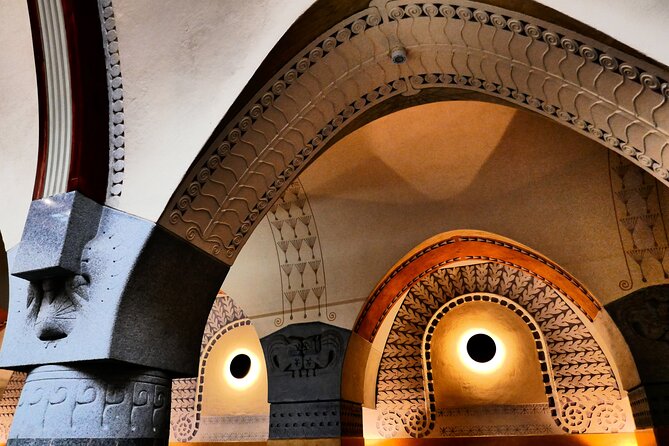
The third stop is Jugendsali for about 15 minutes. Jugendsali is an architecture-friendly name on its own: it points you toward an era or approach in design. Even if you’re not an architecture nerd, you’ll benefit from how a planner frames style as a response to its time.
This is a place where you’ll probably start noticing differences you might otherwise miss—proportions, ornament, and how the building “sounds” visually. A city planner guide tends to connect those details to bigger questions: what was changing socially, and how did that show up in public-facing buildings?
Keep your expectations realistic. This is not a guided museum tour with long explanations. It’s a walk-and-talk format. If you love structure and short, focused insights, you’ll enjoy stops like this more than you might expect.
Pohjola Insurance Building: architecture shaped by commerce
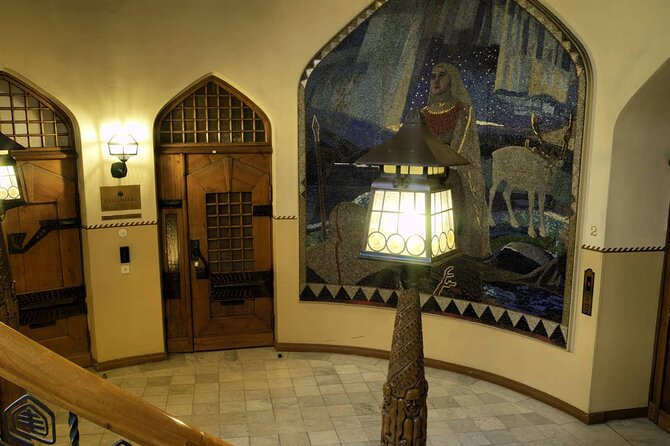
You’ll then head to the Pohjola Insurance Building for about 10 minutes. An insurance building is a great choice for this type of tour because it hints at how the city’s economy and institutions leave physical marks.
This stop helps broaden your mental map. Up to this point, you’ve seen civic and cultural landmarks. Now you get the angle of business and risk—another kind of public importance. A planner’s explanation can connect commercial architecture to trust, visibility, and the way companies wanted to signal stability.
In practical terms, you’ll want to look around, not just at one facade. Buildings like this often sit in relationship to streets and neighboring structures, and the guide will likely point out how the setting changes how the architecture feels.
Esplanadi Park: the break that’s actually part of the lesson
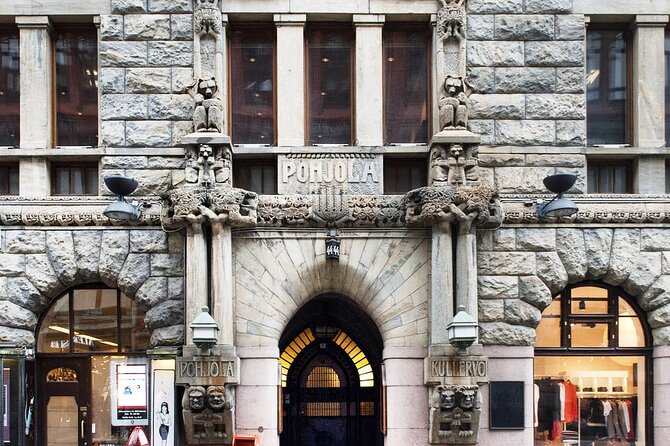
After the business-and-institution stops, you’ll reach Esplanadi Park for about 10 minutes. Parks sound like a breather, but on a city-planner tour they’re often where you understand how a city balances movement, gathering, and public life.
This is where the tour becomes more than architecture appreciation. You’re learning how open space functions—how it supports walking, social life, and urban comfort. If you’ve ever wondered why some cities feel easy to be in, parks and promenades are often a big reason.
For best results, use this stop to reset your attention. Take a moment to watch how people flow around you. The guide’s planning lens usually turns those casual observations into a better understanding of design.
Academic Bookstore (Akateeminen Kirjakauppa): ideas in the everyday
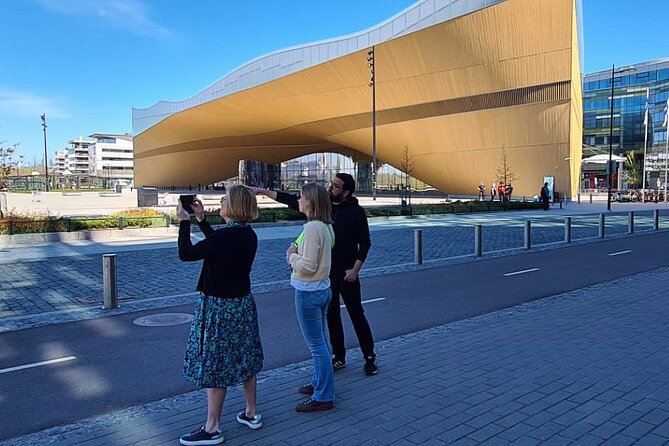
Next is Academic Bookstore (Akateeminen Kirjakauppa) for about 10 minutes. This is one of the stops that makes the tour feel like Helsinki, not just architecture for architecture’s sake.
Bookstores aren’t simply retail; in many European cities, they act like cultural anchors. On this kind of walk, that’s the point. You’re likely to get a story about how ideas move through public spaces and how cultural institutions shape the city’s identity.
A small caution: this stop is brief. So if you’re hoping for time to browse inside, plan to do that after the tour on your own. Think of it as a context stop—the guide helps you understand why the location matters, then you can decide how much extra time you want for shopping later.
Helsinki Central Railway Station: when architecture meets momentum
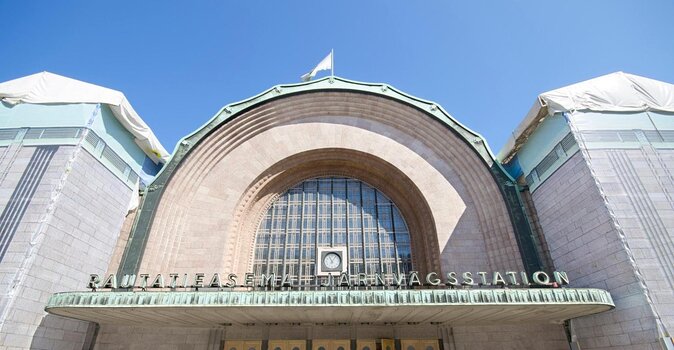
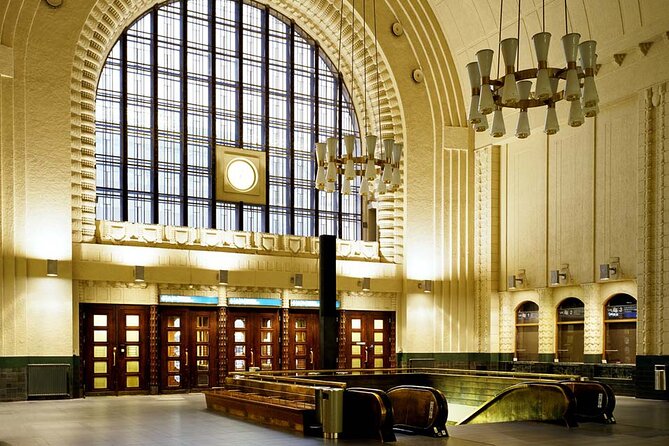
Then you’ll arrive at Helsinki Central Railway Station for about 10 minutes. Stations are powerful because they’re architecture with a job: guiding people through stress, schedules, and movement. Even if you only spend a short time here, it’s a key “how the city works” stop.
The guide’s style—linking political and societal impacts to art and architecture—fits stations perfectly. Transportation hubs aren’t just functional. They’re also public statements. You might get an explanation of how civic ambition, modern needs, and the desire for order show up in the built environment.
Since your time is limited, your goal here is to orient yourself. Look for structural rhythm, how entrances work, and what kinds of spaces the building creates for people. If you’re using transit during your trip, this stop will also pay off later when you move through the station yourself.
Oodi Central Library: the modern finale that changes how you see the route
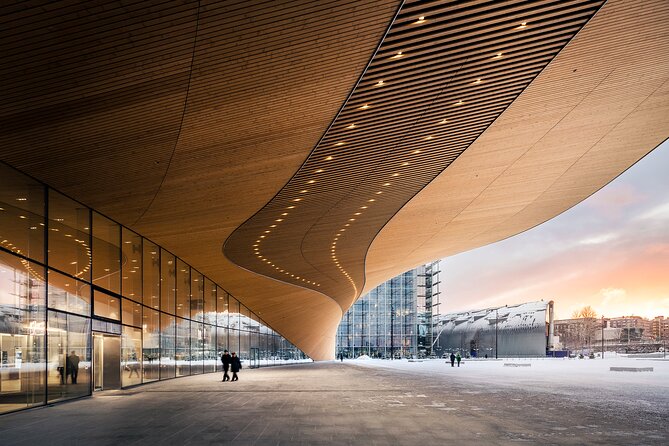
The tour ends at Central Library Oodi for about 20 minutes. This longer final stop makes sense: Oodi is a strong place to land because it offers a modern version of the “public building as cultural engine” idea.
If you’ve been thinking of libraries as quiet book rooms, a newer library space can flip that assumption. This tour’s framing—walking from historic past into contemporary design—is exactly what Oodi supports as a finish. You should leave with a clearer sense of how Helsinki’s architecture conversations evolved over time.
Use your extra time well. Spend a few minutes just absorbing the building’s role as a meeting place for the public. Even without going deep into interiors, you’ll get more from the stop if you notice how the space is meant to invite people in.
Practical note: because the tour ends here, you’ll have a convenient launching pad for your next activity. If you’re hungry, you’ll be in a central area with plenty of nearby options. If you want photos, don’t rush the final minutes—this is the stop that likely sticks in your mind after the walk ends.
Price and value: why $69.14 can make sense for architecture fans
At $69.14 per person, the price is not “cheap,” but it can be good value given what you get: a specialist guide (a city planner), about 3 hours of organized storytelling, and a small group limited to 6 travelers.
Here’s the value math I look for:
- You’re paying for interpretation. Architecture is hard to “self-narrate” on a busy street, and a planner’s explanations can make the city click.
- The tour includes a local guide and lists free admission at each stop, so you’re not double-paying for entry during the walk.
- Small-group format reduces that common walking-tour problem: you don’t just hear the guide from a distance.
Also, Helsinki is compact enough that you might otherwise spend a day bouncing between landmarks solo. This tour is a shortcut to understanding. Instead of spending your time building context from scratch, you’re getting it bundled into one route.
Booking timing matters too. The tour is often booked about 48 days in advance on average, so if you’re traveling in peak season or on a tight schedule, you’ll want to lock in your slot sooner rather than later.
What you actually learn: the planner lens for seeing Helsinki
You’re going to learn more than building names. The guide’s approach ties architecture to real forces: politics, society, and how those influences show up in the built environment.
From what I’d expect from a city planner-led tour—and based on the consistent praise for this guide’s delivery—the key educational shift is this: you stop treating style as decoration and start seeing it as a record. Buildings become evidence of what a city valued at different moments.
A big reason the tour feels satisfying is the mix of eras. You’re not stuck in one period. The route includes civic classics early and more contemporary energy near the end, and that creates a natural “before and after” feeling.
You also get a chance to ask questions. That’s not a tiny perk. When you can ask, you can steer your attention toward what you care about: design choices, cultural context, or how planning affects everyday life.
Who this tour fits best (and who might want to skip it)
This walking tour is best for reasonably active travelers. If you can handle a steady city-center walk and enjoy stopping periodically to look and listen, you’ll likely have a great time.
You’ll also get more out of it if you care about culture and history, because that’s how the tour frames the architecture. If you only want “quick photos and move on,” you may find the explanations more useful on a slower day when you’re open to thinking.
A smart match: architecture fans, students of design, travelers who love city planning, and people who want an informed way to understand Helsinki beyond the obvious postcards.
Small-group comfort: why max 6 matters
The limit of 6 travelers changes the whole feel of the experience. You get fewer crowd interruptions. You can hear the guide clearly. And it’s easier to get a tailored answer instead of a one-size-fits-all response.
It also means the guide can react to the group’s interest. If you ask a question and it sparks a follow-up for others, you can get a mini discussion instead of moving on instantly.
In practice, that makes the tour feel more like a guided conversation through key city spaces.
Is this tour worth booking? My decision rule
Book this tour if you want Helsinki to make sense in one organized afternoon. It’s especially worth it if you like architecture with context and you’ll enjoy asking questions.
Skip it (or consider a different style of tour) if you hate walking, you prefer hands-off sightseeing, or you only want minimal talking. This one is designed for people who want explanations.
If you’re on the fence, here’s the tiebreaker I’d use: if you’re the kind of traveler who later says, I wish I understood what I was seeing—then this is exactly that fix. You’ll leave with a better read on how Helsinki’s public spaces and buildings connect across time.
FAQ
FAQ
How long is the Helsinki architecture tour?
It runs for about 3 hours.
How many people are on the tour?
The maximum group size is 6 travelers.
What’s the price per person?
The price is $69.14 per person.
Where does the tour start?
It starts at Aleksanterinkatu 9, 00100 Helsinki, Finland.
Where does the tour end?
It ends at Helsinki Central Library Oodi at Töölönlahdenkatu 4, 00100 Helsinki, Finland.
What’s included in the price?
The local guide is included.
What’s not included?
Food and drinks are not included, and transportation to and from attractions is also not included.
Is the tour walking or does it involve transportation?
This is a walking tour, and it’s best suited to reasonably active travelers.
Does the tour operate in bad weather?
Yes. It operates in all weather conditions, so dress appropriately.
Are tickets or admission included for the listed stops?
The itinerary lists free admission at the listed stops.
What is the cancellation policy?
You can cancel for a full refund up to 24 hours before the experience’s start time. If you cancel less than 24 hours in advance, the amount paid is not refunded.