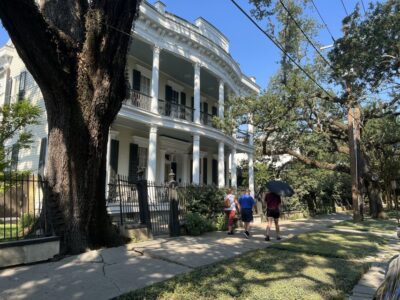
REVIEW · NEW ORLEANS
New Orleans Garden District Architecture Tour
Book on Viator →Operated by NOLA Tours · Bookable on Viator
Gardens and gravestones, in one perfect walk. This New Orleans Garden District architecture tour turns a pretty neighborhood into a real lesson you can use all trip. You’ll get a locally led walk with stops that connect building styles to the people who paid for them, designed them, and lived behind those gates.
I love two things most: the way the guide brings the area to life (you might even meet a host like Angela, a 10th-generation New Orleanian), and the small-group feel that makes questions actually fit into the walk. You’ll also spend real time looking, not just moving, so the architecture sticks.
One heads-up: you’ll cover a good stretch on foot, and parts of the cemetery visit can depend on whether services are happening. Bring comfortable walking shoes, and expect to dress for weather.
In This Review
- Key takeaways before you go
- Why the Garden District feels different once you know the clues
- Getting started at 2727 Prytania St: a smooth 2-hour plan
- Lafayette Cemetery No.1: the burial customs stop that changes how you look at everything
- Commander’s Palace: architecture plus the food-story angle
- Samuel Jameson’s Italianate houses: learning the style behind the beauty
- Morris-Israel House (1869)
- Carroll-Crawford House
- The Women’s Guild of the New Orleans Opera House: spot the two eras
- Louise S. McGehee School: from single family residence to library
- The Rink Shopping Center and recreation in 1884
- The Garden District walk itself: antebellum homes and the stories behind them
- Small-group guide energy: why the lead person changes your day
- Price and value: why $40 often beats DIY
- What to wear, what to bring, and how to make the most of it
- Who should book this tour—and who might not
- Should you book the New Orleans Garden District Architecture Tour?
- FAQ
- How long is the New Orleans Garden District Architecture Tour?
- How much does the tour cost?
- Where does the tour start?
- Is admission included for all the stops?
- Is Lafayette Cemetery No.1 always accessible during the tour?
- What’s the cancellation policy?
Key takeaways before you go

- Small-group pacing (max 14) makes it easy to ask questions without holding everyone up.
- Cemetery context at Lafayette Cemetery No.1 adds meaning to what you’re seeing, not just photo ops.
- Italianate architecture lessons help you spot patterns in the Garden District’s houses.
- A stop at Commander’s Palace connects the neighborhood’s building story to the city’s food reputation.
- A surprise bit of everyday life at the Rink Shopping Center shows how recreation shaped the area in 1884.
- Guide style matters, and many leads use humor, personal ties, and sometimes visual aids to explain details.
Why the Garden District feels different once you know the clues
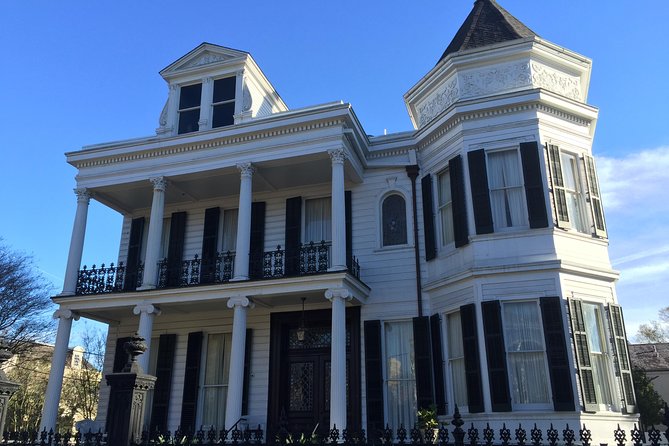
The Garden District looks dreamy even before you learn a thing. But the tour’s real value is how it teaches your eyes. You start noticing shapes, trims, window rhythms, and rooflines, then you connect those choices to time period and taste.
New Orleans doesn’t build history the way some cities do. Here, the story is right there on the block—if someone points out what to look for. That’s what makes this tour a practical add-on, especially if you’re already excited about architecture or if you want to understand what you’ll see later from streetside views.
And since it’s a walk with stops, you’re not stuck staring at one sign the whole time. You’re constantly pairing a building you can see with a story you can remember.
You can also read our reviews of more tours and experiences in New Orleans.



Getting started at 2727 Prytania St: a smooth 2-hour plan

You meet at 2727 Prytania St and the tour ends back there. The total time is about 2 hours, and the pace is leisurely enough for most people who can handle walking.
This also matters because New Orleans weather can be a boss. If it’s hot, you’ll be glad the schedule isn’t overly rushed. If it’s cool and clear, you’ll have time to slow down and look at details instead of just collecting angles for pictures.
The tour runs in English, you get a mobile ticket, and it’s offered with a maximum group size of 14. That number is the sweet spot: small enough for personal questions, big enough that you won’t feel singled out.
Lafayette Cemetery No.1: the burial customs stop that changes how you look at everything
The first stop is Lafayette Cemetery No.1, and it’s focused on New Orleans burial customs. This isn’t just a quick glance at old stone. The point is to help you understand why cemeteries here are different—and why people call them Cities of the Dead.
Two practical notes:
- Entrance is permitted by the City of New Orleans, but it can be closed when services are being performed.
- Admission for this stop is free, and the tour’s approach is educational rather than ceremonial.
If the cemetery is open, you’ll get a meaningful start. You’ll connect the architecture you’ll see later in the neighborhood to broader ideas about legacy, status, and how families mark time in this city.
If it’s closed, your guide will still steer you into the themes of the area. Either way, it helps to go in with a respectful mindset and an extra bit of patience.
Commander’s Palace: architecture plus the food-story angle
Next up is Commander’s Palace. The stop is short, but the topic is smart: the guide talks about the building’s architecture, the history of the owners, and what the culinary experience is known for.
Important practical detail: admission is not included here. In reality, that means you’re probably seeing the structure and hearing the story from the outside or at least without a paid entry included in your tour price.
Why this stop works: it reminds you that buildings aren’t separate from daily life. In New Orleans, the same neighborhood habits that shape homes also shape how the city hosts visitors—especially around food, celebration, and hospitality.
If you’re the type who wants to eat your way through New Orleans (who isn’t?), this stop can also help you plan where to put your reservation time later.
Samuel Jameson’s Italianate houses: learning the style behind the beauty
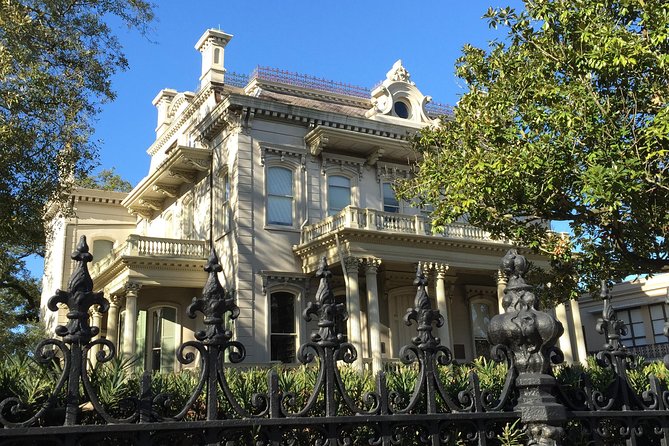
A major theme of the walk is Italianate architecture, and two of the best markers come from the work of Samuel Jameson.


Morris-Israel House (1869)
At the Morris-Israel House, you’ll hear how it was designed in 1869 and how it represents the Italianate style. This is where the tour helps your eye slow down.
Italianate buildings tend to use strong, decorative detail rather than plain surfaces. The guide’s job is to show you which details signal the style—things like proportions, ornamental patterns, and how the building edges are treated.
You’re not just admiring it. You’re learning how to recognize it on other streets later.
Carroll-Crawford House
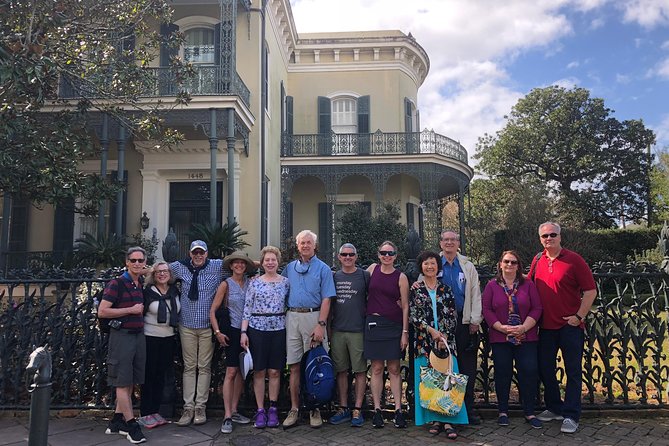
You’ll also make another stop for an Italianate example: the Carroll-Crawford House, designed by Samuel Jameson, with Irish-born roots called out in the tour.
Again, the real payoff is that you start comparing. Once you’ve seen one Italianate house explained, the next one becomes a quick quiz. You’ll notice similarities, then you’ll pick out differences—and your brain starts storing the neighborhood in categories, not chaos.
The Women’s Guild of the New Orleans Opera House: spot the two eras
At the Women’s Guild of the New Orleans Opera, the tour takes an interesting turn: you’ll learn that the building was constructed in two different eras and in two different styles.
That detail is more useful than it sounds. It trains you to notice that a building you think is “just old” might actually be layered—updated, expanded, or changed as tastes and needs shifted.
Your guide will show you how to tell those style differences apart. Even if you don’t remember every term, you’ll remember the method: look at what seems to belong to one time period versus what looks like an add-on later.
This is one of those stops that upgrades your self-guided sightseeing. After this, you’ll spot mixed-era buildings elsewhere in New Orleans more easily.
Louise S. McGehee School: from single family residence to library
The Louise S. McGehee School stop focuses on how the building changed jobs over time.
The tour explains that it began life as a single family residence, then later became part of the McGehee School library. That shift—from private home to school use—adds a “how the city evolves” layer to your day.
Even without going inside, you can think about what it takes to repurpose space. Homes are built for domestic rhythm and privacy. Schools (and libraries) need circulation, learning space, and a different kind of public feel. When a building makes that transition, you’re looking at more than architecture—you’re watching community life adapt.
The Rink Shopping Center and recreation in 1884
This stop is short but memorable: the Rink Shopping Center connects the neighborhood to recreation.
Here’s the standout fact the tour highlights: it housed the largest skating rink in the country when it was built in 1884. In other words, this wasn’t always a “quiet mansion” story. People gathered for fun in purpose-built space.
You’ll learn about residents’ favorite recreational activities around the turn of the century, which gives the Garden District a fuller picture. It helps you avoid an easy mistake: assuming every historic building in the neighborhood was always meant for wealthy domestic life only.
This stop turns the walk into a real slice of daily culture.
The Garden District walk itself: antebellum homes and the stories behind them
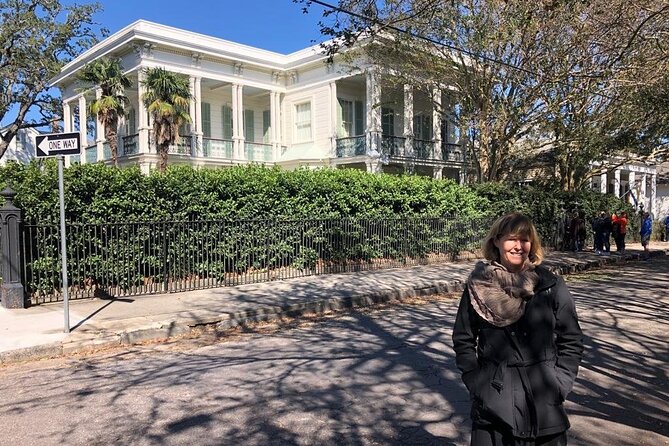
After the marked stops, you spend about two hours in the Garden District admiring the antebellum mansions and learning the context of when they were built.
This is where the tour becomes more than “architecture facts.” You hear stories about the people who designed the houses and the people who lived there. That combination matters because the Garden District is easy to romanticize. The best guides keep it grounded.
One of the strongest effects of the tour is how it changes your self-guided roaming afterward. You’ll walk past houses and do a quick mental checklist:
- What style is this?
- What might the builder have wanted to show off?
- Is the building plain where it could have been decorative, or vice versa?
You don’t need to be an architecture nerd. The guide gives you the hooks. Once you have them, you start seeing the neighborhood as a living catalog of taste, money, migration, and design.
Small-group guide energy: why the lead person changes your day
This tour runs with a guide who’s licensed, insured, and local, and that usually shows up in how smoothly the walk works. You’re not just getting facts—you’re getting a person who knows how to explain them.
The guide style seems to be a huge part of why people rate it so highly. In the past group experiences, leads like Angela (noted for passion and local family ties), Eva (known for building a clear picture of history and architecture), Lee (called witty and charming, with history that lands), Doug (praised for humor, good pace, and example-setting), and Gary (encouraging questions and using photos) all show up as examples of what you can expect.
A few practical signals to look for when you meet your guide:
- They answer questions directly instead of rushing past them.
- They use visual aids like photos when explaining details.
- They don’t treat the neighborhood like a museum exhibit; they connect it to real people and real time.
If you want to learn fast, this kind of explanation is worth its weight in better street-level understanding.
Price and value: why $40 often beats DIY
At $40 per person for roughly two hours, the value comes from three places.
First, you’re paying for interpretation. Yes, you could walk the Garden District on your own. But you’d miss the part where buildings become clues—style cues tied to time, and stories tied to owners and designers.
Second, most stops have free admission. Several key points are listed as free, which keeps the cost focused on the guide and the time.
Third, the group size is capped at 14, so the tour doesn’t feel like a cattle-transport lecture. That makes it easier to slow down and ask about what you’re actually looking at right now.
The one admission wrinkle is Commander’s Palace, where admission is not included. Since the stop is short, it usually doesn’t turn into a surprise expense. But if you’re hoping to go inside as part of the tour day, plan that separately.
What to wear, what to bring, and how to make the most of it
This is an architecture walk, so your comfort matters.
- Wear comfortable walking shoes.
- Bring water, especially in warmer months.
- If you’re the type who loves photos, carry a fully charged phone or camera.
- Since the tour is subject to good weather, dress for the day you land, not the weather you wish you had.
Also, this tour allows service animals, and it’s near public transportation, which makes it easier to fit into a day without needing a car.
Finally, keep your schedule a little flexible. Weather can affect whether the tour runs, and if it gets canceled for poor conditions, you’ll be offered an alternative date or a full refund.
Who should book this tour—and who might not
You’ll love this tour if:
- You want a fast intro to Garden District architecture that helps you recognize styles later.
- You enjoy history that’s tied to what you can see on the street.
- You want a small-group walk led by a local guide who answers questions.
You might hesitate if:
- You hate walking and struggle with staying on your feet for a full, steady stroll.
- You want guaranteed entry into every site regardless of services or closures. The cemetery part can depend on city permissions and whether services are being performed.
Should you book the New Orleans Garden District Architecture Tour?
If your goal is to get more out of your Garden District wandering, I’d book it. The price is reasonable for a guided two-hour walk, and the stops are chosen to teach patterns: Italianate style, mixed-era construction, shifting building uses, and the way recreation shows up in unexpected places.
The real reason to book is the guide quality. When the lead is animated, uses examples, and makes time for questions, the tour turns into something you can carry with you for the rest of your trip—like you’ve finally learned how to read New Orleans from street level.
FAQ
How long is the New Orleans Garden District Architecture Tour?
It lasts about 2 hours.
How much does the tour cost?
The price is $40.00 per person.
Where does the tour start?
The meeting point is 2727 Prytania St, New Orleans, LA 70130, USA, and the tour ends back at the meeting point.
Is admission included for all the stops?
Most stops are listed with free admission, but Commander’s Palace is noted as admission ticket not included.
Is Lafayette Cemetery No.1 always accessible during the tour?
Entrance is permitted by the City of New Orleans, but it may be closed when services are being performed.
What’s the cancellation policy?
You can cancel for a full refund up to 24 hours in advance of the experience start time. If you cancel within 24 hours, the amount paid is not refunded.